The portal tenement on Virmenska Street: Lviv will open the city's most mysterious building for the first time. How to get there
21 August 2026, 14:42
21 August 2026, 14:42
In Lviv, as part of the European Heritage Days, the ancient tenement house at 17 Virmenska Street will be opened for viewing for the first time. Traditionally, the building was dated to the mid-17th century, but during extensive scientific research and restoration, specialists discovered relics that suggest the house's history began at least 200 years earlier.
This is reported by the organizers of the European Heritage Days and the Heritage Bureau.
Ten eras in one building
The stereotype that the tenement house was built only in the 17th century arose from the first preserved written mentions. In reality, its walls hide numerous older relics. Scientists have found Gothic windows and portals, one of which has survived in its historical place. Its stone frame still shows traces of the great fire of 1527, which almost completely destroyed Lviv at the time. This detail proves that civilian construction in the city at that time was not only wooden but also made of stone, reported the Heritage Bureau.
The head of the restoration project, Professor of Lviv Polytechnic National University, Oleh Rybchynsky, noted during the restoration work that the building had undergone about ten stages of reconstruction - from medieval Gothic to the mid-20th century.
In the 17th century, the building was acquired by the Armenian Eminovych family, who added floors and gave it its current name. Later, the property was owned by Armenian archbishops and Peter Lubkovsky, the royal hunter, under whom the house underwent another transformation.
Hiding places of two world wars and a 15th-century autograph
During the cleaning and restoration of the premises, specialists made a series of unique discoveries:
A badge of the Ukrainian Sich Riflemen in a 1916 newspaper: in a crack of a wooden beam in the mezzanine, a badge of a Ukrainian Sich Rifleman wrapped in contemporary press was found. It is likely that a soldier was hiding here during the pacification.
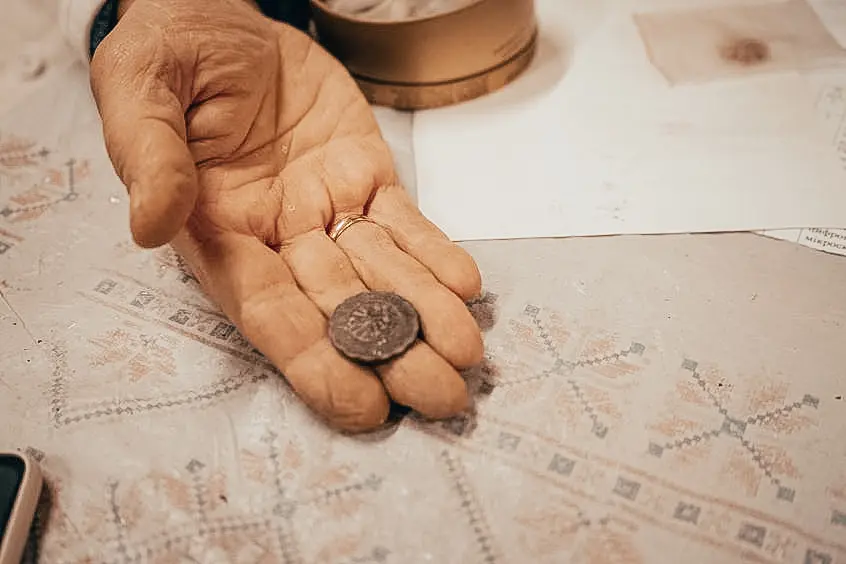
Underground shelter: in the basement, a nook was discovered where a Jewish family had hidden during roundups in World War II (it is currently known that their descendants live in Israel).
Master's personal mark: on the lintel of one of the portals, a "gmerk" (a craftsman's signature) from the 15th century was found. This is the first such find from this period for Lviv.
Florentine trace: the capitals of the inter-window columns on the first floor and the entablature with a grotesque mascaron have no analogues in Lviv, but are very similar to the decoration of Florentine palaces.
Ancient hypocaust and royal stoves
A true discovery for scientists was the preserved 15th-century floor with special openings for warm air - this is an element of an ancient heating system (hypocaust).
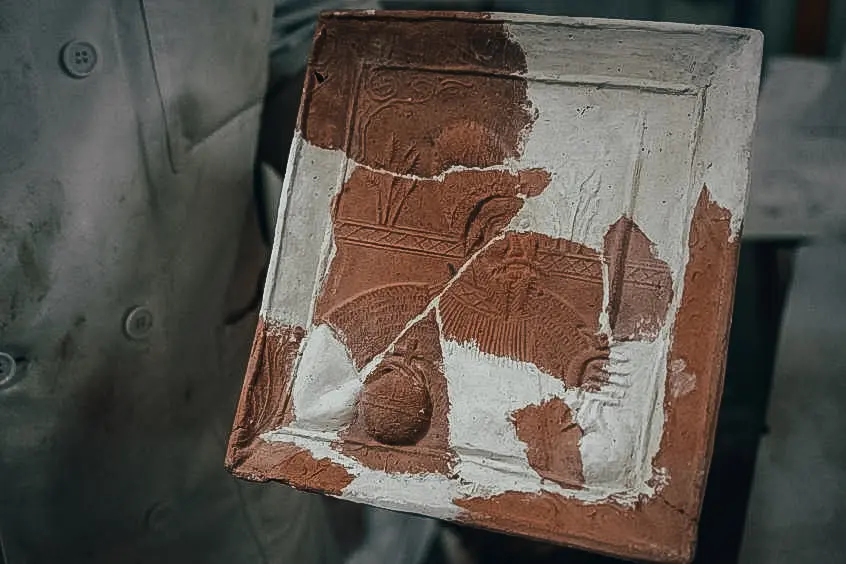
Restorers also found ceramic tiles from an ancient Gothic stove. They depict the coats of arms of the Kingdom of Prussia, Chełm Land, biblical scenes, and a portrait of King Sigismund I the Old.
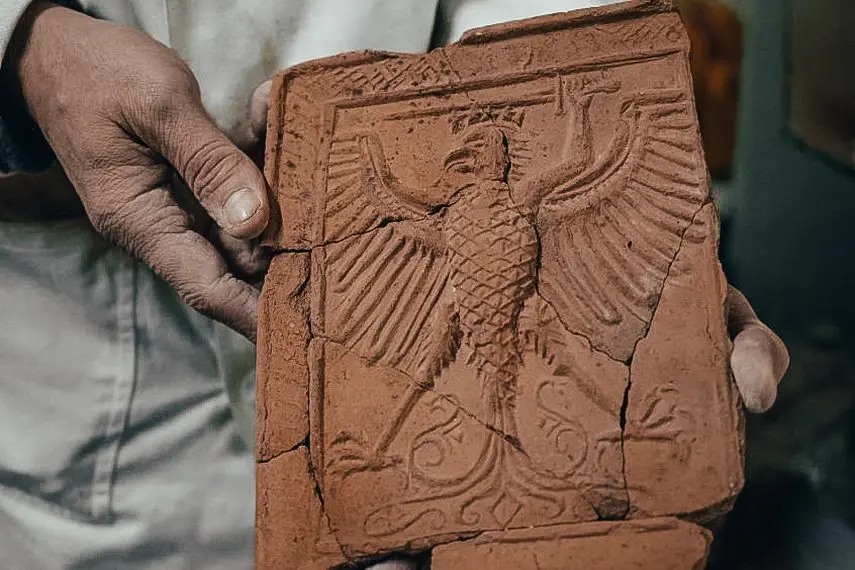
Similar items are exhibited in Krakow's Wawel Castle, but the Lviv tiles are terracotta (clay), not glazed. This indicates that they were made by local craftsmen in a form brought from Poland.
Melusine and the "transfer" technology
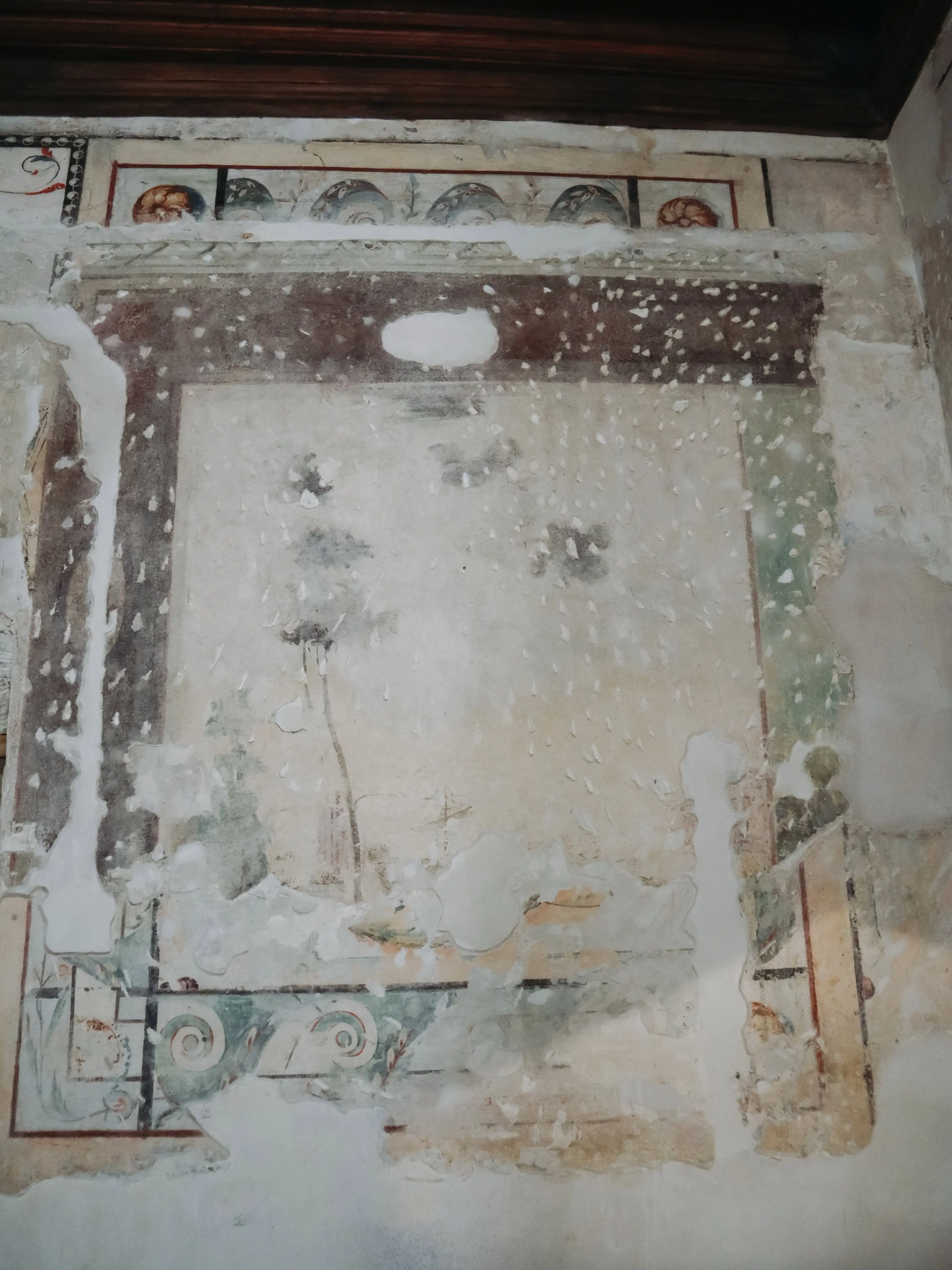
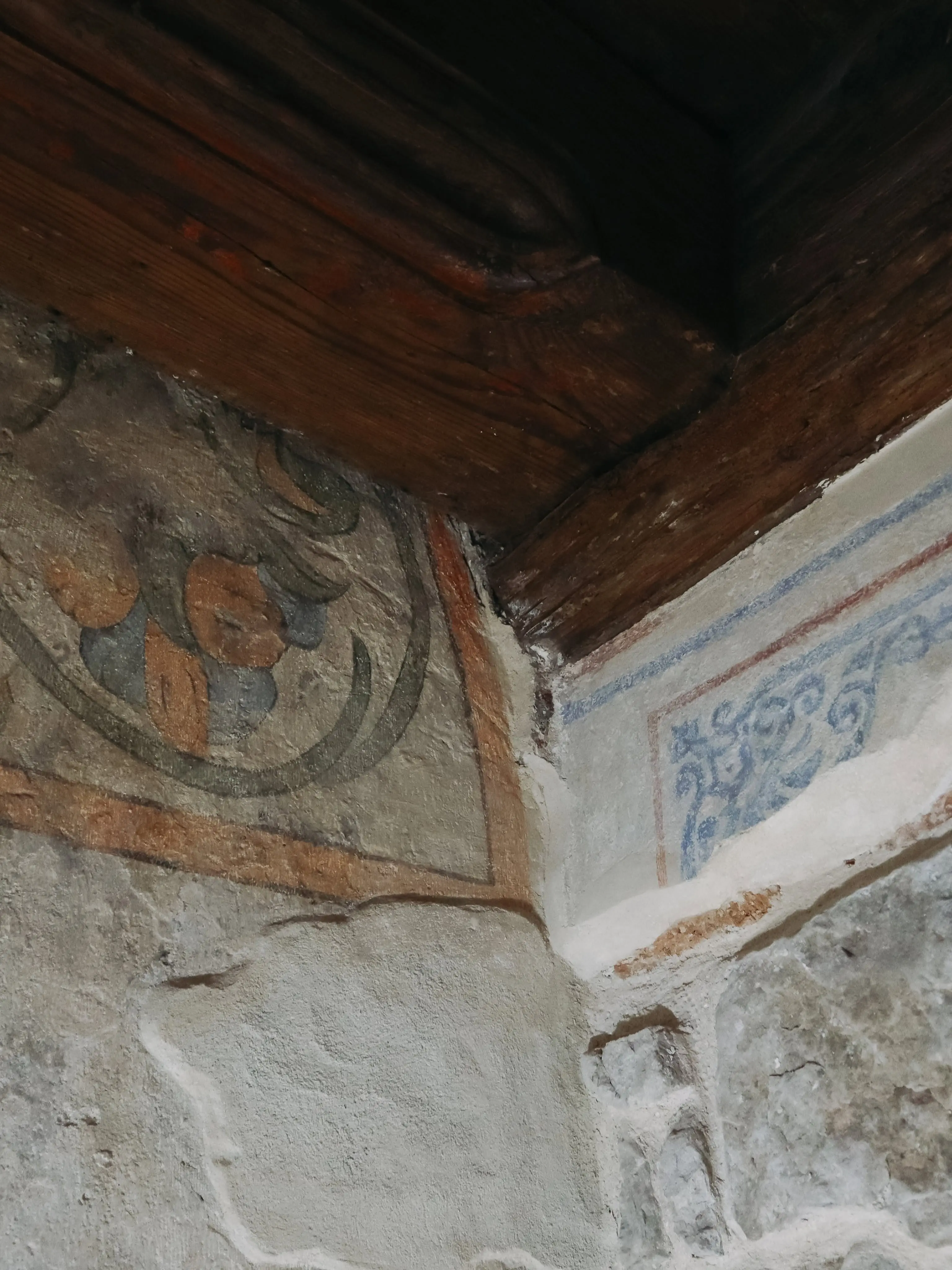
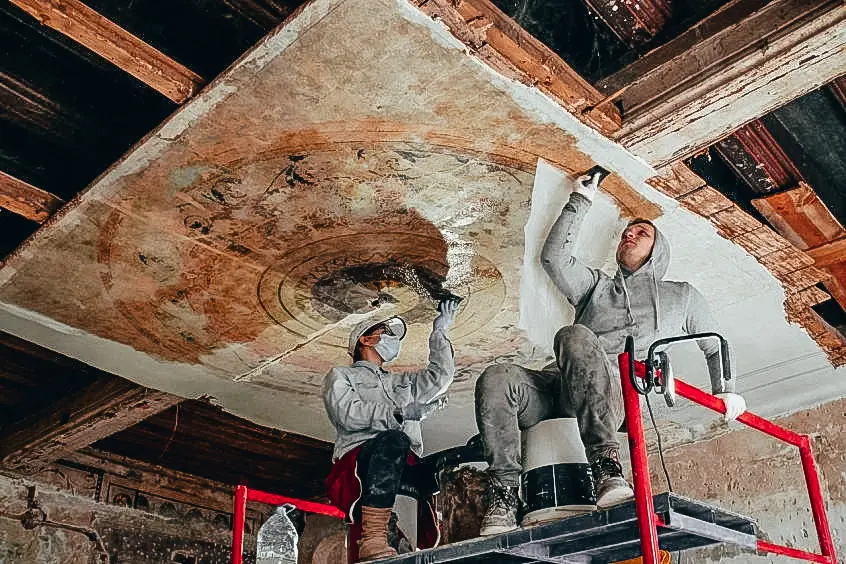
The KARP Restorer team, led by Vasyl Karpov, carried out complex conservation work. On the second floor, rare wall paintings with city landscapes and a classicist rosette were discovered.
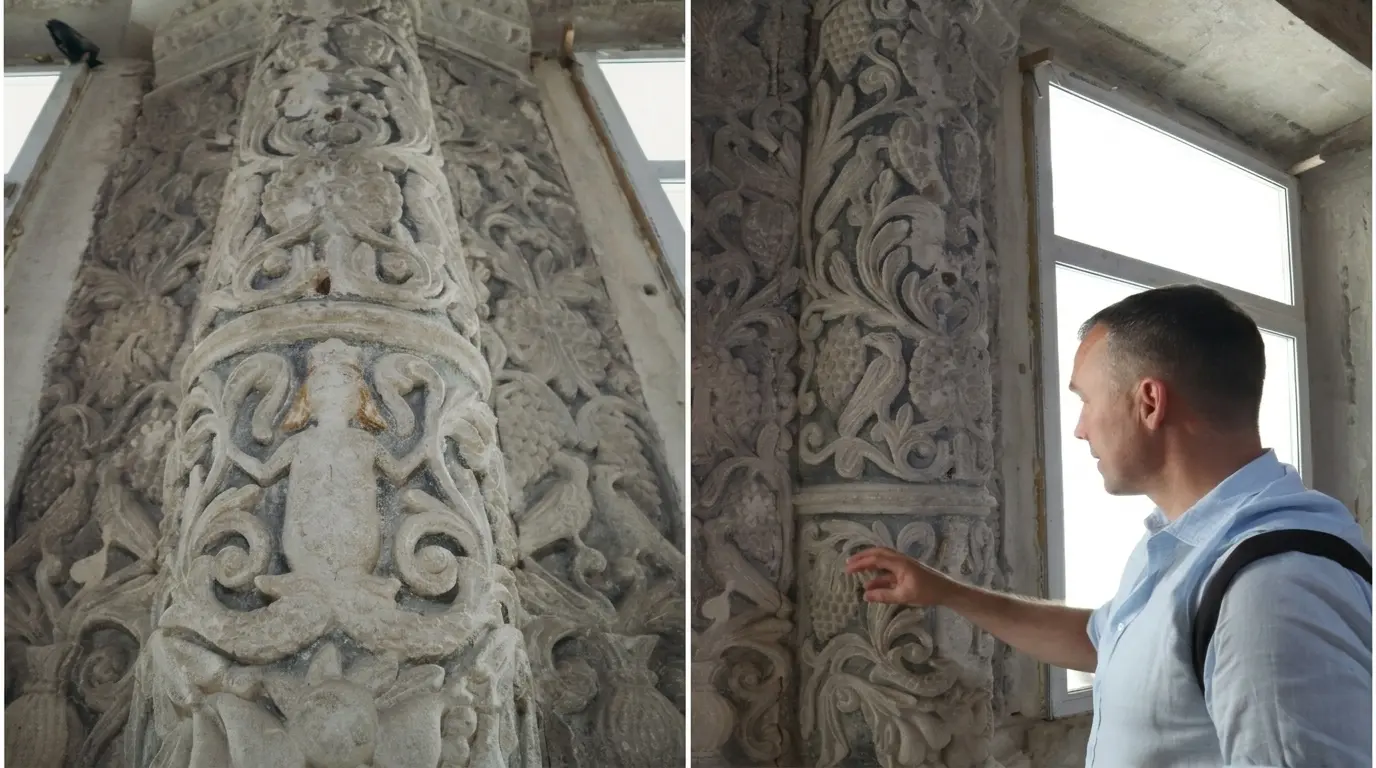
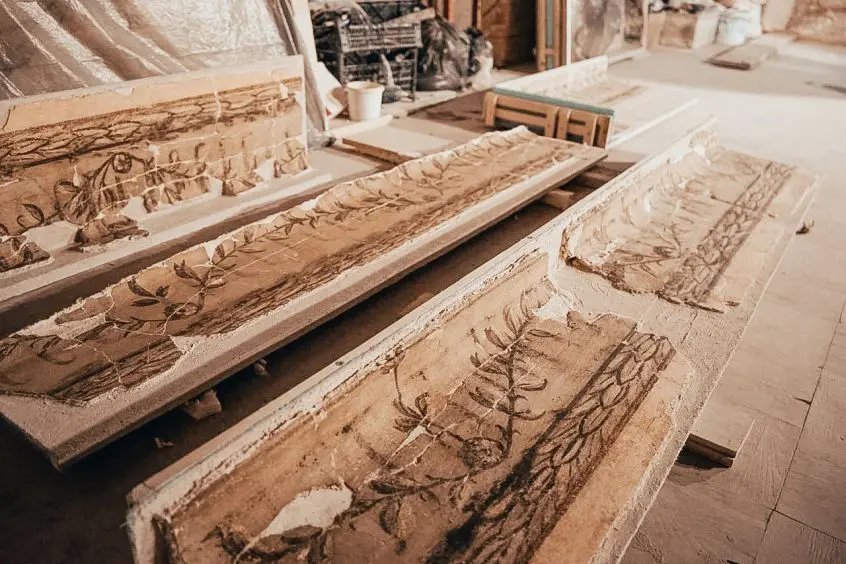
To access the original Renaissance beams from 1654, the later layer of paintings was carefully separated and transferred to a new mobile base using the Italian stacco/strappo technology. Additionally, restorers uncovered a 17th-century column bearing a colored image of Melusine, a mythical spirit of fresh water.
How to get to the tour
Together with the development bureau "Houses and People," it is planned to create an open cultural space, a lapidarium, and an interactive digital tour here in the future. In the meantime, Lviv residents have the opportunity to see everything with their own eyes during exclusive viewings.
When: September 11–12, from 12:00 to 13:30.
Guide: Oleksiy Kyrylyshyn, co-founder of "Houses and People" bureau and initiator of the monument's restoration.
Admission: free, but with mandatory pre-registration.
The registration form for the European Heritage Days events will be available in early September.
We remind you that on the facade elements of the house, under special lighting, traces of lost rosettes and metopes, removed during the reconstruction in the 18th century, can still be seen. On one of the central ceiling beams, an ancient Latin protective prayer "BENEDIK DOMINE … HABITATIONEM ISTAM" ("Bless, Lord, this dwelling") has been preserved, and some of the restorers and specialists who studied the building are now defending Ukraine in the ranks of the Armed Forces of Ukraine with weapons in hand.

Related News