Sausages, chips, and soft drinks: how favorite foods provoke diabetes and hypertension
22 July 2026, 12:15
22 July 2026, 12:15
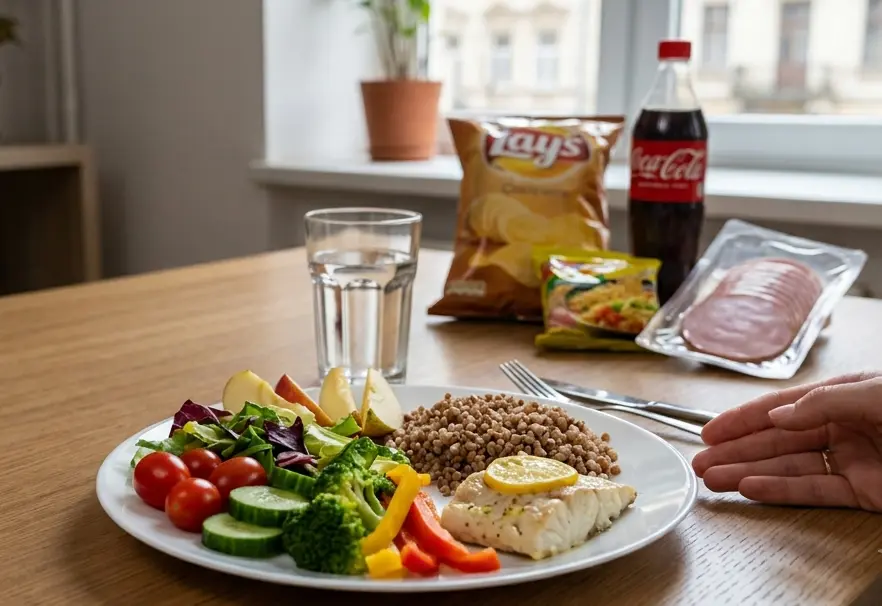
Chips, carbonated water, sausages, instant noodles, and packaged snacks have long become a familiar part of the diet of many Lviv residents. However, specialists from the Lviv Regional Center for Disease Control and Prevention of the Ministry of Health of Ukraine warn: these are ultra-processed foods, consumption of which the World Health Organization (WHO) strongly recommends limiting.
What are ultra-processed foods and why are they dangerous
Ultra-processed foods are industrially produced foods that contain a significant amount of additives: colorings, flavorings, taste enhancers, emulsifiers, and preservatives.
Their composition usually contains too much sugar, salt, calories, and saturated fats, but tragically lacks vitamins, minerals, and fiber. Regular and excessive consumption of such food significantly increases the risks of developing a number of non-communicable diseases:
obesity and type 2 diabetes;
cardiovascular diseases;
arterial hypertension.
Hidden salt and "invisible" sugar: what norms should be remembered
Experts note that the greatest danger of ultra-processed foods lies in their disguised components:
Salt (up to 5 g per day for an adult - about 1 tsp): we get most of this norm inadvertently - from store-bought sauces, cheeses, sausages, snacks, and ready meals, not just from the salt shaker on the table.
Added sugar (up to 25 g per day - about 6 tsp): a significant amount of it is "hidden" in sweet carbonated water, store-bought yogurts with fillings, ready-made breakfasts, and sauces.
How to improve your daily diet
Specialists advise using the simple "Healthy Eating Plate" principle as a guide:
½ plate - vegetables and fruits (at least 400 g per day);
¼ plate - whole grain products (buckwheat, oatmeal, brown rice, bulgur, whole grain bread or durum wheat pasta);
¼ plate - healthy protein (fish, legumes, eggs, lean meat).
We remind you that you can learn healthy habits on the state platform "ZnaYemó".
In addition, specialists from the Lviv Regional Center for Disease Control and Prevention remind that they conduct laboratory research on the quality and safety of food products. More details about this can be found on the official website of the Center.

Related News