How Ukraine Can Win the Economic and Resource War: An Interview with a Former Economy Minister and Military Officer
07 October, 17:03
07 October, 17:03
Productivity instead of myths. How to win when the enemy is four times larger
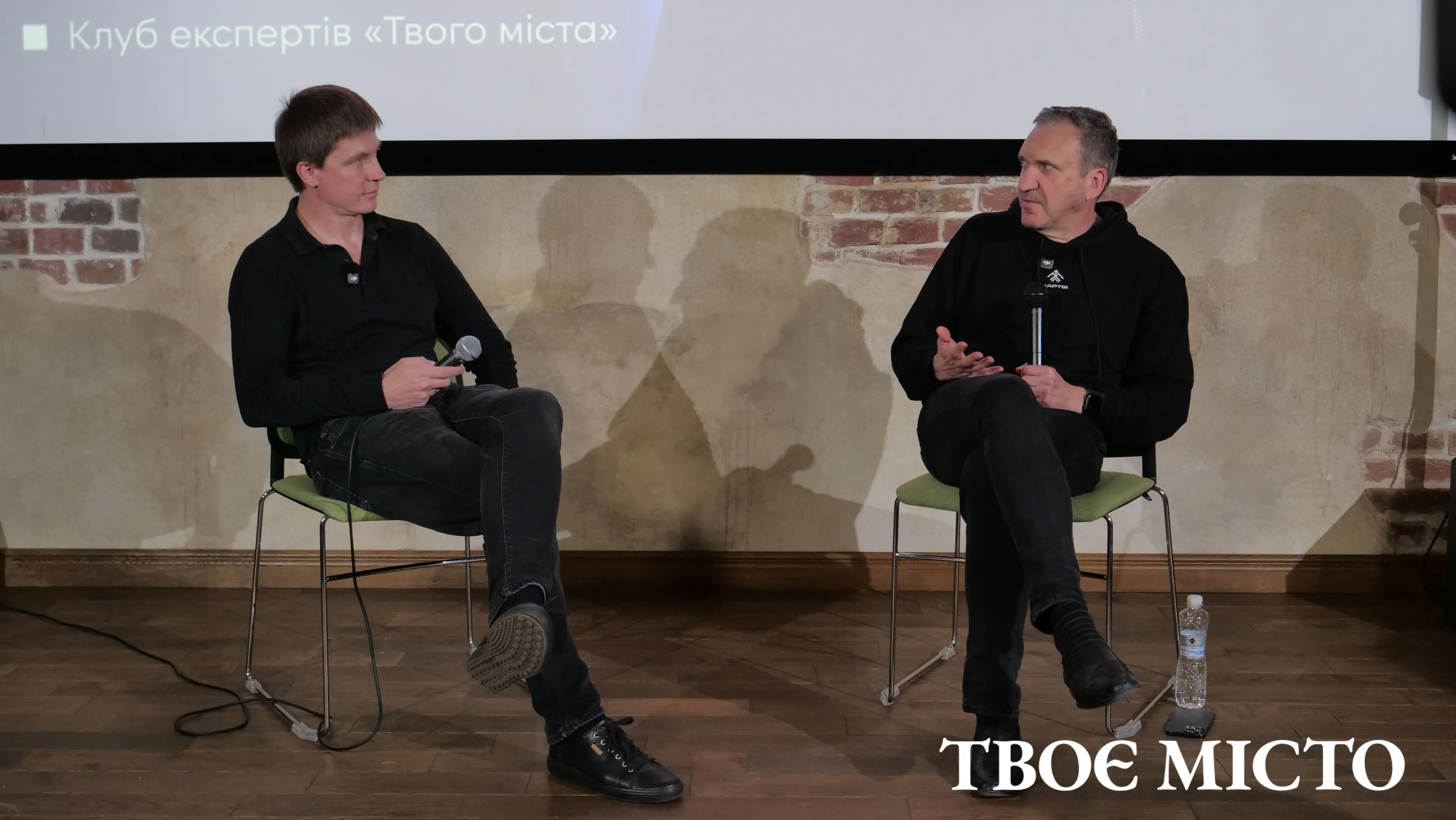
Pavlo, how should I introduce you – Professor, economist, minister, officer?
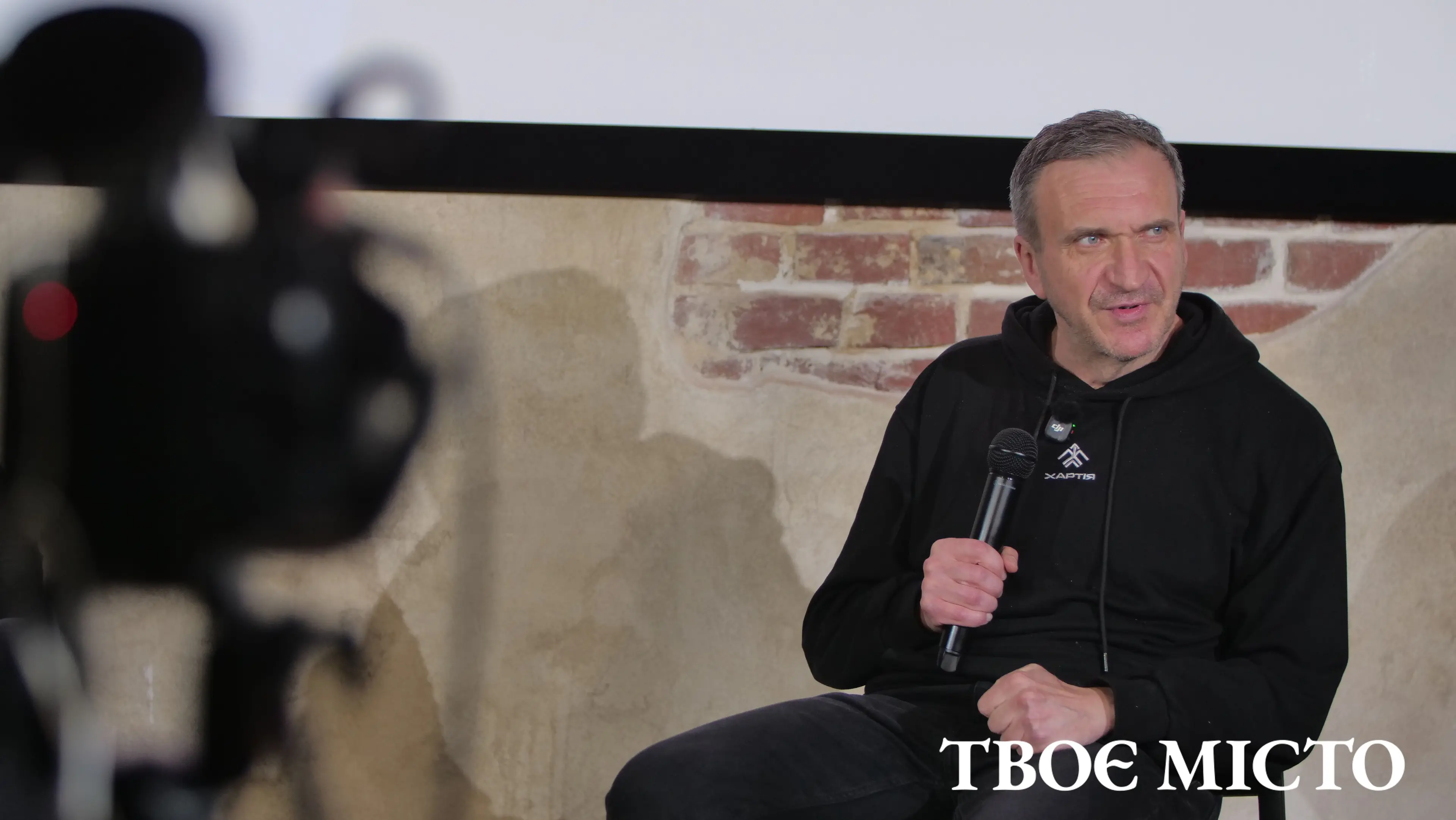
All of the above. By the way, just at a meeting at Lviv Polytechnic, we learned about our commander Ihor Obolenskyi being awarded the rank of brigadier general – it's a great honor.
Today, we will talk about the unity of economics and defense. Recently, a well-known Lviv entrepreneur told me about his company's multi-million hryvnia losses due to a strike on a warehouse, but a few minutes later, he mentioned that requests for support from the military to businesses are only growing, and despite everything, businesses must continue to bear this burden. His son, a Hero of Ukraine, is currently fighting. At the same time, in the corridors of world politics and even in Kyiv kitchens, there are discussions about peace because we are four times smaller than the enemy. In one recent podcast, you explained that the size of a country doesn't always matter... What's the balance there?
Before the full-scale war, Ukraine's population was 30% relative to the enemy's; in 2025, it will be 25%. The ratio is bad, but not fatal. For example, Israel's population is only 11% of Iran's, yet Israel's non-oil GDP is 127% of Iran's oil-producing GDP.
Another example: the population of Singapore is 17% of Malaysia's, but its non-oil GDP equals 117% of Malaysia's. Israel and Singapore are simply much more productive. Despite having a smaller population, Singapore's military budget Singapore is larger than Malaysia's. With budget surpluses, they buy not old fighter jets, but modern F-35s and European air defense systems. Malaysia simply lacks the resources to wage war on Singapore, although they once expelled it from the federation, expecting it to crawl back on its knees.
We currently have 25% of the population and 8% of the GDP relative to Russia (before the war, it was 30% and 12%). The enemy's advantage is enormous, but it's not a dead end. Similar experiences of other countries mobilize us to think about how to work more innovatively. Ukraine today is a typical "work in progress." We will have to abandon the agro-romantic myths about "a cherry orchard by the cottage." Some complain that the IMF and the World Bank underestimate our productivity, but statistics are objective. Mythology about one's own exceptionalism exists everywhere, but it's time for us to put it aside and seek truly productive solutions in these difficult conditions.
"The short leash effect." Why is the West only funding us for reforms?
You say productivity solves everything. What about the Russian Federation and the EU? Russia has a GDP comparable to Italy's. Why is Europe still afraid of Russia if it is significantly less productive?
Russia's GDP is on par with that of a single US state, Texas. But let's be realistic: it has not declared war on Europe. The EU economy is significantly stronger than Russia's, but the problem lies with nuclear weapons and the attitudes of Europeans themselves. Madrid, in general, does not want to pay 2% to NATO, believing that the war is far away and they are only concerned with North Africa.
Regarding support: our official GDP is over 200 billion dollars. 45 billion euros in annual aid from the EU is over 20% of our economy. A quarter of everything around us has been gifted. This is aid of "biblical proportions" (for comparison, before the war, we received 1-2 billion). At the same time, six EU countries are already demanding a radical reduction in the European budget because they can't afford it. Marine Le Pen promises to cut support for Ukraine if she wins in France. 45 billion is not pocket change for Europeans.
I advise state organizations and communities to use the available funds this year, as they might not be there next year. To receive new EU tranches, real reforms and unpopular steps will have to be taken.
So, will the West continue to use the "toothpaste tube principle"?
We should prepare not for a mythical peace in "2-3 weeks," but act according to NATO doctrine, which considers the most likely and worst-case scenarios of the enemy's actions. My family and I are also practicing "what if" algorithms to understand where to live and what supplies to stock. In February-March 2022, the nation was monolithic – it seemed even corruption didn't exist then. The golden toilets appeared later.
Decentralization as a means of survival
Describe the most dangerous scenario that could face us in the near future?
Don't put me in the role of a harbinger of bad news! Among the dangers, for example, are strikes on bridges across the Dnipro. They will be partially replaced by ferries, but it's difficult. The main answer to all infrastructure threats is decentralization. Like internet providers: if the market were held by 2-3 monopolists, the country could easily be disconnected with two or three strikes, but a decentralized network saves us.
It's the same with fuel: when large oil depots were bombed in 2022, the networks (WOG, OKKO) switched to delivering fuel directly from Europe to gas stations by tanker trucks. Decentralization loses in economic scaling but offers a chance for survival. Everything needs to be distributed.
Regarding the front: I serve in the headquarters of a corps fighting in the Kharkiv region. The enemy is advancing minimally in Donbas, but at a terrible cost (the CIA director estimates the lifespan of their soldier at 35 minutes). We operate in a targeted manner, preserving our people. However, due to the total use of drones and thermal imagers, a 30-kilometer dead zone has formed. Any thermal signature is visible on the screens in the headquarters – down to a roe deer. Without perfect camouflage, no one can move in this zone now: neither we nor they. These are the current realities.
Innovations in the numerator. How to reduce army bureaucracy
Let's talk about the pains of our economy, without which defense cannot be built. The enemy is trying to divide the economy and defense informationally; business is suffering, and logistics are being destroyed. You say our victory depends on productivity. The Prime Minister is currently talking about a budget deficit. I recall that once at the Lviv Business School, you taught us: "There is enough money in the world; it's under your feet; you just need to know how to pick it up." Where can we look for these resources now before a difficult winter?
The resource is available. There are two factors of internal resources: productivity (the "numerator", where much more can be done) and cost optimization (our "denominator").
For example, in coffee shops near our locations in Kyiv and Kharkiv, mono QR codes were placed at the bar. Now, the barista doesn't just state the price but asks to scan the code, which immediately offers to leave a tip. If you don't leave one, they won't like you (and buying food where you're not liked is a bad idea). I choose 10%. Part goes to Monobank. Nothing has changed: the same coffee that cost 60 hryvnias now costs 66 hryvnias with a tip, out of thin air! You feel good, the barista smiles. This is an element of the Blue Ocean Strategy: relieve pain points and add services to get more money (this is our "numerator"). So: optimization in the denominator, innovation in the numerator.
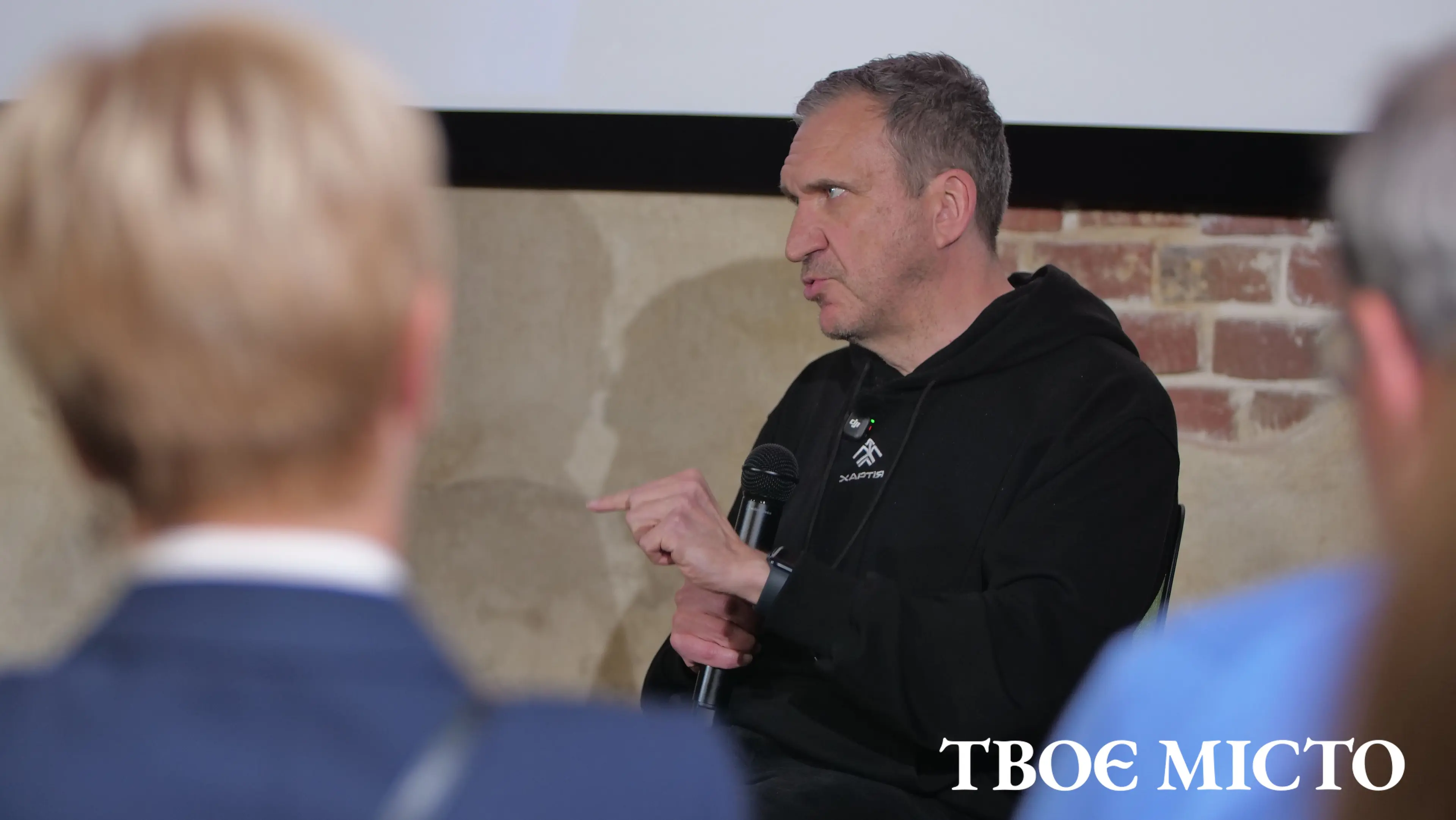
There are also many opportunities to reduce expenses in the army. I am grateful to "Khartia" for asking how I could be used productively – few people do that. When I was waiting for a transfer in another city in Ukraine, a senior lieutenant asked me: "Pavlo Mykhailovych, can you fill out the personnel accounting log? Please rewrite yesterday's page with today's date." We ask for money from Europe, and Sheremet sits and rewrites a page about those who are on leave or AWOL! And the main requirement is to write only in black ink. One colleague even advised: "Why do you need Kharkiv? Stay in the rear, rewrite the log in relative peace."
However, adopting NATO standards is a culture and philosophy. In our case, G1 service is personnel management, not "personnel lists." Why do commanders avoid NATO procedures? Because it means taking responsibility. School doesn't teach us this. On Teacher's Day, we sing "My Teacher, World Star." What critical thinking is there if the teacher is the absolute holder of Truth? But on the battlefield, you need to think critically even about how to execute the commander's intent, let alone calculate the enemy's actions.
It's gratifying that the LMR Department of Education has launched an entrepreneurship course in 45 schools using Mykola Viknyanskyi's manuals. This is a breakthrough! Teachers initially asked: "And what is the correct answer in the case study?" But there isn't one, there are different options for action!
But honestly, a strong competitor boosts productivity the most. Our productivity is stimulated by the "second army of the world." Over the last six months, they have shown themselves quite well with reactive UAVs. To withstand such an enemy, we are forced to be productive: "No, I will no longer rewrite that log."
Songapur model: total defense, competition, and Asian industriousness
And who should be a competitor for the state, spurring us to become more productive?
The remaining 199 countries. Poland, Romania, Singapore or Germany. Their higher productivity is achieved through strong competition. We need more foreign business. Remember the resistance to IKEA, Ryanair, Wizz Air entering the market – the argument being that we need to "protect our own." The owners of the Nord refrigerator factory, being deputies, stood in my reception room and shouted that I was destroying their industry. At the local level, it's the same: large chain retailers complain that they are not allowed into some district centers because the local grocery store is registered to the wife of the district administration head. Competition with global players is not liked by anyone.
This is a matter of economic freedom. Before the war, Ukraine ranked 130th, and while Russia was slightly higher, its economy was non-innovative. It's shameful to lose even to them.
Where do investments come from? The Minister of Finance says: "Support from the West." No! They come from domestic savings. Foreign investments worldwide account for only 1-3% of all investments. The global savings rate is 25-27% of GDP. Germany and the Czech Republic save about 30%, Poland – 22%, China – 45%. In 2024, Ukraine saved 11%, while Singapore – 35-37% (and it's from this surplus that they buy F-35s). When delegations talk about building industrial parks, they don't understand that the main thing is the availability of these trillions in savings. It doesn't matter where they go: into industrial parks or kiosks.
Remember the lamentations in 2022: "We had no savings!" Because we spent everything immediately. And whose fault is that? The Germans, who saved for years? Once, an AI audit of my reputation showed peaks of hate. It turned out to be a reaction to my words that Ukrainians should save for their own pensions. I was written: "We pay current pensioners, so why won't we have pensions? It's unfair!" But who told you the world is fair?
We lived for 23 years in a comfort zone of rules guaranteed by the USA. Former Polish Prime Minister Jan Krzysztof Bielecki marveled that the internet still worked in our country. I explained: "Because it's decentralized." He replied: "I always tell my people – decentralize everything!" When Hroysman and I promoted decentralization in 2014, Prime Minister Arseniy Yatsenyuk feared that "everything would be stolen."
Some of our economists scare us by saying that due to EU requirements, we will have to measure the size of cucumbers. This is Russian propaganda. The worst in the EU in terms of economic freedom is Orbán's Hungary (79th place). If we adopt EU rules, even as poorly as they do, we will rise to 79th place from our 130th! Of course, we'd like to be in the top ten like Estonia.
This is perhaps an ideal case illustrating the influence of economics on politics and security. At a discussion "Your City" about the problems of the Carpathians (from off-roading to the development of the Runa mountain pasture with wind turbines), the head of the relevant Verkhovna Rada committee stated: "This is a consequence of decentralization – too much power was given to communities, which now 'resolve' issues with national parks themselves and cut down forests." The regional administration justifies this: "People are poor, and off-roaders are used to living this way, there's nothing else to do." Meanwhile, our French architect friend wonders: "In France, there has been a single mountain law since 1980 that regulates everything, and its enforcement is monitored by two or three agencies." How can we get out of this situation of constant shifting of responsibility?
Let's go out because we want to live. Our defense forces are strong, but we still need to learn not to steal, not to lie, and to adopt the experience of super-advanced countries like Singapore.
Even a 6% budget deficit in the US is bad, and the bond market is already reacting with rising rates. Clinton's political advisor James Carville once said: 'I used to want to be reincarnated as the Pope or the US President, but now I want to be reincarnated as the bond market because it can bring anything down.' This market stopped Trump's wild tariffs and brought down British Prime Minister Liz Truss in 49 days, who cut taxes but didn't explain who would cover the deficit. Progressives are outraged that the capital market dictates the political system, but if you lack the values to keep the budget balanced, you will inevitably be disciplined by the stock markets.
Another area of their growth is employee engagement. Singaporeans got scared when they measured it at 14% (the global norm for developed countries is 20%). The reason lies in the hierarchical Chinese culture: elders decide everything themselves and don't involve young people. But it's proven that productivity directly depends on engagement. Measure it using Gallup's methodology in your company. Singapore is so concerned about this that it seeks solutions and discusses it at the national news level.
I'll ask more about Singapore, Total Defense, and wolves. You recently said: 'If we are fighting a much larger wolf, we need a pack: it will protect him, and he will fear it.' Are we a strong enough wolf now, and who could be other wolves in the pack for us?
These are related issues. There was a news report on Euronews: Europeans have protected wolves so much that they have started attacking people in Italy. This is a great illustration of Robert Kagan's idea that the jungle is encroaching (even the former Belarusian embassy in Kyiv is already overgrown with thickets!).
In Kipling's poem 'The Law of the Jungle,' there are the words: 'The strength of the Wolf is in the Pack, and the strength of the Pack is in the Wolf.' Our pack now is the Little West (Western Europe and Canada). The Big West (USA) is experimenting for now. Americans need to check for themselves every 100 years that tariffs and protectionism don't work. It sells well to the electorate that didn't study economics, but you can't argue with arithmetic. As long as the Little West doesn't get carried away by right-wing populism, we are strong for them, and they love us.
Thanks to 'Khartiia,' who teach me like crazy: during training at the Bundeswehr Command and Staff College (Clausewitz Campus), German professors and officers asked us: 'Tell us about drones, they are not yet in our doctrines.' And we share our experience! This is where we are strong, as well as our civil society and anti-corruption structures that are taking root. But weak spots – economic freedom, competition, productivity, and savings – need to be urgently improved.
Will we ever be able to build Total Defense like in Singapore?
We need to, and we are already doing it. Singapore is squeezed between Malaysia with 35 million people and Indonesia with 250 million. 42 years ago, preparing for the worst-case scenario, they militarized society, creating the doctrine of Total Defense – from kindergarten to the grave.
It has six dimensions: military, civil, economic, mental, social (cohesion), and cybersecurity. Yevhen Utkin rightly adds the cultural dimension – the Chinese have it, and we need it too. I was most interested in the economic aspect: the emphasis on lifelong learning and continuous skill improvement (working with AI, engagement). This makes a nation competitive and productive, and you don't need the state for it. The fact that you came to this discussion today is direct proof that we are already doing it.
Napoleon's Case and Jazz: How NATO Standards Work in the National Guard
What do you do at 'Khartiia' (questions from the audience from here on)?
I serve in the G7 Training Department of the Corps Headquarters (part of HR). I train officers according to NATO programs: TLP (Troops Leading Procedures) for platoon and company commanders and MDMP (Military Decision Making Process) for battalion and brigade command and staffs. The latter has 7 stages of operational planning. The classes are taught by combat-experienced brothers-in-arms, and I bring something else: I work with culture. Why do commanders learn NATO standards but don't always apply them? Because our management culture opposes it.
Graduates of the Lviv Business School remember the case study from New York University about Robin Hood. It resonates with 'Khartiia' fighters too, as it's an ideal military case study on the functions of a leader and a manager. Recently, a commander told me that he considers Napoleon the greatest military leader in history. And my teachers, Chan Kim and Renée Mauborgne (authors of 'Blue Ocean Strategy'), have just written a superb case study about him for Harvard and INSEAD. We translated it at KShE, and now I teach it to the military. It's ineffective to teach management through lectures – it's only absorbed through participatory methods and case studies.
When I was digging a trench at BZVP, I thought that would be the end of it. That's why I thank 'Khartiia' for asking people about their talents here and finding ways to use them most productively. We are fewer than the enemy, so we must rely on efficiency.
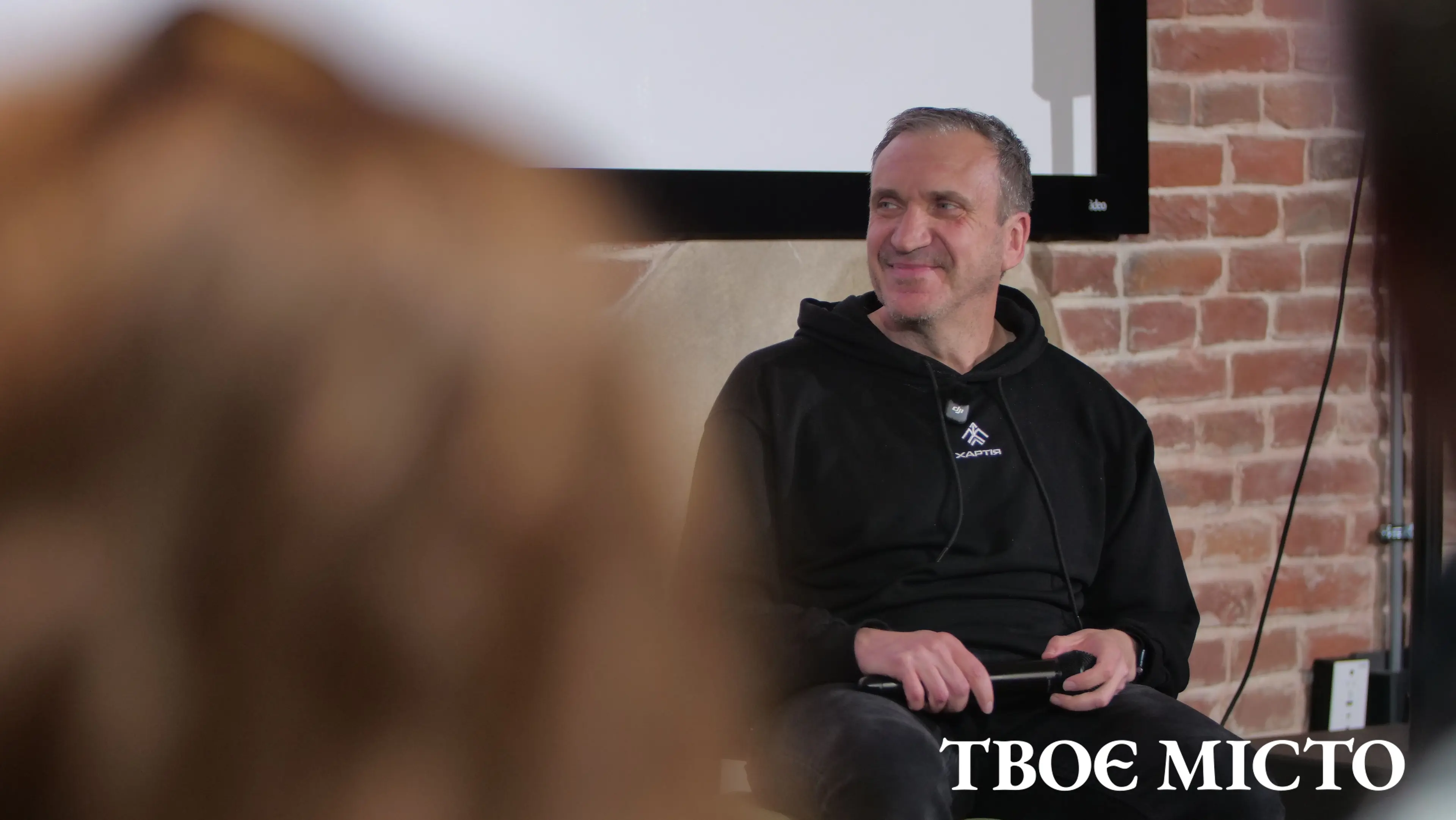
How long did it take to go from digging a trench to effectively using Pavlo Sheremeta in the National Guard?
About a year. The first six months I learned the military alphabet: tactical symbols, coordinates, terrain analysis. Thanks to our commander for his patience. There was a period of adjustment: he, although educated in France and fluent in languages, knew less about what training cases were. I sent him John Kotter's article 'What Leaders Really Do' from HBR. He was delighted and asked me to give a lecture, but I suggested we analyze it practically.
Six months ago, we implemented mission command (the Prussian principle of Auftragstaktik, a common NATO standard). This is when a combat order clearly answers five questions: who, what, where, when, and why. But it doesn't say 'how.' That is decided by the competent subordinate commander on the spot. This is disciplined initiative and complete trust – the complete opposite of the Russian 'initiative is punishable.'
I spontaneously came up with the topic 'Mission Command & Jazz.' In jazz, there is a fixed tonality and tempo, and then there is improvisation. That's how NATO command works. And if we recall that 'Summertime' is a Ukrainian folk song, and the theory of innovation was generally written in Ukraine, then commanders ask: 'So, are we cool?' I say: 'The coolest!' And they say: 'Okay, let's go to war.'
Taking the automotive industry as an example: is Europe coping with the challenges of China's expansion and competition?
This is not only an economic but also a social and cultural challenge that Europe is not yet coping with. Asia is flooding the world with electric vehicles not only because of government support. Fierce internal competition among 200 Chinese manufacturers has brought BYD, Geely, and Zeekr to global leadership, having survived the battle with Tesla.
The main factor is their diligence and thriftiness. Having lived in Asia for 3.5 years, I understood the secret Jack Ma talked about: '9-9-6' (working from 9:00 AM to 9:00 PM six days a week). Although, in the National Guard, we are cooler – we have '8-8-7.' I was recently given three days off per month, and my last real vacation was back in August, but I'm happy.
Another example: we are proud of Nova Poshta and Rozetka. But in South Korea, if you order something before midnight, it is at your door by 7:00 AM, regardless of the region. Which European country is capable of this? And they will have to adapt, because China and India are 3 billion people who already work this way. Europe will hurt. When holidays coincided in France this May, it turned out that half a month could be days off. The Prime Minister tried to cancel one day off, and the French were outraged. I am calmer about the Germans, but the rest of Europe awaits withdrawal. They will have to go through experiments with radicalism and realize: if you want to survive, work more and win with innovation.
True, Asians themselves already understand that they are overworked: their birth rates are falling because they have no time for family. Perhaps they will switch to "9-6-5", but the West must still go through its difficult path.
There is an opinion that Russia cannot be defeated militarily. How do you assess the current state of Russia's economy and is there a chance they won't withstand the war for long?
Economists think in probabilities. The chance that Russia will not withstand this pace is high: their reserves are melting, taxes and inflation are growing. But for them, this is an existential struggle – they cannot afford to lose to Ukraine (the US can, but we cannot). Therefore, they will strain themselves to the last.
We still have room to tighten sanctions, although Europe sometimes backs down (like lifting sanctions against Alisher Usmanov and Mikhail Fridman). But a few Russian drones exploding somewhere at Leipzig Airport will quickly sober everyone up. If the West does not want to fight with its soldiers, it will have to exert economic pressure.
One of your quotes: "Drive the army to the island and burn the bridge. Or put it on the roof and take away the ladder." But who should burn the bridge? We say that Europe or we should do it, but society is still in a warm bath. The authorities communicate with us as if we were children, and the mono-majority will save its own skin, not the state. Who will become the architect of change who wants to win the war, not the elections?
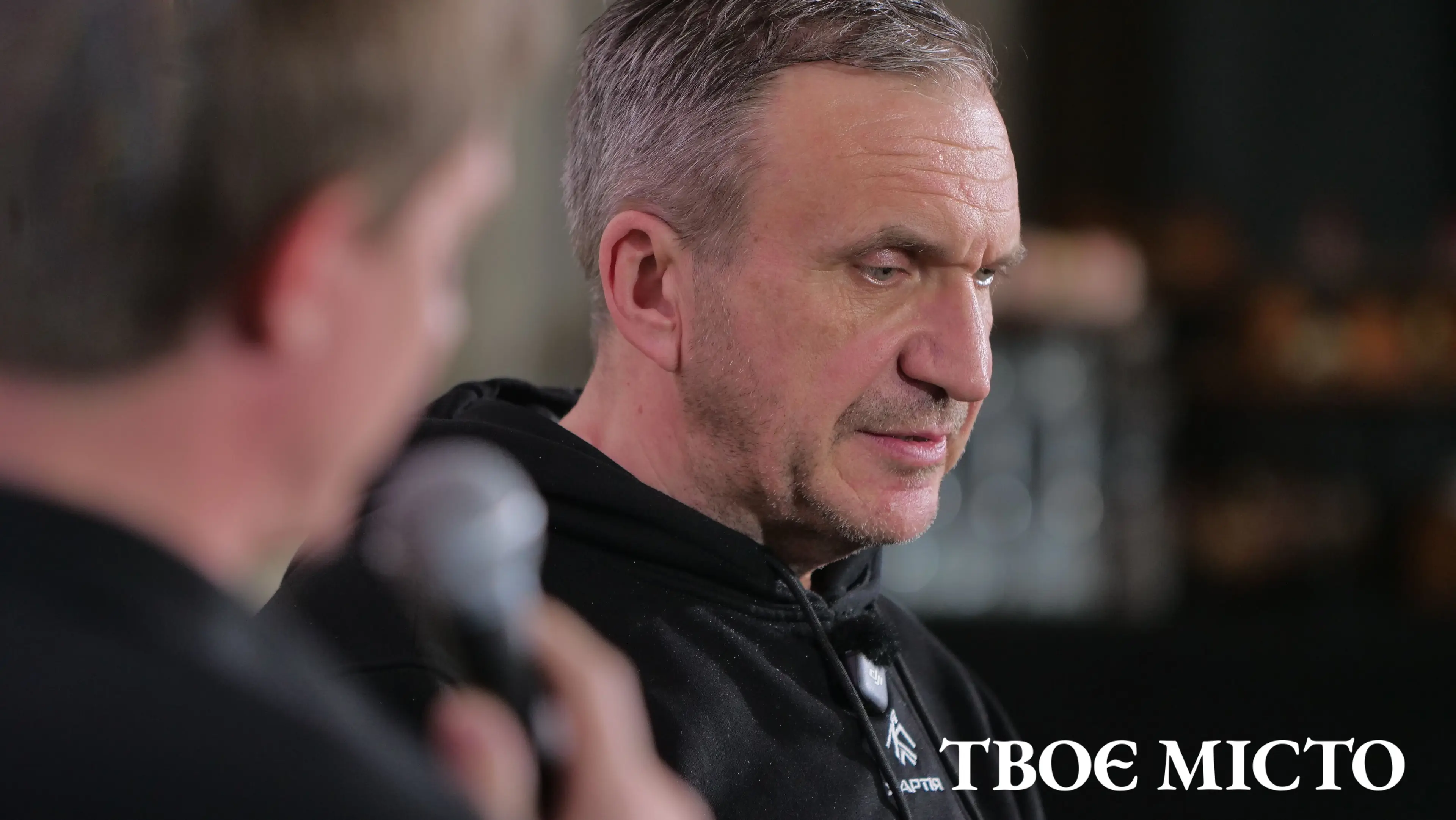
Kyiv is no longer in a warm bath. If other cities still are, realities will quickly catch up with them. There are always reasons for pessimism and optimism, but one must be a realist. Bill Clinton once said: "There is nothing wrong with America that cannot be fixed by the right things that are in it." This formula is perfect for Ukraine.
So far, we have managed to maintain this balance on the bright side, and I believe it will continue. Moreover, there is a medical fact: optimists live 8 years longer. Whining your whole life and living a short life too is an absolute nonsense! It's better to enjoy the sun, do your job, and live a long life. It's a pure win-win!
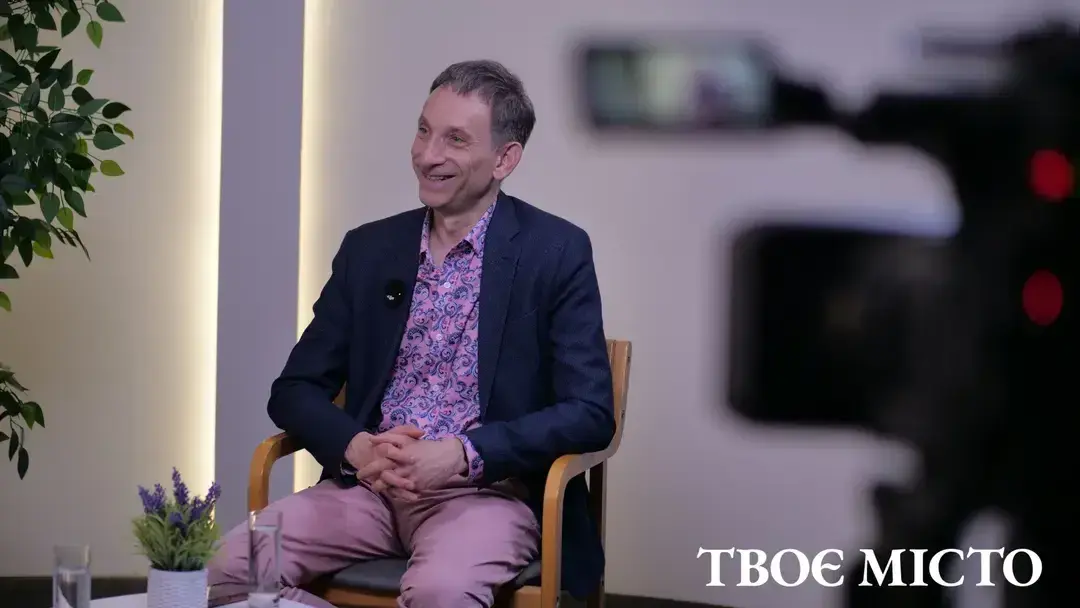
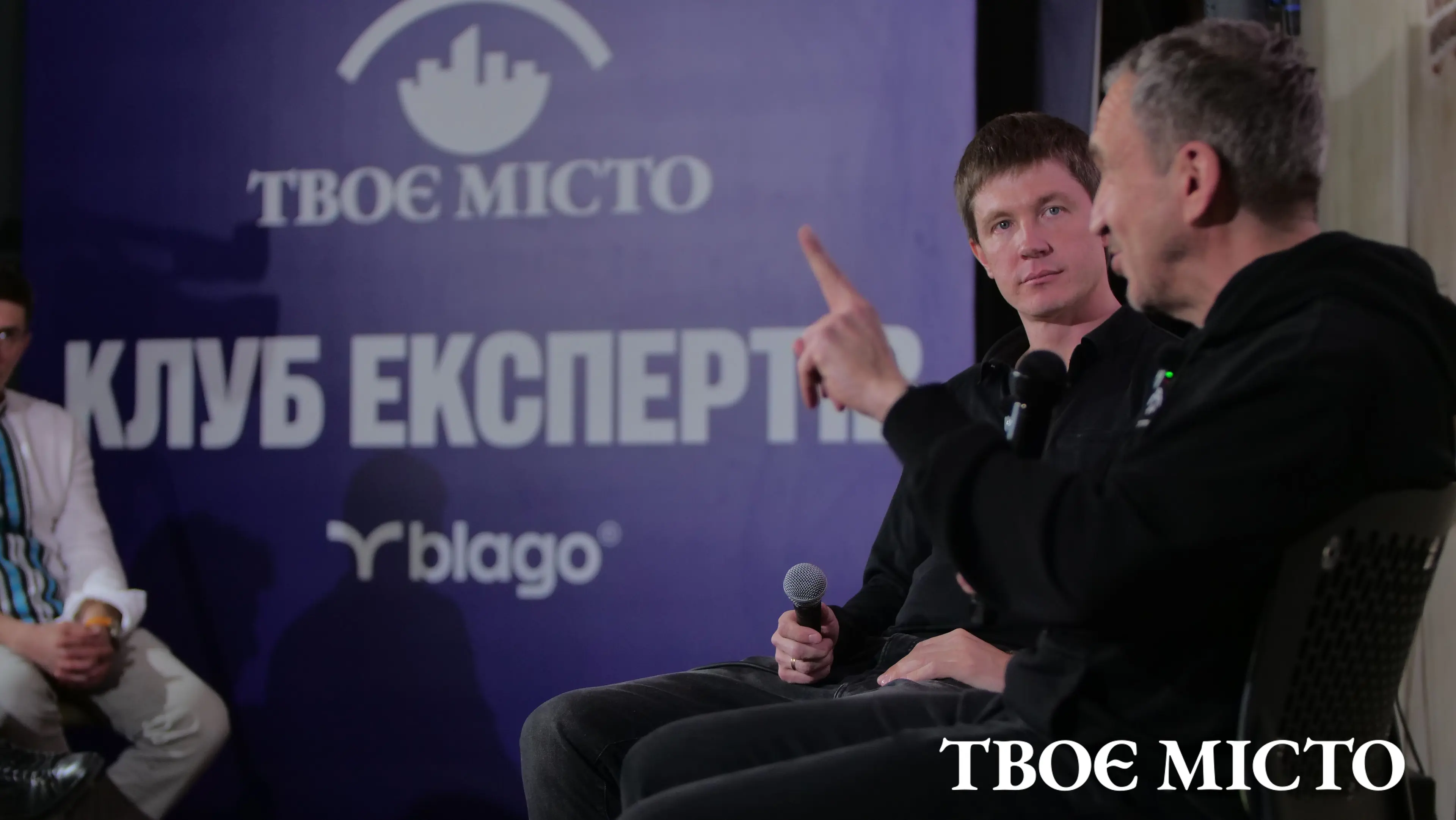
The conversation took place at an offline meeting of the "Expert Club" of your city within the framework of Ukrainian Resilient Week at Lviv's LEM Station. The event was supported by the Robert Bosch Foundation and the company blago.
Moderated by Taras Yatsenko
Full or partial republication of the text without the written consent of the editorial office is prohibited and is considered a copyright infringement.

Related News