An ancient market in the center of Lviv that has survived empires and wars. What will happen to it next?
27 July 2026, 20:00
27 July 2026, 20:00
The reason for the controversial situation was the city council's decision to extend the lease of a 1,933 m² land plot for one year. At the same time, the owners were obliged to prepare a comprehensive market renovation project. The municipality explains this by the need to organize the historical location, while the owners call such conditions "pressure on business".
Why are there so many emotions surrounding this place?
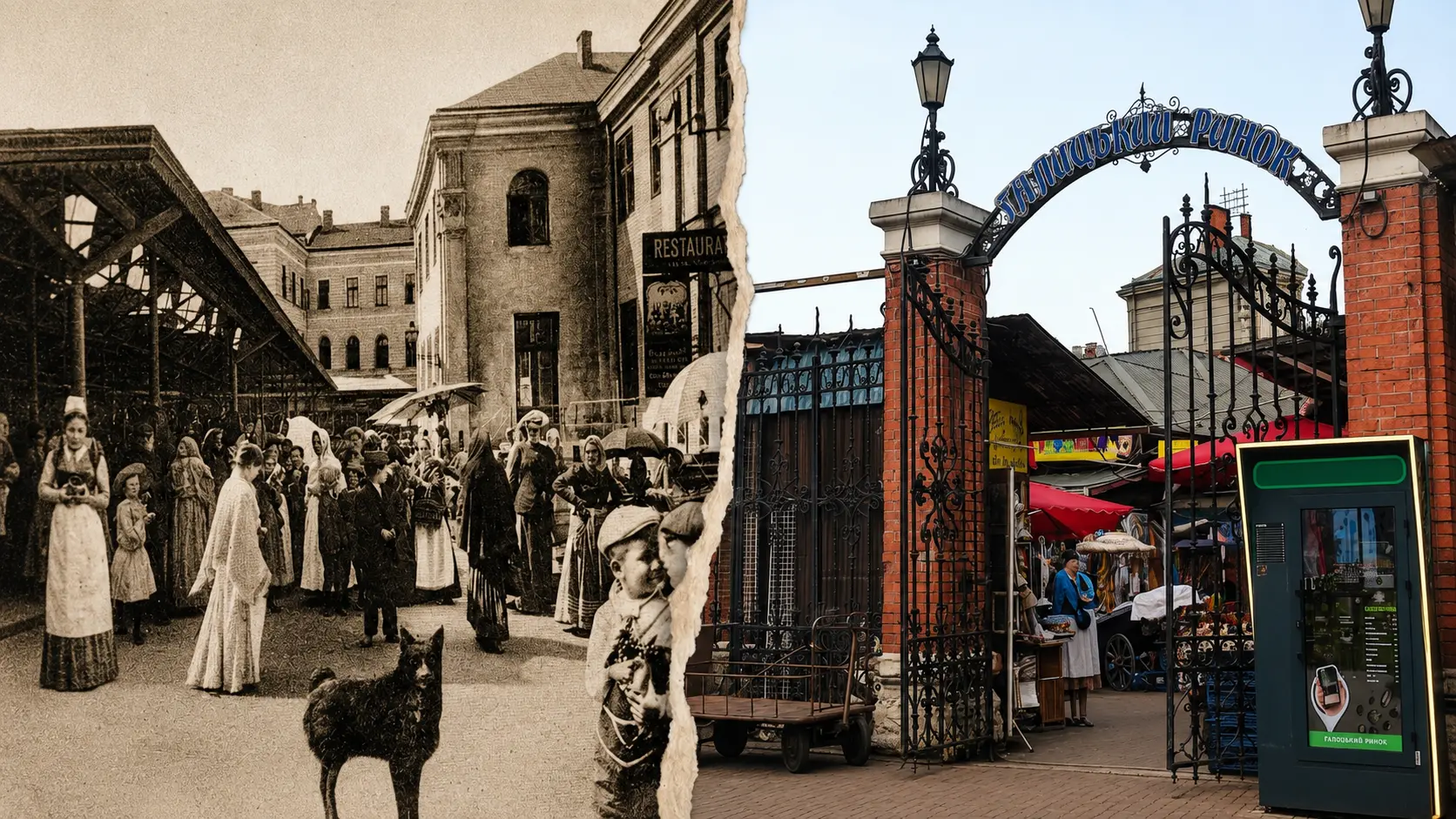
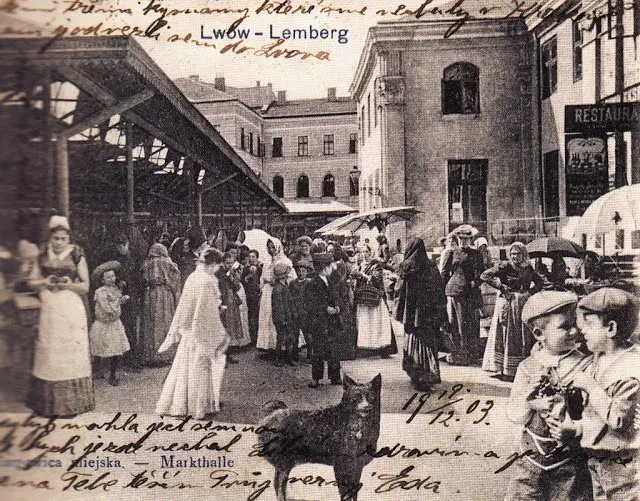
Halytskyi Market has survived Austro-Hungary, Polish rule, the Soviet era, the chaotic 1990s, and now operates during a full-scale war. It is the only historical market in the city center of Lviv that has been functioning continuously for 134 years.
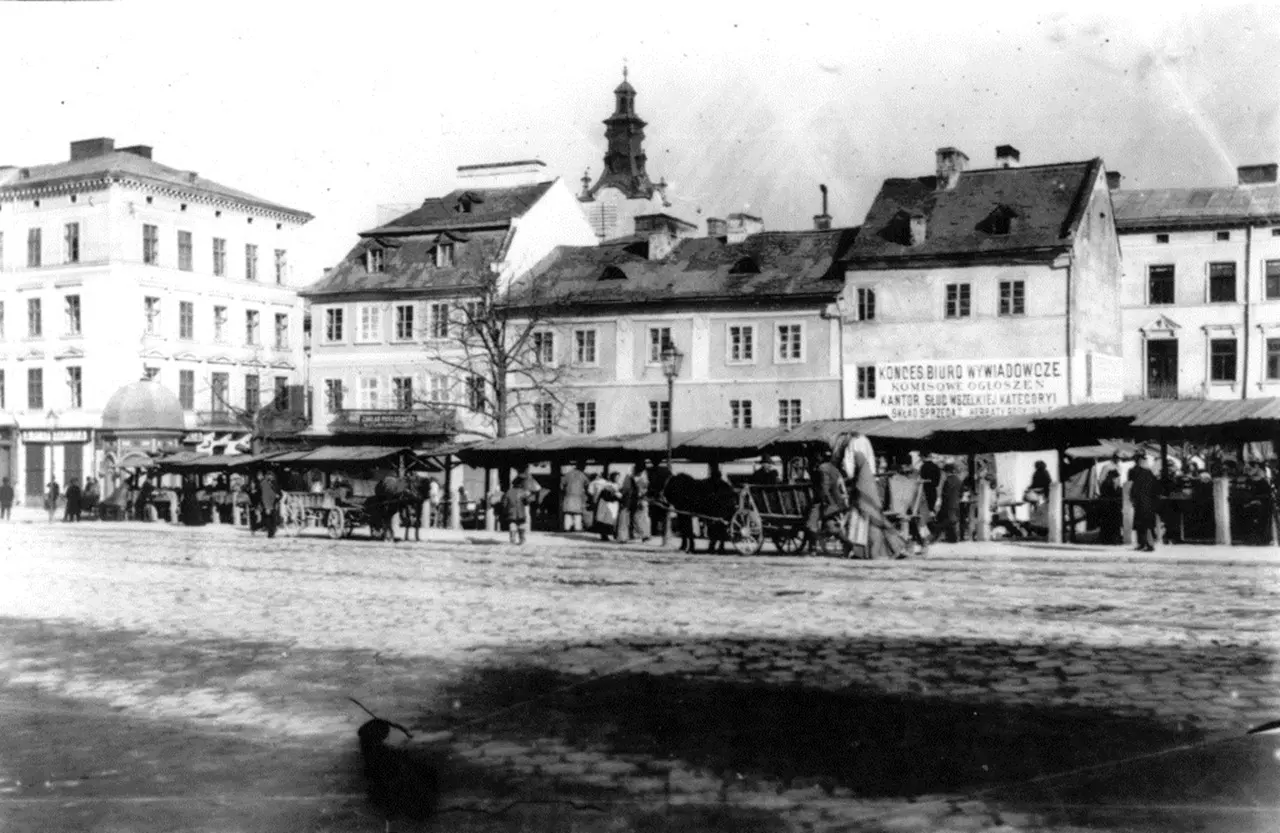
Initially, it was a spontaneous bazaar on the current Halytska Square, where the monument to King Danylo stands today. Trade directly from carts and the ground created dirt, unsanitary conditions, and obstructed traffic in the city center. Therefore, in 1891, the city authorities decided to move the market to a specially equipped area near the Bernardine Monastery – modern Soborna Square.
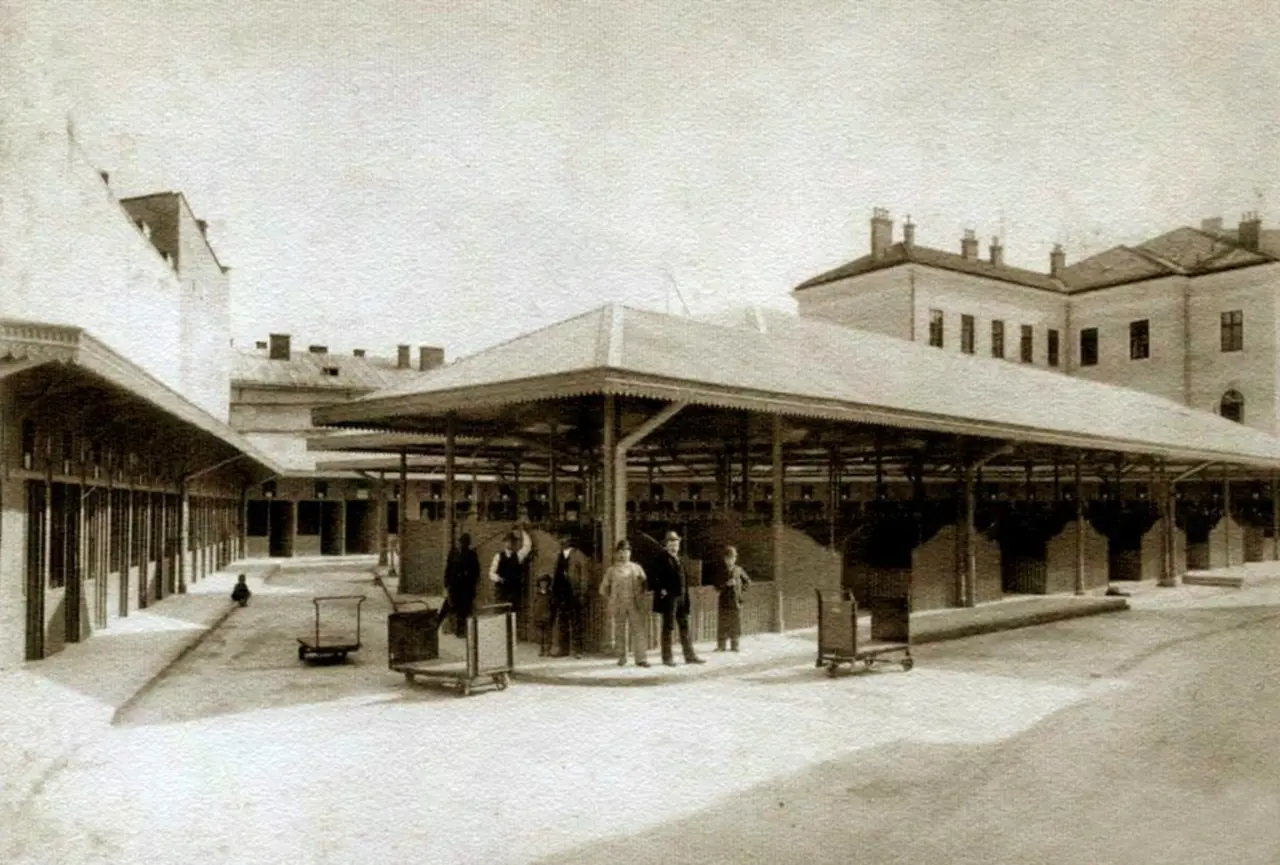
Just two years later, the Viennese firm End & Horn erected a covered pavilion here, which became part of Lviv's large-scale modernization. During the Austrian times, Halytskyi Market was considered one of the most modern in Galicia. It had a cast-iron and glass frame, a water supply, ventilation, refrigeration cellars for meat and fish, and a clear division of trading zones – solutions that were a real innovation for the late 19th century. This is how several generations of Lviv residents remember Halytskyi Market.
Two failed attempts to close
Throughout its history, the market has already been attempted to be liquidated twice. In the late 1990s, the city authorities proposed to close it due to unsanitary conditions and plans for the city center's development. In 2004, the then mayor Lyubomyr Bunyak planned to demolish the pavilions and build a shopping and entertainment center in their place. Both times, the market was saved thanks to protests from sellers and Lviv residents. However, in 2014, the shopping center "Roksólana" was opened next to the market.
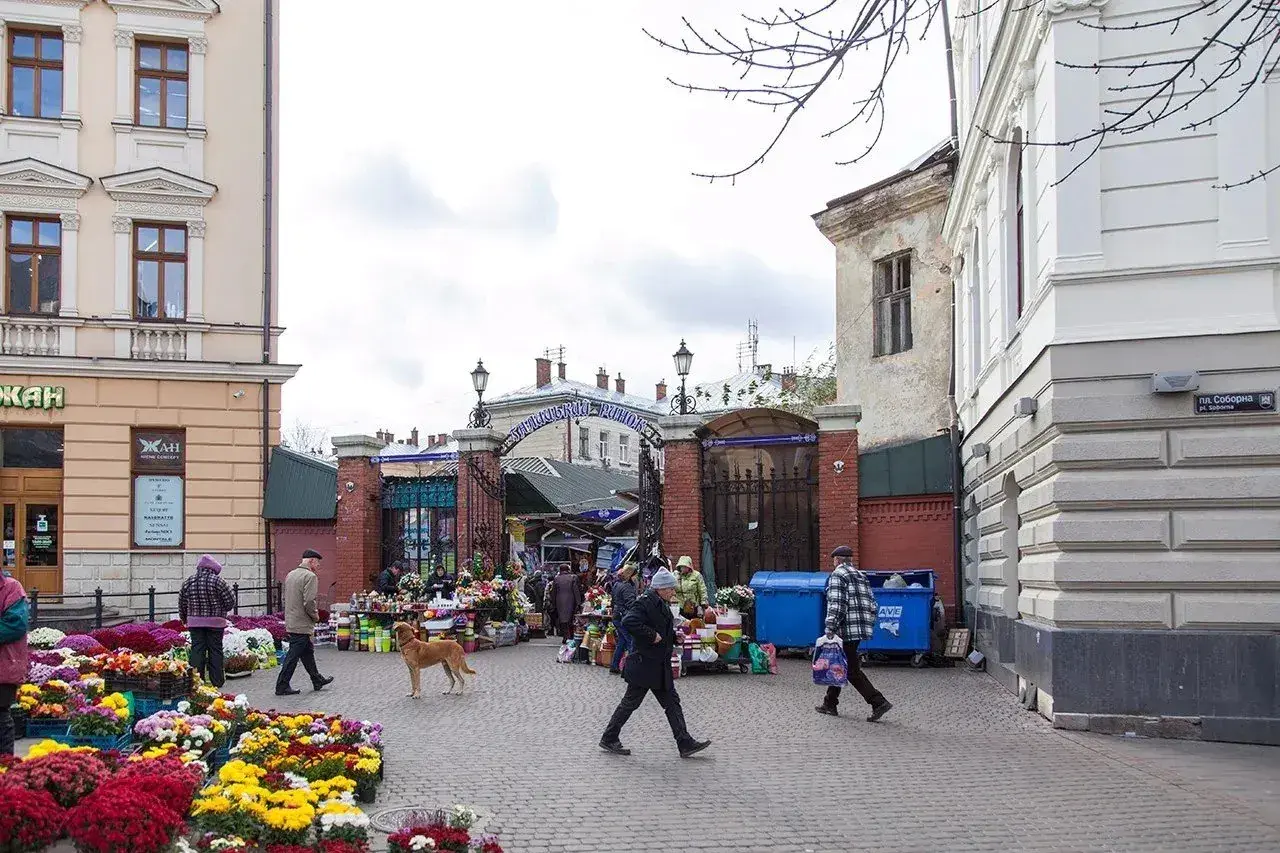
Similar challenges also face historical markets in other European cities. Instead of closure, modernization while preserving the historical function is usually chosen.
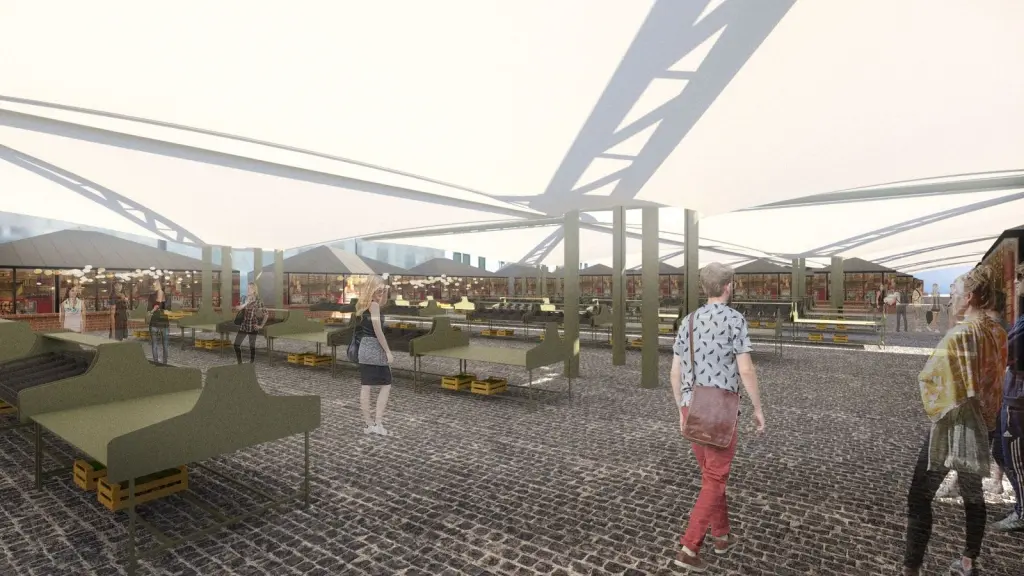
For example, in Krakow, the city authorities are preparing for the reconstruction of the historic Stary Kleparz market. The project includes updating engineering networks, landscaping the territory, and a new roof, but the market itself is to retain its trading function.
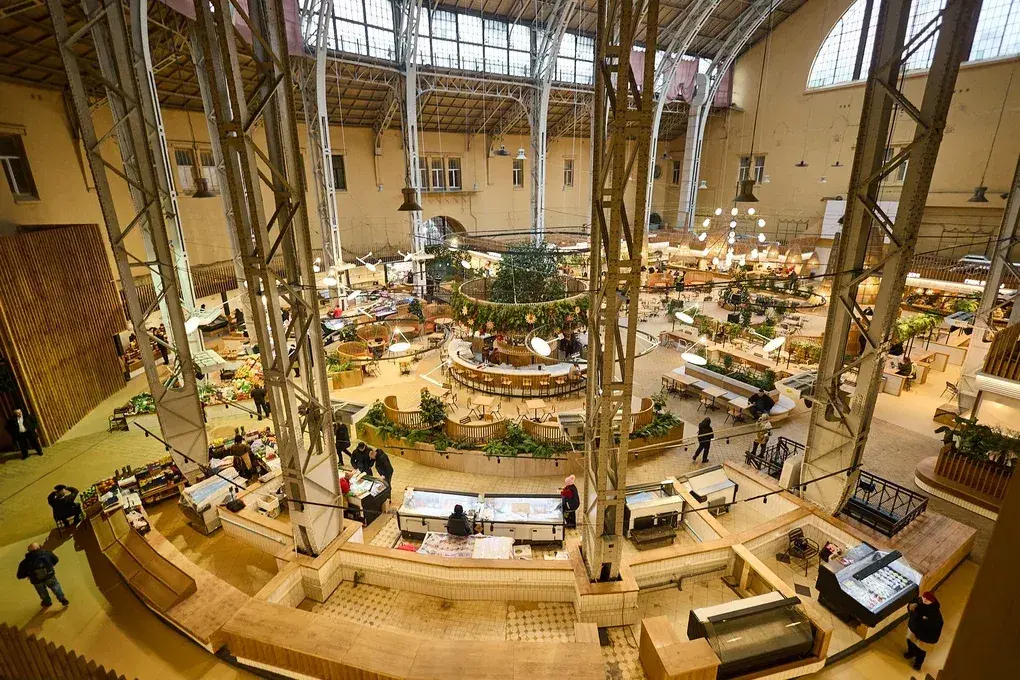
And, for example, Bessarabskyi Market in Kyiv, where repairs were completed last year, now combines traditional traders with a food hall. The estimated investment volume in the renovation of the market, built at the beginning of the 20th century, was about 150 million hryvnias.
What the market looks like today
The problems of Halytskyi Market become noticeable just a few minutes after entering.
The historical pavilion, which was considered one of the most modern in Galicia at the end of the 19th century, today hardly resembles its former self. During the reconstruction in 2005–2007, its open cast-iron and glass frame was hidden behind brick structures, the space was reconfigured, and separate stationary pavilions were equipped instead of open trading rows. Most of the elements that once distinguished the pavilion among the best European markets have disappeared.

We ask Yuriy Putas, co-owner of Halytskyi Market, why this happened.
From the meat pavilion, we head to the rows with manufactured goods. The aisles between the stalls are in places so narrow that two people have to squeeze by sideways. Forget about buyers in wheelchairs. If a fire were to occur here, the situation could be even more complicated: the regulatory width of passage for special equipment should be at least 3.5 meters, while some passages in the market are narrowed to about two.
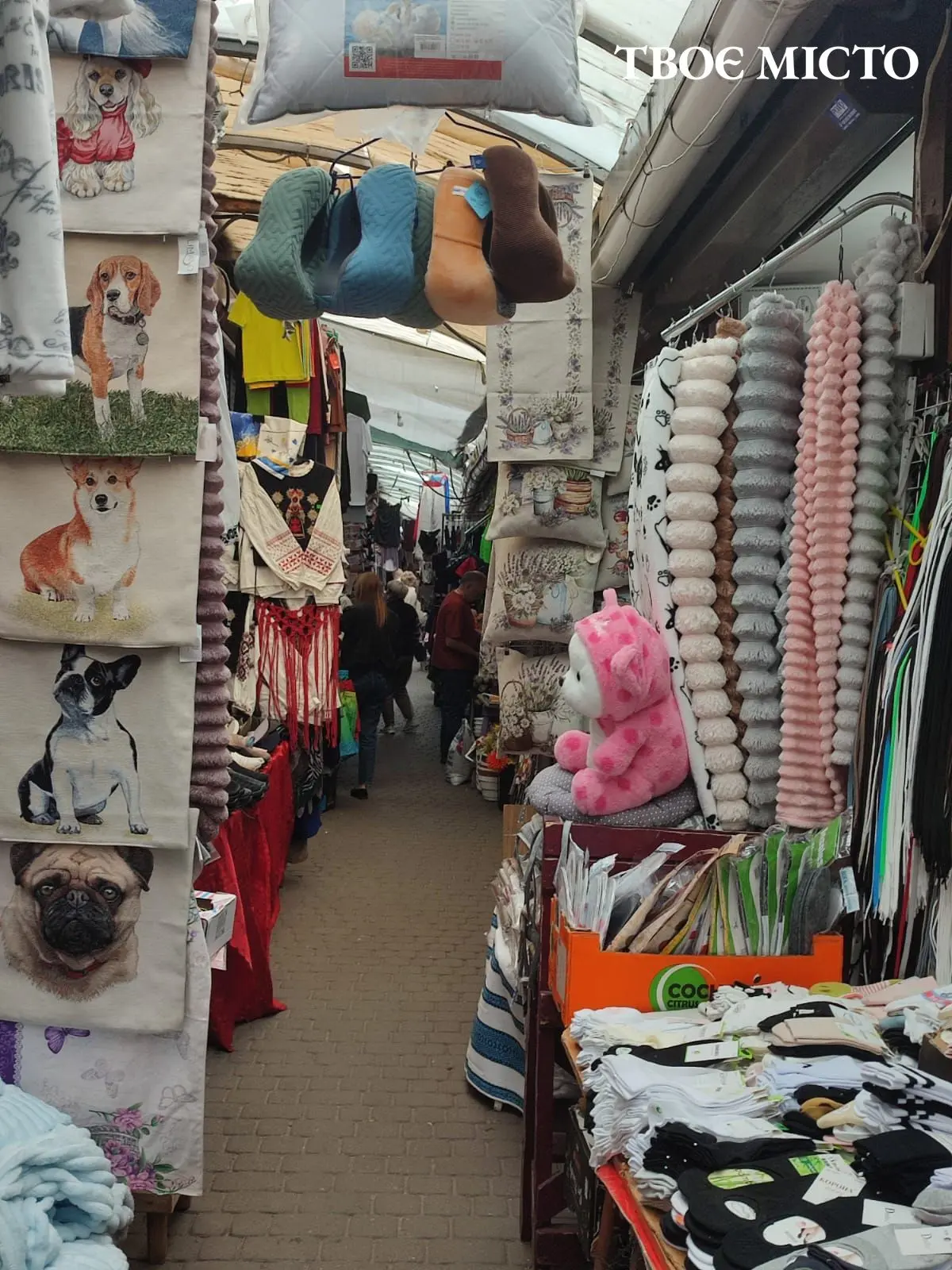
The sellers themselves complain primarily about working conditions. In autumn and winter, it is cold in the open rows, so in severe frosts, some entrepreneurs do not come to trade at all. In summer, the problem is the opposite – it becomes stuffy in the covered pavilion, says a saleswoman, and adds about trade:
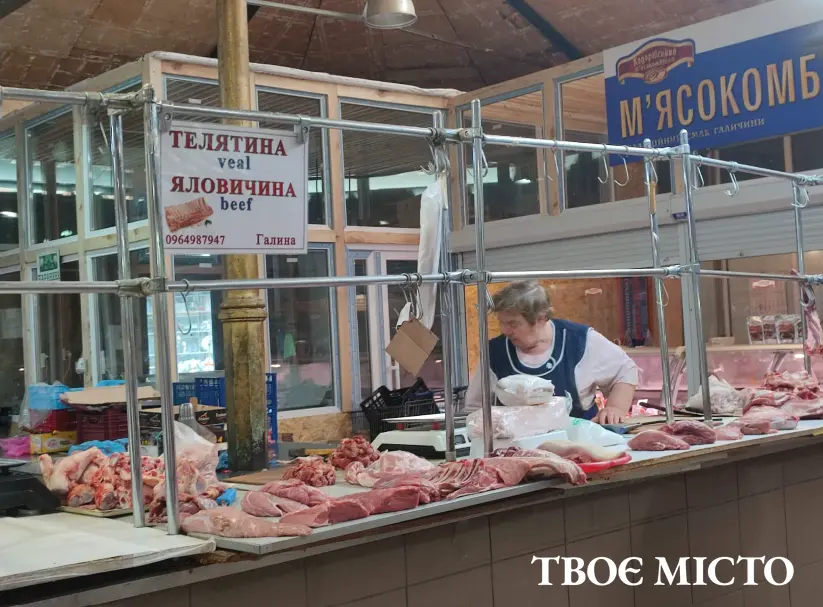
Near the exit, a narrow passage is suddenly blocked by a loader carrying a carcass of meat on a cart. You have to press against the wall to let him pass. There is simply no other route here. The carcass is transported through the open trading area, without protective packaging, inches away from the buyers.
These are precisely the details that best explain why almost no one disputes today that Halytskyi Market needs renovation.
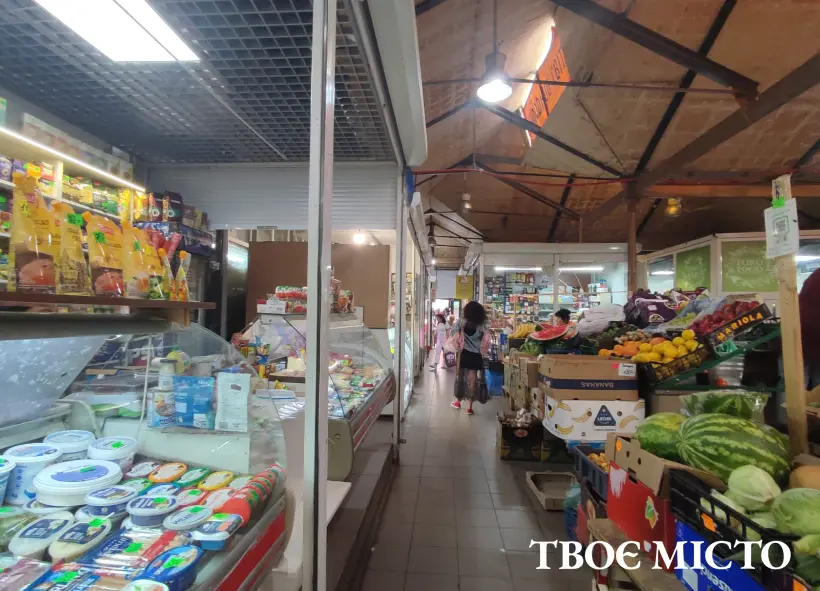
What the market co-owner says
At Halytskyi Market, they say they support changes. However, after applying to the city council this year with a request to extend the land lease for 10 years, they received a one-year contract. At the same time, the resolution obliges the owners to prepare a comprehensive market renovation project during this time – from the reconstruction of trading rows and landscaping, to ensuring accessibility for people with reduced mobility, greening, and updating the external appearance.
Yuriy Putas interprets this as hidden pressure on business from the authorities. At the same time, during the conversation, the co-owner could not answer some questions regarding the market's current operations. In particular, he did not name the number of entrepreneurs working at the market, did not specify how many sellers use the stalls for peasant trade, and did not explain the principle by which individual sellers pay for trading spots. However, Yuriy Putas noted that the market pays about 60,000 UAH in rent for the land plot monthly (720,000 UAH per year).
Yuriy Putas also cited the example of the flower pavilion near the market. Last year, Lviv City Council also granted the right to lease that land plot for a year, although, in the owners' opinion, the contract should have been concluded for ten years. The court of appeal sided with them, but now this decision is being reviewed by the Supreme Court.
According to market lawyers, failure to comply with these demands of the city council may be grounds for further action by the authorities, which could jeopardize the market's closure.
Is this really the case?
Can the city council refuse to extend the lease of the land plot if the entrepreneur owns the market buildings?
The law says it can. But only if there are grounds provided by law, which is confirmed by the Land Code and the Law "On Land Lease."
The first option is if the land is needed by the community for public needs. For example, to widen a road, build a transport interchange, or create a public space. In this case, the law provides for the possibility of purchasing real estate for public needs or its compulsory alienation in cases and procedures defined by law, with prior and full compensation for its value. Such cases are regulated by the Law of Ukraine "On the Alienation of Land Plots and Other Real Estate Located Thereon, Which Are in Private Ownership, for Public Needs or for Reasons of Public Necessity." The Constitution of Ukraine also requires prior and full compensation for the value of property in case of compulsory alienation.
The second option is a change in urban planning documentation. If the general plan or detailed plan of the territory defines a different functional purpose for this territory, for example, defines it as a transport infrastructure or public space territory, the use of the land for a market may contradict the new intended purpose. If the new functional purpose of the territory makes it impossible to further use the land plot in accordance with the urban planning documentation, this may be one of the legal arguments when deciding on the conclusion of a new lease agreement.
However, in the current situation, one of the most realistic grounds could be the owner's failure to fulfill the conditions specified in the city council's resolution, particularly regarding the preparation of the market modernization project; this could be an argument for refusing to conclude a new lease agreement after the current one expires.
In this case, a complex legal situation arises: the market buildings remain private property, but the current right to use the land plot underneath them may not exist. This does not terminate ownership of the buildings, but it creates a legal dispute regarding the further formalization of the right to use the land plot. At the same time, the law proceeds from the principle of the unity of the legal fate of the land plot and the real estate located on it, enshrined, in particular, in Article 120 of the Land Code of Ukraine and Article 377 of the Civil Code of Ukraine.
What do they say at the city council?
The Lviv City Council assures that the decision to grant the land on lease for only one year does not mean an intention to close the Halytskyi Market. The director of the legal department, Helena Payonkevych, in a comment to "Your City" emphasizes that the council, as the owner of the land plot, has the right to determine the lease term independently.
The city council also disagrees with the owners' assertion about the "automatic renewal" of the lease agreement. According to Payonkevych, the legislation changed a few years ago, and now it is not about extending the current contract, but about granting the land plot on lease for a new term.
Regarding concerns about the possible closure of Halytskyi market, the city council emphasizes that the decision about its future operation depends not on the city, but on the owners.
Fear for the future
Despite the city council's assurances, it is the sellers themselves who feel the most uncertainty. For many of them, Halytskyi market has been their only place of work for many years. What they fear most is not the reconstruction itself, but the fact that after it, they might lose their trading spots or be unable to afford the increased rent.
Others worry that after the market's renovation, the rent may significantly increase.
Also, most entrepreneurs refuse to comment openly on the situation. Some ask to contact the market management, while others simply do not want to talk about the conflict.
How Lviv residents see the future of the market
While the city council and owners discuss lease terms, most Lviv residents interviewed by "Tvoe misto" are talking about something else. Almost all of them expressed concern about the possible closure of the Halytskyi market, as well as dissatisfaction with the current practices and excessively high prices there.
Hanna, a resident of the center of Lviv, is convinced that after the renovation, the market should return to its main purpose – to be a place where peasants come to sell their own produce.
At the same time, Iryna from Lviv, who lives nearby and has been coming to Halytskyi market for about 30 years, believes that the reconstruction was long overdue. According to her, the market has lost its historical appearance, and the current trading and safety conditions raise many questions.
Lviv resident Yustyna says that in recent years she has almost stopped going to Halych Market. In her opinion, it has lost not only its convenience but also its historical atmosphere.
Nina lives near the market and remembers the times when peasants came here with their produce. She says that today Halych Market no longer fulfills this role, but she cannot imagine it disappearing.
Historian and archaeologist Mykola Bandrivskyi, who has been researching Lviv's historical heritage for many years, is convinced that the main issue today is no longer the recreation of the Austrian pavilion.
According to him, first and foremost, Halych Market itself must be preserved as a historical place that has been part of the city's life for over a century.
In over 130 years, Halych Market has survived changes of power, closure attempts, large-scale reconstruction, and competition from modern shopping centers. Almost everyone interviewed by "Tvoe Misto" agrees that the market needs renovation. But at the same time, everyone wants it to remain a market after this modernization – a place where people come not only for purchases but also for the atmosphere that generations of Lviv residents remember.
When we leave Halych Market, it lives its usual life. Sellers await customers, and customers slowly walk between the stalls. But it is precisely now being decided what this market will be like in a few years and whether those who came here in their childhood will recognize it.
Full or partial republication of the text without the written consent of the editorial office is prohibited and considered a copyright infringement.
Related News