These mistakes could cost Lviv its future. Lessons from railways in foreign cities that the whole country should take into account

02 November, 21:15
02 November, 21:15
The European Commission presented a comprehensive plan to accelerate the development of high-speed rail connections in the EU. Its goal is to reduce travel time for passengers and expand the network of high-speed long-distance services.
One of the reasons for this decision is the rapid growth of the aviation industry, which is intensifying air pollution in cities and increasing the concentration of greenhouse gases. In this context, high-speed trains, which cover distances in less than three hours, could become an alternative to short-haul flights. At the same time, shifting short trips to rail would allow airlines to focus on long-haul routes and avoid the need to expand airport infrastructure.
The first task is to eliminate "bottlenecks" at borders by 2027 and find opportunities to further increase train speeds, including above 250 km/h. The EU has already approved support for 804 infrastructure projects totaling 34.4 billion euros. The plan also envisages the creation of several transport corridors.
Although Ukraine does not appear to be a priority direction of the initiative, already integrated into the project are Kyiv and Odesa. Lviv is not mentioned separately, but it is located on the routes of two planned corridors: "North Sea – Baltic Sea" and "Baltic Sea – Black Sea – Aegean Sea".
The considerable interest in the EU initiative in Lviv is evidenced by a recent discussion on transport issues, organized by the media hub "Tvoye Misto". Paradoxically, such topics are being discussed during the war, yet delay could be very costly: if Ukraine does not react now, it risks "missing the train" and losing the opportunity to join the program. That is why it is worth studying today the experience of other countries where high-speed railways operate, and assessing what benefits their construction could bring to Lviv.
Stations in the middle of a field: a Chinese lesson
One of the key features of new high-speed main lines is the need for large turning radii and considerable land plots, required for trains traveling at speeds up to 360 km/h. This creates a problem on the approaches to cities, where there are only traditional railway tracks that significantly limit speed.
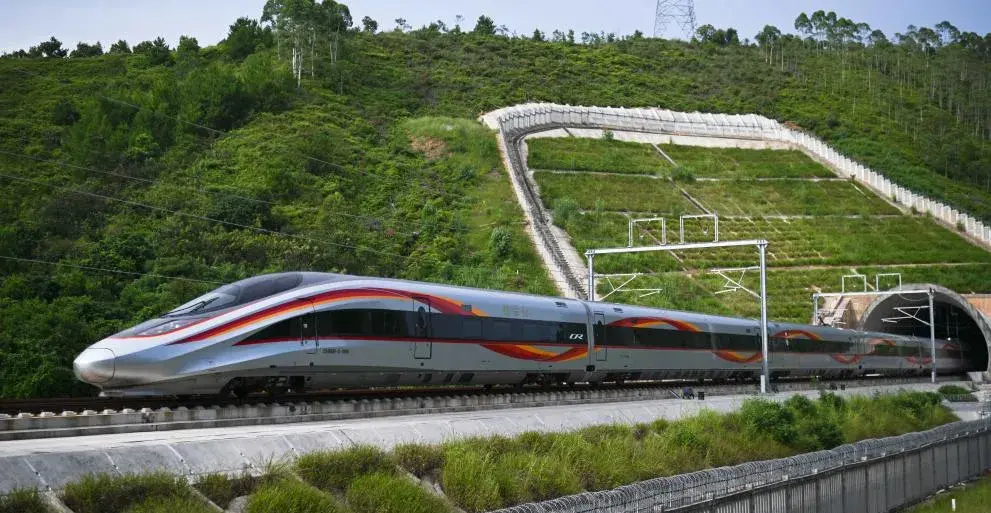
That is precisely why in China new stations are usually built several miles from traditional urban centers. Local authorities deliberately allocate adjacent vacant land for commercial and multi-story residential development, expecting that the new stations will attract business and passengers.
At the same time, developing large station squares, access roads, and metro lines to such remote suburban stations requires billions in investment. When clusters of large cities, such as those in the Yangtze River Delta, merge, they begin to function as a single integrated labor market. This allows workers to move freely between cities. Young professionals value such opportunities and willingly move to regional megacities, causing smaller cities to lose their workforce. For them, this dynamic creates a "suction" effect.
A similar process is occurring with consumer spending. Because local residents can quickly reach a larger neighboring center by train, money that could have remained in local retail and entertainment flows out of the city. This leads to the decline and hollowing out of traditional secondary centers, including historic parts of cities that have considerable value.
If the expected influx of business and new residents does not happen, the city is left with debts for infrastructure but does not receive a corresponding growth in tax revenues. Instead, isolated "ghost stations" may appear on the periphery.
Within an integrated European network, Lviv, despite its size, risks remaining only a secondary city between larger agglomerations – Warsaw and Kyiv.
At the same time, cities that attract visitors with their history or picturesque nature often experience a sharp rise in tourist traffic on weekends thanks to visitors from large metropolises. For Lviv, improved transport links could give impetus not only to tourism but also to other areas, including exhibitions and the creation of amusement parks.

So the Lviv city authorities need to decide: remain a quieter city or become an important hub of a high-speed rail network that will connect Warsaw, Kyiv, Kraków, Odesa, and Wrocław? If it is the second option, one of the key questions will be determining the location for the high-speed train station.
Another important question is the availability of sufficient funding. When it comes to programs involving investments of tens of billions of euros, it is necessary to clarify what opportunities they open and under what conditions they can be implemented. Building new high-speed main lines requires enormous capital investment, so financing mechanisms are of decisive importance. What exactly does the European Commission offer – grants or loans?
At the same time, the question arises whether Europe will have enough long-term financial resources to support such large-scale projects. After all, today it is forced to build up its defense capabilities, finance assistance to Ukraine, and carry out the transition to "green" energy.
The example of Laos is telling in this context. China provided the country with financing for a large-scale infrastructure project, but passenger traffic turned out to be extremely low, and the accumulated debt became an unbearable burden for a small state. This financial dependence became a tool of political pressure, as a result of which Laos effectively turned into a satellite of China.
Lyon won, Le Creusot did not: the French experiment
This example shows that the Chinese model of high-speed rail development cannot be applied everywhere. The experience of France confirms this: its cities are smaller, older, and highly urbanized. Because of this, it is not always possible to build new stations and lay separate tracks. By the way, large French cities are similar to Lviv in many respects.
France began actively developing its TGV high-speed rail network much earlier than China. Historic stations were built here long ago, not far from city centers. That is precisely why the French experience is especially valuable for analyzing the long-term impact of high-speed rail.
As in China, in France physical distance gradually began to play a smaller role than travel time. At the same time, it became clear that new rail lines did not become a universal driver of development: their economic and social consequences differ significantly depending on the region.
The first French TGV line was laid between two economic centers – Paris and Lyon, which are about 400 kilometers apart. Thanks to the construction of specialized tracks allowing speeds of up to 360 km/h, travel time between the cities was reduced to approximately two hours. This made it possible to run a business from a single location, which had previously been practically impossible.
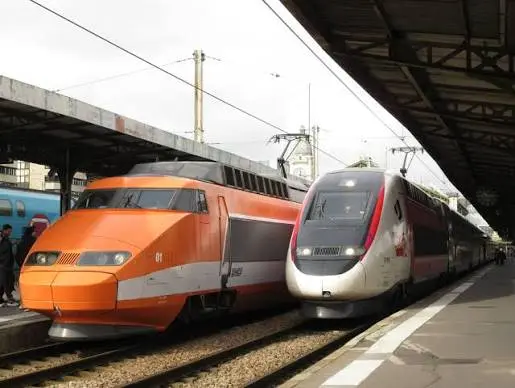
Initially there were fears that Paris would completely absorb Lyon's economic potential – a city with a population of 280 thousand people. Instead, Lyon and its agglomeration demonstrated rapid economic growth, and the number of business trips increased by 144%. The TGV station was built on the basis of the historic transport hub "Part-Dieu", located about 3 km from the city center.
Thanks to consistent urban planning policy by local authorities, this district turned into the second-largest business center in France. Service companies with high added value and headquarters of large corporations that gravitated toward the rail hub settled here. At the same time, the hotel sector saw the opposite trend. Because Paris became accessible for comfortable day trips, the number of overnight stays in Lyon's hotels initially even declined: company executives increasingly preferred to return home the same evening.
It can be assumed that in the future Lviv will also be able to attract part of the business activity from Kyiv. However, for this it is necessary to significantly reduce travel time between the cities.
Thanks to the use of Korean express trains, the trip from Lviv to Kyiv currently takes about five hours. At the same time, trains depart from and arrive in Lviv at hours when public transport is no longer operating. In addition, on the approaches to Lviv and Kyiv, including sections along Pid Dubom Street, trains still move at low speed.
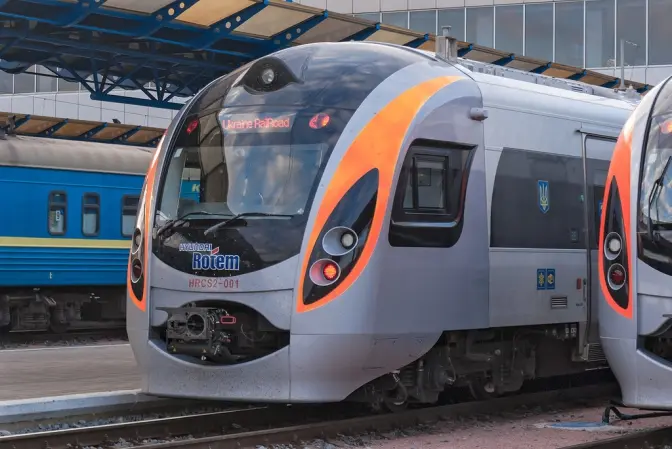
All this shortens the time available for business meetings and makes the working day excessively long. The problem could be solved by building a separate station for high-speed trains in a more convenient location. If sufficient territory is available nearby, a new business quarter could be developed. It is also important to provide adequate parking so that passengers have a guaranteed opportunity to leave their cars.
In addition, to ensure the economic feasibility of doing business from Lviv, prices for residential and office real estate in the city should be lower than in Kyiv in the long term.
Similar processes took place in Lille – a city with a population of 230 thousand people, located 200 km from Paris. Until 1993 it experienced economic stagnation due to the decline of the textile and mining industries. However, the launch of the TGV Nord line in 1993, and later the Eurostar connection with Brussels and London in 1994, turned the agglomeration into an important service sector center. In effect, these cities began to function as a single large business and administrative hub.
Lille successfully transformed, becoming an important center of business activity, tourism, corporate offices, and services. To serve TGV trains, a new station was built near the historic one, which continues to receive slower trains as well as some budget TGV services.
At the same time, Lille did not simply wait for the arrival of new rail connections. The local authorities seized the opportunity and created a large business quarter "Euralille" directly next to the station.
An interesting example of transport integration is also found on the Paris – Lille line. TGV trains stop at "Roissy" airport, as well as at an additional station in Beauvais, located roughly midway between Paris and Lille. This contributed to the development of the airport, which began offering budget flights, available in particular to Parisians heading off on vacation. Operating airlines in Beauvais costs significantly less than at Roissy airport, where expenses are considerably higher.
Following a similar principle, Lviv International Airport could attract passengers from smaller cities – Rivne, Ivano-Frankivsk, Lutsk, and others.

Smaller French cities were also connected to the high-speed rail network. One example is Vendôme, from where it is now possible to reach Paris in just 42 minutes. A new station was built on the outskirts of the city specifically for the high-speed line. This led to the emergence of a significant number of so-called "super-commuters" (super-commuters) – people who kept high-paying jobs in large Parisian corporations but moved their families to Vendôme. Housing here is cheaper and quality of life is higher. As a result, real estate prices in the city rose sharply.
A similar situation developed in Leh-Mans, from where the road to Paris has also been shortened to less than an hour. However, here the high-speed line was laid directly through the station in the historic city center. The local authorities took advantage of this opportunity by creating the Novaxis (Novaxis) business park directly next to the railway platforms.
Le Mans has managed to attract back-office departments, insurance companies, and customer service centers from Paris.
Instead, for the city Le Creusot integration into the high-speed rail network proved far less successful. Although travel time to Paris was reduced to 85 minutes, the municipality failed to attract the expected number of corporations or achieve noticeable urban development. The station was placed in isolation – in the middle of a field, many kilometers from the city center. In addition, local industry was already experiencing structural decline, so the new infrastructure alone could not provide an impetus for economic revival.
This example shows that the location of a new station is of decisive importance. Travel time by train is an important indicator, but no less important is how much time a passenger spends getting to the station within the city. Therefore, urban development must be adapted to the arrival of high-speed rail services. It is necessary to plan infrastructure in advance and create conditions for attracting new types of economic activity. After all, laying tracks alone is not enough to generate passenger traffic: cities served by high-speed rail must offer passengers and businesses something more.
Where the train meets the plane: the Belgian lesson
Having become a major administrative center, Brussels gained significant advantages from high-speed links with London, Paris, and Frankfurt. In particular, travel time to Paris was reduced to 1.5 hours. On approach to the cities, trains continue to run on conventional railway tracks, while building new dedicated lines required considerable time. As a result, air travel between these cities has almost disappeared. This confirms that high-speed trains, as the European Commission anticipates, can successfully replace air travel on certain routes.
At the same time, on the northern route, to Amsterdam and Rotterdam, the impact of TGV high-speed trains proved much less noticeable. Laying new tracks in this densely populated region was a complex and, in essence, not particularly necessary task: the distances between cities are relatively short, so same-day business trips were already possible before. This experience shows that on very short distances, the construction of high-speed railways may lose its expediency.
The choice of one of Brussels' three railway stations to host the TGV high-speed train station became the subject of active political lobbying at the local level. Near the North Station, the large "World Trade Center" had operated for many years and was considered an ideal location for such a transport hub. However, the choice ultimately settled on the South Station – probably to promote the renewal of the neighboring declining district.
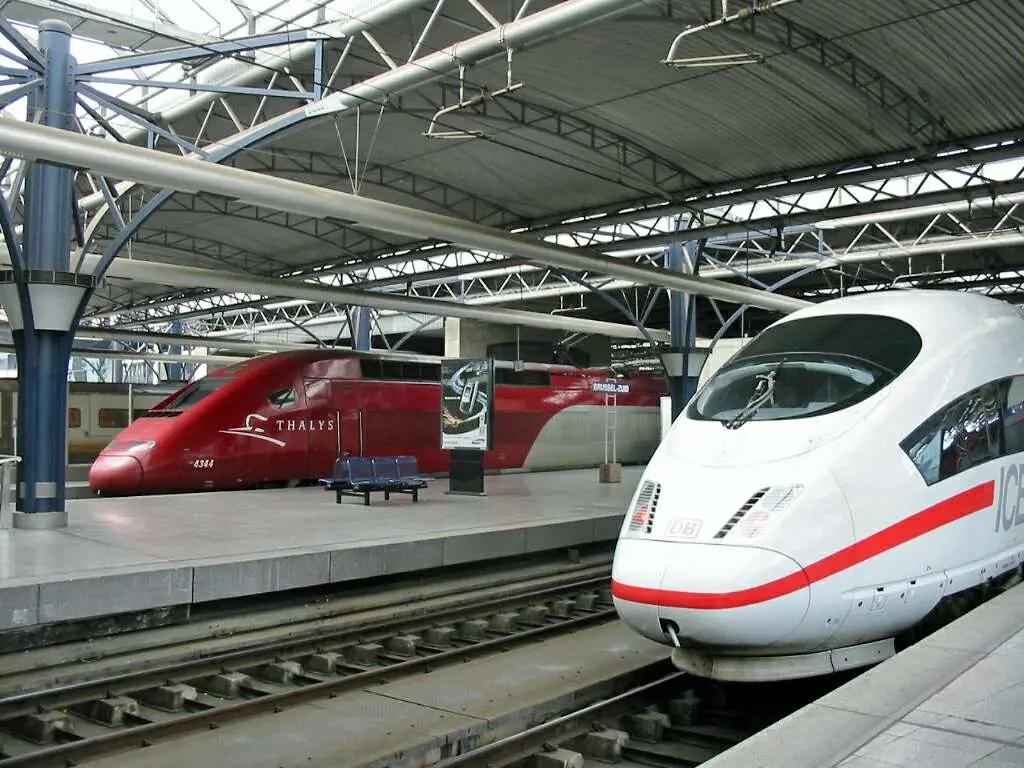
Belgian railways built one large office building there, but no other notable changes in the district's economic development occurred. This may be explained by the fact that the city's numerous administrative and business centers can be easily reached by metro. However, after several years of TGV operation, it became clear that some trains should also stop at Brussels Airport. TGV trains bound for Germany now also stop in Liège. A new station was built there, and the local airport was expanded to serve cargo air transport. In addition, another airport oriented toward low-cost passenger flights appeared in Charleroi.
The historic Zaventem airport was deemed to be located too close to the city, too noisy, and to create excessive environmental pollution. As a result, its functions were distributed among three different airports. This once again confirms that, in certain cases, high-speed trains can remain an important complement to air transport. After all, airports located near urban centers cannot expand indefinitely. Thus, Brussels operates two TGV high-speed train stations and three airports with clearly delineated functions. All these projects required significant expenditure and substantially increased the debt burden on the national, regional, and municipal organizations involved.
If Lviv decides to build a new railway station for high-speed trains, the first thing that will need to be determined is its location. This decision will have a significant impact on the life of the city, so it cannot be left solely within the competence of "Ukrzaliznytsia". One possible option is to use the current central railway station. Even if enough land can be found around it to create a new large business district, access to it will remain difficult. Travel time by rail will be reduced, but the road to the station itself will continue to take a lot of time. Having considerable experience in urban planning and regional governance gained abroad, I would not recommend choosing this option. The center of Lviv is already overcrowded.
It is also clear that some trains must in any case stop near Lviv Airport. Perhaps there is potential there for creating a large new business district integrated with the airport.
In this zone, it is particularly appropriate to develop activities that are not sensitive to aircraft noise and require substantial land areas. These include sports and wellness facilities, exhibition halls, hypermarkets, as well as combined office-warehouse premises for companies engaged in international trade.
A development plan for this territory needs to be drawn up now, involving the Lviv business and construction sector in its preparation. Belgian experience also shows that railway companies rarely have the capacity or willingness to manage urban development around stations.
The development of the airport area may have a significant impact on the everyday life of Lviv residents, and this impact will be positive. However, ensuring it must be the responsibility of municipal transport.
From Lviv to Kyiv in 2.5 hours
Building new railway lines is a very costly process, especially when it comes to main lines for high-speed trains. In addition, there is often a lack of free space for laying such tracks, particularly in already built-up areas or mountainous terrain. Therefore, many countries have found an alternative – modernizing existing railway infrastructure, which is significantly cheaper.
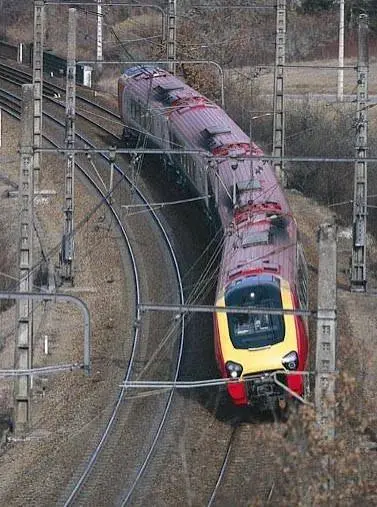
To this end, rolling stock has been developed that can reach high speeds on specially built high-speed lines and then continue on conventional tracks – regardless of whether they have been modernized. One such solution is body-tilting technology (tilting trains), created to reduce the effect of centrifugal force on passengers. Such trains can run on conventional tracks at speeds of about 200 km/h, and on specialized high-speed sections reach over 250 km/h. Applying this technology would make it possible to reduce travel time between Lviv and Kyiv to approximately 2.5 hours. This approach has already proven successful in Europe. However, it should be taken into account that on modernized sections it is difficult to organize shared operation of high-speed and slower trains.
Recently I met with former classmates from the Polytechnic Institute in Leuven (Belgium). Some of them devoted their entire careers to designing and later building TGV high-speed railway lines in Belgium. They warn that such projects are long-term and require solving numerous technical tasks with the involvement of experienced specialists. Only qualified experts should be involved in this work. In Belgium, the implementation of the entire TGV program was managed by the state. To avoid the bureaucratic inertia of the national railway company, a special subsidiary structure under state control was created, which directly handled the implementation of the project.
Experts also drew attention to the difference in railway track gauge in Europe and Ukraine. This creates technical difficulties for organizing international routes, in particular within the framework of a project designed to connect the Baltic and Black Seas. In Ukraine, the only structure that has the necessary specialists for this is "Ukrzaliznytsia". At the same time, it is worth remembering that over the years of independence, Ukraine has implemented few large-scale projects. Ideally, a specialized team should be formed at "Ukrzaliznytsia", with additional staff training provided – in particular, learning foreign languages and mastering modern project management methods.
Lviv: Museum City or Railway Hub?
The examples above suggest that the European program for developing high-speed rail connections could significantly change Lviv. From a medium-sized city, it could become an important transport hub. At the same time, the question arises: would it perhaps be better if Lviv remained a quiet, charming museum city?
This question deserves broad public discussion involving local residents and community representatives, as well as the mandatory support of highly qualified experts. The "Your City" platform could become a suitable venue for such discussions.
If Lviv decides to develop as a railway hub, preparation of large-scale projects must begin now – identifying appropriate land plots and developing designs for new facilities.
Lviv should also support projects whose implementation may have exclusively positive consequences. One of the priority directions should be attracting funding to eliminate the "bottleneck" at the border with Poland. Accelerating rail connections with cities such as Kraków, and possibly Warsaw, will promote the development of tourism and international business. To resolve the problem at the border, it is advisable to introduce passport control of passengers directly while the train is in motion. In addition, European-standard tracks need to be laid to Lviv. If the need arises to build new high-speed main lines, it would be desirable for them to run mainly through the territory of Poland.
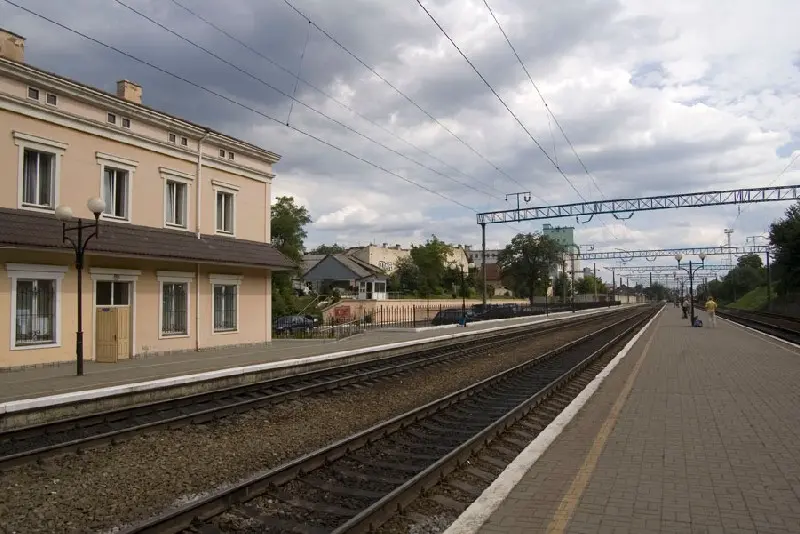
Another direction, whose effectiveness should be assessed now, is reducing travel time on the Lviv–Kyiv route. The existing Korean "express" trains could be replaced with new rolling stock featuring body-tilting technology (tilting trains), which would probably also require partial modernization of the tracks. It may be possible to reduce travel time to less than 2.5 hours without enormous investments. Some developers propose modernizing the existing "Pidzamche" station – their ideas are worth listening to.
Lviv's construction sector has developed significantly, but still specializes mainly in residential projects. Developers who have already accumulated capital could consider diversifying their business and join in financing and building facilities for other purposes.
What Lviv can do now
High-speed rail acts as an economic accelerator, not as a creator of economic growth. Cities that combine rail connections with thoughtful local planning thrive. Meanwhile, those that do not strengthen their own economic base fall behind and accumulate debts.
The Lviv City Council does not have the necessary technical specialists and therefore is not an appropriate structure for financing and managing railway track modernization projects. Its capabilities are limited primarily to influencing where exactly new facilities will be located within the city. The European program is potentially so large-scale that, if Ukraine participates, key decisions and management of it will certainly be carried out from Kyiv. There, most of the attracted funding will likely be disposed of as well.
At the same time, Lviv can lobby among decision-makers for projects that would have a positive impact on the city. First and foremost, this concerns simplifying cross-border connections with Poland, developing high-speed links with Kraków and Warsaw, and preventing the emergence of a direct rail route between Warsaw and Kyiv bypassing Lviv. Another promising direction could be lobbying to reduce travel time to Kyiv.
However, the most important practical contribution of the city authorities may be developing the public transport system and further transforming Lviv into a city attractive for living – both in terms of cost of living and its quality.
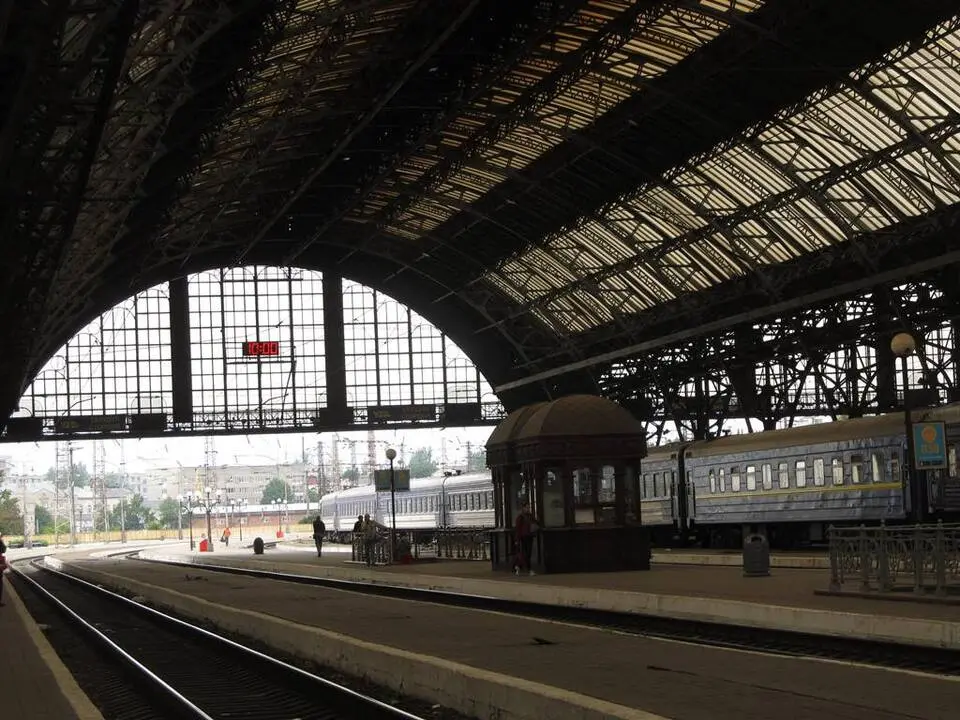
At the same time, the Lviv City Council may gain direct access to part of the multibillion-euro European funding by proposing projects to improve the connection of new high-speed facilities with the urban transport system. A striking example of such an approach, which can be implemented with relatively small expenses, is the development of municipal transport along the existing Syhnivka–Central Railway Station rail line, which is now almost unused.
Recently, many large residential projects have appeared along this transport axis. A significant number of Lviv residents already live in this area, but they do not have convenient connections with other parts of the city. Using the existing track could provide transport links between these districts, the main railway station, and possibly the airport, at relatively low cost. The author of this article has repeatedly proposed this idea in publications and during discussions on the "Your City" platform. Since the track is managed by the railway, a constructive partnership with "Ukrzaliznytsia" must be established to implement such a project.
It would also be advisable for "Ukrzaliznytsia" to realize that the extensive network of railway tracks is one of the reasons for limited mobility in Lviv. To get from one district of the city to another, one often has to cross tracks, and there are not enough bridges for this. Many railway lines were laid as early as the 19th century, whereas today most of them are almost unused. It would be more efficient for "Ukrzaliznytsia" to concentrate its activities on a smaller number of intensively used tracks. The rest could be transferred to the city for municipal transport needs.
Since the southern part of Lviv is not yet fully built up, "Ukrzaliznytsia" could consider creating a new ring railway branch for passenger transport. This would allow quick access to the main station while bypassing the city center. A new ring road is planned for construction in the north of Lviv. So why not implement a similar project for rail connections in the south of the city? Such a ring branch could become part of the high-speed connection along the Lviv–Kyiv route.
Full or partial republication of the text without the written consent of the editorial office is prohibited and considered a violation of copyright.

Related News