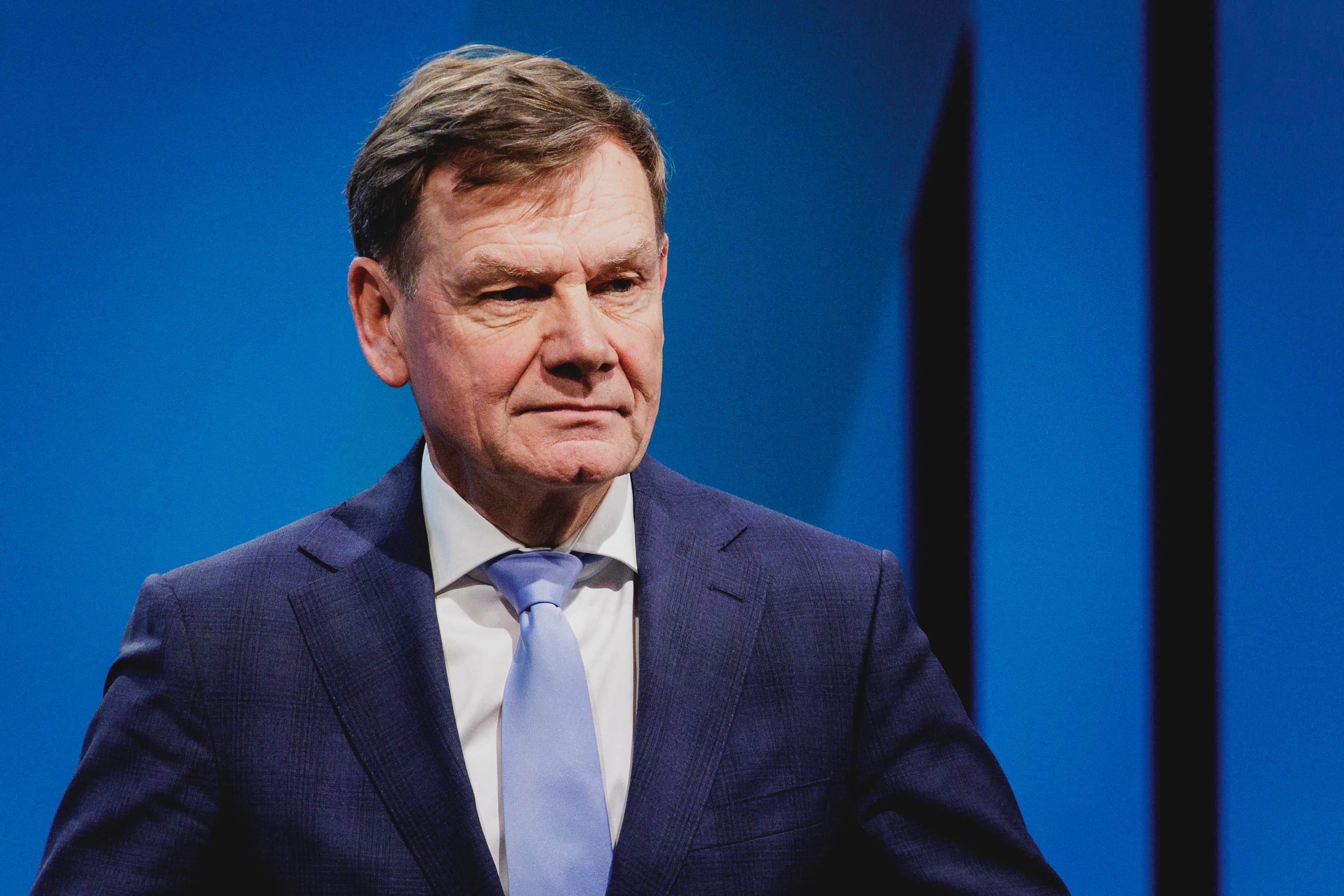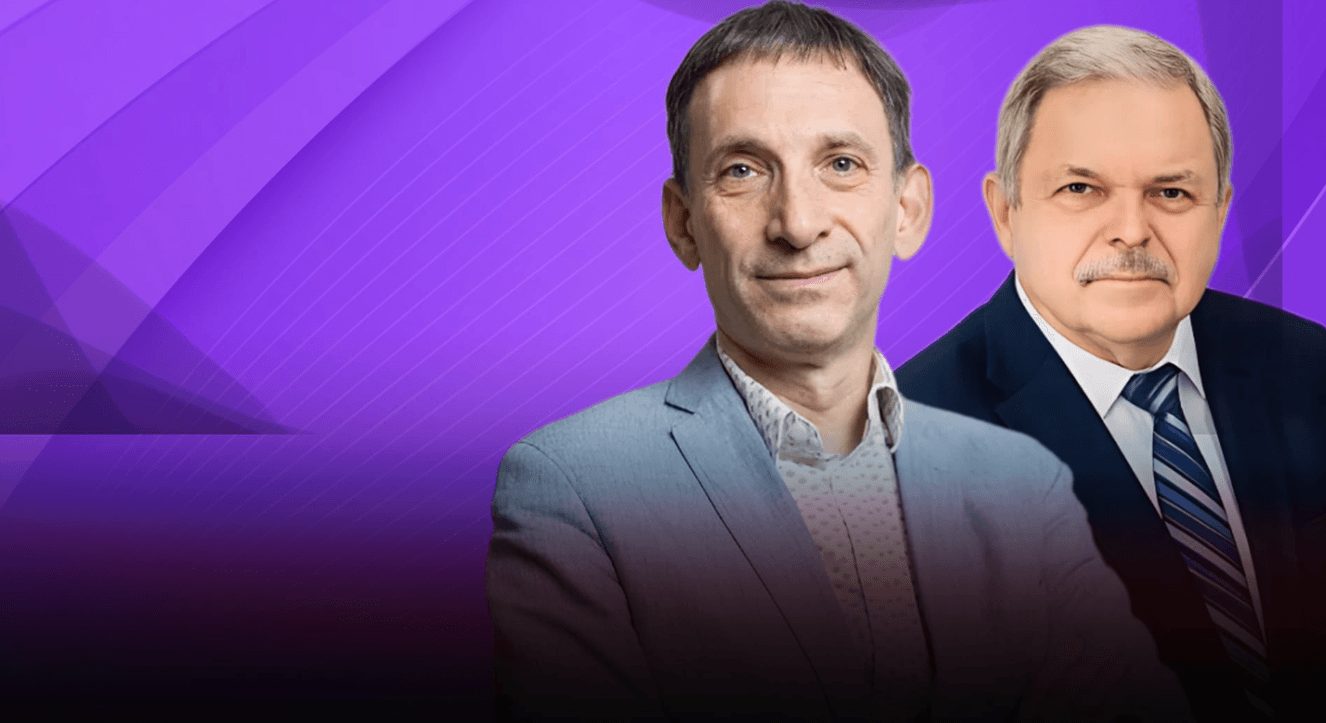
Let me tell you how the idea to invite two speakers at once to this meeting arose. For me, Mr. Vitaliy is a connection to reality. When I start to lose faith, I remember Mr. Myroslav. While preparing for the event, we most often heard two questions from the audience: is World War III already underway? Where is the line after which we will finally realize it?
Vitaliy Portnikov: Thank you very much for the invitation! It is a special honor for me. Recently in the Vatican, a Ukrainian guide took me on a closed route from the Sistine Chapel to St. Peter's Basilica – a path usually taken only by the Pope and cardinals. To be at the same meeting with Mr. Myroslav today is roughly the same great honor and celebration for me.
Regarding World War III: we will only find out about its beginning when it ends. Contemporaries never know this in the moment. It is we who are now certain from textbooks that World War I began with the shot in Sarajevo, and World War II with the invasion of Poland. But why not the Anschluss of Austria? Not the annexation of Czechoslovakia? For the USSR, let me remind you, the war generally began in 1941, while 1939 practically did not exist in their historiography. Similarly, now we do not know the starting point. Georgia-2008? Crimea-2014? Or the full-scale invasion in 2022? Future historians will provide the answer. The main thing is that they should be humans, not rats controlled by artificial intelligence developed by the last, I would say, humans. That is our main task.
Since 2022, I have been insisting: this is not a Russian-Ukrainian war, but part of a global conflict. In the West, this is still often not noticed. At one time, I convinced Israeli colleagues that war would come to them as well. I even named in an article for one of Israel's main Hebrew publications Haaretz the cities that would be bombed (Be'er Sheva, Metula), and a few months later people were evacuated from there. They didn't believe me; they said it wasn't their war, that Iran was supplying drones to Russia just for money. But it's not about money. This is a real struggle between world democracies and authoritarian regimes. Market democracies and market dictatorships cannot coexist. This is the core of the process, even if they situationally form alliances, like the USSR and the USA in World War II.
Russia seeks to restore its empire and become the gendarme of Europe. China wants to squeeze the USA out of Asia through proxy forces like Iran, which itself has imperial ambitions. It must be understood that the arbitrariness of dictatorships forces democracies to act desperately. When the USA saw they were being pushed out and international law was being violated, leaders emerged there who were ready to ignore rules to protect their interests. The Trump administration did not arise in a vacuum.
Look at the escalation between Israel and Iran. Islamist Iran openly promises to destroy Israel as soon as it obtains nuclear weapons. The Jewish instinct after the Holocaust suggests: if someone tells you they will destroy you—believe them. This is not a figurative expression. As a Jew, I absolutely believe it.
It's the same with Ukrainians. Putin's 'final solution to the Ukrainian question' is no joke. In the occupied territories, people are literally not allowed to be Ukrainians: they are killed, imprisoned, or expelled. Even 80-year-old ethnic Ukrainians who lived in Russia for decades were forced to flee in 2022 simply because of their identity.
Therefore, preserving the state, keeping it Ukrainian, is our only chance to survive. All this is a fragment of a global confrontation between a world that does not respect free will and a world that does. And whether this will escalate into World War III in the classic sense, we shall see. The existence of nuclear weapons may preserve this war in exactly these forms for the coming decades.
Myroslav Marynovych: Regarding a world war, there is an interesting pattern: first, separate conflicts flare up that can still somehow be settled. But a moment comes when they all explode at once, and it happens unexpectedly. Like when a Serbian student shoots the Archduke – and that's it, it becomes a trigger for a multitude of simultaneous events. So far, there is no World War III in this sense, but if such a moment arrives, we will call it its beginning.
The international order after World War II grew in Europe. It wiped the bloody sweat from its brow and said never again. European Christian Democrats built the value platform upon which institutions like the UN, the Security Council, or the EU later emerged. What do we see today? The institutions exist, but values have changed. It's like removing the foundation: the institutions are left hanging in the air and are largely paralyzed. Look at the UN Security Council – it's simply an astonishing paralysis and catastrophe.
The destruction of the value platform is taking place. Imperial whims, contempt for the weaker, and the division of the world into spheres of influence have replaced the principles of the international order. Until recently, we thought this was plusquamperfectum — the pluperfect, a long-past time. But no, it has surfaced again. This means a deep crisis. If humanity comes to its senses and restores the value platform, World War III can be stopped; if not, we will have a great global tragedy.
And lastly: Ukrainians haven't been believed for years. All our warnings to the West that Russia is a threat were rejected as being politically incorrect, claiming we simply don't understand modern theories. The West constantly ignores our intuition and vision of threats. Granted, Western voices are now appearing that admit Ukrainians should be listened to. Listening to those who survived Russian occupation and rule and understand its true nature. So, I would like us to finally be heard when we warn of the threat of a final conflict and the urgent need to return to values.
There is an opinion that the world finds itself in a situation similar to the one after the Yalta Conference: the powerful have divided zones of influence among themselves. Where is Ukraine in this division? Why is it not being listened to, and does Ukraine itself understand what it wants to be in the world?
Vitaliy Portnikov: I don't think this is the world after the Yalta Conference. Back then, there was a clear status quo: understandable spheres of influence and limits of possibilities. Later, the Soviet Union annulled the Yalta system because Stalin never considered this division final. Now there is no 'Yalta' – except perhaps in the imagination of Donald Trump or Putin, but certainly not Xi Jinping.
An absolutely opposite process is taking place: the United States is trying to undermine the economic foundations of the complementary existence of its opponents. Trump's actions in Venezuela and the pressure on Iran are meant to force China to buy oil at a real market price, not for next to nothing from the outcasts of world politics – Caracas, Tehran, and Moscow. Imagine, about 25% of the Chinese economy relies on cheap Iranian oil, another part on Venezuelan, and the majority on Russian oil. If sanctions were lifted from these countries and they sold oil within the framework of OPEC agreements, China would lose the ability to dump on world markets and would have to carry out internal reforms, which it currently does not need at all.
There is logic in the Americans' actions. Why do they flirt with Russia? Because they want to lift sanctions so that the Russian Federation returns to the oil market and stops giving discounts to China or India. They hoped to convince us to make concessions, but it didn't work – we've already passed that station. The Europeans said 'it won't happen like that.' Now, to return Russia to the markets, they will have to put pressure on Russia itself. So we can be wary of Trump's values, but we should wish success to his attempts to return a civilized order to the energy market. Russia becomes aggressive because of high oil prices. When there are no excess profits, the Soviet Union collapses. We know this from our own experience.
Where is Ukraine's place here? We are a factor that prevents the Russian Empire from restoring itself, forces Europeans to look at the continent soberly, and prevents Americans from returning to the "civilized market" at the cost of abandoning values. At one time, we warned: energy flirting with Russia and all these "Nord Streams" would end badly. I said in Germany: as soon as "Nord Stream 2" is completed, a big war will begin in Europe. People laughed at me, calling it a phantasmagoria. And everything came true absolutely perfectly.
Mr. Myroslav says that we are not being listened to. But why should people who study Russian culture all their lives listen to us? Let them listen to Dostoevsky! Everything is written there. "Am I a trembling creature or do I have the right?" – this is the essence of Russian politics for all time. Their obsession with the readiness to justify immoral acts with moral phrases is still the basis of Russian political and everyday culture. It is enough to read three volumes of Dostoevsky, "The Gulag Archipelago", and several books by Tolstoy to understand what will happen to you if you lose your vigilance.
In the West, they think it's exotic. But for us, who lived with this "exotica" in one state, it is life and a matter of survival. I always told Western opponents who consider Russia a center of European civilization: "Just read what is written there." No great Russian writer hid anything. But even this was not done. The inability to realistically analyze the world is a huge problem for the West, not just for us.
Myroslav Marynovych: So, there really is an attempt to divide the world into spheres of influence. This thought has clearly taken hold not only of Russia but also of America – at least in Trump's head, and this stuns me. The thing is that a virus has flown into the world Make America Great Again (MAGA). But Trump here is only a pale compiler. In fact, Putin was the first to formulate this idea: "To restore the greatness and power of Russia." This is actually Make Russia Great Again, which was later simply paraphrased in English.
This virus has infected not only two countries. We see a somewhat paler version of Make Hungary Great Again, and Slovakia has not moved far from this. This is an attempt by states and politicians to return to the past in order to see the future. But returning to the past is a path to nowhere that only blocks the future.
Regarding Hungary, I want to share my understanding of why this string of countries on our western border reacts to Ukraine this way. These nations are not used to our agency. They know about the Ukrainian ethnic group, they have historical emotions toward us, but previously, when it was necessary to solve issues regarding Ukraine, they always turned either to Warsaw or to Moscow. And now a situation arises when nolens volens one must turn to Kyiv and seek new models of relationships.
They have no respect for this agency, and they are not psychologically or economically ready. Now the war is slightly raising Ukraine's status – everyone already understands that we must be respected as a military force. But they still need to get used to everything else. A radical change in the world frightens some nations, so they are so eager to return to a predictable and understandable past.
Vitaliy Portnikov: When we talk about Hungary and Slovakia, we must notice important things. At one time, the uprising of Lajos Kossuth for the creation of his own state was destroyed by the Russian troops of Field Marshal Paskevich. After that, a dual monarchy appeared – Austria and the Kingdom of Hungary. The response to the fact that the Russians did not allow Hungary to establish itself as an independent subject was two things.
The first is chauvinism, which did not exist in Austria. In Galicia, which was part of the Austrian crown, the attitude toward the rights of Ukrainians was completely different than in Subcarpathian Rus'. This applied to all the peoples of the Kingdom of Hungary. Jabotinsky, in an article on the death of Shevchenko, recalled how Croats fought for years for the right to military commands in the Croatian language, because the army was essentially Hungarian. That is, the Hungarians decided: if we failed to create our own state, we will act like "statesmen" by suppressing the freedoms of others. The second thing is the fear of Russia. The memory that it is better not to spoil relations with it, because it can come and take away freedom again, which was repeated in 1956.
Therefore, the territories of modern conservatism and anti-Ukrainianism in Europe are, in essence, the borders of the former Austria-Hungary with reinforcement precisely in the Hungarian part. The empire is long gone, but look at the Russian influence in Austria, Czechia, and even stronger in Hungary and Slovakia. Croatia did not initially have this influence because of the war with Serbia, but a few decades have passed, and there is already an anti-Ukrainian, anti-European president. A large part of the population has returned to Austro-Hungarian thinking.
It turns out that the borders that existed before the First World War have not disappeared anywhere; they exist in the heads of people who never even lived in those empires. And for you and me, this is a great stroke of luck. Because if these invisible borders were not in the heads of Galicians, it is unknown what would have happened to our country at all after the declaration of independence. You see, these borders act differently, and this also needs to be remembered.
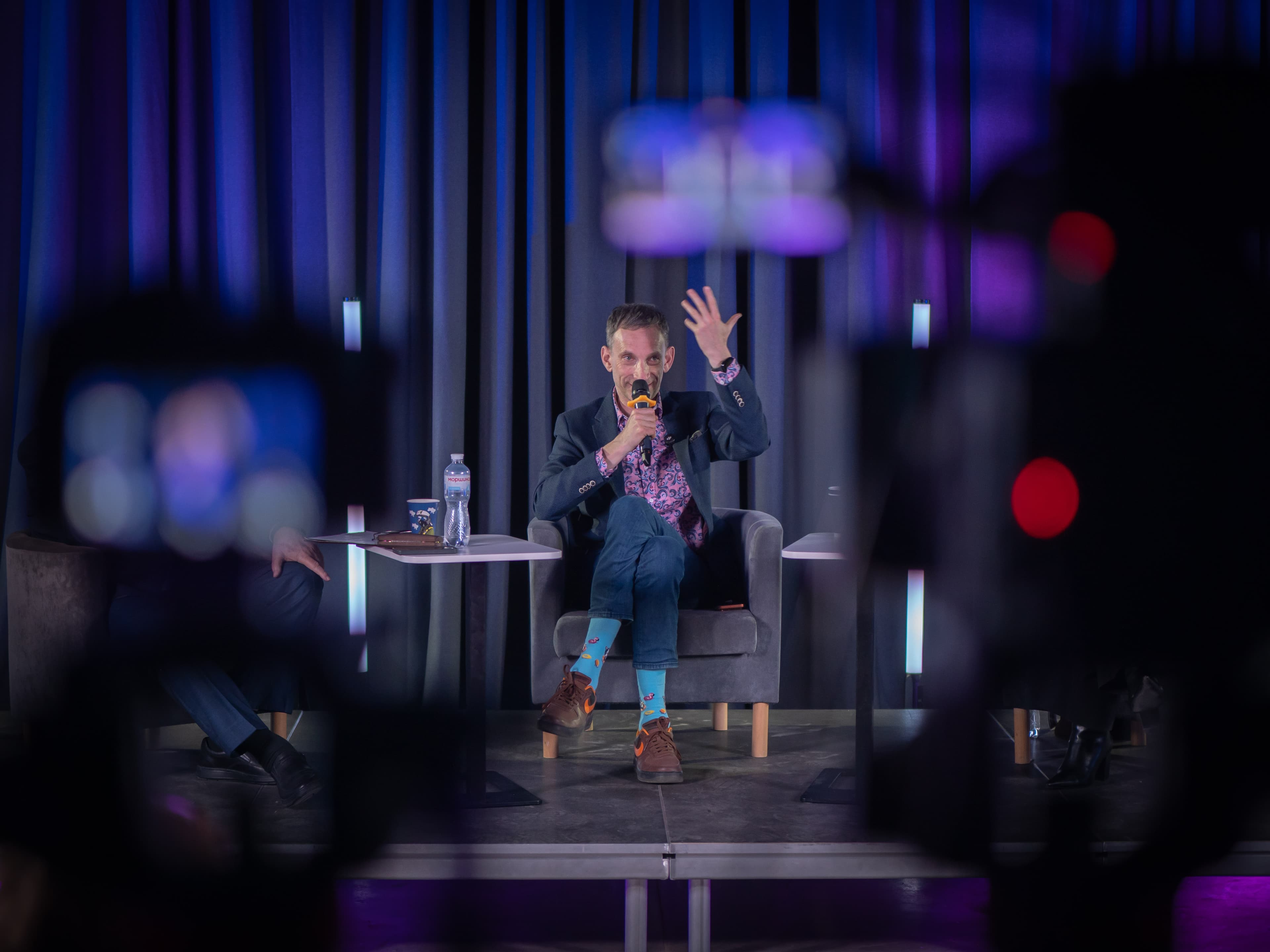
Can Ukraine reach a peace agreement with Russia? What other scenarios of developments could there be?
Myroslav Marynovych: Firstly, I completely do not believe in the negotiation game that is happening now. Putin has driven himself into a situation where only the complete surrender of Ukraine can justify his power. He will not be able to sell any compromise options to the Russian population. Even if he tries to present a compromise as a victory, he will be forced to start a new conflict in a year or two. Signing a compromise will mean only one thing: Putin is truly scared and has no other choice. But I almost don't believe in this.
Now about other scenarios. We are used to extrapolating the current situation into the future. But God has many "black swans". Remember 1991. In March, in a referendum, Ukraine voted by a majority for a new concept of the USSR (without the right to secede). Sitting in my Drohobych, I was horrified: is this people really driving itself into a trap?! And then came August 1991, the putsch. In three days, moods changed radically, independence was proclaimed, and in December it was confirmed. It was impossible to predict in February what happened in December.
Therefore, our laments – whether we will manage to survive – are just an extrapolation of the current moment. Let us be calm. The world is ruled not by Putin and not by Trump, but by the Lord God. Perhaps, at a time of such a terrible war, my words will offend someone, but there is peace in my soul. Not because I do not empathize with the losses, but because I know: behind this world is a hand that guards it.
Vitaliy Portnikov: I actually believe that Putin is capable of going for peace agreements, because I do not believe in the agency of the Russian population at all. Most Russians want the war to end, and any finale can be sold to them. In this sense, the moods of their society give Putin even more freedom of maneuver than the Ukrainian society gives Zelenskyy, because here the majority opposes capitulation and territorial concessions.
However, the Russian authorities do not want to maneuver. Regaining control over Ukraine is an objective idée fixe of Putin and the FSB for the revival of the empire. Russians have never built a national state – they immediately became an Orthodox empire. In Europe, there was the "Spring of Nations". It also passed by us in a cultural sense through the activities of Shevchenko, Franko, and our historians. But the Russians skipped this stage; they do not know how to live without an empire. This "What a country we lost!" of theirs is about exactly that.
The end of the war depends on when the Russians realize that hitting their head against a wall does not justify the results. Putin in Ukraine and Trump in Iran act symmetrically, trying to destroy infrastructure to cause the collapse of the state. But the authoritarian regime in Iran does not have the support of the majority. Iranians want to be Persians, and the regime took away their identity in exchange for theocracy (just as the USSR replaced everything with Bolshevism). Trump gives Persians an opportunity to say that they exist. And Putin, on the contrary, is trying to force Ukrainians to say that they do not exist. But the Persians exist, and we exist!
Another difference: no one will rebuild Iran. But we exist with the support of the civilized world, which provides us with money for the budget and military technology. This makes Russia's task practically impossible. It is a matter of time before this becomes clear. And, unfortunately, of great sacrifice by the Ukrainian people. Another crucial point: the Russian bombings are terrible, but they give us the opportunity to build a new decentralized energy system. Try voluntarily dismantling the Soviet power grid! It could only be bombed out. There is nothing good in any "Shahed" or missile, but paradoxically, this makes the aggressor's ultimate goal impossible.
Therefore, I am not thinking about negotiations. An irony of fate: they were supposed to take place in Abu Dhabi. And then one fine day we see photos where Abu Dhabi and Kharkiv are being bombed by "Gerans". I think this war will simply have a tendency to fade out.
You cannot even imagine how rapidly the world will now develop in a scientific and technical sense. And the center of this world will definitely not be Russia. They only know how to steal—from the atomic bomb to movie plots. It was painful to learn after the collapse of the USSR that all our favorite movies were stolen. This is already a fact of our biography. The Americans have made a colossal leap over the last 10 years. In Ukraine, unique special operations like "Pavutyna" (Web) have been developed, which seemed like science fiction just three years ago! What similar achievements in science or military affairs does Russia have? None. And then it becomes absolutely clear who in this situation is capable of surviving and winning.
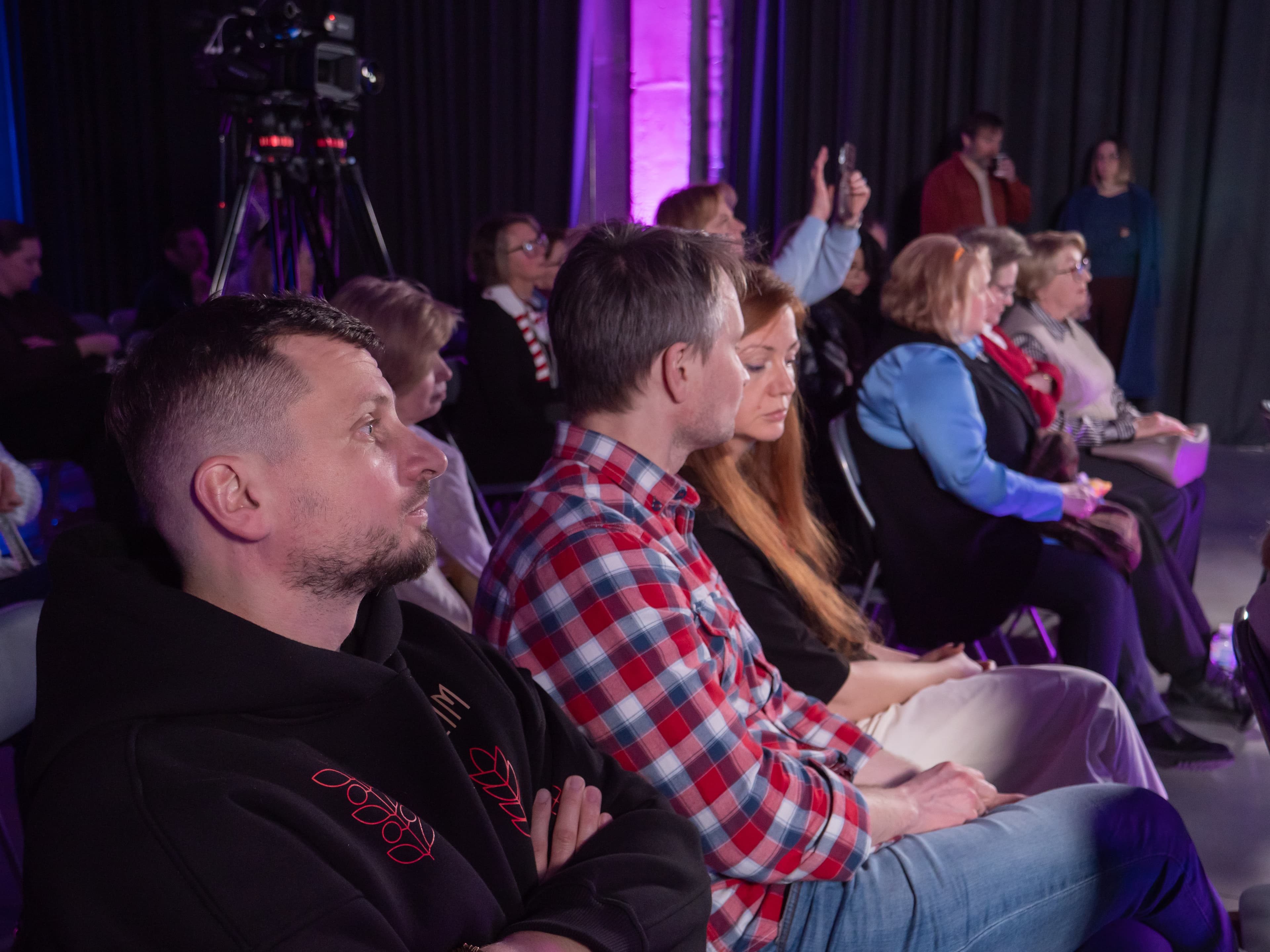
In public discourse, at least two scenarios are being discussed. First: Russia must necessarily collapse, and Ukraine must participate in this. Second: Europe must get much more involved, help us win, and recognize that this is also its own enormous challenge. Is there a third scenario?
Myroslav Marynovych: Will Russia collapse? I have always believed in this. I am an incorrigible optimist and have historical confirmation for this. In the late 1970s and early 1980s, the entire active group of dissidents in the camp was completely convinced of the collapse of the Soviet Union. In the West at that time, reading Andrei Amalrik's essay "Will the Soviet Union Survive Until 1984?", they tapped their foreheads, as if to say, you're crazy, such a great power will surely survive.
Back then, believing in the collapse of the USSR was even crazier than believing in the collapse of Russia today. But I believe in it. The mechanics of change in Russia have their own specificity: first, a long period of stability. Everyone becomes convinced that Russia will never collapse. Only then does something happen that unexpectedly and instantly leads to a crash.
However, I agree with Mr. Vitaliy: we must remember that Ukraine survives as a state thanks to Western aid. Let's compare two periods. When Baturyn fell to Menshikov's hordes, the world found out about it at best several months, or even years, later. Today, however, the world sees all the processes in Ukraine on an iPhone. They couldn't react immediately to the massacred Baturyn. They reacted immediately to the atrocities in Bucha, or at least noticed and responded emotionally.
That's why we are quite justifiably annoyed that Europe isn't giving us enough weapons for victory. But let's remember that they give enough so that we don't fall, but stand firm. After all, our banks and stores are working. Remember March and April 2022, when cash was dispensed in amounts of 200 hryvnias, and stores began having supply problems. The situation stabilized precisely thanks to Europe's help.
However, the West is still absolutely not ready for the collapse of Russia. Any of my attempts to start a conversation on this topic hit a taboo. In their imagination, we are either incredibly cruel people who desire the collapse, or naive dreamers who do not realize the threat of nuclear weapon dispersal. But there is a good rule of Western civilization: what cannot be stopped must be led. Or at least controlled. Instead of acting like George H.W. Bush or Margaret Thatcher, who came to Kyiv and asked "not to engage in nationalism" and to preserve the structure of the USSR, the world should think about how to control the collapse of Russia so that it does not lead to global destruction. But I don't see such readiness yet.
Vitaliy Portnikov: I believe that Russia already collapsed in 1991. From the perspective of the Russians themselves and the whole world, the Soviet Union was Russia. The Bolsheviks gave decorative statehood to the union republics, but despite this renaming, the territory did not cease to be Russia. For the Russian people, the events of 1991 were the collapse of their state, and now there is a struggle for its restoration within those same borders.
Putin does not hide this, declaring "Lenin's mistake" of "cutting up" borders and making way for separatism. Zhirinovsky was already shouting in the 1990s that all of these should be governorates. Putin proposed to Lukashenko: "Join Russia with your regions." And everyone thought it was a joke. And now Putin is occupying Ukrainian regions and not creating an "alternative Ukraine"—he is simply annexing these territories as regular regions of the RF with a Russian population. We can consider anything a joke, but this is the Russian perception of reality. When we succeed in defending our statehood, we will finally state that Russia collapsed in 1991 and the attempts to restore it failed in the 2020s.
As for the fate of the current RF—everything will be "fine" with it. Every year of its existence is accompanied by wild Russification of all non-ethnic Russians. Once on my broadcast, a Russian academic (an opponent of the Putin regime) said: "The future of Russia is not when people consider themselves 'rossiyane' [citizens of Russia], they must consider themselves 'russkie' [ethnic Russians]." And this has already happened: a huge number of Chechens, Tatars, Buryats, and Tuvans consider themselves "russkie".
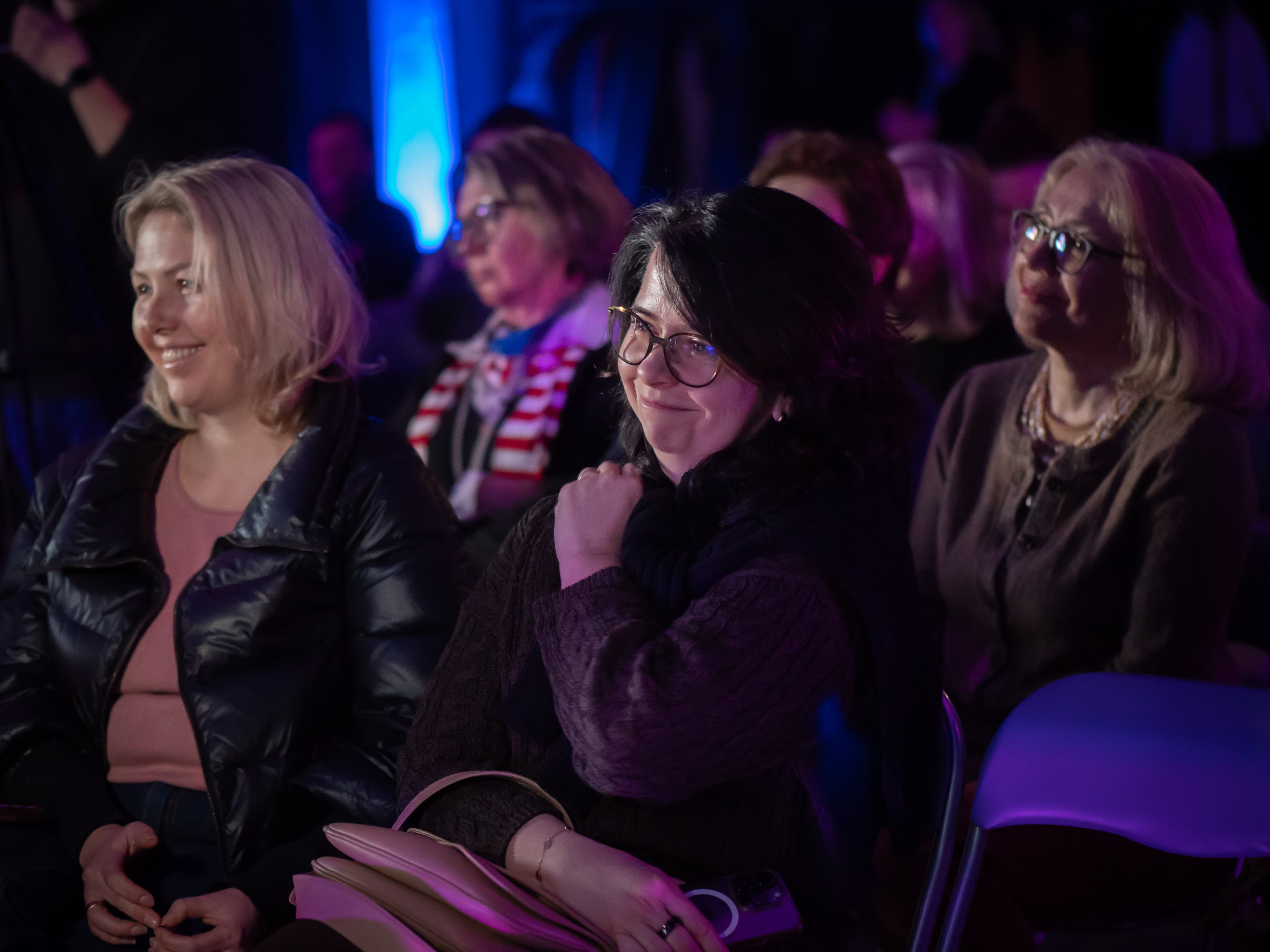
Even if Russia loses part of its territories due to cataclysms, it would likely strengthen it. Losing control over Chechnya would rid Moscow of the mafia-like influence on its own elite. The loss of Yakutia would be interesting, but that would require more intense global warming so that Yakuts could export diamonds via the Northern Sea Route (I'm not joking; survival depends on logistics). And Tatarstan, the main trigger for independence, has no external borders at all. It would take a cataclysm where Tatars could not only declare independence but also take control of part of a neighboring Russian region to reach the border with the Republic of Kazakhstan.
Therefore, objectively, the RF may persist within its internationally recognized borders. But it will always be a dangerous neighbor, a state steeped in nostalgia for a lost empire. Even if the core with nuclear weapons decays, its interest in Slavic neighbors will be dozens of times greater than that of the current RF, where Buryats or Tuvans don't understand what they are dying for near Kyiv or Kharkiv. But for Russians, it will always be clear.
The issue is not territories, but population. Three-quarters of Russians live in the European part. In the vast spaces beyond the Urals, there is almost no one. Maybe someday the Chinese will be there, but so far they haven't been able to settle these lands and are living peacefully with that. How will they possess Ukraine without a population? Just like Siberia. Yermak arrived there—well, the real Yermak Timofeyevich—and stopped the development of that territory forever. And the Russians survived it. They will survive a depopulated Ukraine too. Don't look for strategic thinking in their actions.
Speaking of Europe, you will see rapid political changes in the coming months and years. The US has not yet left NATO, there is still no understanding of whether they will defend allies and whether Article 5 works at all, but in Europe, a European Defense Union with the participation of Ukraine is already being discussed. And, of course, with the nuclear weapons of France and Great Britain at its center. You cannot even imagine how absolutely different these configurations will be by the end of Trump's presidency. And we should survive at least to take our place in them.
I am an optimist because it is not the question of Ukraine's borders being decided now, but the question of China's geopolitical border. It will lie along our border with Russia. Putin's grandchildren are already studying Chinese. And they are right to do so: one must know the language of those who save and feed you. We will study English, they will study Chinese. This is the great civilizational border of Europe that we will become. The Russians themselves realize this. Politician Karaganov says that 'our European journey has ended,' and philosopher Dugin proclaims them heirs of Genghis Khan. I was called a Russophobe, but I am a 'Dugin-phile,' I simply understood sooner than they did that Russians are not a European people!
I finally understood this during a broadcast on 'Echo of Moscow.' A listener asked if I considered Russia a European country. To avoid offending the audience directly, I replied: 'It seems to me that Leo Nikolayevich Tolstoy said everything about Russia's European nature.' To which the listener responded: 'I knew you were the same kind of scoundrel as Leo Nikolayevich Tolstoy.' And everything became clear to me from this unexpected reaction: the listener of a liberal station hated Tolstoy for considering himself European!
We confuse the concepts of Europeanness and non-Europeanness. By the way, the drama of Russian culture is that there a European is necessarily someone intellectual, with a jabot and rings. But a German miller, a French mason, or a peasant from Belgium are also Europeans. Europeanness is about shared rights and values that united ordinary people and aristocrats even in feudal times thanks to free cities. Russian civilization, on the other hand, is about the absence of rights and values, because there were never free cities there. In Ukraine, there were many of them: from Kyiv with Magdeburg Rights to the free cities of Galicia. But in Russia, not a single one. Well, there was Veliky Novgorod, but it was burned down, and the people were hanged.
Values? Remember the reforms of Patriarch Nikon, when people who crossed themselves in their own way were burned alive to the laughter of the crowd. What kind of faith are we talking about?! It's tinsel. And during a crisis, it falls away: the patriarch walks on goat hooves, priests consecrate missiles that will fly at cities. Politicians on TV say 'everyone must be killed, everyone shot, everyone eaten.' Journalists and actors shoot rifles at nearby cities and film it. These are people without value education; others would not behave this way. Remember the phrase by one of the communist writers after Stalin's death: 'It's clear that Stalin was an executioner, but who wrote 40 million denunciations?' The same people who now pray in Russian churches for the death of Ukrainians wrote them.
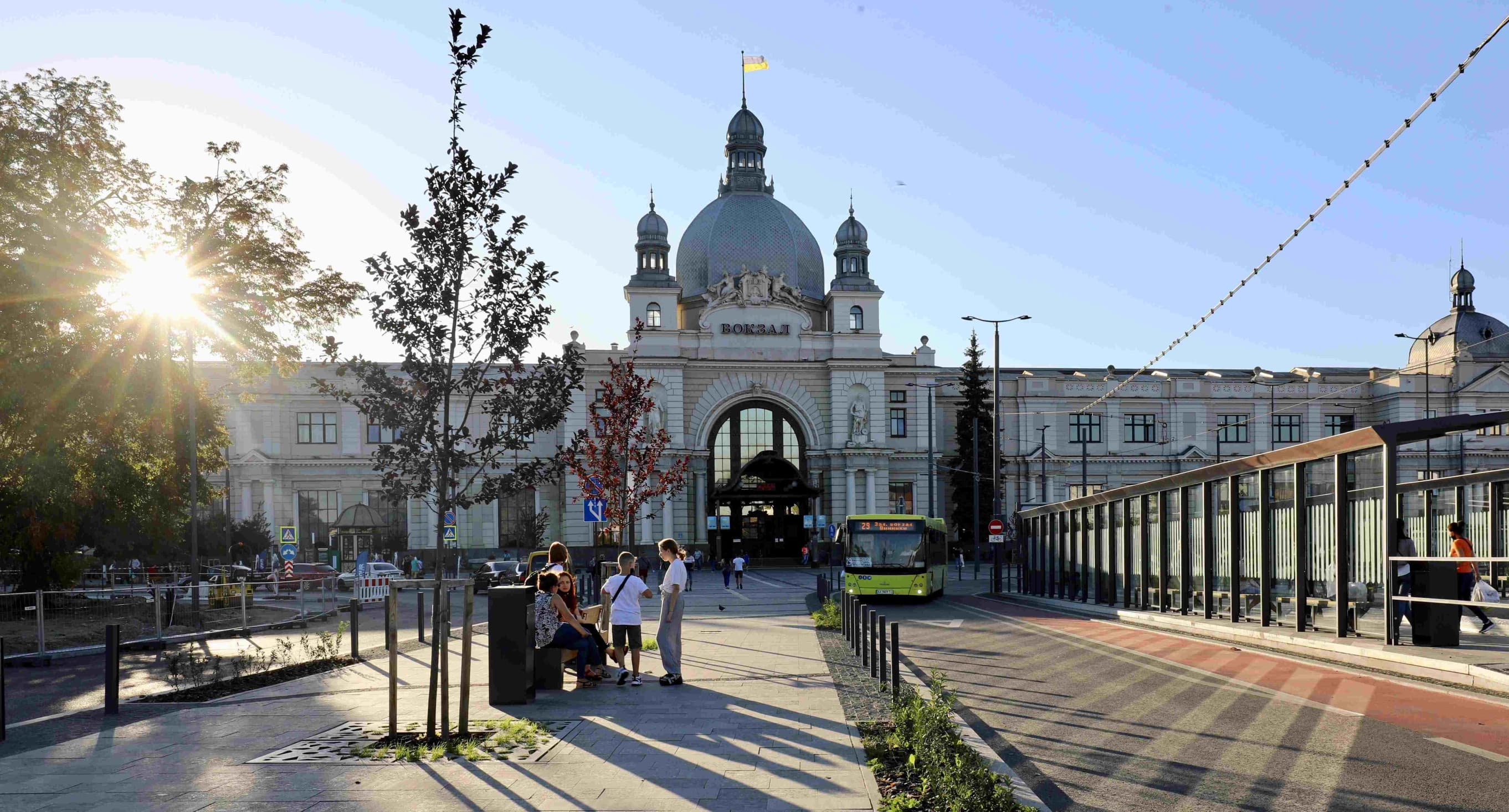
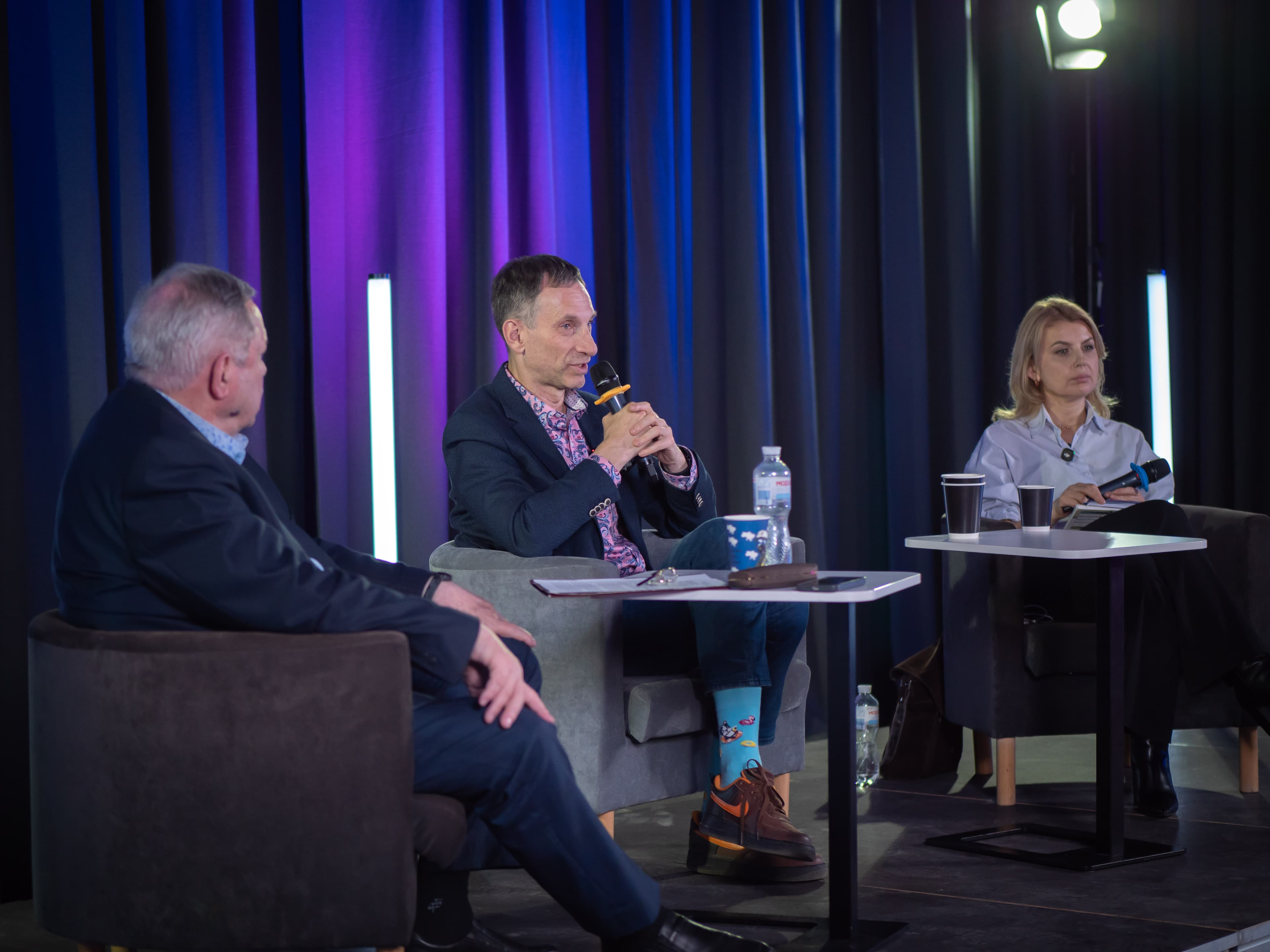
The discussion took place in Lviv at the Lem Station creative hub. The conversation was moderated by journalist Svitlana Zhabyuk, founder and head of the 'Experts' Club'.
'Experts' Club' is a community of the 'Tvoe Misto' (Your City) media hub, bringing together people interested in social processes and expert discussions.
Join the 'Experts' Club' community. We will hold meetings once a month and announce events on the 'Tvoe Misto' website and social media. This is a great opportunity to listen to speakers, ask them questions, and be in an atmosphere of wonderful like-minded people.
Text: Marichka Ilyina
Full or partial republication of the text without the written consent of the editors is prohibited and considered a copyright infringement.
To receive current and hot news of Lviv and Ukraine, subscribe to our Instagram and Viber.
Live broadcasts of important events and weekly video programs – on current Lviv issues in 'Theme of the Week', intellectual conversations on all-Ukrainian topics in 'Accents of Tvoe Misto', and public discussions for the collective search for better solutions to the city community's challenges – watch on our YouTube channel.