"Ukrainians learned to create this perfectly." Who is saving the country while the old system is falling apart
29 May 2026, 16:30
29 May 2026, 16:30
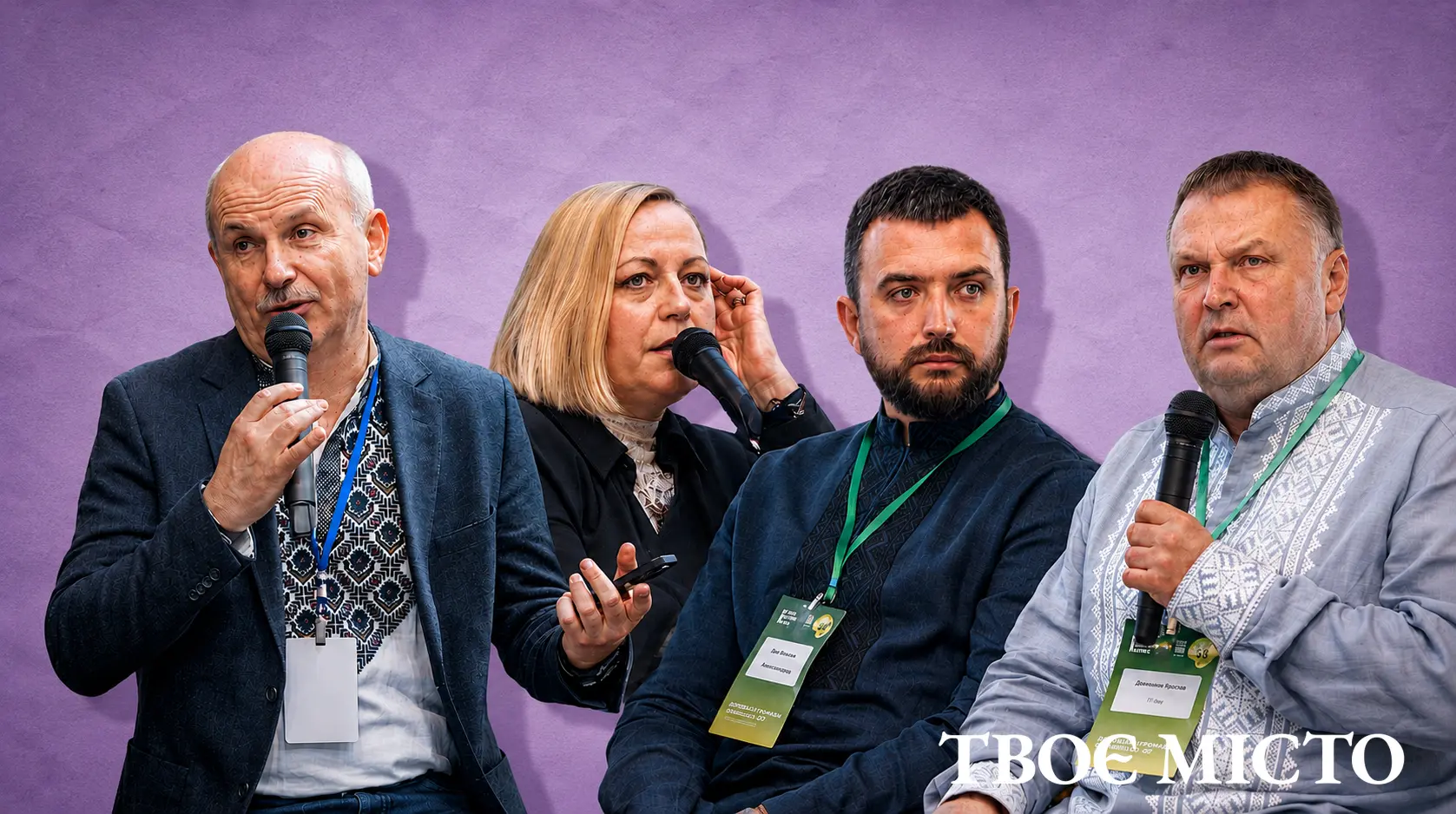
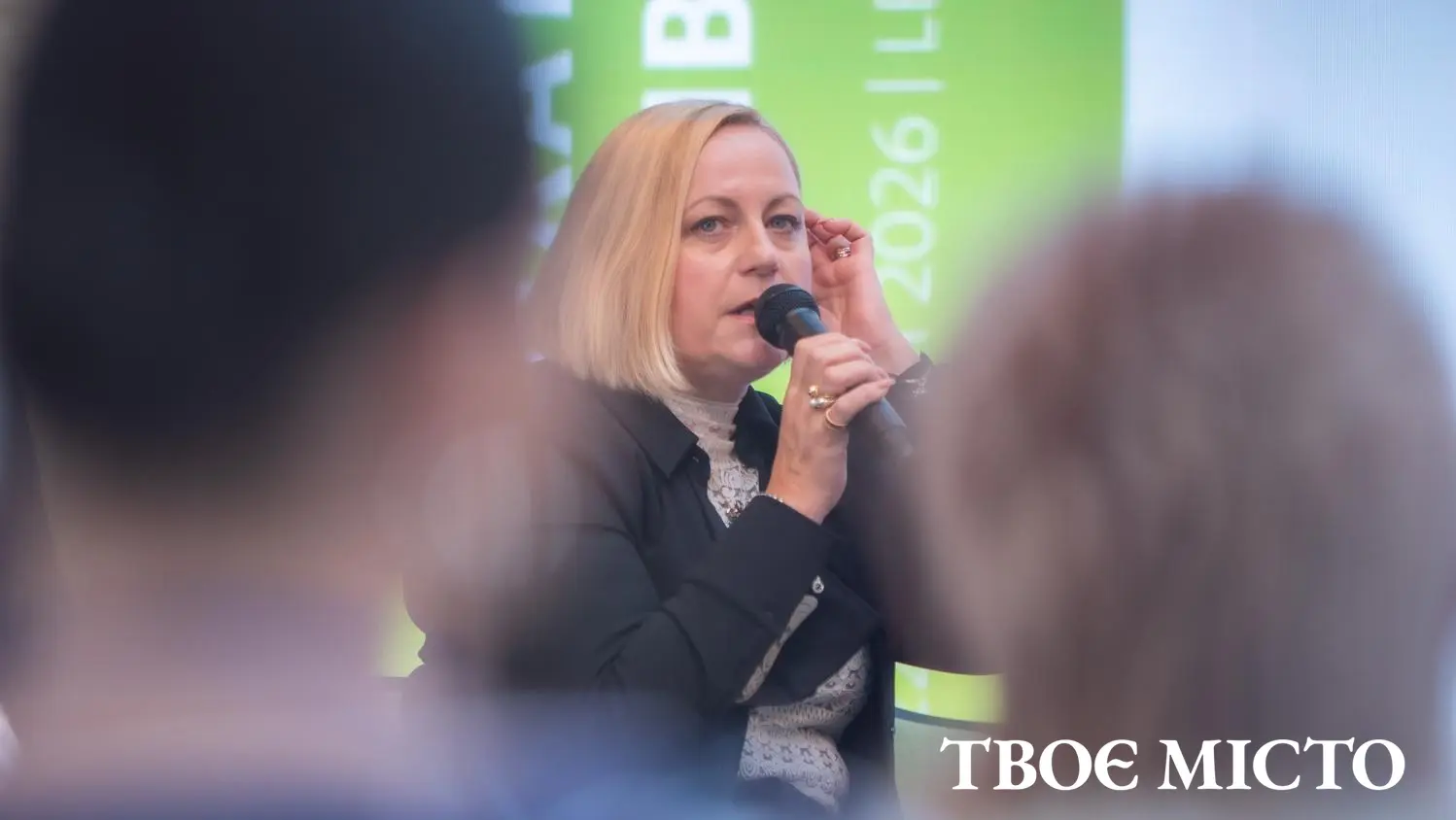
"Today, I no longer believe in leaders as much as I believe in teams and collaboration" — with this quote from a Greek Catholic bishop with an MBA degree, moderator Taras Yatsenko, CEO of the media hub "Tvoe Misto," opened the third panel of the Spring Business Forum — 2026, which gathered nearly 500 participants at LEM Station. The forum's organizer, Volodymyr Glaschenkov, immediately set the tone: "The goal of this discussion is not to talk about money or dry business metrics, but about immeasurable things – social behavior, institutions, and what Ukraine can be."
How did the unification of competitors grow the IT industry by almost 18 times? Why do charitable foundations buy lethal weapons and consider it normal? How do family businesses raise millions overnight? And what to do with the Ukrainian syndrome of "all is lost"?
The Dubrovnik Phenomenon and Friendly Competition. How IT Communities Changed the Economy
Reflecting on how and why effective associations are created, the co-founder of SoftServe, the "IT Ukraine" association, and the Lviv IT Cluster Taras Kytsmey offered a historical example of Dubrovnikas follows
It was precisely these principles of preventing the monopolization of power that were laid at the foundation of Ukrainian IT communities. In 2003, four companies established the "IT Ukraine" association (its first president was Mykola Roienko from Miratech). From the very beginning, strict rotation was introduced: first, the president was changed every six months, then every year, and now they have settled on a two-year term.
"In 2009, following a similar logic, three companies – SoftServe, Eleks, and N-iX – founded the Lviv IT Cluster. Everyone asked: 'Why do you need this cluster? We're already working fine in Lviv,'" — recalls Kytsmey.
To prevent foreign corporations, which were actively entering the market at that time, from taking over, the cluster's creators introduced a quota system for the supervisory board: Ukrainian companies must always have a majority by at least one vote. The head of the supervisory board (currently Sviatoslav Kavetskyi) also changes regularly by rotation. Today, the cluster organizes the best IT event in Eastern Europe – IT Arena, and similar associations are attempting to establish themselves in many Ukrainian cities.
Additionally, two years ago, the U WIN business club was created, which currently has about 70 members and promotes a win-win culture. The plans include expansion to all-Ukrainian cooperation, as having deep private connections makes it easy to negotiate formal business matters.
How were fierce competitors united? Kytsmey explains: "We are friends and competitors at the same time. We compete for orders and people, and this makes us stronger. If you say, 'We don't want to compete,' you will become weaker. If we divide something among ourselves, then when external companies come, we will lose to them. Why was the best painter in Florence also the best painter in the world? Because there was competition, which leads to development."
The community also learned to defend its interests in a civilized manner (such as the "Diia City" regime or working with new government regulations) – to lobby for the rules of the game for the entire industry, rather than seeking preferences for one company. The result of these values, as the moderator noted, quoting historian Yaroslav Hrytsak, "is spread on bread." Taras Kytsmey confirmed this:
The gravity of family business. The architecture of survival and the deep emotion of trust
If the IT sector is about speed and scaling, then family business is about generational continuity, which our enemy has been trying to break for centuries. CEO of Family Business Network Ukraine Larysa Mudrak, who has over 10 years of experience at Radio Free Europe/Radio Liberty and political experience, recalled the words of Bohdan Hawrylyshyn:
"In the 1990s, he told me: "Ukraine is more suitable than anyone for building horizontal connections." I didn't understand it then. But after two revolutions and the start of a full-scale war, I realized it with every cell of my being."
In successful European countries (France, Italy, Germany), family businesses account for 90% of GDP. Why? Because what is passed down as inheritance often lasts longer than international corporations. FBN International has existed for 30 years and unites 65 countries. Ukraine is the only country in the entire post-Soviet space that has managed to create a similar club. Its founder Vlad Burda won the license to join this network 17 years ago. Today, FBN Ukraine unites 70 families, which is over 300 participants including children. The community includes representatives of different generations: Seniors (founders), NowGen, NextGen, and Junior Gen. The association organizes the national award "Best Family Business of the Year" (a striking example of winners are siblings Olena and Rostyslav Vovk, who, 10 years after their father's death, achieved incredible growth with Kormotech and Enzym Group), helps create boards, family constitutions, and family offices.
In March 2022, at the beginning of the full-scale war, Larysa and Vlad considered closing FBN, believing that participation in clubs had moved to tenth place in importance. But this challenge turned into a massive consolidation.Every night, we and the owners gathered in large Zoom conferences and shared experiences. Foreign partners reacted instantly – in the first two weeks of the war, they transferred up to 5 million euros in aid to the National Bank's accounts. And after that, they said: "We can't work like this, we need specific projects and reporting", recalls Larysa Mudrak.
Since then, horizontal connections within this Ukrainian community have been creating miracles. For example, when enemy missiles hit enterprises of the Family Business Association members (such as Nova Poshta or Biosphere), aid is accumulated within the club. The speaker emphasizes that sometimes they can raise up to a million hryvnias overnight. This is about business to business, face to face.
It is this phenomenon of instant understanding that she calls "the deep emotion of trust" – when an owner contacts an owner through the club's platforms and a decision is made in a few minutes. Another of Mudrak's favorite terms is "the gravity of family business", when the third generation successfully enters the business and harmonizes the family and the team: "We consciously do not chase quantity, as each family is a separate complex universe. Plus, people need a long time to understand the terminology and training."
Business communities were also able to close information gaps at the international level. When, on March 28, 2022, the IMF urgently requested analytics on the state of the agricultural business and fields, no state structures could provide it quickly. But FBN did it through business schools – in particular, the Kyiv School of Economics and Tymofiy Mylovanov gathered the necessary data in two weeks.
"In addition, foreign partners asked daily for instructions: "What did you do step-by-step? We need cases, not just a list: money, relocation, employees. And I saw full of English books about the war in European airports, but not a single one about Ukrainian business. So we decided to create one: at night, we interviewed our participating families. Thus, the bilingual book "War Lessons" was born, " explains Mr. Mudrak. He adds that foreigners are grabbing the English editions instantly, and they have even coined a term for this phenomenon – "the architecture of Ukrainian business survival". So, the third volume of the book is currently being prepared.
FBN also did not stand aside from volunteering. From day one, family business owners, through United 24, have been buying drones, consistently funding the blood center for the Armed Forces of Ukraine, and supporting the Superhumans clinic – its founder Andriy Stavnitser is an FBN member.
How a charitable foundation became a strategic partner of the military
If business communities supported the economy from the beginning of the war, then the volunteer movement took over some of the state's functions in defense. Deputy Director of the "Return Alive" Foundation Oleg Karpenko shared a stunning retrospective. In 2014, the organization started with three people and the first donation of 10,000 hryvnias. Back then, the foundation was more of a positive stimulus in the country. Over time, "Return Alive" evolved into a competent assistance fund and is now a strategic partner of the military. The team has grown to 180 specialists, who have accumulated over 45 billion hryvnias in aid.
The foundation has completely broken global charity patterns.
All these achievements are based on communities and horizontal relationships with businesses (the foundation interacted with almost all businesses in the country), authorities, the military, and ordinary people. The ambitious goal of "Come Back Alive" for 2026 is to attract $1 billion from international partners. As of May, half of this sum has already been raised. However, when delegations from the foundation go abroad, foreigners are simply shocked. They need three to five meetings to explain the power and nature of these horizontal relationships in Ukraine. Because foreigners simply cannot comprehend how people, businesses, and the state interact in such a way to collect such cosmic sums.
To the direct question from the moderator whether the state should not have already been dealing with these issues in the fifth year of the full-scale war and why the foundation continues to duplicate its functions, Oleh Karpenko replied: "In fact, each of you duplicates the functions of the state and helps it in some way. This is not a problem, but an absolute norm. This is the responsibility of business and every individual. There are so many problems in the state and the army that they can be dealt with constantly. Plus, we understand the limited resources of the Ministry of Defense and the country as a whole... I don't know how it could be otherwise".
The "everything is lost" syndrome and management crisis. Why successful communities do not influence the state
So how can these fantastic achievements at the IT, family business, and volunteer levels be implemented into the general state agenda? The answer from political scientist Vadym Denysenko was harsh and analytical: unfortunately, these associations live in their "bubbles" (in a good sense of the word) and have little influence on the national level.
Denysenko explained: "Whoever sets the agenda controls society. In Ukraine today, there are only two institutions that have a monopoly on shaping the national agenda. These are the President – through international activities and negotiations regarding the war. And anti-corruption officials – a group from NABU and SAP to activists, who have a monopoly on determining who is a corrupt official. All other political forces live in their own bubbles, maintained primarily through dislike of their neighbors. Anti-corruption bodies are finally establishing themselves as a political actor capable of overturning chessboards. The suspicion against Yermak shows the elites that Zelensky cannot protect his inner circle. Whether someone likes it or not, we essentially have a new quasi-branch of power".
According to the political scientist, cardinal changes have been occurring since 2026: the consensuses of 2022–2025 are breaking down due to enormous societal fatigue. Ukraine is now navigating between Scylla (the need to punish corrupt officials) and Charybdis (the necessity not to disrupt the fragile balance that allows the war to be conducted).
The resource of information warfare, where each scandal was covered by a new one, has also been exhausted. "We have to constantly raise the ceiling for new scandals, and there's nowhere higher to raise the ceiling,” says Denysenko. – The cases with the Chief Justice of the Supreme Court or "Mindiсhgate," besides the legal aspect, carry a huge informational burden".
At the same time, neither the old nor the new elites talk about the future at all. Instead of discussions about overcoming dead ends (for example, a new Labor Code is discussed only as a way to collect money from businesses, not as a way to preserve labor resources) – there is silence. Denysenko diagnoses a management, not a political, crisis: "The resource of simply replacing politician X with politician Y has been exhausted. The problem is that the system de facto continues to replicate the model built by Leonid Kuchma during his second term. This replica is extremely unstable in 2026, as it does not account for the factor of war and the return of millions of people to peaceful life".
The same "network impulse" (horizontal ties), which has dragged the state in 2022-2023, is beginning to slow down. To get out of the crisis, we need a pact of elites, without which no state in the world has overcome similar challenges. However, no one talks about this, justifying it by saying that "we have no elites."
But Denysenko considers the destructive principle of "all or nothing"to be the nation's biggest mental problem. He cited a quote from Roman Vashchuk, former Ambassador of Canada to Ukraine and former business ombudsman:
Responding to the moderator's joke that in Lviv, everyone will always be dissatisfied with everything, Denysenko unequivocally replied: "Lviv is not unique here... Once a friend in the 1990s told me: 'Anyone who has lived in Ukraine for more than three days thinks someone owes them something.' This is absolutely normal from Lviv to Donetsk.".
Private success vs. State institutions. Instead of an epilogue
Denysenko's opinion that the fantastic achievements of business and volunteers exist only in their "bubbles" and do not form a nationwide agenda sparked a lively reaction. Taras Kitzmey summarized the society's headache: "Societal success depends on institutions. There is a striking difference between private and public institutions in Ukraine. Go to a private clinic with world standards, and then to a public one – the difference is so striking. That's why the IT industry is private. If it were public, we would never have seen any IT... What should we do? Build public institutions! And as long as we demand some focus from politicians: 'Show us how cool you are, what you can give us,' instead of building institutions – nothing will happen.".
Larisa Mudrak supported this point, adding that the issue of army provision is still a nationwide trend. Regarding influence on the state, business communities are still taking small steps. When it's necessary to stop the "boundless desires of Mr. Getmantsev", or to help sole proprietors or "Nova Poshta," associations unite, raise media waves, and repel attacks. But she says that institutionally, everything is complicated: "For 10 years, I have been asking to enshrine the norm for family businesses in the legislation, as in Europe. Instead, a bill appears to impose additional taxes on family businesses.".
Closing the third panel of the Spring Business Forum, Volodymyr Glaschenkov noted:
Full or partial republication of the text without the written consent of the editorial office is prohibited and considered a copyright infringement.

Related News