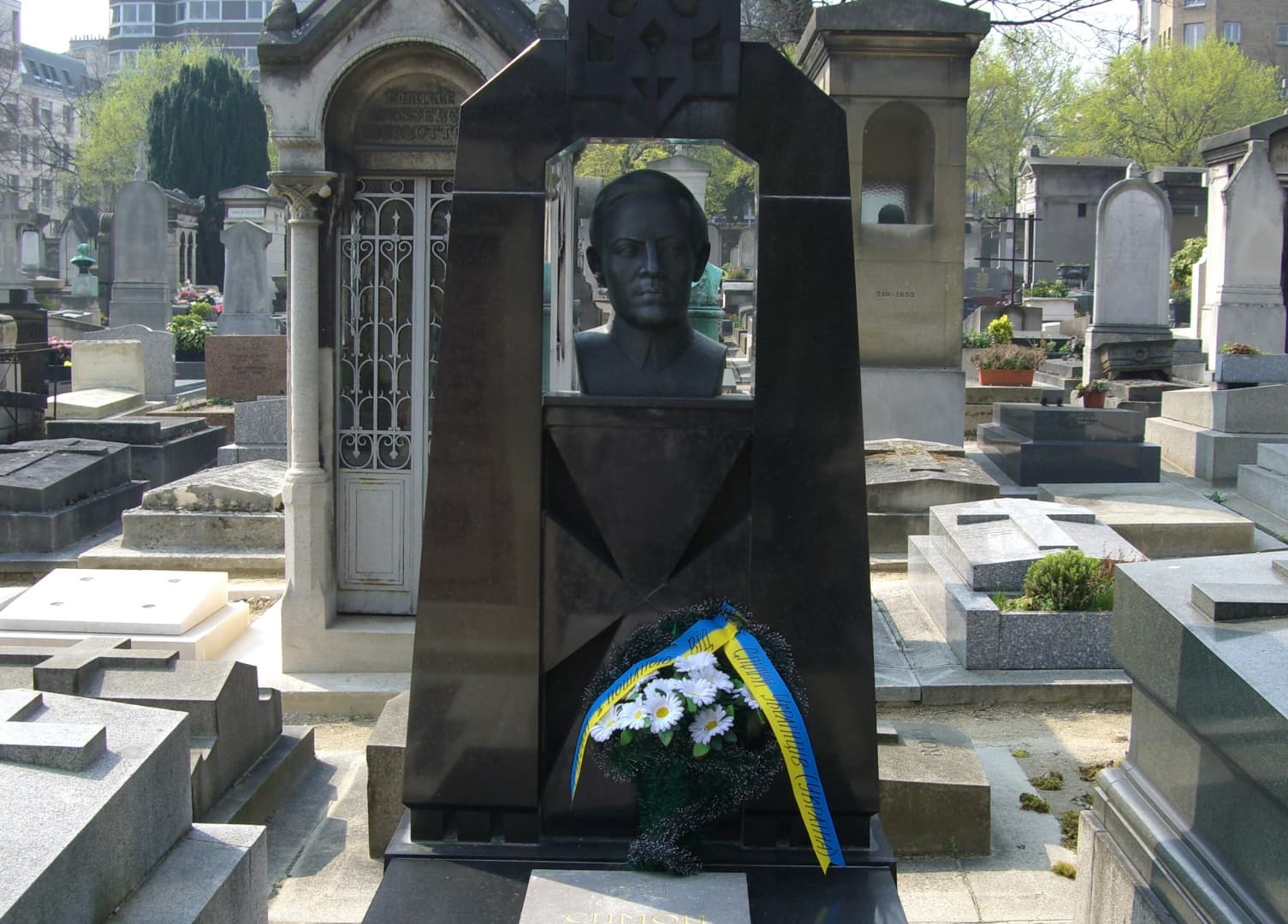
The Office of the President is developing a project for the Pantheon of Outstanding Ukrainians — a memory space where they plan to rebury political, military, and cultural figures whose graves are currently located abroad.
During the discussion, the head of the Office of the President Kyrylo Budanov emphasizedthat it is not only about reburial, but about a broader process of returning historical heritage. According to him, implementation will be difficult, as burials are located in different countries — both friendly and unfriendly — however, it should not be postponed, especially in conditions of war.
Also, meeting participants were instructed to prepare a list of figures for possible reburial, work out an implementation mechanism, and determine the location of the future pantheon. Among the options being considered is the National Military Memorial Cemetery.
At the same time, the idea itself remains controversial: there is still no unity regarding exactly where the pantheon should be and who has the right to be honored there. These very questions became key in the reactions of the expert environment.
People's Deputy and historian Volodymyr Viatrovych in a comment to "Tvoe Misto" said that he evaluates the idea of reburial positively and emphasizes that it has both a practical and a symbolic basis. According to him, part of the burials abroad are under threat, and for the figures themselves, it would be an honor to be buried in Ukraine.
At the same time, speaking about the importance of such a space, Viatrovych emphasizes that the pantheon should perform a unifying function for society.
Separately, Viatrovych dwells on the question of location. In his conviction, the pantheon should be located in the center of the capital, fulfilling both a symbolic and a protocol function.
He also clarifies that the pantheon does not provide for mass reburials — it is about a limited number of figures, so the requirements for the site must be especially high.
Regarding the selection criteria, Viatrovych notes that this issue is still being formed and requires legislative regulation. At the same time, according to him, it is primarily about state figures of different historical periods and military leaders.
Architect and local historian Ivan Shchurko in a comment to "Tvoie Misto" said that he also supports the idea of creating a pantheon, but warns against haste in its implementation. In his opinion, the initiative itself is correct, but belated.
Shchurko emphasizes that the key question is in developing a common approach to exactly who to honor in such a space.
Speaking of the possible location, Shchurko notes that although Kyiv looks like a logical option, one should not be limited only to the capital.
Historian and serviceman Vakhtang Kipiani, who participated in the meeting, confirms, that there is currently no final vision for the project. According to him, the proposal to create a pantheon on the territory of the National Military Memorial Cemetery did not receive support.
He also draws attention to the absence of an agreed-upon list of figures and the need to develop clear criteria.
According to him, the questions regarding the appearance of the space itself also remain open — whether it will involve relocating existing tombstones or creating new memorial forms.
Thus, despite general support for the idea, experts agree on one thing: the implementation of the pantheon requires a clear concept, agreed criteria, and broad public discussion.
The idea of creating such a memorial space in Ukraine has been discussed for years. Back in the early 2000s, it was proposed at the state level to create a complex in Kyiv to honor prominent figures, but these initiatives were not implemented.
In 2015, this issue was revisited, but even then the project did not see practical implementation. In parallel, the concept of a pantheon was developed within the expert community, particularly with the participation of the Ukrainian Institute of National Remembrance.
In various years, it was proposed to consider the pantheon not only as a burial place but as a broader memorial space with the possibility of individual reburials. At the same time, there is still no final decision on the format, location, and principles of its content, which is leading to a new wave of discussion around this idea.