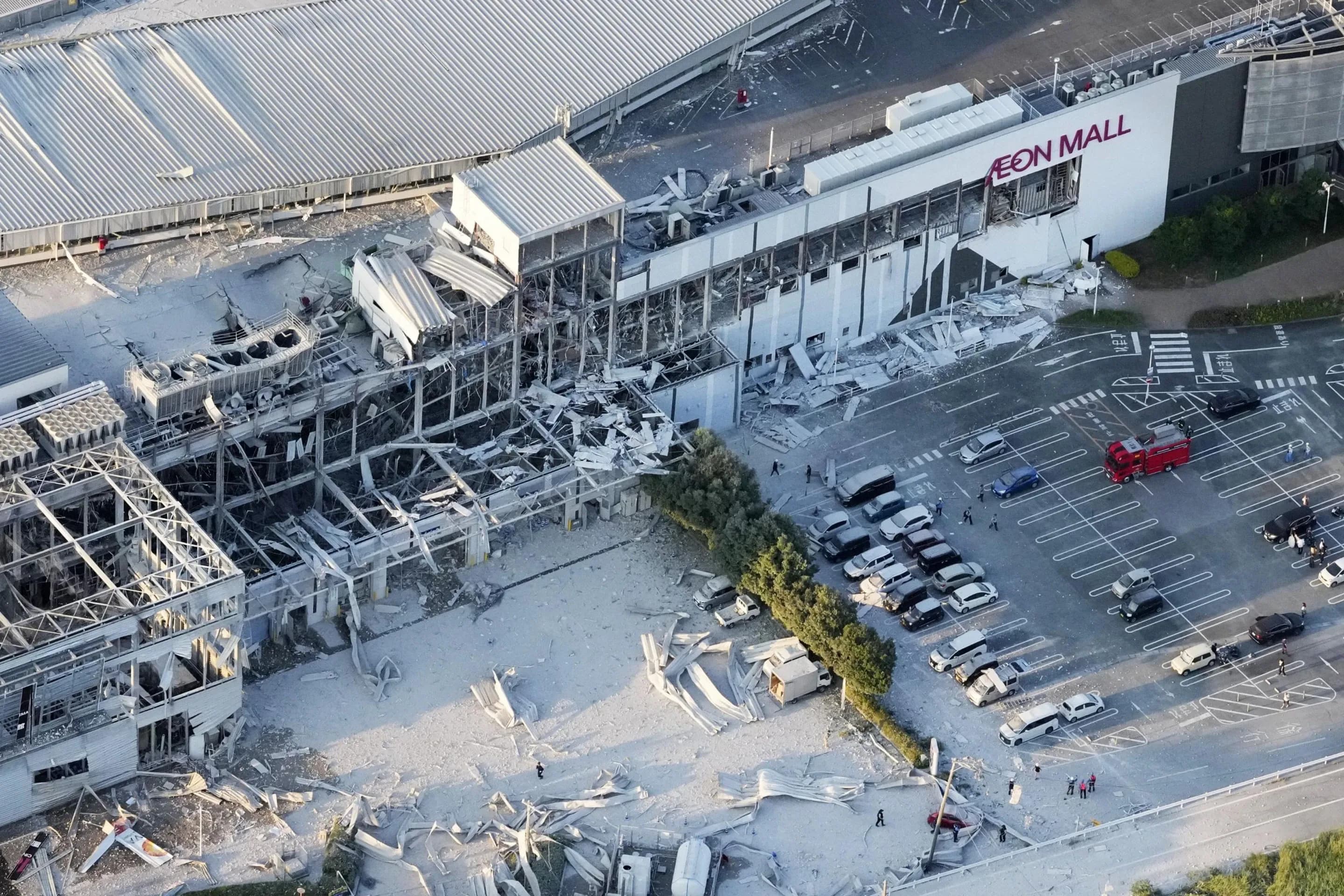
On Wednesday, a powerful magnitude 7.1 earthquake struck the southwestern Japanese island of Kyushu. The natural disaster caused infrastructure damage, an explosion in a shopping center, fires, and mass power outages. Preliminarily, there are no fatalities, but at least fifty people were injured. This is reported by Reuters, citing official statements from Japanese authorities and emergency services.
Scale of destruction and casualties
The tremors were recorded at 16:27 local time, with their epicenter at a depth of 10 kilometers near the city of Uki. The seismic intensity reached the maximum level of seven on the seismic intensity scale. A powerful aftershock was also recorded in the region.
Japanese Prime Minister Sanae Takaichi announced during an emergency briefing in Tokyo that authorities are continuing to assess the full scale of the aftermath. According to local hospitals, over 50 people have been hospitalized. Passengers of a high-speed train, which was in motion during the seismic event, also sustained injuries.
Main consequences of the disaster
Due to cracks in the roads, damaged overpasses, and a freight train derailment, all rail transport, including Kyushu Shinkansen high-speed trains, has been completely suspended. The runway of Aso Kumamoto Airport has been temporarily closed.
Over 48,000 households lost power, and mobile communication outages are observed in the region.
An explosion occurred in the Aeon shopping center, and fires broke out in several areas.
The stone walls of the historic Kumamoto Castle, still under restoration after the 2016 earthquake, were damaged.
Major technology companies, including TSMC, Sony, and Fujifilm, evacuated workers from their factories.
Tsunami threat and NPP safety
Following the tremors, the Japan Meteorological Agency issued a tsunami warning for the coasts of the Ariake and Yatsushiro Seas. The first waves have already reached the shoreline, and residents are urged to stay at a safe distance from the water immediately. In total, the Emergency Management Agency has ordered the evacuation of over 150,000 residents.
At the same time, the operators of the Genkai and Sendai nuclear power plants assured that there were no disruptions in the operation of the facilities and the radiation levels remained within normal limits.
Seismologists warn that strong aftershocks are possible in the region within the next week, and there is a high risk of landslides in mountainous areas.
We remind you that on April 18, two powerful earthquakes occurred in the central Japanese prefectures of Nagano and Omachi, with an interval of approximately one and a half hours. The magnitude of the first was over 5.0 on the Japanese seismic intensity scale, and the second was below 5.0.