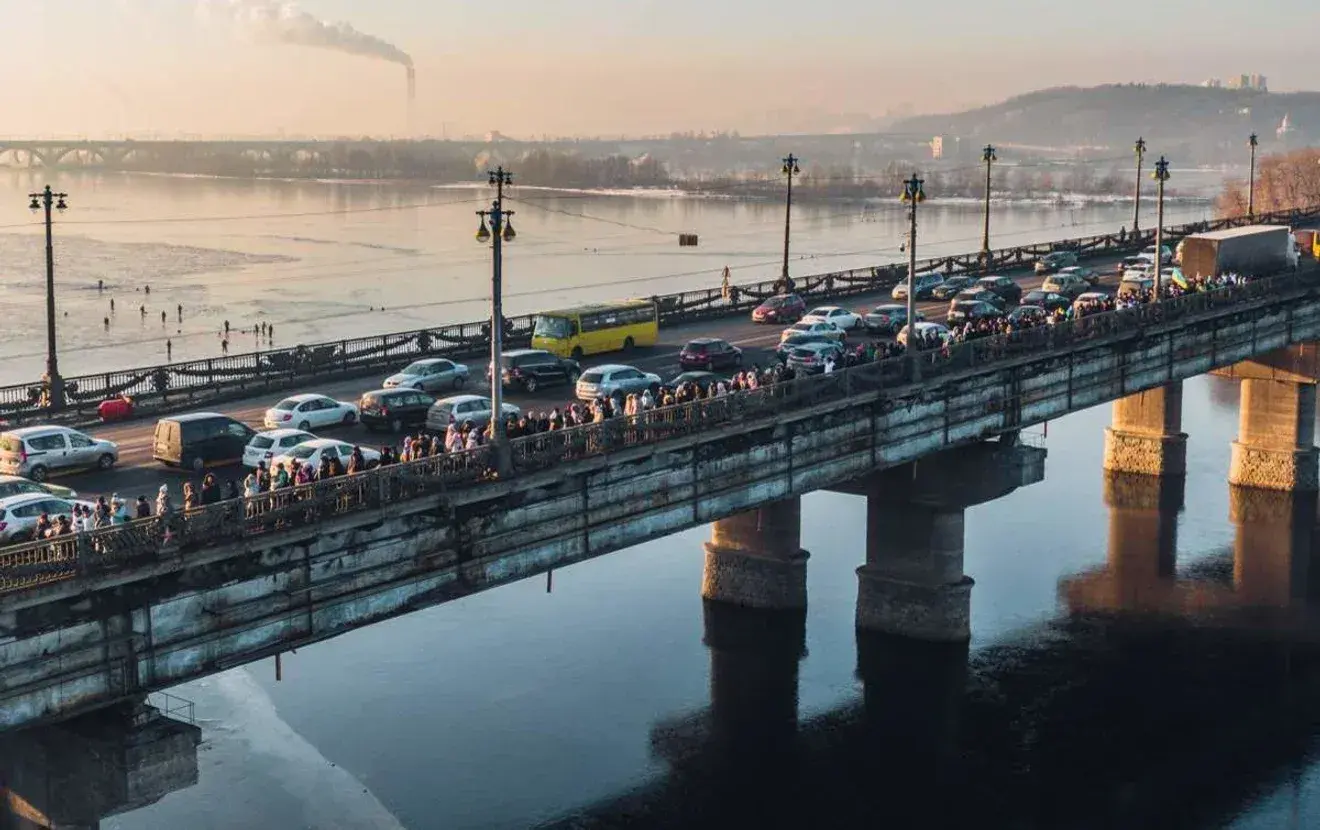
"Kyiv may become two islands": what will happen to the bridges and can pontoon crossings save the situation

11 October, 08:36
11 October, 08:36
"Your City" spoke with transport analyst Dmytro Bespalov and military expert Viktor Kevliuk to find out, how serious the threat of disrupted connections between the banks is, what consequences this would have for residents, and whether the announced backup crossings could become an effective alternative.
Several days of strikes: what has happened to Kyiv's bridges
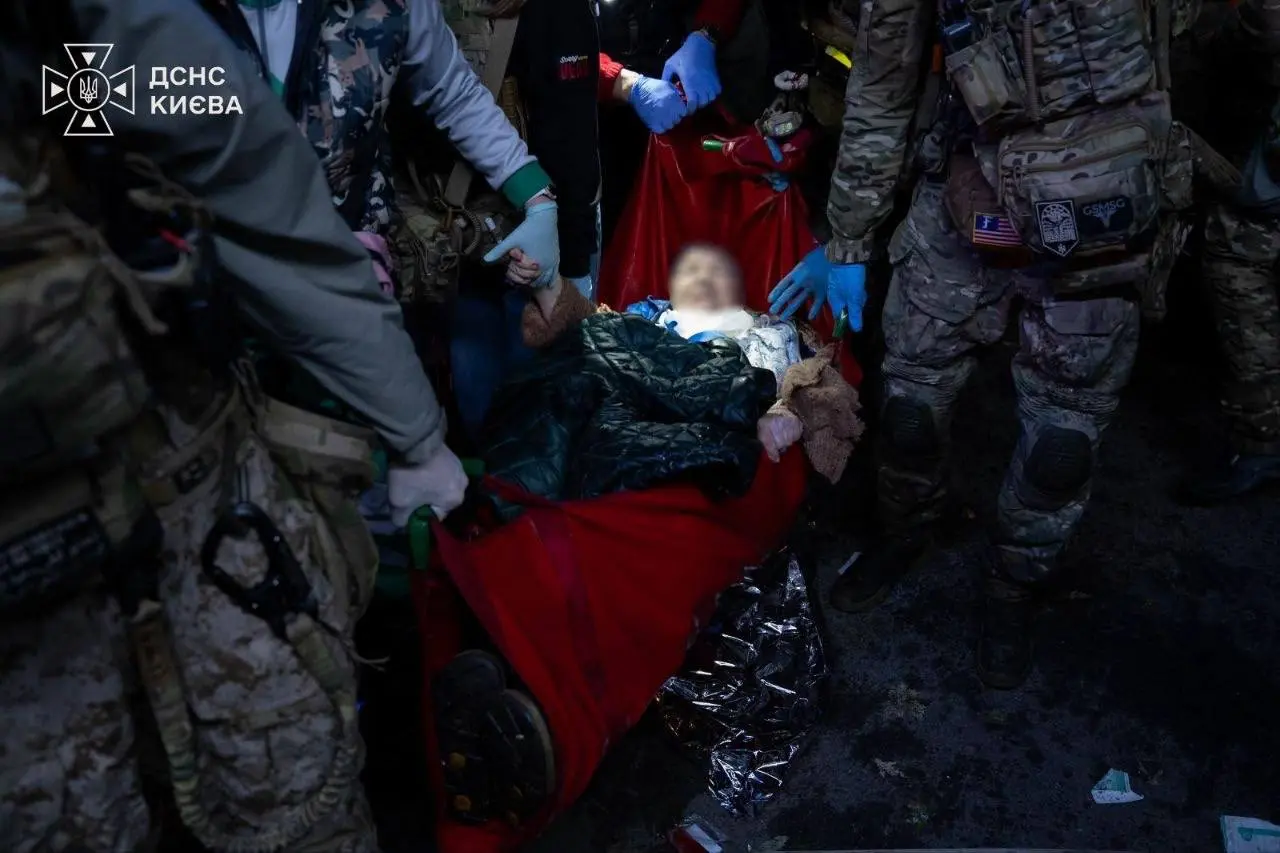
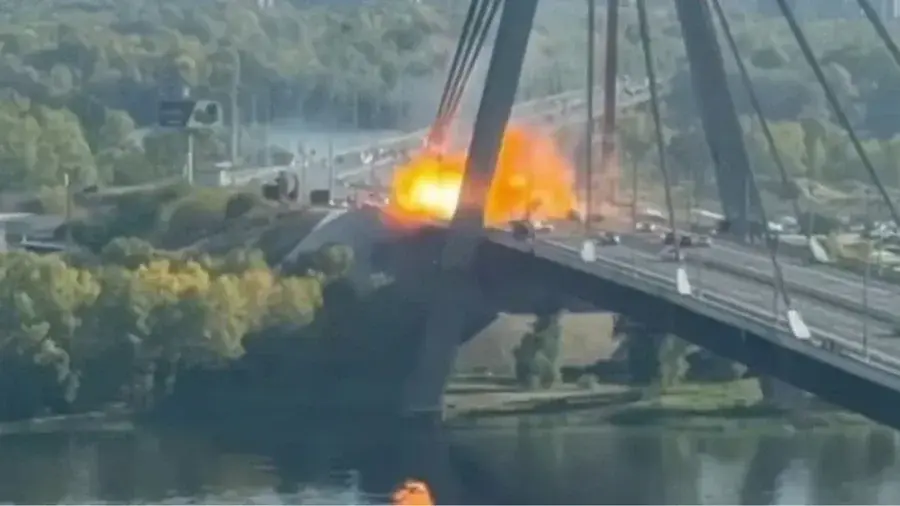
On October 1, under attack was the Southern Bridge. Russian drones hit near its support section and later the roadway. Due to the threat of repeated attacks, traffic on the crossing was restricted, and the metro on the open section of the Green Line was temporarily suspended. Public transport was rerouted to alternative routes.
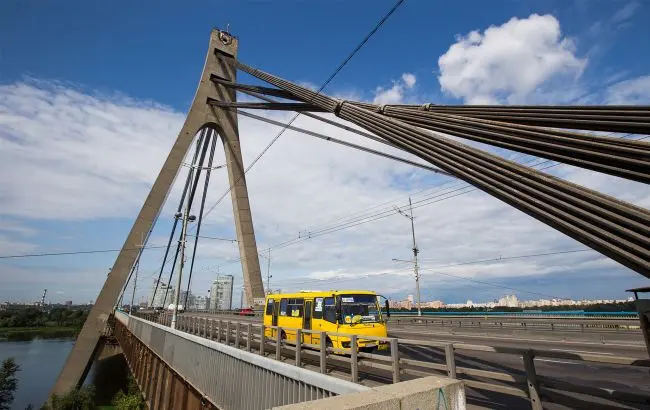
The attacks continued the next day. On October 2, the Southern Bridge was completely closed in both directions, and partial restrictions were introduced on the Metro Bridge and the Paton Bridge. This placed additional load on other crossings, caused traffic jams and made it difficult to move around the city.
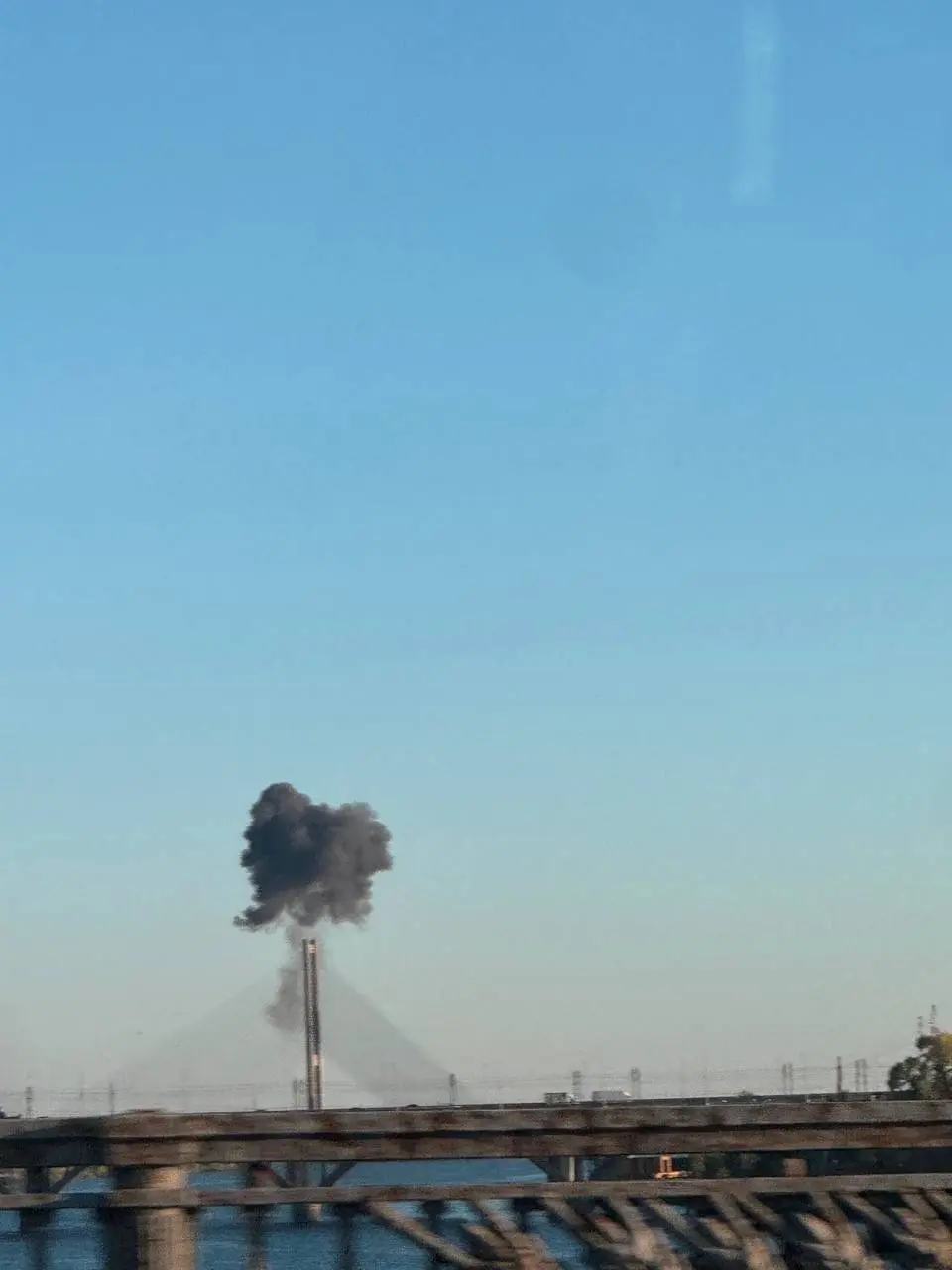
Already on October 3, under attack was the Northern Bridge. The attack damaged the roadway and the trolleybus contact network. Traffic in one of the directions was temporarily closed, and public transport routes were changed.

Yes, this demonstrated that to disrupt connections between the banks of the Dnipro, it is enough to temporarily make a bridge unavailable.
Why bridges are one of the narrowest points of Kyiv's transport system
Transport analyst Dmytro Bespalov explains that Kyiv's dependence on bridges took shape long before the full-scale war. Its cause lies in the urban planning imbalance between where people live, where they work, and the main centers of attraction.
According to the expert, when the capital's transport model was being developed, about 40% of residents lived on the left bank, while more than 80% of jobs were concentrated on the right bank. A significant share of universities, specialized hospitals, ministries, research institutions and other organizations is also located there.
Bespalov stresses that these indicators come from earlier studies, so they should not be treated as current statistics for 2026. However, in his view, the nature of the urban planning imbalance itself remains important for understanding the capital's transport problems.

At the same time, the number of bridges across the Dnipro does not meet the needs of the existing street and road network. As a result, the crossings effectively become places where transport demand is concentrated. "If you consider Kyiv's transport system as a whole and look for bottlenecks in it, then the bridges will be precisely such bottlenecks of our transport system," — Bespalov notes.
According to the analyst, Kyiv already struggled with planned bridge closures for repairs. Under conditions of repeated attacks, when restrictions can be imposed suddenly, the situation becomes even less predictable.
Instead of 45 minutes, an hour and a half: how Kyiv residents' trips may change
Bespalov explains that the consequences of bridge closures are not limited to traffic jams directly in front of the crossings. The additional load spreads to the adjacent street and road network, and the increased length of routes affects the duration of trips.
In his estimate, the disruption to traffic may mean that a trip which under favorable conditions would take about 45 minutes will take 80–90 minutes or more.
Read also: Attacks on the power grid are becoming more frequent: what Kyiv residents are urged to prepare for
An extra half hour or an hour on the road every day means lost time for people who commute to work, school, or medical facilities.
If restrictions last for weeks or months, however, the problem may go beyond the transport sector. Some residents will have to change their work schedules, look for other routes, or give up certain trips. This is not only about comfort of movement. Transport accessibility directly affects the ability to use city services and maintain a usual way of life.
Why buses cannot replace the metro
One of the most important questions is whether ground public transport can compensate for the closure of the metro between the banks of the Dnipro. Bespalov stresses that the answer depends primarily on the carrying capacity of different types of transport, that is, the number of passengers they can move within a given period of time. The metro has a significantly greater carrying capacity than bus routes. Therefore, simply increasing the number of buses will not provide a full replacement for trains.
According to him, for such transportation the buses would have to run at intervals of about 20–30 seconds. However, implementing such a schedule is practically impossible. Vehicles need time to reach a stop, drop off passengers, and take on new ones. In addition, they use the road network, which may already be overloaded with cars. "A bus cannot replace the metro in carrying capacity. Accordingly, it is not able to carry such a number of passengers," — Bespalov concludes.
So, some people will try to leave earlier or later to avoid the greatest load. Others will be forced to give up trips. That means the problem may partly disappear from transport statistics not because the transport system coped, but because people lost the ability to use it to the usual extent.
"They do not aim to completely destroy the bridges"
Bespalov draws attention to one more circumstance: the goal of attacks may be not only the physical destruction of bridges, but also creating conditions under which using them becomes dangerous or is regularly restricted.
At the same time, he does not deny the need to temporarily halt traffic in the case of an immediate threat of strikes. On the contrary, such restrictions can reduce risks for passengers and drivers. In the expert's opinion, the city should look for ways to respond quickly to threats without turning every air raid alert into a prolonged disruption of the entire transport network.
This refers to the principle of differentiated traffic management: restrictions should take into account the current security situation, and the transport system should be able to resume operation as soon as it becomes safe.
"Kyiv is turning into two islands": what military expert predicts
Military expert Viktor Kevliuk assesses strikes on Kyiv's bridges as part of the threat to the city's logistical resilience. In his view, repeated attacks may indicate attempts to systematically disrupt connections across the Dnipro. He assumes that Russian forces are testing specialized infrastructure strike weapons. At the same time, as of the preparation of this material, there is no independent confirmation of the specific characteristics or quantity of such weapons.
Kevliuk explains that the main danger of a prolonged disruption of connections lies in the rupture of logistical links between the two parts of the city. "This is a logistics rupture. Any other measures that will be taken to restore it will, first, be very costly, second, require significant resources, and most importantly, time," — the expert notes.

The situation may become especially difficult for people who live on one bank but work, study, or receive medical care on the other.
This figurative comparison describes the worst-case scenario, not the current state of the capital's transport connections.
According to the expert, prolonged restrictions could complicate access to workplaces, kindergartens, educational institutions, and hospitals.
A separate issue is the work of emergency services. If movement across the Dnipro is significantly restricted, transferring additional forces and equipment from one bank to the other may take more time or require alternative routes. In such a case, the importance of resources already located on each bank increases, as does the ability of services to respond to emergencies without constantly moving across the river.
Disruption of connections is a threat not only to transport
Kevliuk stresses that bridges play an important role not only in the everyday life of the civilian population but also in the broader logistical system of the state.
Disruptions to the ferry crossings may affect the transportation of cargo, the supply of enterprises, and the functioning of infrastructure that depends on regular deliveries. According to him, organizing alternative railway crossings is especially difficult. Unlike temporary road connections, the transportation of railway cargo requires specialized engineering solutions.
If the ability to use certain railway bridges is lost, cargo flows will have to be redirected along other routes. This may increase transportation distances, the load on other sections of the network, and logistics costs.
Kevliuk also emphasizes that transport infrastructure must ensure the resilience of the state under various scenarios of the war's development.
Pontoon Crossings: What the Authorities Promise
Against the backdrop of strikes on bridges, the authorities have announced preparations for backup crossings over the Dnipro.
On October 3, Minister of Community and Territorial Development Mykola Kalashnyk stated that construction may take up to three months. According to the stated plans, the backup structures are expected to provide at least half of the throughput capacity of the existing bridges.
The minister also cited a benchmark: about 600,000 vehicles that cross the Dnipro between the banks of Kyiv each day. However, between the stated goal and the real capacity of temporary crossings to serve urban traffic, there are a number of technical and organizational questions.
And it is precisely here that the assessments of our two experts complement each other.
Why Bespalov Doubts the Promised 50%
Dmytro Bespalov does not deny that Ukraine has experience in setting up temporary crossings. Similar solutions were used to restore connections after bridges on smaller rivers were destroyed. However, according to the expert, such structures have significant limitations. They can provide temporary transportation of critically important cargo, but they are not a full replacement for a stationary bridge.
Particular difficulties arise with pontoon crossings, which require special equipment, maintenance, and consideration of natural conditions. "It is not cheap. I do not know in what quantity we have the appropriate kits available, and if not, they will have to be bought or obtained somewhere", — explains Bespalov.
He also draws attention to limitations related to the winter period, spring floods, and the safety of traffic during possible repeated attacks. However, the stated throughput capacity raises the most questions for the transport analyst.
In his opinion, it is not enough simply to set up a crossing over the Dnipro. It is necessary for the road network to be able to accept the traffic flow leading to the crossing and distribute it after the river is crossed.
Kyiv's stationary bridges are not just structures over water. They are part of large transport hubs with approaches, interchanges, and engineering infrastructure. If a temporary crossing has a limited number of lanes and insufficient capacity of adjacent roads, its actual effectiveness may turn out to be significantly lower than expected.
The expert suggests that transport specialists and the authors of the stated goal may have different understandings of the throughput indicator itself.
This is an important clarification: the theoretical throughput of a crossing is not the same as the real one; it also depends on approaches, congestion, and operational restrictions. Therefore, whether the stated 50% is achievable can only be assessed on the basis of specific transport calculations.
Why Kevliuk Considers Backup Crossings Necessary
Viktor Kevliuk evaluates pontoon crossings primarily as a means of increasing infrastructure resilience. In his view, creating alternative connecting routes is important even when they are not capable of providing the same volume of transportation as stationary bridges.
At the same time, Kevliuk acknowledges that the Dnipro is a difficult water barrier. Creating and long-term operating temporary crossings requires significant engineering resources.
He explains that the military has experience organizing various types of crossings, including with the use of specialized floating vehicles. However, the ability to quickly provide military transportation does not mean that such solutions are automatically suitable for a mass civilian traffic flow. In addition, any new infrastructure in wartime conditions requires accounting for the risk of repeated attacks.
Thus, the experts assess pontoon crossings from different positions. For Kevliuk, it is fundamentally important to have a backup way to cross the Dnipro. Bespalov, on the other hand, raises the question of how many vehicles and passengers such crossings can realistically carry.
Why even a sturdy bridge does not guarantee uninterrupted traffic
At the end of the conversation, Viktor Keviuk specifically addressed the widespread notion of the exceptional strength of large bridge structures.
In his view, assessing a bridge's stability solely by the characteristics of individual materials is incorrect. A bridge is a complex engineering system in which all elements work together and transfer loads to the supports and the foundation of the structure. Therefore, even damage that does not lead to complete collapse may make the use of the structure dangerous.
As an example, the expert cites the Antonivskyi Bridge in Kherson Oblast, which did not collapse immediately after strikes on the roadway, but its use was significantly complicated.
Keviuk's main conclusion is that the external integrity of a structure does not always indicate that it can be operated safely.
That is why engineering inspections are necessary after strikes, and decisions on resuming traffic must be made by responsible specialists based on the actual condition of the structures.
What Kyiv can do right now
Both experts agree that the city needs backup solutions, although the emphasis in their recommendations differs.
Dmytro Bespalov emphasizes the need for flexible transport management. In his view, Kyiv should seek ways to quickly adapt routes to the security situation, ensure the operation of public transport in accessible directions, and avoid unjustifiably long restrictions after the direct threat has passed. At the same time, the expert stresses that standard transport solutions may be insufficient for such a situation.
Keviuk, in turn, proposes considering the transport system as part of the city's broader readiness for crisis situations. He pays особую attention to possible disruptions in electric transport operations resulting from attacks on energy infrastructure. In his assessment, Kyiv should plan alternative ways of transporting passengers in case of prolonged power outages. At the same time, buses also depend on the availability of fuel, serviceable rolling stock, drivers, and accessible roads.
If connections between the banks are significantly restricted, the question will become important not only of how to get people across the Dnipro. No less important is whether residents of each bank will be able to obtain necessary services without regular trips to the opposite side of the river. This concerns the accessibility of hospitals, stores, social institutions, workplaces, and public transport within districts.
Keviuk also emphasizes the need for coordinated work between the city authorities and the military administration. In his view, issues of defense, public safety, transport provision, and backup resources require joint planning.
Do Kyiv residents need to prepare for life without connections between the banks
Viktor Keviuk believes that residents should take into account the possibility of prolonged transport restrictions in their own plans. This primarily concerns people whose daily lives depend on regular trips across the Dnipro. The expert advises thinking in advance about alternative ways to get to work, medical facilities, and other important places.
At the same time, he stresses that the city authorities should focus particularly on those who cannot independently change their location or mode of movement. These include, in particular, people with limited mobility, medical patients, and other residents who need constant assistance.
Keviuk admits that in the event of a sharp deterioration of the security situation, a temporary departure from the city may be one way to reduce the load on its infrastructure for those who have such an opportunity. However, this is the expert's personal recommendation in the context of a hypothetical crisis scenario, not a message about the need to evacuate Kyiv.
At present, there are no grounds to treat a complete transport isolation of the banks as inevitable. At the same time, the October attacks showed that even partial restrictions can significantly affect the everyday life of the capital.
A city that needs more than just another bridge
Kyiv's problem did not arise in October 2026. As Dmytro Bespalov explains, its basis is a long-standing imbalance between where people live and the location of workplaces, educational, medical, and other important institutions.
Pontoon crossings may become part of the backup infrastructure, but their real effectiveness still needs to be confirmed by calculations. Buses can partially help passengers, but will not provide a full replacement for the metro. And even after traffic on the bridges is restored, the question remains of how quickly the transport system will be able to respond to future threats.
Therefore, Kyiv's readiness for possible prolonged restrictions on connections is not only a matter of the number of crossings over the Dnipro. It is also the accessibility of necessary services on both banks, the availability of alternative routes, the resilience of public transport, the work of emergency services, and the ability of urban infrastructure to function under crisis conditions.
The main question now is not only whether Kyiv can preserve its bridges. But also how prepared the city is to continue living if using them becomes more difficult.
We note that "Your City" will continue to follow this topic. The editorial office has sent official requests to the Kyiv State Emergency Service (DSNS) and the Kyiv City State Administration (KMDA) and is awaiting responses.
Full or partial republication of this text without the written consent of the editorial office is prohibited and is considered a violation of copyright.

Related News