100 thousand cars drive on Kyiv's emergency bridge daily: what's preventing its rescue
03 August 2026, 20:15
03 August 2026, 20:15
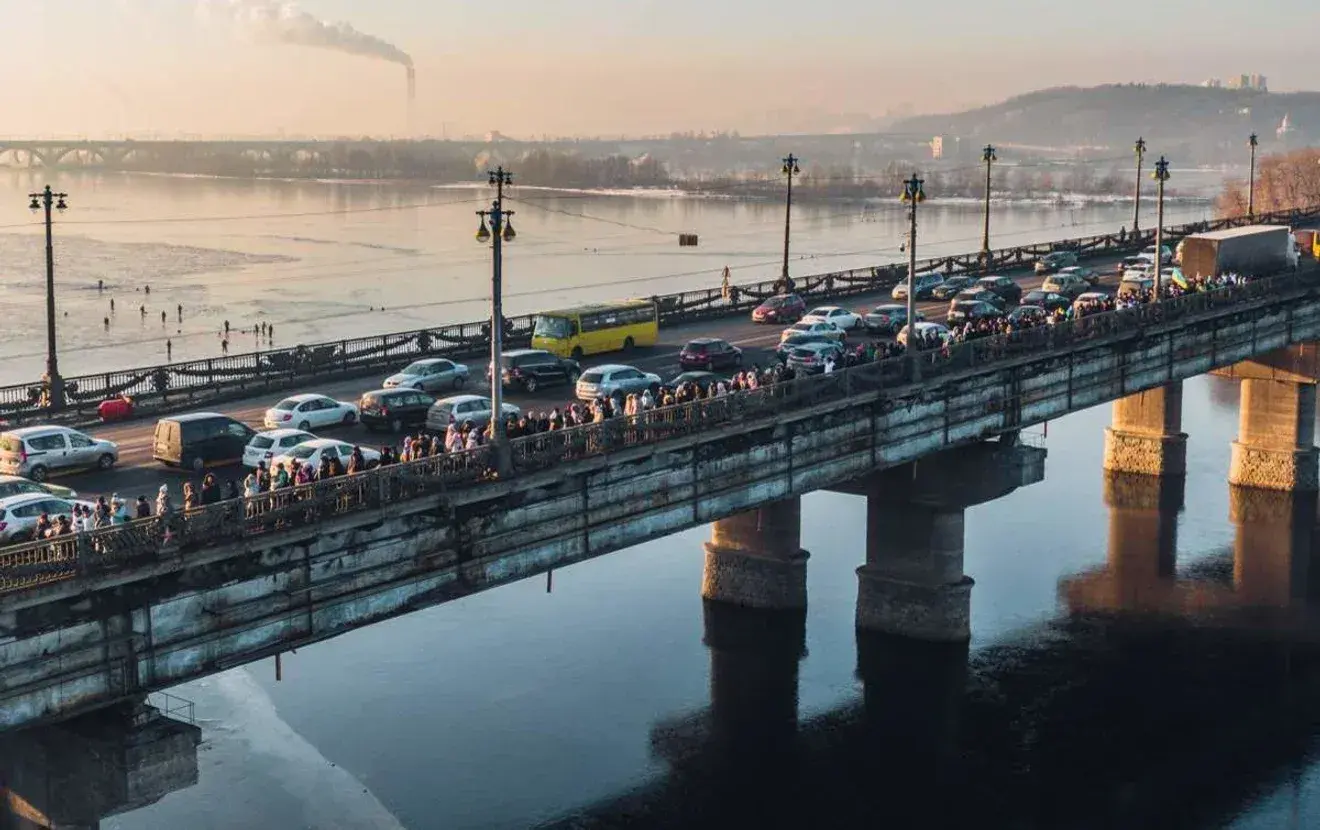
The world's first all-welded bridge, connecting the right and left banks of Kyiv for over 70 years, is officially classified as non-operational today. Despite this, thousands of drivers, public transport passengers, and emergency services continue to use it daily, as the city effectively has no adequate alternative to this crossing.
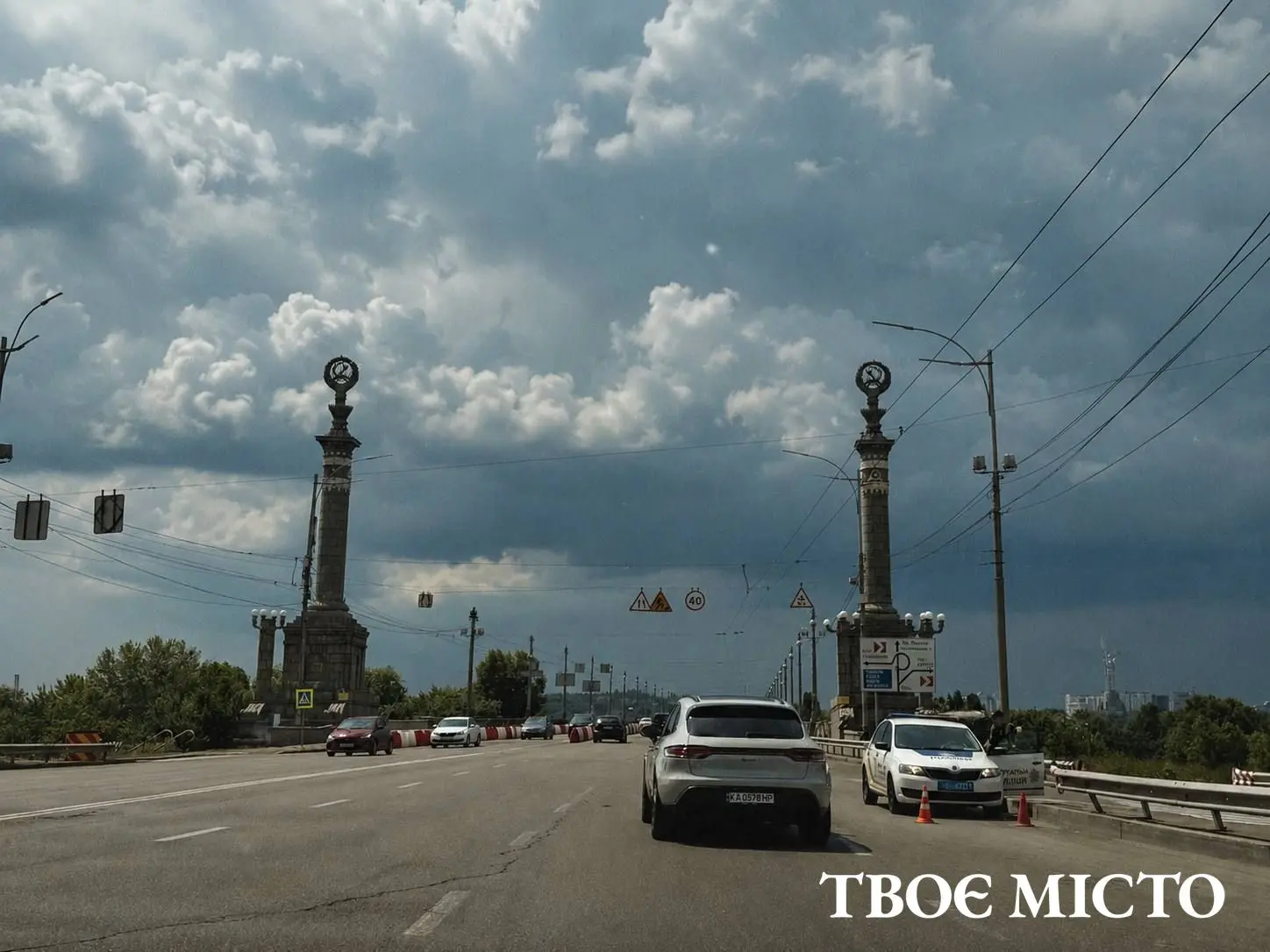
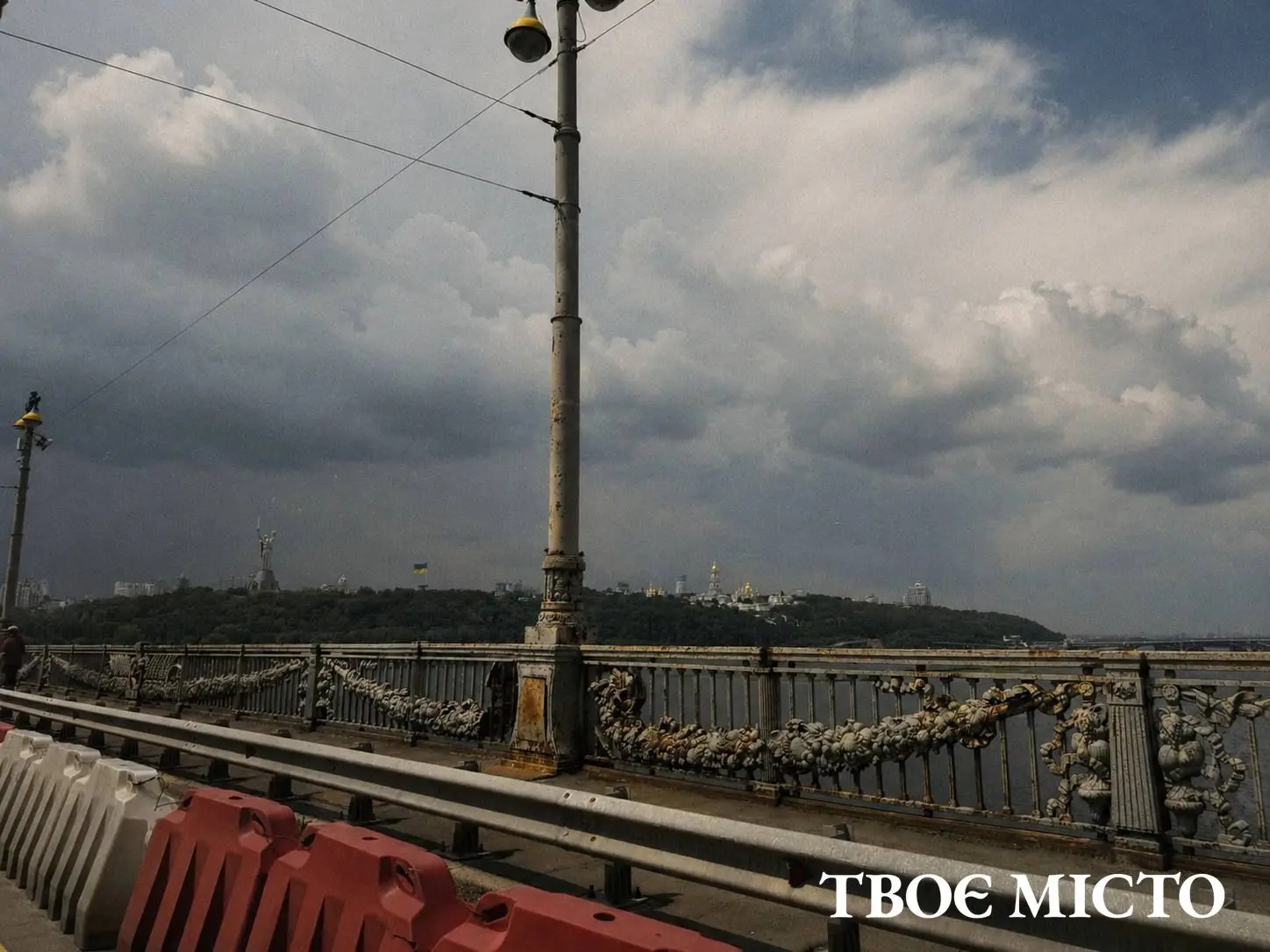
To see for ourselves the current condition of the Paton Bridge, "Tvoe Misto" headed to the crossing on a regular weekday. Even outside of peak hours, the flow of vehicles was almost continuous – cars, buses, and public transport moved constantly in both directions. Even during the drive, cracks in the road surface, closed outer lanes, and other signs of the structure's years of operation are noticeable. It's hard to believe that a bridge, which remains one of the capital's key transport arteries, has officially been considered non-operational for several years.
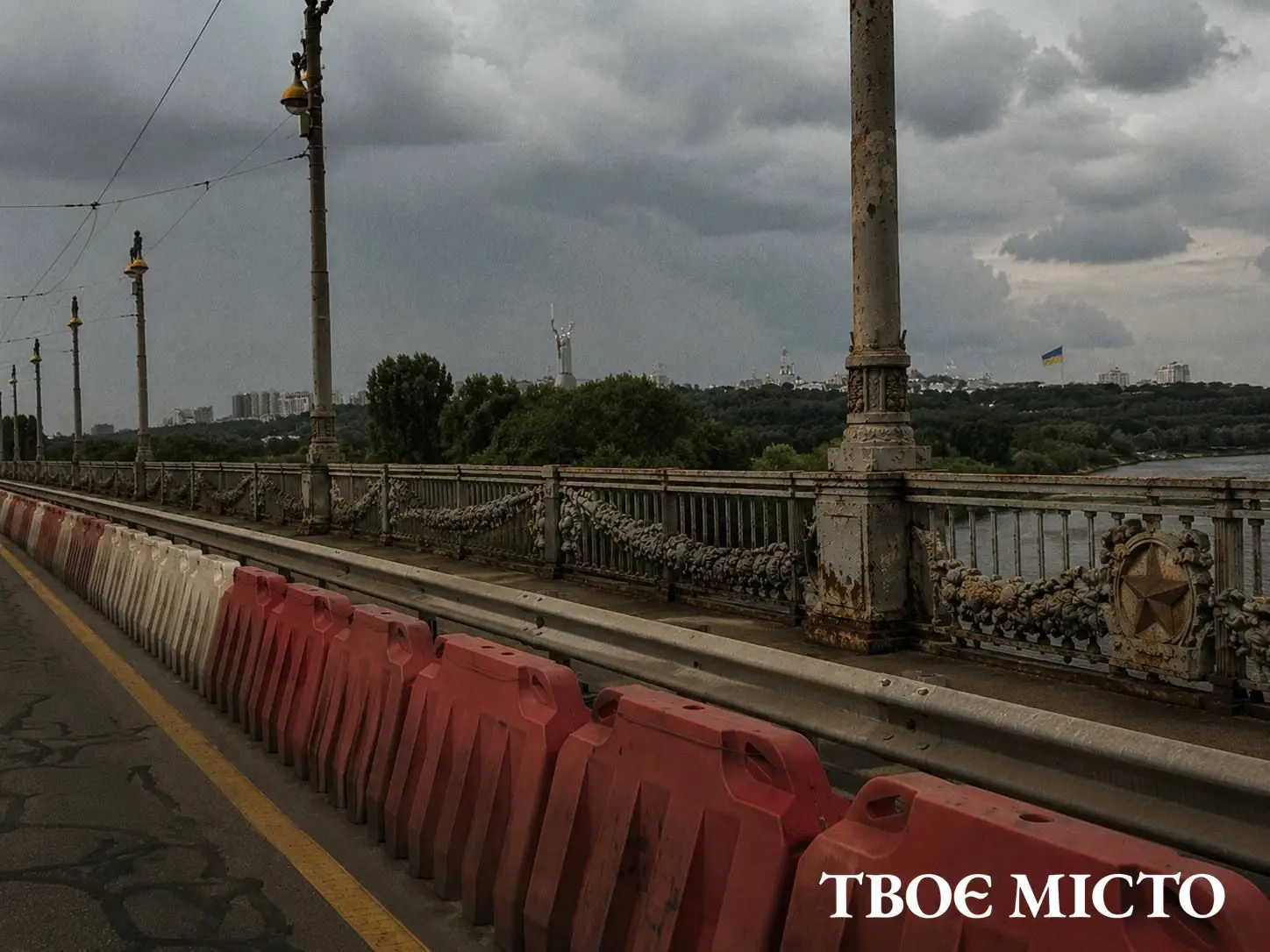
This observation gives rise to the main question: how safe is it to use the Paton Bridge today, and why has its comprehensive restoration remained only in plans for years?
For several years now, specialists have been warning about the need for comprehensive restoration of the Paton Bridge. At the same time, reconstruction has not yet begun: the city is only preparing project documentation, while the issues of funding and the final scope of work remain open. But why has one of the capital's most important transport arteries ended up in such a state, is it safe to use it today, and what scenarios could save the bridge?.
From an engineering breakthrough to a capital city symbol
The history of the Paton Bridge began long before its official opening. The construction of the crossing, designed by engineer Yevhen Paton, started two years before the Soviet-German War. In September 1941, while retreating from Kyiv, NKVD special units blew up the crossings over the Dnieper River – only the supports remained of the unfinished bridge.
During the German occupation, Fritz Todt's military construction organization was responsible for restoring the crossing. The main work was carried out by Hungarian sapper units and about three thousand Jews brought from Eastern Europe for forced labor. In the autumn of 1943, while retreating from Kyiv, German troops burned down the bridge.
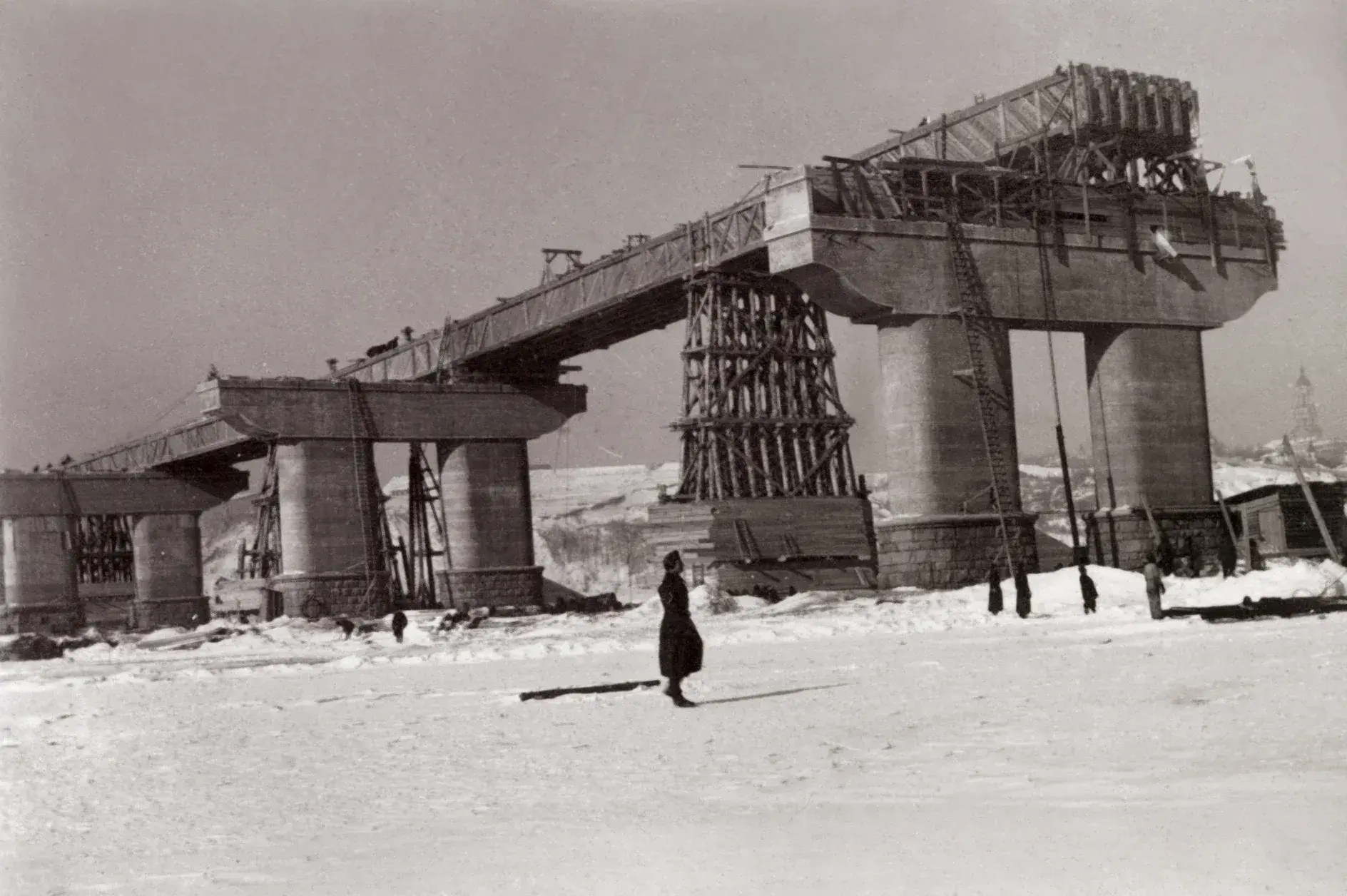
The crossing began its new life after the war. On November 5, 1953, the Paton Bridge was officially opened – it became the world's first all-welded bridge and a true breakthrough in engineering thought. The structure was created with the direct involvement of academician Yevhen Paton, in whose honor it was named.
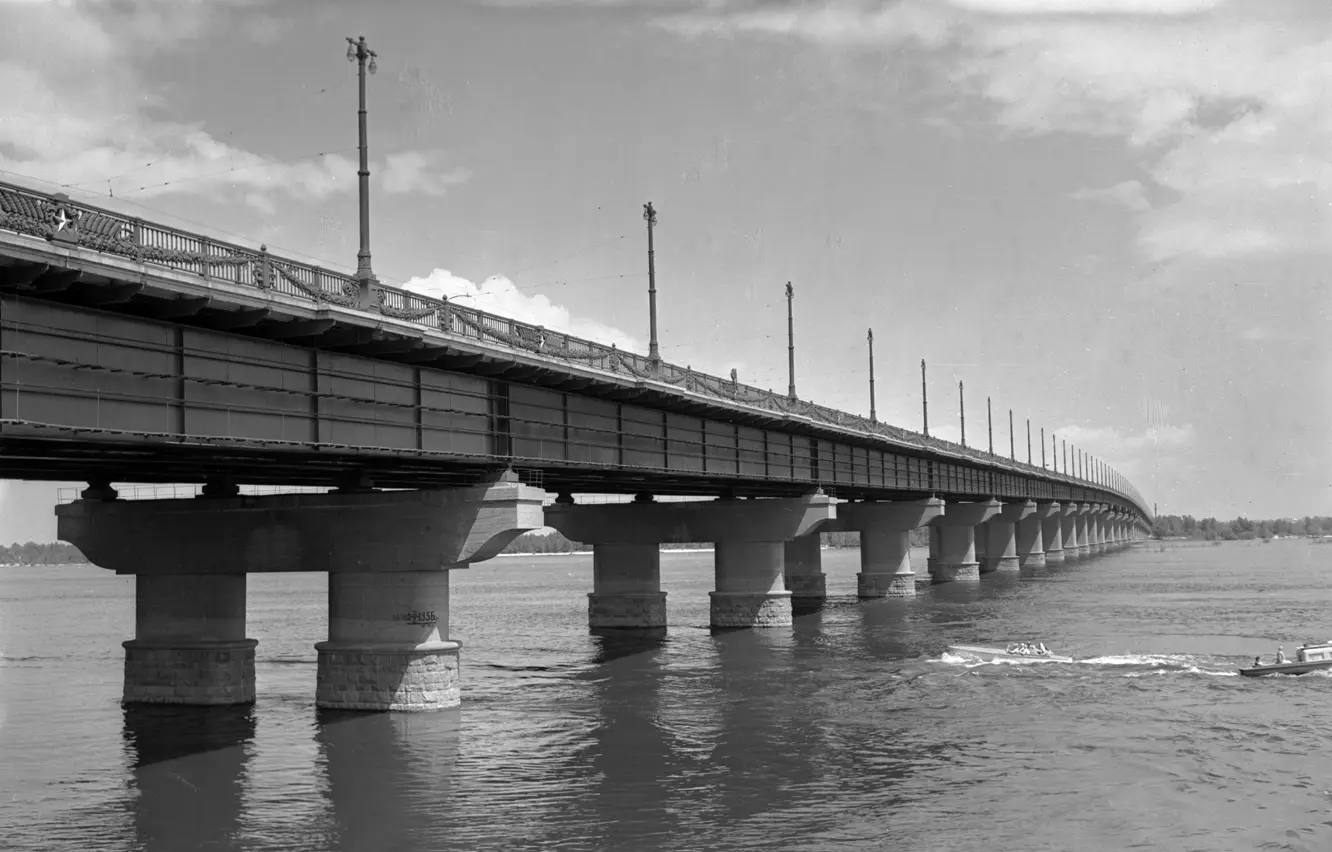
The crossing, over a kilometer and a half long, became not only an important transport artery of Kyiv but also a unique engineering monument. In 2008, the Paton Bridge was included in the State Register of Immovable Monuments of Ukraine as a monument of architecture and urban planning, science and technology. Protected were not only its architectural elements but also its main structures and location. Therefore, beams cannot simply be replaced with modern ones, nor can another bridge be built next to it – the object can only be restored.
Also, in 1995, the American Welding Society (AWS) recognized the bridge as an outstanding welded structure of the 20th century for the implementation of automatic welding during bridge construction.
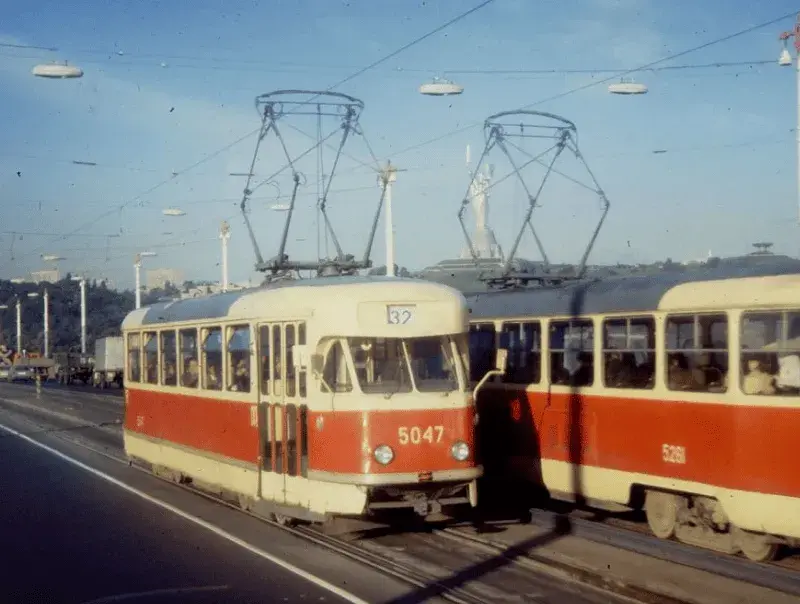
In different years, cars, public transport, and trams, which connected the two banks of the capital until 2004, used the bridge. Then, the tram tracks were dismantled, freeing up space for additional car traffic lanes.
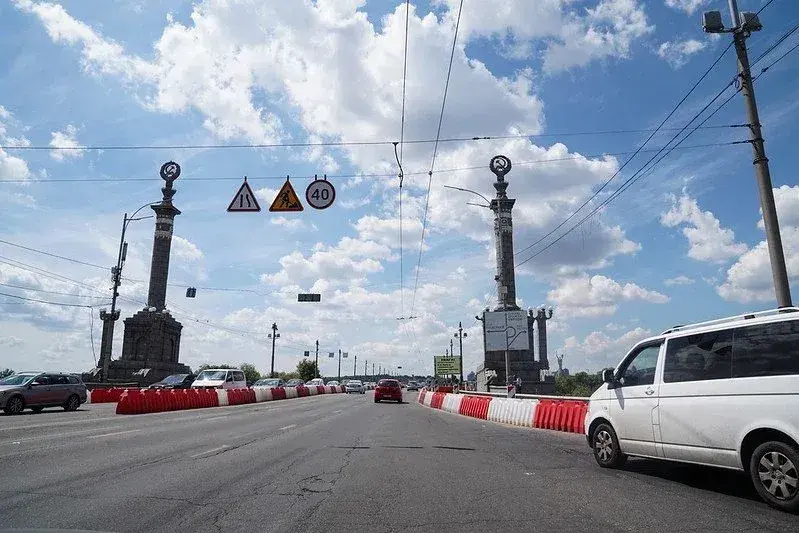
However, over time, the bridge, designed for significantly lower transport loads of the mid-20th century, began to wear out rapidly. In 2017, it was declared emergency, and later assigned the fifth operational status, which means the structure is unserviceable. After an inspection in 2020, traffic on the outer lanes was restricted, and weight restrictions were introduced for heavy vehicles.
Is it safe to use the Paton Bridge today
Despite its official status as an unserviceable structure, the Paton Bridge is not closed to traffic. Thousands of cars, public transport, and emergency services use it daily. According to estimates previously announced by "Kyivavtodor," traffic intensity on the bridge reaches approximately 100,000 vehicles per day, although it was designed for significantly lower traffic loads.
In addition, at least four bus and two trolleybus routes pass over the crossing, providing connectivity between the right and left banks of the capital daily. This is precisely why any restrictions or complete closure of the bridge will inevitably affect the operation of Kyiv's entire transport system.
At the same time, news about cracks, corrosion of metal structures, and further postponement of restoration raise a legitimate question among Kyiv residents: is it safe to use this crossing today?
The KPI "Kyivavtoshlyahmist" assures that the last planned inspection of the bridge, conducted in 2025 by the V.M. Shymanovskyi Institute of Steel Structures, confirmed the need for restoration. At the same time, based on the results of a technical meeting with the participation of relevant specialists, the bridge can continue to be operated, provided that established restrictions are observed.
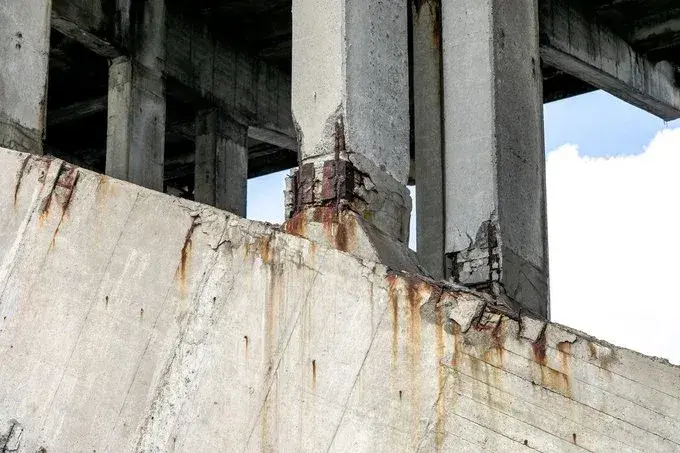
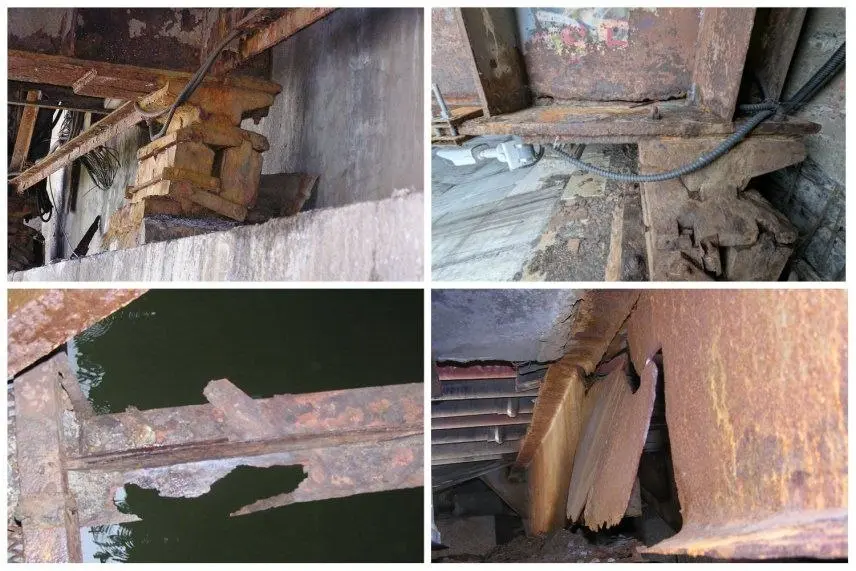
Currently, a number of restrictions are in place on the bridge: traffic is prohibited for vehicles with a load on the axle exceeding seven tons, the maximum mass of a single vehicle should not exceed 17 tons, and traffic is organized according to a temporary scheme - two lanes towards the left bank and three in the opposite direction.
However, even with such restrictions, many questions remain among experts regarding the actual technical condition of the structure.
According to a transport expert Dmytro Bespalov, the results of the bridge's technical audit raised serious concerns a few years ago.
At the same time, the expert emphasizes that the status of an inoperable structure by itself does not automatically mean its operation will cease. Legislation provides for special procedures that allow the use of such objects under certain conditions, particularly after relevant expert conclusions.
Why the Paton Bridge reconstruction has been stalled for years
The need for a comprehensive restoration of the Paton Bridge has been discussed for more than a year. At the same time, the project itself has not yet moved into the implementation phase. Tenders for design have been canceled in various years, different concepts for restoration have been discussed, and disputes have arisen between state and city authorities regarding responsibility for the project's implementation.
Currently, as reported by the Kyiv City State Administration, the city is only developing project documentation for anti-emergency work and is simultaneously determining the future client for the restoration.
However, even after the project documentation is prepared, the start of the restoration remains uncertain. As experts explain, the main problem lies not only in organizational procedures but also in the lack of a clear funding source for such a large-scale project.
According to the expert's assessment, this is not a routine repair but one of the most expensive infrastructure projects in the capital.
Meanwhile, according to engineer and urban planner Dmytro Makahon, the situation around the facility is just one manifestation of a much broader problem – the approach to maintaining urban infrastructure.
Restore or build new: what the future of the Paton Bridge might look like
If there is a consensus among experts regarding the current state of the bridge – the structure requires comprehensive intervention – then there are different approaches to the future of the Paton Bridge. Some specialists advocate for large-scale restoration with the return of the bridge's historical transport function, while others consider it appropriate to consider building a new crossing nearby, preserving the historical bridge as an engineering monument.
Dmytro Makahon is convinced that the Paton Bridge needs to be comprehensively reconstructed, not just limited to local repairs.
According to the urban planner, bringing back the tram would not only restore the historical function of the bridge but also make public transport more competitive, which could ultimately reduce the number of cars on the crossing.
Meanwhile, transport analyst Dmytro Bespalov believes that the city should look more broadly and assess not only the cost of restoration but also the long-term investment efficiency.
According to the expert, during preliminary work, British consultants considered several development scenarios.
At the same time, Dmytro Bespalov emphasizes: even this option remains just one of the concepts for now. Its implementation requires a full feasibility study, identification of funding sources, and a political decision, because until there are answers to the questions about funding and implementation, "any concepts will remain just good ideas."
What happens next
In 2026, over 2 million UAH are allocated for the winter maintenance of the bridge, but currently, the Paton Bridge continues to operate under numerous restrictions. As reported by the Kyiv City State Administration, the city is only developing project documentation for anti-emergency work, determining the future client for restoration, and preparing technical specifications. Specific deadlines for the start of work have not yet been announced.
Despite its technical condition, the crossing remains one of the key transport arteries of the capital. Public transport routes connecting the left and right banks of Kyiv, as well as a continuous flow of private cars and special vehicles, pass through the bridge daily. Currently, four bus and two trolleybus routes operate across the bridge, providing transport links between different districts of the city.
At the same time, the latest technical meeting with the participation of relevant institutes confirmed: the operation of the bridge is possible only if the already implemented weight and traffic restrictions are strictly adhered to. At the same time, the specialists themselves emphasize that the restoration of the structure remains necessary and cannot be postponed any further.
This was also emphasized by transport analyst and head of the public organization "Kyiv Passengers" Oleksandr Rak, noting that this is not the only problematic bridge in the capital. In total, Kyiv has 132 road bridges, of which, as of the end of 2024, 28 (21%) are recognized as dilapidated, and another 44 (33%) are in a pre-dilapidated state.
He also cited an example of using the process freeway removal in world practice: when continuous flow highways were transformed into signal-controlled streets or public spaces where car traffic was completely restricted.
Most examples of freeway removal come from the USA, where, after the adoption of the Federal Aid Highway Act in 1956, a network of highways between cities and within agglomerations was actively built. However, starting from the 1970s, part of these highways began to be dismantled. In Portland, Harbor Drive was demolished; in New York, the West Side Elevated Highway; and in Rochester and Montreal in the 2010s, highways through city centers were transformed into ordinary city streets.
In San Francisco, earthquakes prompted changes – the damaged Embarcadero Freeway and Central Freeway were decided to be dismantled. At the same time, in Boston, Madrid, and Düsseldorf, individual highways were moved underground.
Similar transformations occurred in other countries. In Seoul, the highway over the Cheonggyecheon River was demolished and a embankment was created in its place. In Paris, the road along the Seine was transformed into a pedestrian and bicycle space; in Utrecht, the highway over the water canal was dismantled; and in Brussels, the Reyers overpass was replaced by an ordinary city street.
For over seven decades, the Paton Bridge has become not only one of Kyiv's symbols but also a critically important transport artery, without which it is difficult to imagine the daily life of the capital. That is why the discussion around its future has long gone beyond a purely engineering issue. It concerns people's safety, the city's mobility, the preservation of a unique monument of world engineering, and the ability of the state and city authorities to respond promptly to challenges related to aging infrastructure. Today, experts interviewed by "Tvoe Misto" have different views on the bridge's future, but they are unanimous in one thing: it is impossible to postpone a comprehensive solution to the problem any longer.
Full or partial republication of the text without the written consent of the editorial board is prohibited and is considered a violation of copyright.

Related News