How can we learn to live with birds in the city – not displacing them, but coexisting? Which species have increased, and which have decreased? Are there any Red Book listed birds in Lviv? Where has the house sparrow disappeared from the streets, and how can we humanely curb the growth of the pigeon population?
About how Lviv looks from the perspective of its feathered inhabitants, "Tvoe Misto" learned from Andriy Bokotey – an ornithologist who has been researching urban birds for over 40 years, a Doctor of Biological Sciences, Professor of the Department of Zoology at the Ivan Franko National University of Lviv, and a scientist at the State Museum of Natural History of the NAS of Ukraine.
Ornithologists "see" birds... by their voices
A city is a territory with few natural places that birds are used to. Urban space is densely built up, large areas are paved, and 80% of the territory is covered with hard materials. A metropolis has a high human population density and increased noise levels, which also deters birds.
In addition, the air temperature in the city is always several degrees higher due to industrial activities, heating of buildings, and heat-conducting utilities. And this attracts birds more than natural areas do.
Today, 104 bird species live on the territory of Lviv, and about 200 species live in the Lviv region.
"People are often surprised by such a number and ask where these birds are if there are so many of them," notes ornithologist Andriy Bokotey. "They say we only see a dozen bird species. Where are the others? Average Lviv residents very rarely look up. But birds mostly live high up – in trees, hiding in canopies; some don't descend to the ground at all. Therefore, we know little about them and don't see them at all."
It turns out that ornithologists work not so much with the appearance of birds as with their voices. Professional ornithologists must know bird voices, at least those of the species they work with and that live in that territory.
"We work by ear. Sight is an additional element that we use. We know bird voices, so we hear them," explains Andriy Bokotey. – "People say there are few bullfinches in Lviv now. Or that there are none at all. But I hear them all the time. I don't see them either; I hear them. And I hear them almost every day if I walk past green zones."
"Can you distinguish the voices of all 100 bird species by ear?" – we are quite surprised.
"Perhaps even a bit more," the ornithologist smiles in response.
According to him, ornithologists identify birds by their voices, analyzing the unique frequencies, rhythm, and structure of their songs; professionals distinguish individual characteristics, timbre, rhythm, and the structure of a bird's song.
Rose-ringed parakeets have appeared in Lviv parks
Among those 104 bird species living in Lviv, 75 species nest within the city limits, and 32 species stop over during migration.
"In general, birds relate to the city in different ways. There are bird species that do not tolerate proximity to humans – these are urbophobes. These include our common Eurasian skylark. If the city starts developing territory where the skylark previously lived, it retreats. You will never see a skylark in cities, although these birds may migrate over the city and their voices will be heard.
The tree pipit also belongs to the urbophobes. It occurs very rarely in Lviv parks. A few years ago, one pair nested in Znesinnia Park. Franko Park, Stryiskyi Park, Pohulianka, Znesinnia – these are territories where birds live that do not tolerate humans very well."
There are species that are quite friendly toward the urban environment. They mostly stay in city parks and squares where there is a lot of greenery. Among them is the common chaffinch, which can live in both the forest and the city. It is tolerant of the environment, quite friendly, and easily allows people to approach.
The chaffinch is a partially synanthropic species. It often lives near humans in parks and gardens but is not an obligatory human companion, like the house sparrow, for example.
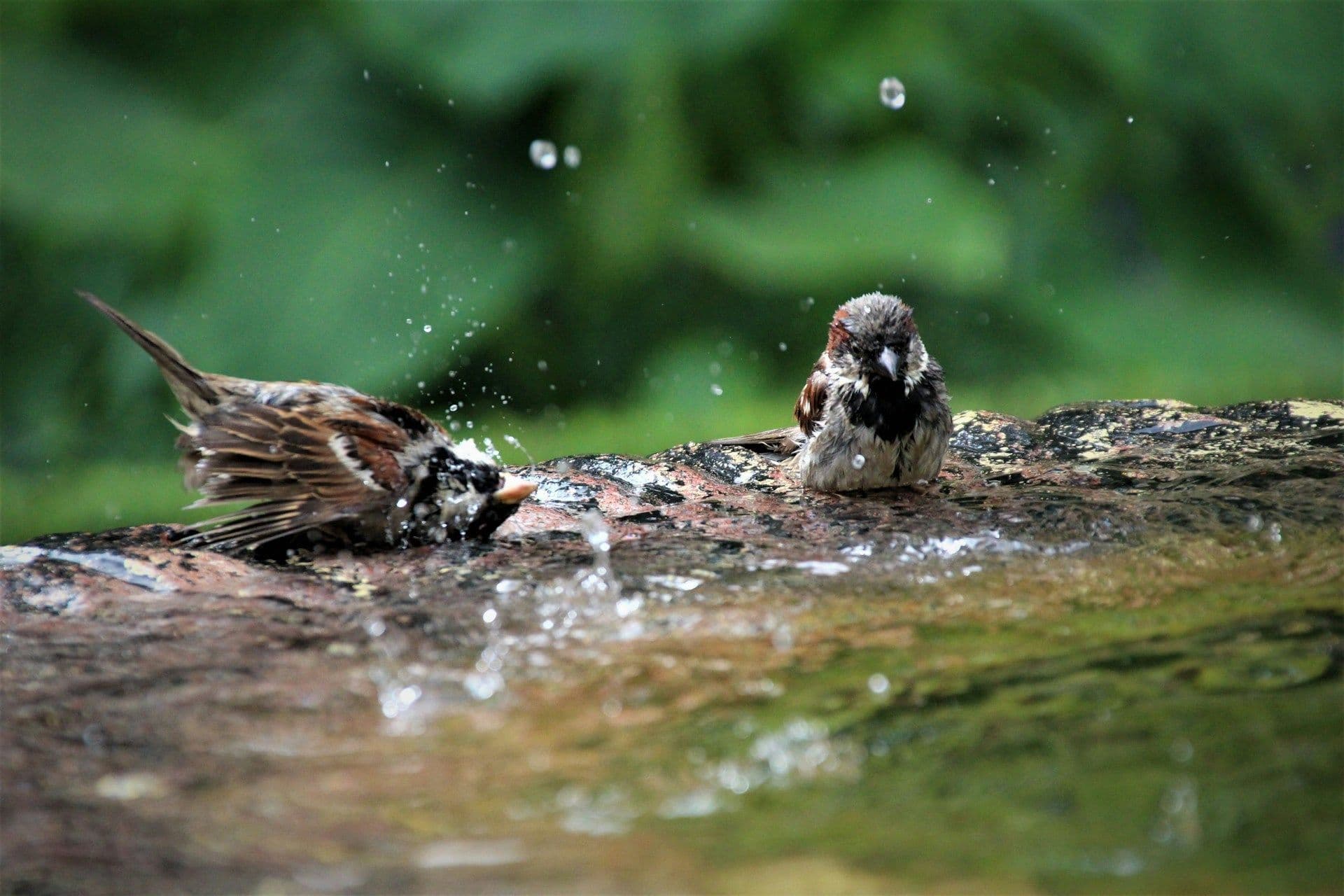
"There are also 6–7 bird species that have adapted so well to coexistence with humans that they have effectively lost their wild populations. These are synanthropic birds. The house sparrow, which we see less and less often in Lviv, lives only near humans," notes the scientist. – The same can be said about the white stork.
These birds live only near humans. They can feed in meadows, fields, or near rivers, but they always build their nests near human dwellings. Synanthropic species also include swallows—barn and house swallows—as well as the common swift. These are birds that practically no longer have populations in the wild."
There are adventive bird species—those that appeared here relatively recently. These include the Eurasian collared dove and the Syrian woodpecker, which began to be encountered around the 1950s. Before that time, they were not present in Lviv. Somewhat earlier, the black redstart appeared in the city.
A large group of so-called rock birds also lives in Lviv. These are species that in nature nest or once nested on rocks. In the city, they adapted to living near humans and became synanthropes. Among them are the sparrow, the swallow, the swift, and the jackdaw, which practically no longer has a natural population left.
"They need niches and crevices; they are quite unpretentious regarding weather conditions. In the city, on our high-rise buildings, they have actually found the same 'rock' conditions they had in natural habitats. But in the city, the food base is even richer.
In the parks of Lviv, you can sometimes see parrots. Occasionally they escape from captivity and sometimes settle in the wild. In particular, Rose-ringed parakeets have appeared in Lviv. In the wild, these birds live in South Asia and some parts of Africa."
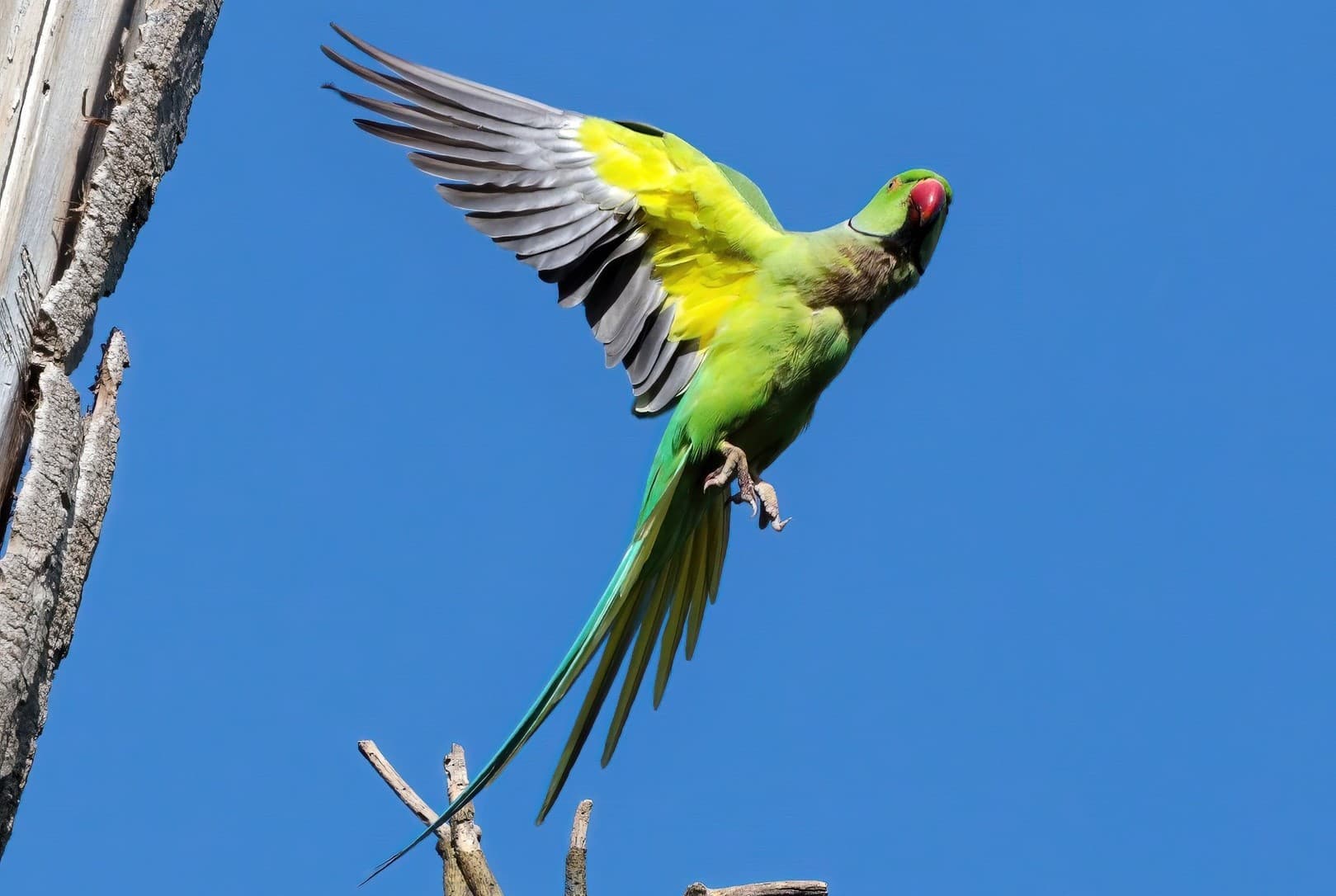
Rose-ringed parakeet
Which Red Data Book birds live in Lviv
Andriy Bokotey emphasizes: the fact that rare bird species listed in the Red Data Book of Ukraine live in Lviv is unique. Specifically, the stock dove. Only one or two cities in Europe can boast the presence of this bird in their urban avifauna.
"It is very similar to our feral pigeon, but the stock dove is the only pigeon that nests exclusively in hollows. The stock dove lives in Stryiskyi Park, Ivan Franko Park, Pohulianka, Znesinnia, and the High Castle—in parks where there are large old trees with hollows. Biologically, this bird is associated with beech. Beeches have survived in the city's old parks, and that is where stock doves nest in hollows. They gladly eat beech nuts.
Among the Red Data Book species nesting in Lviv are also the Ural owl and the white-backed woodpecker. The Ural owl is found in the Briukhovychi and Vynnyky forests and at Pohulianka. A few years ago, it was photographed in Stryiskyi Park, though it's unlikely it nests there; it might have just been hunting, the ornithologist says. The white-backed woodpecker is found in suburban forests and occasionally nests at Pohulianka, which is located close to the Vynnyky forest.
To the question from "Tvoe Misto", whether the number of Red Data Book birds in Lviv is increasing, Andriy Bokotey replied that the stock dove population is growing overall in Ukraine, but its numbers in Lviv are declining.
"There are fewer and fewer hollow trees in Lviv's parks. Because of this, the number of stock doves is decreasing. Over the last 30 years that I have been conducting research, its population has fallen threefold. As for the Ural owl, its numbers are unlikely to be increasing, but in principle, it is a species whose numbers are growing; it is expanding its range boundaries to the north. The white-backed woodpecker is not numerous but has a stable population."
The city shapes bird composition
What exactly attracts birds to the city? First and foremost—food. Previously, birds often fed at dumps, but now this feeding niche in Lviv has virtually disappeared. Containers are closed, and garbage is taken out in plastic bags.
However, people in cities often feed birds. And frequently with food that harms them. In particular, bread, which birds cannot fully digest. This leads to exhaustion, diseases, and sometimes a painful death.
At the same time, by creating a food base for birds—for example, by planting decorative fruit trees in the city—one can significantly influence the formation of the city's bird fauna composition.
"The more plant species we plant whose fruits birds eat, the more such birds we will have in winter," — the scientist emphasizes. — "In winter, birds are tied only to food. They have virtually one task—to survive. And the more food there is, the better the chances that they will survive the cold period.
Birds especially love rowan, which is also very beneficial for them. Its berries are eaten first in winter. Sunflowers can generally be called a panacea for birds. Even sunflowers planted on city lawns and flowerbeds will bring them great benefit."
In addition to food, birds find good nesting conditions in the city. These are new conditions, often very unusual.
"Overall, it's a paradoxical phenomenon when a nuthatch, which usually nests only on trees, suddenly decides to set up a nest on an open side wall of a building. Sparrows quite often occupy swallow nests—they like to 'bully' smaller birds, drive the swallow out of the nest and settle there themselves. The sparrow is almost twice as heavy, so it usually wins.
Nesting conditions can sometimes be very surprising: birds set up nests in outdoor toilets, in the openings of broken streetlights, on trees in tubs located in crowded places."
Andriy Bokotey recalled that a few years ago, near the entrance to the cathedral, there were wooden tubs with black locust saplings, which have now been transplanted into the ground.
"Common wood pigeons—wild forest pigeons—settled on two of the five small black locusts," he says. "I could reach the nest with my hand. It's always crowded near the cathedral, it's the city center, people are constantly walking by, but it didn't bother the pigeons. They were comfortable there."
What trees do birds use in the city to place their nests?
"We examined almost 4,000 bird nests on trees and streets in Lviv, as well as in parks," the scientist says. "Rooks predominantly build nests on oaks and poplars because they like tall trees. The Eurasian collared dove and wood pigeon—the wild forest pigeon—chose ash and linden, preferring these species. Interestingly, the magpie chose the willow. There aren't that many willows in Lviv, but all the magpies are precisely on willows."
The ornithologist noted that many new tree species have appeared in Lviv, but birds are not yet building nests on them or eating their fruits.
Do swans freeze in winter on the pond in Stryiskyi Park?
Andriy Bokotey spoke about whether it is safe for the swans in Stryiskyi Park to winter on the water during frosts. Concerned citizens are worried about the fate of these birds and are actively calling the city's "hotline" to save the birds from death.
How safe are frosts for swans?
"Swans do not freeze in icy water. They can even sleep on the ice – and often do. At the same time, they do not freeze thanks to the characteristics of their circulatory system.
They easily obtain food in the water. The main thing is that open water remains during frosts. Thanks to their long necks, swans easily reach various plants from the water, so there is usually enough food for them in any body of water."
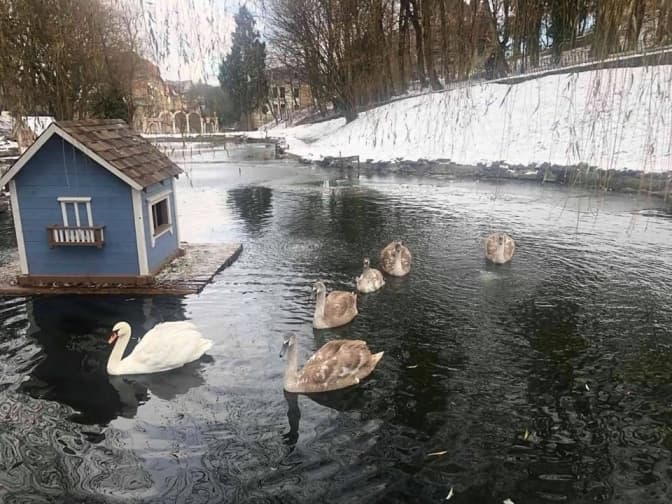
The fact that swans stay to winter in bodies of water does not harm them, the ornithologist reassures. In winter, they do not freeze even in icy water thanks to dense waterproof feathers, a thick layer of down, and subcutaneous fat, which act as hydro- and thermal insulation. Swans' legs are protected from the cold by a special circulatory mechanism: arteries warm the veins that return blood to the body. Saving the birds is only necessary when they are injured or frozen into the ice.
"That pond is heated so that it doesn't get covered in ice. If it is heated, it does not freeze all winter, even in severe frosts. Swans feel comfortable on the pond. In the summer, they raised chicks, fed them, and then quietly continued living. And then in the autumn, people start chasing them around the whole pond with nets to catch them. The swans get very stressed because of this. By doing so, we shorten their lives. It's amazing that this happens only because Lviv residents complain that the swans are freezing."
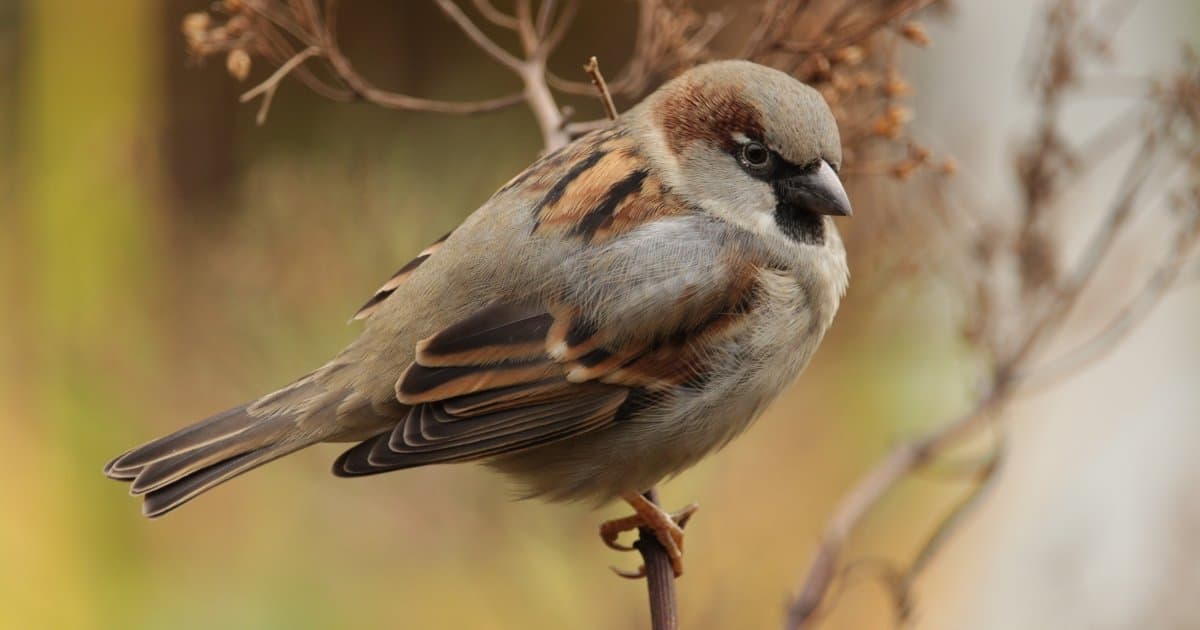
Where are the sparrows disappearing to from Lviv?
In the 1990s, the population of the house sparrow was 17-18 thousand breeding pairs; in the 2000s, there were 7-8 thousand, and according to the latest censuses, only 3.5 thousand remain.
"It must be said that this is not a catastrophe. The sparrow has repeatedly experienced drops in numbers. Once, the 'paradise' for sparrows was the time of horse-drawn transport. There were horses and plenty of food around. But then the car appeared, and the number of sparrows decreased sharply. Later they adapted to new conditions, and their numbers grew again."
Now sparrows are going through a difficult survival period again, the ornithologist notes. Trash bins in the city are organized; they can no longer get food there. Buildings where they built nests in crevices began to be plastered and then insulated. Balconies where sparrows could make nests were glazed.
"In other words, we did everything to make life difficult for the sparrow. Then we wonder: where did the sparrows go?"
According to the ornithologist, sparrows have survived mostly where there are homesteads. But there are almost no such households in Lviv. Only in the suburbs, where people keep chickens and ducks.
"And there is always a house sparrow there. And the collared dove is most often next to it. In the city center, it's hard for the sparrow to live because of the pigeon – which is stronger and larger, pushing it out in the struggle for food and space. Once, small flocks of sparrows slept in the crowns of trees in the city center. Then the dense tree crowns were decorated with garlands. And who likes sleeping with a light bulb on? Sparrows don't like it either. All of this together gave such a result – house sparrows have almost disappeared from Lviv."
Pigeons are pushing birds out of the city and pose a danger
On the contrary, the number of rock pigeons has increased proportionally. If in the early 2000s there were 3-4 thousand of them in Lviv, in 2018 there were already 18-19 thousand. Every second bird in Lviv is a rock pigeon, ornithologists claim.
"And something needs to be done about this. Pigeons are becoming more numerous because city residents constantly feed them. What the pigeons don't finish during the day, rats eat all night. Pigeons do not improve the environment in any way. They carry about 90 types of infectious disease pathogens, 10 of which are dangerous to humans. Moreover, they are poorly diagnosed and even worse treated."
For this, pigeons are called airborne rats. In addition to infections, city pigeons spread ticks, bedbugs, and fleas, and contact with them often triggers allergic reactions.
According to Andriy Bokotey, feeding and open attics are ideal conditions for the uncontrolled breeding of rock pigeons. They inhabit house roofs, niches, balconies, and attics.
According to the ornithologist, this problem can be solved simply:
"It will never be possible to completely remove pigeons from the city. But if we close their access to attics, roofs, and other convenient places for them, they will stop breeding rapidly. This will significantly and humanely reduce the population's numbers."
Which district of Lviv has the most birds?
The most birds are in the Sykhiv forest park – 50 species, Pohulianka and Znesinnia parks, Shevchenkivskyi Hai, and Stryiskyi Park.
"Many decorative fruit trees are currently being planted in Lviv, which attract birds. In particular, decorative pears. Trees are now being pruned correctly, leaving branch forks where birds can build their nests. But with the grass, there is still trouble. It is indeed mowed down to zero, and this is also one of the reasons why there are no sparrows in the city. Grass must bear fruit and drop seeds; then there will be food for many bird species. But the entire lawn is mowed, without leaving any, even small, sections in the corner that would bear seeds for bird feed."
Andriy Bokotey recommends, when improving green zones, to preserve old hollow trees and stumps, leave piles of brushwood in remote corners of parks and forest parks, do not clear all overgrown areas as they serve as feeding grounds for many bird species, and also not to rake up and remove at least a portion of the fallen leaves.
Birds work tirelessly to maintain balance in the city's nature. They control insect and rodent populations, spread seeds, pollinate plants, and act as scavengers, destroying pests. They also enliven the urban landscape, and bird symphonies are not just singing, but true natural art that brings joy.
"Currently, blackbirds are singing in Lviv," – adds the ornithologist. – "On Pohulianka, they have been singing for several days now. There is a settled population there – about a thousand breeding pairs that haven't flown away for a long time. That's why they are singing."
Singing means that the bird is ready for the mating season, for breeding. The male sings, "announcing" that this is his territory, that he will build a nest here, invite a female, and raise offspring. The city's parks are now filled with birdsong."
Full or partial republication of the text without the written consent of the editorial board is prohibited and considered a copyright violation.