Lviv is covered in down and pollen: doctors warn of exacerbation of seasonal allergies
27 May 2026, 18:12
27 May 2026, 18:12
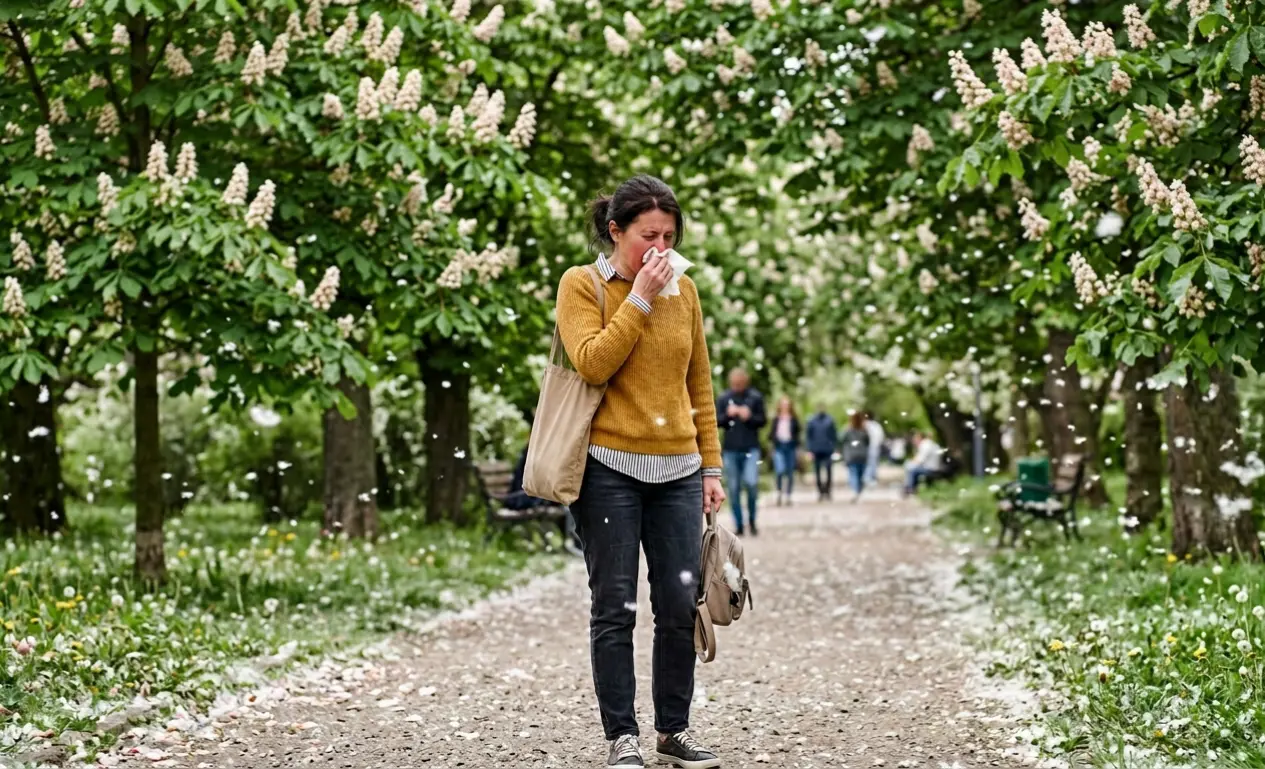
In Lviv and the region, down and blossoms have been actively swirling in the air in recent days, carried by the wind through the city and parks. For some, this is a picturesque late spring scene, but for allergy sufferers, it's a period of constant sneezing, tearing eyes, and nasal congestion.
After all, late May marks the start of seasonal allergies. Especially now, when Lviv and the region are experiencing windy weather: plant pollen along with down is rapidly spreading through the air and increasingly bothers people with hypersensitivity.
Roksaliana Holovyn, assistant at the Department of Clinical Immunology and Allergology of Danylo Halytskyi Lviv National Medical University, and a practicing allergist, explains:
At the end of May, the blooming season of grasses and cereals begins. One of the most common allergens medical professionals cite is timothy grass, whose peak blooming occurs in June-July. And by the end of summer and autumn, ragweed and wormwood begin to bloom — weeds considered among the most aggressive allergens.
Symptoms of seasonal allergies often resemble a cold: nasal congestion, watery discharge, sneezing. However, there is a characteristic difference—itching of the eyes and nose.
In some people, allergies can manifest as coughing, wheezing, and even asthmatic exacerbations. Medical professionals emphasize that if allergies are not treated, inflammation gradually spreads from the upper respiratory tract to the bronchi.
According to the allergist, self-medication in such cases can be dangerous. People often buy any allergy tablets or drops at the pharmacy, but this often only worsens the situation.
The same applies to decongestant nasal drops, which, with prolonged use, can cause medicamentous rhinitis and dependence.
Doctors name allergen-specific immunotherapy (ASIT) as one of the most effective methods for treating seasonal allergies. After examination, medical professionals determine which specific allergen the patient is sensitive to and gradually "acclimate" the body to it. This helps not only to reduce symptoms but, in some cases, to completely eliminate allergy manifestations and prevent the development of asthma. Such therapy is usually carried out in winter, when there is no plant pollen in the air.
The intensity of symptoms also highly depends on the weather. On sunny and windy days, pollen can be carried for tens or even hundreds of kilometers.
During the period of active blooming, allergists recommend rinsing the nose with saline solutions after walks, washing hands and face, wearing sunglasses on windy days, and changing clothes and taking a shower after returning home. It is also advisable to regularly clean the mosquito nets on windows and avoid prolonged stays among grasses during peak blooming periods.
We remind you that, according to the Ministry of Health of Ukraine, approximately every fifth Ukrainian has allergies. And according to the World Health Organization, 20 to 40% of people worldwide have allergic manifestations.

Related News