09 March 2026, 12:00
09 March 2026, 12:00

Shevchenko the Artist
In the "Shevchenko Dictionary," we read that 835 works from the poet's artistic heritage have been preserved, and more than 270 have been lost. This heritage can be divided into three periods. The first consists of works prior to his academic years and exile, which the artist created at a young age (up to 33 years). The second period includes works from his academic years and exile (from 1847 to 1857). This stage includes his apprenticeship under Karl Bryullov, as well as the time when he was prohibited from writing and drawing. The third period is his creative work after returning home, which reflects Shevchenko's travels through Ukraine and his desire to live freely.
Shevchenko's path as an artist began in 1828, when he became a servant-boy ("kozak") for the landowner Pavel Engelhardt, whose family was among the four wealthiest in Ukraine at the time. The master possessed significant capital of over 3 million rubles and owned 8 villages and 3,800 serf souls. Despite his great wealth, Pavel Engelhardt did not want to hire a professional painter; instead, he invested in Shevchenko's artistic education. What kind of commissions did Taras Shevchenko perform for him?
First and foremost, he created a series of private watercolor works depicting the landlord's mistresses. Thus, Taras Shevchenko discovered the beauties of that era for himself, but at the same time, he would secretly take candles and begin to copy illustrations from books every night. Consequently, graphics began to reveal the romanticism of the era to him. Shevchenko drew his first graphic portrait without formal education when he was 16 years old. His attention to detail, "culture of the stroke," and the emotions of the subject revealed his innate talent. From then on, Shevchenko began to study painting professionally – he traveled with Mr. Engelhardt to Vilno, and later, in 1831, found himself in the circle of Karl Bryullov and Vasily Zhukovsky.
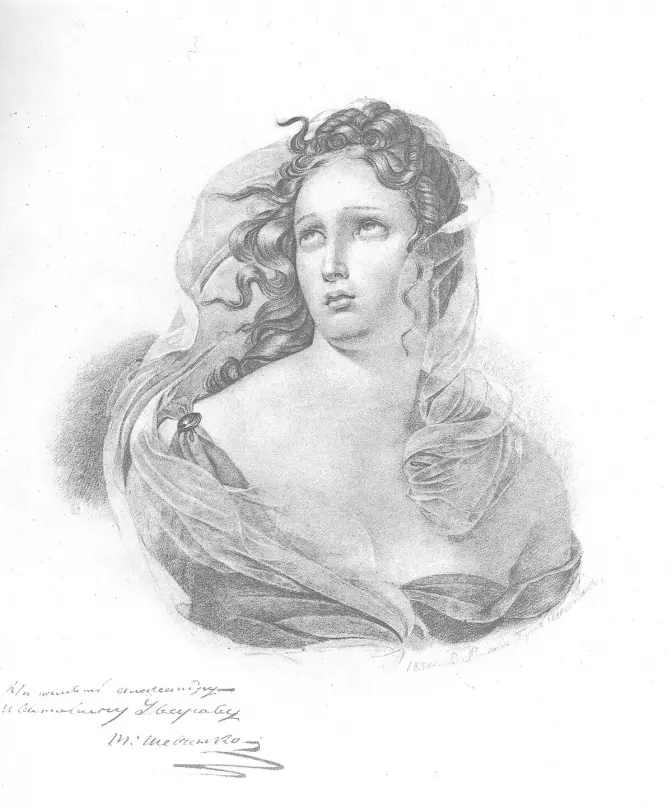
“Bust of a Woman,” 1830.
Thoughts of Suicide
In Saint Petersburg, Taras Shevchenko met his compatriots. Ivan Soshenko introduced the artist to two circles of acquaintances – students of the Academy of Arts and Ukrainian intellectuals. The connecting link between these groups was the academy student Apollon Mokrytsky, who was one of the first to recognize Shevchenko's talent as an artist. Later, his friends helped him attend drawing classes at the Society for the Encouragement of Artists. There, the future artist was able to study skeletal structure and even received financial assistance for medicine and art manuals.
Later, Shevchenko met Karl Bryullov, or rather Karl Brulle, as the famous artist came from a Russified family of French origin. The name change was necessary for the opportunity to study in Rome and the Vatican. Karl Brulle called the landowner Engelhardt a "pig in Torzhok shoes" and an "amphibian." The artist valued freethinking and, despite his privileges, repeatedly quarreled with the czar's family. Rumors spread that Karl Brulle, setting off to study in Italy, reached the border of the empire, took off all his clothes, and threw them away. When asked "why?" he replied that he did not want to take even the dust of his stepmother-homeland to Italy.
Through Karl Brulle, Shevchenko met Vasily Zhukovsky, who was the personal tutor to the heir to the imperial throne. It was thanks to his portrait that Shevchenko was bought out of serfdom for 2,500 rubles. However, Karl Brulle was unable to finish the portrait due to Vasily Zhukovsky's departure. Brulle's capricious character hindered the work, for if he did not finish a portrait immediately, he would not do it at all. The constant delays plunged Shevchenko into depression. He did not hide that he began to think about suicide, and only a letter from Zhukovsky turned him away from this intention.
And Shevchenko's intention was quite serious. The titles of his historical-themed drawings, which he created in 1836–1837, testify to his despair over his disenfranchised status: “Death of Oleg, Prince of the Drevlians,” “Death of Socrates,” “Death of Lucretia,” “Death of Virginia,” “Death of Bohdan Khmelnytsky.” However, despite his depressed state, Shevchenko composed himself and finished the painting himself – he painted in Zhukovsky's hands. Thus, on May 7, at the age of 24, Shevchenko was freed from serfdom, and later wrote in a letter to his brother: “I live, I study, I bow to no one and fear no one except God – it is a great happiness to be a free man, you do what you want, no one will stop you.”

Self-portraits and Self-love
In total, Shevchenko created more than 30 self-portraits. According to art historian Ivan Dudych, the love for self-portraits is a kind of litmus test that leads us through the emotions in the poet's biography. His friend Bronisław Zaleski recalled how Shevchenko once drew a self-portrait while looking at his reflection in a bucket of water because there was no mirror during an expedition in the desert.
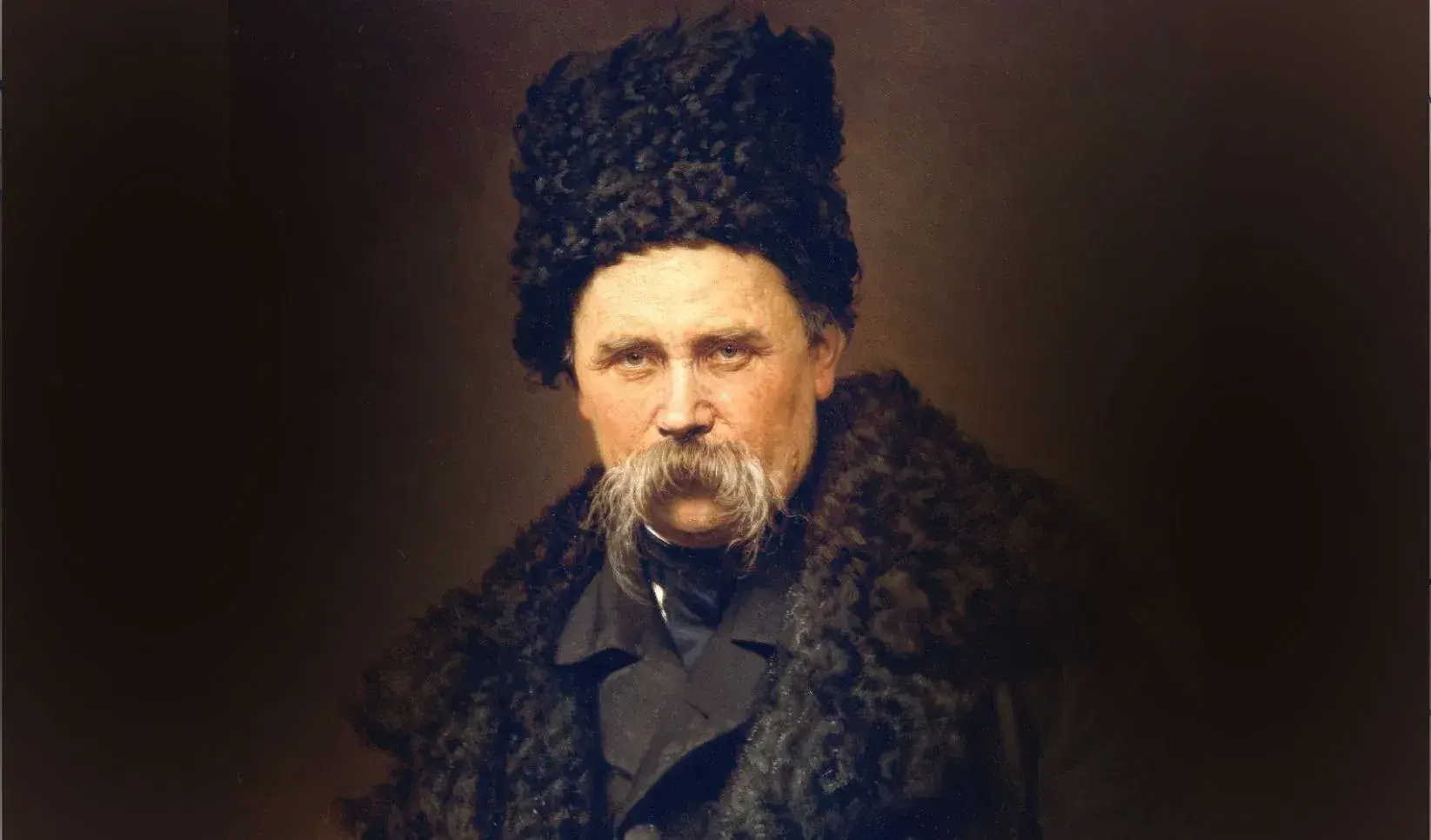
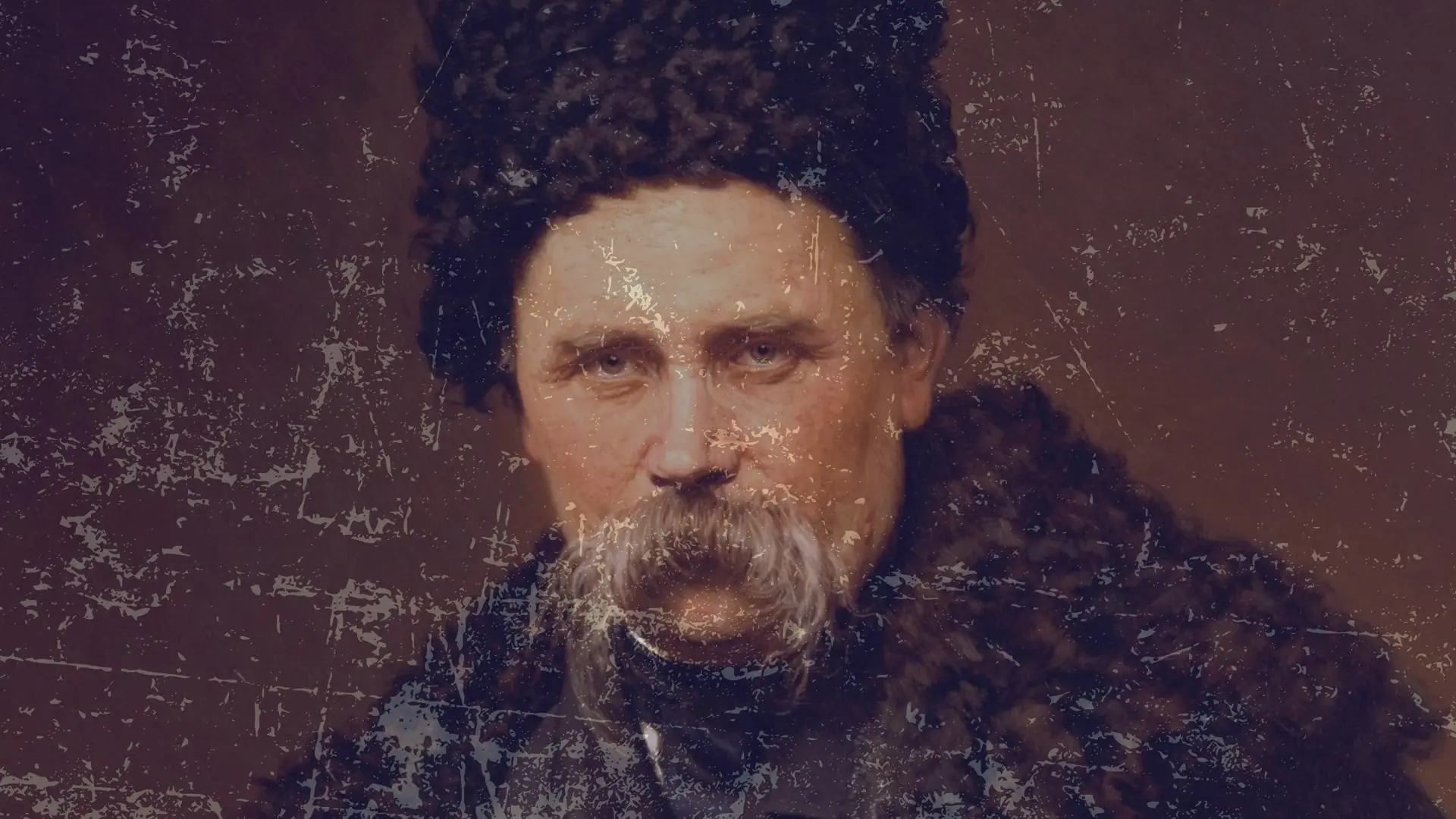
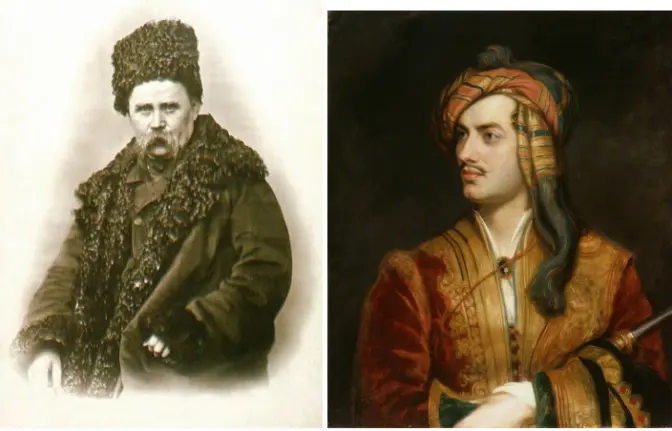
The image of the poet in a sheepskin coat and a lambskin hat was cultivated by Shevchenko himself. He often visited photo studios as soon as they opened, posing and capturing this image in etchings, which he signed personally and exhibited at the Academy of Arts. Art historian Ivan Dudych compared the artist's unique image to the portrait of Lord Byron in an Albanian costume: in the Romantic era, there was a fashion for orientalism, which was supposed to convey the hero's initiation during times of trial. And Shevchenko's series of self-portraits are compared to the self-portraits of Rembrandt.
Shevchenko the Scamp
The image of the sensual and romantic artist did not always correspond to reality. The memoirs of the artist Fedor Ponomarev reveal Shevchenko to us from a completely different side: “Once Petro Petrovsky complained to his friends that he could not finish the painting “Hagar in the Desert” because he had no money to buy a large bird to paint angel wings from life. They could not help him, as they themselves were sitting hungry. Petrovsky received a ruble from his old mother. Shevchenko, having instructed his friends to lock the door and hold Petrovsky by the hands, “instantly took the cherished ruble from his pocket.” The friends fled to the “Rome” tavern, and here Shevchenko orders a glass of vodka, orders two steaks, and tosses the ruble to the bartender. The offended Petrovsky joins his friends' meal, and they all set off to the drawing classes.
In the evening, after returning from classes, Shevchenko wonders: how can he help the Petrovsky he robbed? Eureka! Sokolov, the assistant to the academy's police chief, keeps a small flock of geese in the backyard. Shevchenko and Ponomarev pinch one goose's beak and drag it under a greatcoat to Petrovsky's studio. And when he finished painting the goose, a soldier-janitor cooked it for the friends in a samovar. Soon Taras became rich enough to give Sokolov a ruble for the goose.”
Thus, the goose found its death in a samovar, yet was immortalized in the wings of an angel.

The Holy “Peasant Family”
While in a foreign land, Shevchenko nevertheless constantly nurtured within himself the image of a family idyll. The painting “Peasant Family” reflects the archetypal image of Ukrainian comfort: a peasant hut, a father, a mother with a child, a small dog. We also see a grandfather sitting to the side on the earthen bench, remembering the distant past. Not only with the help of paints but also with words, Shevchenko captured this moment in his soul:
“And here before me stands our poor, old, white house, with a darkened thatched roof and a black chimney, and near the house on the ledge are apple trees with red-sided apples, and near the apple tree is a flower garden – the favorite of my unmarried sister, my patient, my gentle nanny. And near the gate stands an old spreading willow with a dried top, and behind the willow is a barn, surrounded by stacks of rye, wheat, and all sorts of other grain. And behind the barn, down the slope, begins the orchard!.”
At the same time, Shevchenko combines the Ukrainian nature of the image with the Renaissance tradition, as he was inspired by the works of Michelangelo. In particular, on his canvas "Doni Madonna," we can observe a similar landscape and an idyllic depiction of the Holy Family.

The Ukrainian Madonna
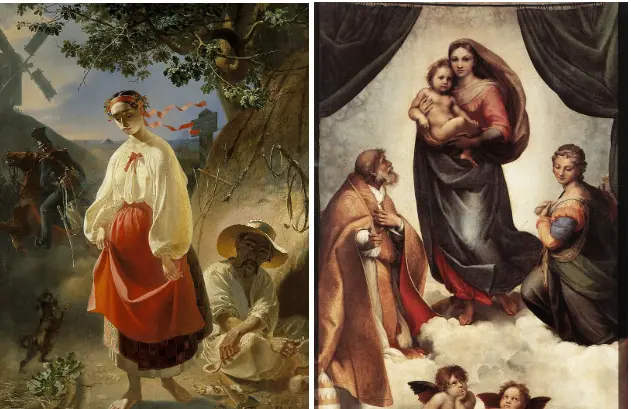
In one of his most famous paintings, Shevchenko sought to depict a Ukrainian Madonna, drawing inspiration from the Sistine Madonna – a work by the Renaissance master Raphael.
Compositionally, both paintings are similar. A primary sign of Romanticism was that a curtain and theater appear before us. In the "Sistine Madonna," a ledge is depicted that reveals the heavenly sky. In Shevchenko's work, the frame is a powerful, sturdy oak, one of whose branches is broken off, serving as a symbol of ancestral tradition.
In the center of the painting is the unwed mother Kateryna, but her child is still in the womb. Here, a clear parallel can be traced with the "Sistine Madonna." In particular, we see a special similarity between the feet. Thus, Shevchenko sought to place Ukrainian painting within the European circle of professional fine art.
Maria and Danae
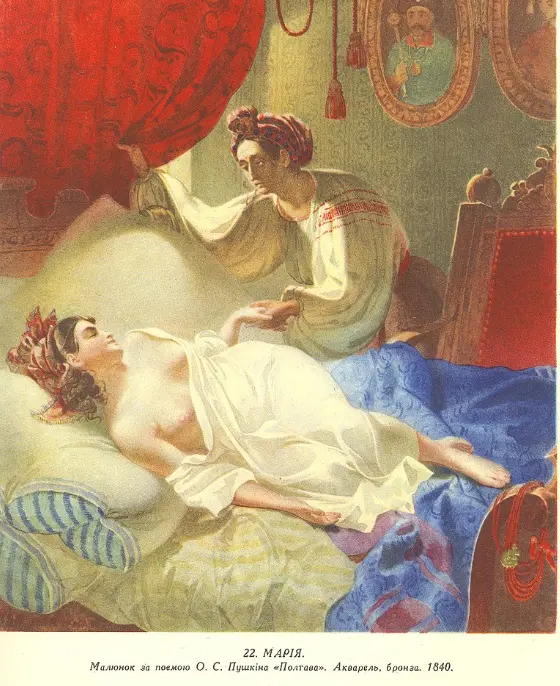
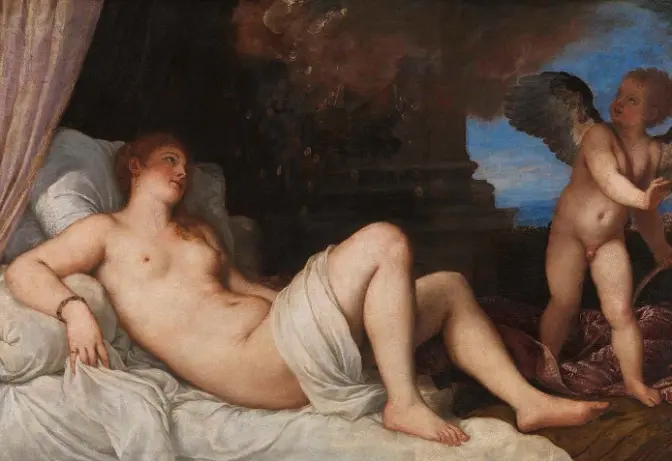
Another painting that testifies to a unique interpretation of mythology and awareness of world art subjects is "Maria." And although this painting is an illustration for Pushkin's poem, a completely different meaning is embedded in it. Before us is a young woman, next to her is another lady trying to cover her. Behind them, portraits of hetmans can be seen on the wall. Shevchenko's painting is extremely similar to the subjects of Titian and Rembrandt, who also depicted Danae.
According to the myth, Danae hid from Zeus, who fell in love with her. In different paintings, he manifests differently: descending in the form of golden rain or Cupid. In Shevchenko's version, Zeus is replaced by Ukrainian hetmans looking at Maria. Thus, the artist incorporates Ukrainian fine art into the heritage of European art.
Shevchenko – National Artist of Kazakhstan

For Kazakhstan, Taras Shevchenko is, in essence, the first national artist. For before him, there was no artist there who depicted daily life through the means of fine art. The expedition and study of the Aral Sea became not only an exile but also a liberation for Shevchenko: he could finally paint freely, satisfying his need for romantic adventurism.
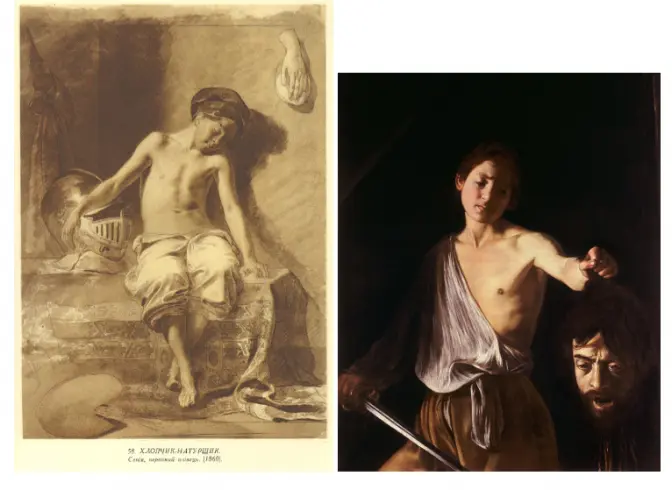
Why was Shevchenko strictly forbidden from not only writing but also painting in exile? The fact is that in ordinary sketches of people or nature, he reflected a real revolution. For example, in the painting "Boy Sitter," there seems to be nothing special at first glance. But if we compare this work with Caravaggio's "David with the Head of Goliath," one can notice that the analogy to Goliath's head is the helmet of an adult male knight, which is a symbol of great imperialism.
The other hand does not hold a sword, yet it intersects with a plaster hand, which is an allegory of enlightenment and science. That is, through art and education, the Ukrainian nation can acquire the culture necessary in the fight against imperialism.
Shevchenko – Prophet of Surrealism
An example of Taras Shevchenko's visionary nature in fine art is his anticipation of the surrealist style, as pointed out by art historian Diana Klochko. For instance, the light source in the background and the bizarre clock refer us to Salvador Dalí. And the work itself resembles the painting "Apparition of Face and Fruit Dish on a Beach."
Shevchenko often looked beyond his time and wrote in his mature years that the horizon held an unfathomable allure for him: “I am always drawn to see what hides behind it. This feeling gives me no peace. And all my life I remained a person who strives to look beyond the horizon, this boundless, unsettling boundary between the manifest and hidden parts of the world”.

Anastasiia Honcharova
Full or partial republication of the text without written consent of the editors is prohibited and considered a copyright infringement
To receive current and hot news of Lviv and Ukraine, subscribe to our Instagram and Viber.
Live broadcasts of important events and weekly video programs – about current Lviv issues in "Topic of the Week" and intellectual conversations on all-Ukrainian topics in "Accents of Your City" and public discussions for the joint search for better solutions to the challenges of the city community – watch on our YouTube channel.
Related News