– SoftServe is a legendary global company born in Lviv. Taras Kytsmey is an advisor even to me; I have been learning from him for many years. Today, the company's headquarters are located in Austin (USA), Lviv, and London, and the CEO position is held by an American. Describe SoftServe in numbers as of today.
– Right now, I feel a transformation. Previously, Ukraine was primarily a country of engineers with a strategic advantage in IT – we already have the third generation of IT engineers. Now, step by step, it is becoming a country of entrepreneurs. We see the rapid development of a second generation of entrepreneurs, in whom we have high hopes.
Regarding SoftServe – it's simple: we created the company in 1993, 32 years have passed, and we finally became successful (laughs).
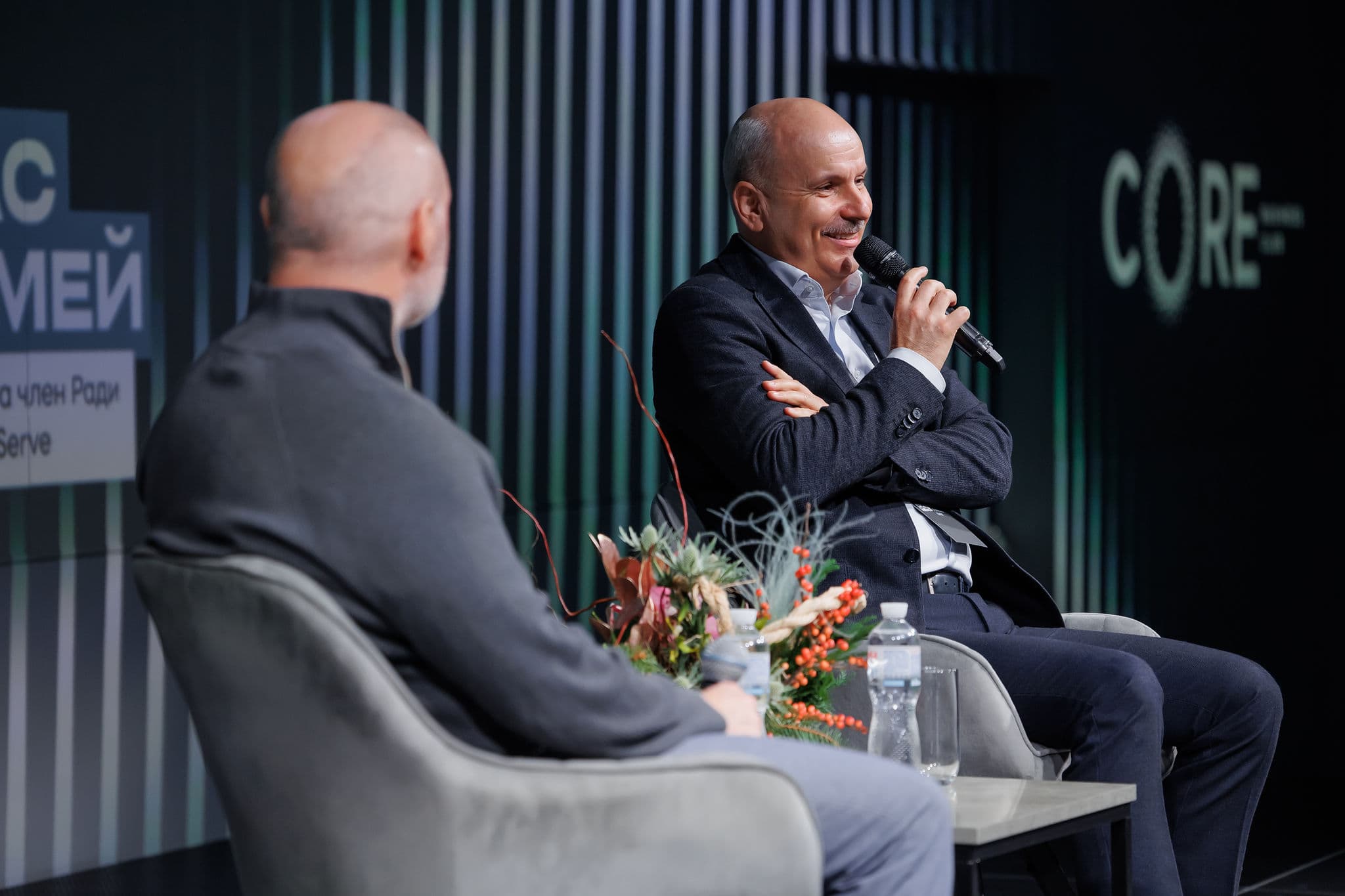
– It's simple, you see. Just wait 32 years.
– For success, you need to work in one direction for 30 years. Now we have over 10,000 employees. Sales and marketing offices operate in the USA, Western Europe, and the Middle East.
Development centers, besides Ukraine (Lviv, Kyiv, Dnipro, Chernivtsi, Ivano-Frankivsk; 150 people now work in Kharkiv, at its peak there were 1,000), also operate in Poland (over 1,000 employees), Bulgaria, and Romania. Five years ago, we entered the markets of Mexico, Colombia, and Chile.
Our key industry is high-tech. For a client like Cisco, 600–700 specialists are working. We also focus on healthcare, finance, retail, and education. SoftServe develops a variety of services – from traditional Application Development to migration to cloud environments.
A separate direction is artificial intelligence, which is growing by more than 100% every year. The company's annual revenue exceeds 800 million dollars.
– As far as I remember, you also worked with Google.
– The industry is evolving, so to deliver solutions now, it is necessary to partner. Our traditional partners are Google, Microsoft, Amazon, and NVIDIA. It works like this: Google creates technology, for example Google Cloud, and we develop solutions for how to move data centers from clients' offices there. Google goes to well-known companies and sells the product, but it always needs a partner to implement the final solution, because they don't do it themselves, they don't have the capacity for it.
– You are one of the co-owners of SoftServe; you were the company's CEO for 15 years. How many years has it been since you were CEO?
– 12 years.
– Name two or three of the most common mistakes you made in the early years of SoftServe, or that small companies generally make at the start? What would you do differently now?
– Tomorrow you are always smarter than today, and today – smarter than yesterday. I might have done many things differently. Our mistakes alternated with successful decisions. Business is like playing poker: if you have the cards, you have to play, and if not – have the patience to wait.
We were lucky that General Electric – the number one company in the world – became our first client. However, for the first eight years, we tried to sell everything from Ukraine to the USA. It was extremely difficult, especially at a time when the internet was just emerging.
– Now it's impossible to imagine IT companies in the world without the internet.
– There were no mobile phones then. At first, we used a dedicated line from the 'LITech' company: our runner went there to send the first deliveries. Programmers didn't believe that the internet would one day appear right at the workplace.
In 1996 or 1997, we bought an antenna from a company that was a kind of mini-ISP, laid a not-very-powerful line, and distributed internet within the company. This was a real quantum leap – the internet finally appeared at the employees' workplaces.
One of our mistakes was opening the first office in Washington. This is a city where the government is concentrated, and SoftServe still doesn't have enough competence in how to correctly build relationships with authorities, including the Ukrainian one. In Washington, we were a young and inexperienced company.
– You're not the only ones with a Washington problem :)
– Back then, we made a strong entry into Washington thanks to Liuba Tsehelska, who personally knew Gorbachev and had been in Moscow for a long time. A very cool, feisty woman. She wanted to represent SoftServe in America. We were gold sponsors (gold sponsors) of a major summit in Washington, became leading operators of the Northern Virginia Technology Council. But sales weren't happening because we didn't fit into the Washington lifestyle at all. In that 'House of Cards,' it's hard for a young company to survive. But a year later, we opened offices in Boston and California – and they went very well. We realized our mistakes and made the right decisions.
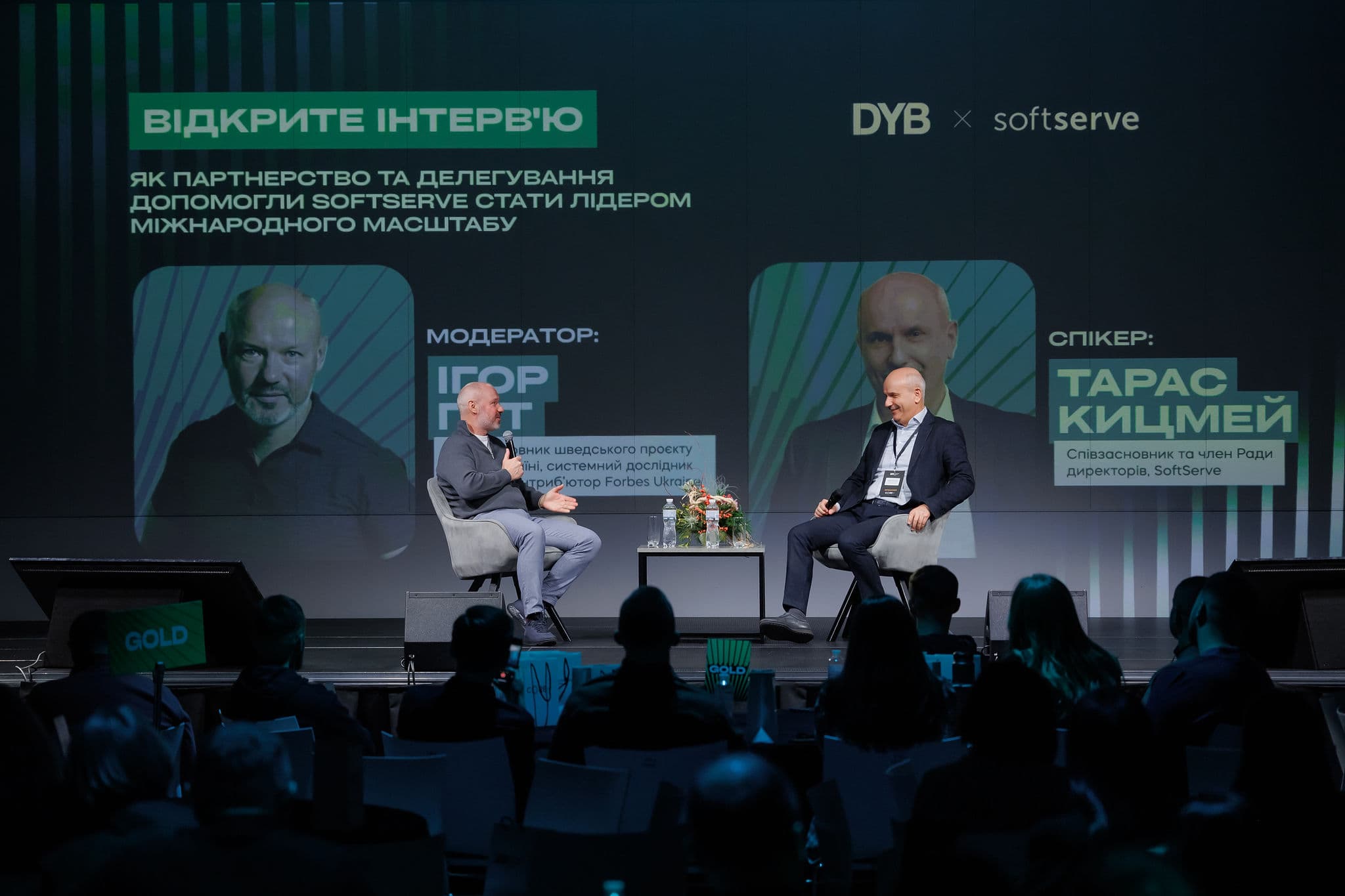
– Now young Ukrainian companies often repeat this mistake with Dubai. Tell us about your experience: when should an owner step down from the CEO position and delegate it to another person?
– – I stepped down from the president position when the company was 20 years old. I'm not a fan of founders handing over the business after two years because they're already tired. They should first create the foundation, culture, and values. SoftServe's success formula is leadership plus innovation. I always say, 'We are in the people business' – it's a business with people inside the company, with clients, and with society.
However, everyone eventually burns out in their position. We wanted there to be no "sacred cows" at SoftServe and for any person in the company to be able to hold any position, including CEO. That's why in 2008 we created a Board of Directors, which included four founders who were working in operational management at the time. Our partner Vilnis Ezerins became the Chairman of the Board, and over the last two years, he was replaced by Yaroslav Lyubinets.
In fact, we launched a smooth five-year plan for the institutionalization of the Board of Directors in the company's activities: I remained President, while the Board "practiced" managing the company using me as an example. With the emergence of the Board of Directors, I, as CEO, got a real boss. We began to jointly form plans, and I, as CEO, had to report regularly to the Board on their execution. When you work under such pressure, more resilience and rights appear – no one is afraid of offending one another, and normal cooperation is formed.
In five years, we clearly delineated the areas of responsibility between the Board of Directors and management. We spent a year looking for a new CEO, and in 2013, I handed over authority to Alan Harlan. Since then, none of the founders have been involved in operational activities. This happened only 20 years after the company's founding.
– We often see companies with a 10-15-year history where the owner wants to step away from business, but there is nothing to hand over. Because it's not a company, but a business at the level of a "hustle-scheme" that cannot be sold. The architectural function has not been fulfilled. The system must be created by the founder – it is a talent and a gift from God. No manager will live the company 24/7 like an owner. Managers only manage systems, improve them, or take anti-crisis actions.
– A Harvard Business Review article describes five levels of boards of directors – from purely administrative ones that meet twice a year, check financial reports, and give superficial advice, to those that actually manage the company like a CEO.
Our Board of Directors at SoftServe is in the middle – in the "engaged" status. Since we have been in business for 30 years, we are deeply involved in strategy formulation, monitoring its execution, and appointing key people. This works because the founders have stepped away from operational management but continue to pass on experience and implement ideas. At the same time, we have recruited young, energetic managers with different backgrounds.
Always work with the assumption that there are people smarter than you, and listen to them.
– Boards of directors and supervisory boards make binding decisions, while an advisory board only looks critically and advises. SoftServe has one of the best corporate governance models in Ukraine – a one-tier model with a Board of Directors. But you also use advisory boards, even though there is a stereotype that they are only for small companies.
– The Board of Directors has more power than the CEO and makes the final decisions. The advisory board only advises. When we were forming the Board of Directors, we cared about the balance of power: currently, we have four members from Ukraine and three from America. In the case of an advisory board, the question of balance of power does not arise – you simply invite those who have interesting experience. Our advisory boards usually worked for two to three years. Then they exhausted themselves, a feeling arose that the advice was becoming repetitive, and we invited new people.
An advisory board is the simplest mechanism for attracting external expertise for company development. We created the first such board in 2010 when I was still CEO. We invited specialists from America and India who shared valuable experience with us. Don't be lazy about inviting smart people and listening to them. For example, Chris Baker was a member of our first board: he became so integrated into the team that he eventually made his way to the Board of Directors, and in 2016 became the company's CEO after Alan Harlan.
– You handed over the post after 20 years. One of the stages of preparation for this is raising a team that the new CEO can rely on. Medium and large Ukrainian companies often face the same problems. But the fundamental difference is that large ones have strong teams and people who grow within those teams. For small and medium-sized businesses that are not yet ready for serious-level top management, an advisory board is a good compensator: you can "buy" a few days of professionals' time. Taras Kytsmey is a member of the DYB board; sometimes a single coffee with him provides an idea that I would have taken a year to reach on my own.
Given today's realities, the situation in the country, instability, and all the risks, what would you advise owners of young, growing companies? Invest in Ukraine or export more? What to do with teams, management, cultures, technology? What to expect from your sector? Will artificial intelligence kill us or help us?
– I would also like to talk about partnership. I'm lucky with people. I have a number of companies, and in none of them do I own more than 50%. Different people became co-owners of SoftServe, we created a mechanism for distributing shares. I always said: "Don't fight for an extra 2%; if we grow the company tenfold, you will receive 100% more in percentage terms." We actually grew the company 30 times.
Every partnership must be based on trust. I have SoftServe, Lem Station, Plai, Baczewski Restaurant, Charbel – different partners everywhere, and I don't think I can be deceived. If you don't trust your partner, that's already the wrong foundation for business.
– A mutual friend of ours told a joke: "A young entrepreneur asks a wise man why people don't trust each other. The wise man replies that there are only two reasons: because people either don't know each other well or know each other too well."
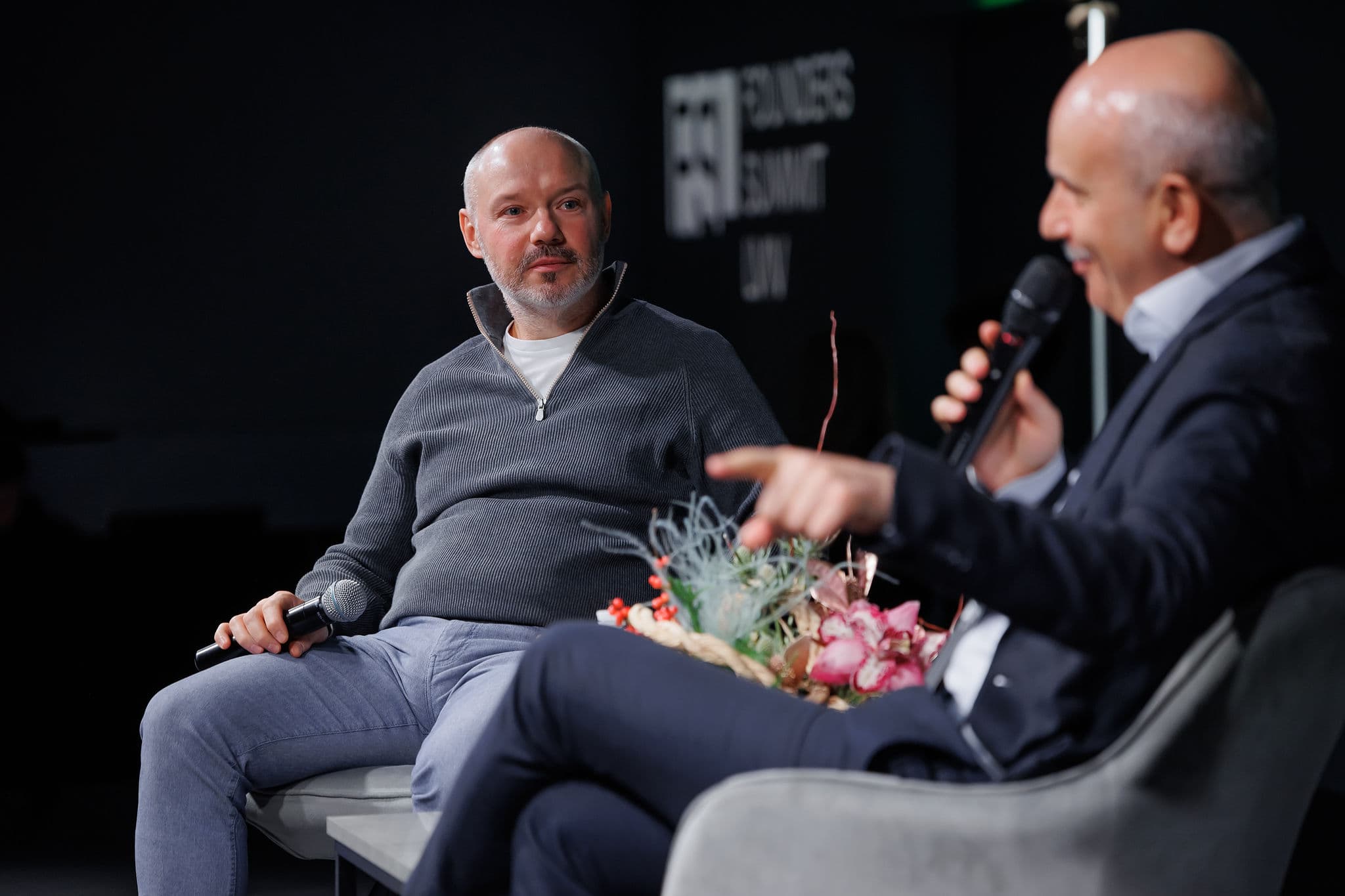
– Partnership is like a family. My partners are radically different, and that's a plus because we complement each other. Any idea undergoes critical review by an opponent – that's how truth is born in disputes. The main thing is that you have different views but shared values. We have had such difficult discussions that we could have fallen out for life. But our culture is that it is a struggle of ideas, not personalities. We walk out of the meeting room and say, "Well, are we going to the birthday party to drink today?".
I am often asked if SoftServe has shareholders agreements. It doesn't. In America, everyone has such agreements and is constantly suing each other. We, on the other hand, have the right level of values and trust.
– Unfortunately, we also have a lot of lawsuits; not much is said about it. You are lucky; you are truly a role model for entrepreneurs.
– There are two types of law: continental (rules) and English (precedents). SoftServe lives by precedent law. We do not try to invent complex rules in advance for all possible cases in the future. Instead, we analyze real precedents that have already happened, make decisions, and later say: "We've been through this, here's how it's done correctly." A corporate agreement is continental law, and living by precedents allows us to do without it.
– This is an example of adaptability. Modern minds say: in the world we live in, crisis is superimposed on crisis. Adaptability is the key condition for survival here.
Text: Marichka Ilyina
Photo: Core Business Club
Full or partial republication of the text without written consent of the editorial office is prohibited and considered a violation of copyright.
To receive current and hot news from Lviv and Ukraine, subscribe to our Instagram and Viber.
Live broadcasts of important events and weekly video programs – about current Lviv issues in "Theme of the Week" and intellectual conversations on nationwide topics in "Accents of Your City" and public discussions for the joint search for better solutions to the challenges of the city community – watch on our YouTube channel.