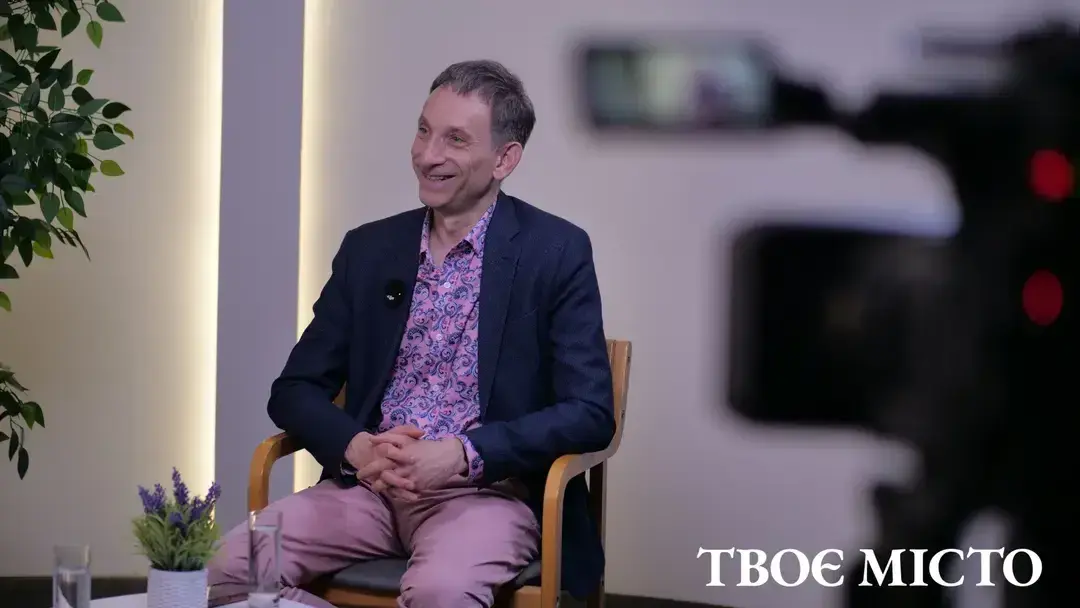
Are you tired even after your vacation? A psychotherapist named an unexpected reason
23 June 2026, 20:00
23 June 2026, 20:00
This is the second part of the conversation with the specialist; the first part with Roman Kechur was about, "Why is Putin in a dead end and how to reach an agreement with Poland?"
Fatigue or burnout, or why perfectionists always lose
How to distinguish fatigue from complete burnout?
These are outwardly similar but radically different states. Fatigue sets in when you are doing something you believe in, are convinced of, and see meaning in. This goes on for a long time, so you get tired, exhausted, but you don't give up. Burnout, on the other hand, is when you are fighting for your ambition. Like, I'll show you all: I'll be the smartest, the richest, I'll achieve the goal – see, you didn't believe it, but I'll do it. That is, you are doing it not because you love it. This is not the motivation of a mother or father protecting their children out of love. It is because we want to show something to someone or someone, to be better than others.
Such motivation always leads to losing. No one has ever won because of it for one simple reason: the peak you reach in such cases is always too low, because there is always a next, higher one. You buy a Mercedes, but there are even more expensive cars; you build a three- or four-story house, but there are skyscrapers; you conquer Everest, and someone flies into space. Do you understand?
Yes. But we are currently living in a world where everyone says: motivate yourself, work harder and better, there are greater opportunities.
I would say:Live better, be happier.It's clear that one has to work. But a person works to be happy, not to work.
I look with surprise at the dynamic of having to defeat everyone, and then even defeat the winners. I believe that a person should do what they see meaning in and what they love. It is not necessary to be the best, the richest, the smartest. One needs to live a life filled with meaning.
What do you mean by the phrase 'live a life filled with meaning'?
Love. That is the only thing that can fill a person.
Okay. So, a person loves their job, they are there from morning till night, they think they have some mission, goals.
Oh, yes, that's wonderful. One can envy if a person loves what they do, sees meaning in it, understands what benefit this work brings to them and to others. That's marvelous!
And what if they can no longer do it – physically have no strength, barely drag themselves to work, but still work?
If they love it, then the person is tired; if they don't love it, then they are burnt out.
And what if a person goes on vacation for two weeks and then says: 'I didn't rest'?
There can be various reasons here. This can happen with depressive disorders, depressive experiences. There could also be some physical ailments, such as hypothyroidism or some latent hepatitis. There can be many different reasons – physical and psychological; they need to be investigated.
We are not made up solely of motivation. The human psyche and body are not such a simple system of linear cause-and-effect relationships; we are organized more complexly.
Guilt over vacation and the saving power of routine
It's summer now, people will go on vacation. Last year, many of my acquaintances complained that they were on vacation but didn't rest at all. Is this because of the war?
It's because when we rest, we feel a conscious or unconscious sense of guilt. While I'm resting, someone is sitting in a trench. Or while I'm resting, enjoying life, someone has lost an arm, a leg, or someone has been killed. Obviously, such rest is overloaded with guilt. Many of us cannot fully rest in such an atmosphere. This is normal psychology for normal people.
So, it's even hard to convince yourself: 'I'm taking the children for a vacation, so I'll rest too'?
Consciously, you can convince yourself of anything. But a person also has feelings that are not very conscious, their unconscious.
So, is there no point in going on vacation? I'm asking because there are people who say: 'The full-scale war has been going on for so many years. I haven't left Ukraine, haven't left Kyiv, the entire time.'
No, one needs to rest! If we want to win this war, we must have strength. We need to rest, gain strength, help each other, and give our all. It's the same as usual, like at work. An employee who doesn't rest stops being effective. We need to rest, gain strength, concentrate, and then continue working for ourselves and for this country.
Maybe it should be some other forms of rest? You don't necessarily have to go somewhere far away. I recently recorded the story of a soldier. He says: 'I came home in the morning and already managed to mow the grass near my house.' And I understand that for him, this is real relaxation.
Everyone has their own relaxation: for some, it's physical exercise, while others need to lie down and not move; some need to steam in a sauna, while others collect mushrooms or read books. Everyone has their own way of resting, their own hobby, their own love.
How important is routine, in which there is time for peace? So that it's not like you rest once every six months, and your body can't even switch over because it's not used to that option at all – resting.
We need routine because it organizes us and maintains our work capacity. You wake up in the morning and don't know what to do? Make your bed – that's the first thing to do. Then wash up, brush your teeth, do some exercises, take a shower, prepare breakfast, take care of others. Even if you don't have big plans for the future, or you're lost, or you don't know exactly what to do. Routine supports us in that moment, keeps us in working condition. Psychologically, it's very good to rely on the familiar.
But a bicycle doesn't move because you're pedaling one pedal – you need to pedal the other one too, the one opposite. So, alongside routine, there must be novelty, interest, unexpected events, surprises. But life cannot consist only of routine or only of surprises.
So, there must be some balance, and if there are surprises all the time, something new? Do you get exhausted?
Yes, then we are disoriented, we lose our footing.
The Anxiety of War, Addictions, and the Illusion of Control
Some people say they are eating, drinking, and scrolling through feeds more now.
War causes intense anxiety, disorientation, and creates a constant threat. We don't know how it will end. And all these addictions are because we are trying so hard to calm ourselves down. Why does a person drink alcohol, use drugs, engage in all those addiction rituals? Because they lack a way to calm themselves. They feel tension, cannot relax.
If someone cannot relax in a normal way, they need alcohol, drugs, or other means that kill us, and that's a problem. We need to find other ways that don't kill – a gym, swimming, a walk in the forest or park – there are many. We all have good advice, but unfortunately, the number of addicted people is not decreasing. I don't know if it's increasing. There have always been many addicted people.
Why do addicted people often think they have everything under control?
Because addiction is built on the illusion of independence. This illusion of independence is a way to maintain self-esteem. It's about 'I am not like that.' Look, they're lying there drunk under the fence, but I can still walk on my own legs. Or: I don't drink myself, only on occasion. And so on. It's the way people maintain their self-esteem.
True depression or hidden emotions: why we misname our states
We've dealt with fatigue and burnout. But what about those who have already reached depression? And how to distinguish what's wrong with you?
To answer the question of whether we are depressed, whether we need medication or some psychotherapy, or whether we are not depressed, we need to understand what feelings we have. For example, if I fiercely hate someone inside, but outwardly appear as a depressed person because I cannot express my hatred, then I need to explore myself. Understand that I am very angry, furious. My upbringing, ethical standards, worldview do not allow me to be aggressive, to react impulsively. That's why I hold myself in such shackles. Or, for example, I envy someone.
Does this have anything to do with depression?
People often experience something and don't admit their feelings to themselves, so they call it depression. You see, if you listen to how many 'depressions' we have... there aren't that many anywhere. This is because words lose their meaning. In the mouth of a psychiatrist, the word 'depression' has one meaning, and in common, everyday use, it's completely different. My mood soured for 15 minutes – that's it, I have depression. After 15 minutes, I argued with someone or saw something funny, read something – I cheered up, and there's no depression. This is a colloquial understanding.
Very often, we misidentify our feelings. We misname them, misrecognize them, poorly understand where they come from, and therefore poorly define our state. This applies to adults. Because adults are people who well understand what they are experiencing.
They understand, but don't admit it to themselves?
It's worth admitting, no matter how sad it may be.
How to do it? You need to ask yourself: 'Why am I angry right now?'.
If you can be honest enough with yourself, then yes. If not, talk to someone you trust.
The epidemic of loneliness in the age of social media and the rule of 'playing to the end'
People used to say that Ukrainians don't go to therapists because they are very friendly and would rather talk with someone.
Ukrainians are going to therapists because an epidemic of loneliness is looming over us.
This is a European epidemic where a person is alone with themselves and a gadget.
We are becoming Westernized. Obviously, the war adds a lot to all of this. But people are becoming increasingly isolated. We have an increasing number of superficial contacts and a decreasing number of deep ones. I remember feasts at my parents' house. Dozens of people used to come, all of them close friends and relatives. As a child, I didn't remember everyone, but I knew they were all important figures. Few people live like that now.
So what happened when these people got together? Because now it's perceived as an additional hardship. People came, so you have to treat them to something. Although it's not difficult at all, you can buy everything.
A community was being built; people of their own kind met. People had fewer superficial contacts, they were less socially oriented, less socially successful. Therefore, they built networks of very deep relationships among themselves and thus supported each other. When you live in a survival society, you don't need many superficial contacts. You need a few dozen deep contacts – people who will help you survive.
Now, in a self-realization society, this is not so important, because everyone can earn money for food from the supermarket. Now it is important to have many superficial contacts in order to compete with peers. It's simply a different societal structure. We have changed the internal nature of our society over the last 40-50 years. We are already experiencing the psychological consequences of this, and it seems to me that we are not comprehending them well.
Plus social media, where it seems like you have 150 communities, but in reality, you end up alone.
Well, you have a million likes. But who needs them, like these fake friends – it's all incomprehensible.
Those who earn on social media. And someone does earn.
And someone runs a casino, that's true (laughs).
What would you advise Ukrainians who think everything is fine with them, or conversely, that everything is bad? Once, Lina Kostenko's words from «Marusia Churai» were often quoted: «But there is a sad comfort, indeed: someone in the world has it worse than you». But isn't it ecologically unsound to compare like that?
I don't like giving advice at all. I'd rather say what I do myself, what advice I give myself. I always say this: the game is not over, you are still alive, there will be some next turn, and you don't know what it will be, so you have to play.
When I was a small child, I watched hockey matches. The Soviet team played against the Canadians, whom I rooted for. Firstly, because my dad rooted for them, he said that Ukrainians play for Canada. And secondly, because of moments like these. Imagine: three seconds left, the Canadians are losing by a few goals, and they are playing, even though they will definitely lose. Do you understand? That's the difference between a professional and an amateur. Until the game is over, you have to play: do what you can, and let whatever happens, happen.
Interviewed by Svitlana Zhabiuk
The meeting was held with the support of the Robert Bosch Foundation. Join the "Club of Experts" so you don't miss the next opportunity to meet in person!
Full or partial republication of the text without the written consent of the editorial office is prohibited and is considered copyright infringement.

Related News