Why is Putin in a dead end and how to reach an agreement with Poland? A psychotherapist on Ukraine's new role
15 June 2026, 20:15
15 June 2026, 20:15
From Illusions to Initiative: How Ukraine Changed Its Role in the World
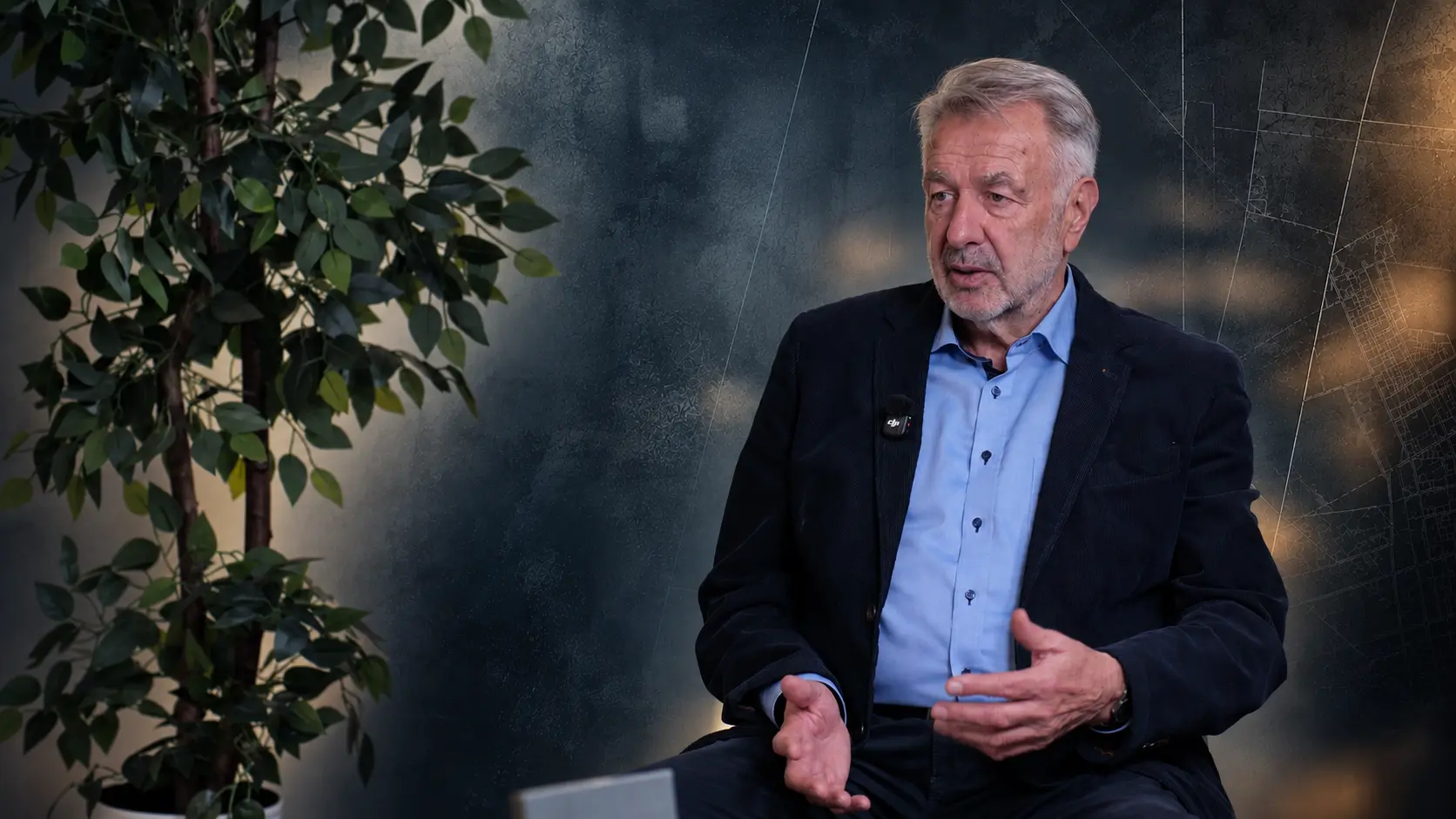
At the request of a military colleague, today we will discuss what is happening with the Ukrainian psyche and how we communicate with the world now (including statements by the head of state). Can it be said that Ukrainians, in the fifth year of the great war, have become more resilient and stronger?
We see it every day: we are becoming more agentic, more powerful, stronger. We have stopped retreating and started attacking. We have many external victories – we have gained recognition in Europe, and powerful businesses want to produce weapons with us. Now we are on top, although it comes at a very high cost: we are losing people, infrastructure, and suffering. But we are fighting, and the prospects look more optimistic. This affects how we present ourselves and how we behave. There is a lot of positivity in this, but there are also dangers: sometimes, in such optimism, we can forget that the war is not over, Russia is not defeated, and we still need help.
Since the beginning of the full-scale invasion, we have come a long way: from fear to anger, then to aggression, and now – to confidence. What would you add to this list?
When you are at the epicenter of a war, you should never be confident, because anything can happen tomorrow. We have already seen so many turns on this road; 'black swans' have flown to our side and against us. During war, there is always fear – it is natural. It is not good to position oneself as fearless and unbreakable, because it is not true. We are fighting, standing our ground, but at the same time, we are a little scared, very angry, wary of the future, and believe in victory. It is always a mixture, not a single feeling.
Do we talk about ourselves differently now than at the beginning of the full-scale invasion? Then, more emphasis was placed on heroism; we talked about shooting down drones with jars of pickles. Now Zelenskyy is writing a letter to Putin. Has the communication and its tone changed, or do you not think so?
Yes, at the beginning, we had to comfort ourselves with illusions. Those jars of pickles are a fairytale reality with which we protected ourselves from fear, being on the brink of disaster. Our current positions are significantly better; we are becoming agents, and most importantly – we are taking the initiative. Zelenskyy writes a letter and dictates the agenda, and before that, he launches drones: everything burns nicely, smoke rises. Putin arrives at a press conference to talk about the economy or the greatness of Rurik, and he is asked: –Did you read Zelenskyy's letter?–.
This is initiative; we are playing a game. Obviously, Putin will retaliate, but he would have done so anyway. However, it shows that we can set the agenda and cannot be ignored. With Trump's arrival, an agenda emerged where great powers negotiate the fate of the world. From Biden and the EU's position of 'nothing about Ukraine without Ukraine,' we have moved to Trump's ideas, where Ukraine is the 15th issue to be resolved in 24 hours. Therefore, our new positioning is a message to the world and ourselves: we have good cards, and we will play them.
Trump said we don't have any winning cards.
We do! Perhaps not enough to defeat everyone, but we are those without whom the game cannot proceed and with whom one must negotiate. That's good.
What do you think helped the head of state change his communication so much: technological developments or the dedication of our military?
Without the army, we would be dead or in concentration camps; the nation's focus around it is our only trump card. Allies appear after a strong army is established. Besides that, there are big interests: China, Russia, and the US decided to divide Europe into spheres of influence. Ukraine was a small dish in this menu, but our interests coincided with the interests of European countries, and we gained a natural ally. We got a bit lucky, but luck favors those who fight. If we had lost the war, no one would have mourned us much.
In our interview, you said that only the strong are taken seriously and we will be listened to when we become strong. Are we that strong yet?
No one is as strong as they imagine themselves to be. But we are no longer a victim or a dish on the table; we are sitting at the table as participants. We are a mid-sized country, and through alliances and exploiting the contradictions between great powers, we can defend our place. But only if we remain consolidated around our country's interests and if we have many passionate individuals. Then we have every chance.
Post-colonial Trauma and the Maidan Archetype
We have often been characterized as a traumatized post-colonial country. Many Ukrainian songs begin with 'oy,' as if we are united around our suffering, and we are comfortable in this state. From a psychological perspective, this is a victim state. But now, it seems like Ukrainians are spreading their wings.
Most non-imperial post-colonial countries identify with weakness, appealing to injustice and their own trauma. Cultures generally crystallize around trauma or triumph. Empires unite around triumph, and smaller countries, like us, unite around trauma or mourning. This is a general psychological characteristic; there is nothing unique about it. But it is difficult for Ukrainians to understand their similarity to others; we always seek our own uniqueness. But in this, we are not alone: all nations seek their uniqueness, and in that, we are similar to them.
And have we re-evaluated this trauma in terms of behavior? Perhaps we are already moving on and recognizing that we were traumatized, but are now capable of resisting?
The idea of a victim lies in the belief in justice: if you were traumatized, others should acknowledge it, help, and provide some dividends. It seems that if the past was against us, then the present should be for us – as a form of compensation. However, there is no compensation. Fate is mostly unfair: those who had a bad childhood have a greater chance of a bad adult life. And Ukrainians finally seem to have understood this. In this sense, we have truly re-evaluated the trauma and drawn a conclusion: no amount of crying will make things better. We need to appeal not only to morality and justice but also to strength and interests. We need to find those for whom it is beneficial and who are on the same path.
And does this mean we will forget this trauma? The idea is heard at conferences: 'We should not build Ukraine based on past models but create something new and modern.' Is there a danger in forgetting our past?
Any reform breaks against tradition. If you build something that has no roots in tradition, it simply will not take hold. For something to grow, it must grow from who we are. We will have to invent our own recipe for a 'Ukrainian miracle.' If we want transformation, we need to use foreign experience but root it in our culture. For example, in Asian countries, society is organized vertically, and only then did they introduce capitalism. Our society is completely different; it will simply reject such a strategy. We need a network organization, then we will invent many drones and surpass competitors. We need to use our own strengths.
I once read a phrase that the Maidan was like a session of collective psychotherapy for Ukrainians. Could you confirm that?
I was at both Maidans – it was an unforgettable impression of uplift and unity. But it is worth looking at it more broadly: the Maidan has already become part of our culture, perhaps UNESCO will recognize it someday. (laughs). We need to pay attention to the contrast against which it arises: societies with excessive individual competition. That's why we have nice apartments and cars, but bad entrances and roads. Maidan is the opposite pole, a dream that if we had always lived like this, it would be the Kingdom of God here. It's good that our culture has this archetype of civil unity, but we must understand who we actually are. If we only appeal to the dream, ignoring reality, we will build nothing, but create another illusion.
So we don't always live up to the image we've created for ourselves?
No one is as they imagine themselves to be. There are no such people or nations.
A test of a nation's maturity: how to resolve conflicts with neighbors
Why it's important for Ukraine to build a Pantheon of Heroes and why it irritates other nations so much?
All nations appeal to continuity and rely on the fact that there were generations of heroes before them. But we emerge as a state in a place where we didn't exist before – we existed as a people, but mostly as appendages to foreign empires and often divided among them. And now we are occupying our place, one of the most fertile on earth with a wonderful climate and resources. Obviously, all our neighbors are unhappy about this. There always remains a grey zone of mutual claims, and conflict is inherent in this, it's the very nature of a nation's existence within a state.
Imagine: you have a house, and someone next door starts building theirs. They weren't there before, the sun didn't get blocked for you, and now, of course, this causes irritation. Similarly, we are building a state that is destined to be strong and sovereign, and which will have to be reckoned with. We shouldn't look at it as if there are some bad nations, like the Poles, and we are good. We are not saints, and neither are they: they have done a lot of good, and a little bit of bad – just like everyone else.
We need to understand the series of reasons underlying this. Because of the war, we are in a weak and dependent position. If this continues for a long time, a psychological phenomenon of 'secondary victimization' arises, where the victim is blamed: like, Ukrainians are probably somehow bad, that's why this war is happening. Moreover, political forces in many countries (including the US and Poland) have simply 'appropriated' aid to Ukraine to expand their electorate. Then their opponents have no choice but to look for dark sides of this position and build a narrative that 'Ukrainians are stealing weapons'.
This is typical for all of Europe: part of the opposition takes a pro-Russian or anti-Ukrainian stance not because they are 'against us,' but due to cynical internal struggles for power and voter sympathy. Furthermore, we are completely preoccupied with the war and, from our perspective, do not understand how important the issue of the Volhynian tragedy is for Poland.
And they have both political and purely historical claims against us. These conflicts have been going on for years, like a chronic illness. It was a surprise to many that Zelensky honored a special operations unit with the name 'Heroes of UPA.' Two years ago, we recorded a conversation with Vakhtang Kipiani, who said: 'No unit bears the name of UPA leaders. For us, this is very important, but it's hard to imagine it being done under the current government.' So, it was a surprise, it wasn't announced. Do you see psychological methods for us to negotiate with the Poles?
To negotiate, one must understand that there is a certain inequality involved. If we have to agree with the Poles on the names of our streets or units, then they should also agree on such matters with us. If Ukrainians agree to their decisions, but the Poles don't agree with us, we get a new suzerain. It's as if a new empire appears, and they have power over us. This is unacceptable.
But if we want to win the war and build a good country, we need allies; we can't quarrel with everyone. We are on a thin tightrope now. We must understand that this is both a struggle for power within Poland itself and many undefined historical conflicts between our nations. The dark pages are not described, much is hidden. We have not yet done the work that the Poles did with the Germans at one time – the formula of 'we forgive and ask for forgiveness'.
We've been through this before. It was all voiced during Yuschenko's time with Kaczynski. But something new keeps appearing.
The conflicts and mutual claims between us are greater than what is voiced. This needs to be understood. When the other side says there is a big conflict, we respond: 'We know nothing and don't understand what it consists of‘.
No, we say: 'We know there is a conflict. You have inflated numbers, but we also suffered, we also had victims. We forgive and ask for forgiveness'...
The approach of the late Professor Ihor Skoczylas was very good; he did such work, and now there are historians in Poland who are continuing it. They are not following a political path, but a purely historical one: they try to identify those responsible in each specific case, forming lists of names of the murdered. This path can lead us to reconciliation and understanding. We need to name the victims, the murderers, ask for forgiveness, and forgive. It's difficult, but if we don't go through this path, it's doubtful we will win the war.
My professor Ihor Halagida and I talked about publications that gather the names and surnames of not only Ukrainians but also Poles, Jews – everyone who lived in those territories at the time and died.
Exactly, that's what's needed: to create a joint list, not just of Ukrainians or Poles.
But are we already such a mature and conscious nation that we won't turn discussions into mutual accusations?
Every nation must metaphorically complete the 12 labors of an ancient hero. We must win the war and build strong alliances. And since we are moving towards Europe and joining the Western world, we will have to come to an understanding with our closest neighbors. This doesn't mean we have to give in to everyone and accept everything – that's wrong and will end badly. We need to have an honest dialogue, talk to these people, and admit our sins where they exist. At the same time, we must insist on our interests and position where we feel we are in the right. Because now we are taking a test: are we behaving like teenagers and saying, 'You are bad, even worse than us, and we are good‘, or are we trying to talk like adults? And we should appeal not only to the authorities and politicians but also to Polish citizens.
With what? They keep saying: 'Look at the photos of civilians murdered at that time, you are guilty of this. And your guilt is not sufficiently punished or recognized'.
If someone killed civilians, they are a war criminal. This must be acknowledged. And if it was Ukrainians, and if Poles killed Ukrainians. There is no justification for a person with a weapon killing unarmed civilians. If we did this and it has been proven, we must admit it, apologize, and demand the same acknowledgment and forgiveness from the other side. This is how adult people behave, seeking understanding, not fanning the conflict. Because if you look at this conflict from a historical perspective, there are many facts of instigated confrontation: both the Nazi authorities and the Russian state machine with its spies provoked it. If we repeat this now, we are working for our enemies and strengthening the Russians.
This position is very often heard from Ukrainians who tell Poles: 'It's all Russia, it's interested in us becoming weaker.' But the Poles don't really buy into that.
But besides Russia's role, there were crimes on the part of Ukrainians, and on the part of Poles. They need to be acknowledged.
How do you see the solution to this? Perhaps historians' forums, which are currently meeting in Poland and Ukraine, should also include psychologists to make communication clearer?
We need elites, churches, universities, politicians, statesmen, writers, teachers, and perhaps psychologists. If we don't want another war, we need those who can take responsibility for the crimes of their ancestors from both sides, ask for forgiveness, and forgive others.
So, historians and this victim count are not enough?
Not enough. Historians are just the first stage; then societies have to interact with each other.
Does Ukraine truly appear subject to other countries now, and are we "getting carried away"?
We've gotten carried away many times, but such mistakes are inevitable. When you are in the epicenter of a war and fighting, you cannot look at everything with a sober mind, as if it were a chess game. For that, you need to be outside the conflict. We all – both the government and society – have made many wrong steps. But I wouldn't beat myself up over it. The point of working through mistakes isn't that, but rather not repeating them in the future.
What do you mean? Name a mistake that we, as a society, should have rethought.
We need to consider other countries, as they may have their own point of view. For example, on the eve of the elections in the US, a Democratic politician accompanies our president to a factory. Since Americans generally support us very much, Republicans might perceive this joint visit as us openly playing favorites with the Democrats. I don't think anyone deliberately thought that way. The problem is precisely that they acted without thinking. Everyone is so wise when they are sitting on the couch, watching TV, and have time to analyze who said what. But when you are in the epicenter of events, you make mistakes.
What other criteria are there for a mature nation?
There are many criteria, but to simplify: strong feelings are the starting point for thinking, not the final destination. A mature person doesn't act blindly under the influence of emotion; they start thinking: 'What does this mean? Why now? What past event does this actualize?' From a psychological perspective, it's most important to understand: in the Ukrainian-Polish conflict, we are dealing with very strong feelings on both sides, which require deep contemplation, not impulsive action. We both lack this. Both states severely lack a mature perspective on intense feelings and desires.
Is this like a teenage impulse – who's going to win?
Strong emotions lower our IQ. The stronger the feelings, the weaker our thinking. This applies to everyone.
The former Ambassador of Ukraine to Poland said in an interview that Zelensky took a very good position because he is not reacting to Poland's demands to revoke the decision on naming the UPA.
If we can remain silent publicly (and it is indeed a good position), then we must talk privately. This cannot be ignored. We have to say: 'We didn't know it would be so intense for you.'And we have to ask: 'Are you offering us to mutually agree on a Pantheon of Heroes?'This is the main question that reveals the essence of the matter. If we are to agree mutually, then we will probably have long lists of demands from both sides. If not, then we need to have a dialogue with lower emotional tones.
Then it sounds like this to us: 'In Kyiv, the main square is Maidan Nezalezhnosti, and in Warsaw, it's Piłsudski Square. They are not equivalent. We could also name it like that.'
Someone has to be the adult in this room. It's difficult because you will always be criticized from all sides. If you are among teenagers, everyone will shout that you've sold out to one, then another, that you're inconsistent. But having the courage to take responsibility is the task of those who lead.
'Boil the frog slowly': what Putin will do next
From a psychological point of view, it is analyzed that things are going badly for Putin because he should not have responded to Zelensky's letter at all. By reacting to it, he already found himself in a weaker position.
You are not obliged to respond if there is no smoke. But if there is smoke coming from the window of the room you are sitting in – everyone sees it. Zelensky's letter is the second move, and the first was the smoke coming from their oil reserves. Therefore, it is very difficult for him not to respond. No one can ignore reality, and Putin neither.
My prognosis for him is sadder. Western politicians are counting on a rational approach: we disrupt his logistics, his offensive falters – therefore, he should sit down at the negotiating table. But Putin realizes that the conditions he refused half a year ago will not be offered to him now. He understands this, and for him, it means defeat. What will he do? As far as I can sense the situation, he will move towards further escalation. It won't be a case of us pressuring him, and he retreating and going to peace talks. I believe we will win, but he will still do great evil, and there may be much more suffering.
Can psychological pressure be applied not to Putin, but to his elites, let's call them that. You once said in an interview that psychopaths like Putin eventually end up alone in a bunker and don't press the button.
I said that in 2022 and I still think so. You have to boil the frog slowly, which is what is happening now. Putin is delaying the use of nuclear weapons because he understands the bad consequences and still hopes to achieve something. When he realizes he won't achieve anything, he might give such an order – he's crazy enough for that. But I hope his order won't be carried out precisely because of the pressure and interests of the people surrounding him. There are few fanatics who want to die in a bunker with the leader. This regime is led not by fanatics, but by cynics who consider their personal interests.
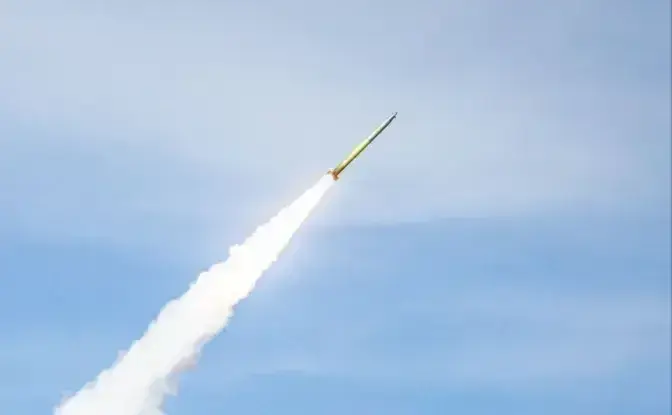
And the intimidation with 'Oreshnik' – is that also such a process?
Yes. He is trying to scare us, and perhaps even more so – our European allies. Today he is shooting at Bila Tserkva, and tomorrow – at European cities, trying to raise the stakes.
How could Zelensky's decree on a parade in Moscow have affected Putin?
It doesn't matter anymore whether we write decrees about parades to him or not. He is attacking us to the maximum extent possible, whether we provoke him or not. The idea that we are provoking him stems from the illusion that he is not fighting us at full strength. But that's not the case.
Moat of crocodiles and the new Ukrainian aristocracy
Europe or America often express fear: what to do when the war ends and those who have come out of prisons return from the front lines in Russia...
Ukrainians do not have to solve all the problems in the world. Our task is to dig a moat with crocodiles, arm ourselves with the most modern weapons, and build our own country. What will happen in Russia - whether it will fall apart or build a paradise on earth - should not concern us. We must demand reparations, justice, and punishment for criminals, but not dedicate our entire lives to it. Let the Americans or other Europeans worry about that. We can only sell our expertise, as we understand their language, culture, and society well, but we certainly should not save Russia.
We unite well when there is a threat. But are we ready for an adult conversation within the country? When the war ends with our victory, will we not again become a society where everyone knows best how things should be?
Nobody knows that. Until you step into the river, you won't know its depth. But, judging by what I see and hear, we already have an entire social group capable of thinking in the country's interests. Being just good, honest people is a necessary, but not sufficient, condition. Educated and experienced people who think in terms of state interests are needed. We have this stratum of passionate individuals, there are quite many of them, so we have every chance to build a good country.
Are you an optimist?
Overall, everything ends in death, so it's hard to be an optimist (laughs)But in thoughts about our country and our people, I look to the future optimistically.
You say that Ukrainians are not super unique, because all peoples seek their uniqueness. And what are Ukrainians like now? Have they surprised you in any way over these years?
I would say: not them, but us. Before the war, I was most worried that we would get scared, lose quickly and submit. Therefore, I was struck by the opposite picture of general uplift. But the fact that we are capable of fighting for five years - complaining and arguing among ourselves, but defending ourselves daily at the front and in dialogues with the world - is a great and very good surprise. We turned out to be smarter, more organized, and more resilient than I imagined. I believed we could fight for six months, but I didn't imagine we could fight for five years. Besides, we have formed our own modern aristocracy - these are people who are fighting. This is a very positive unexpected development.
Thank you for this conversation. I hope it will instill faith that conflicts are not so scary.
Western culture is built on conflict and its overcoming, while Eastern culture seeks harmony. We have a conflict, and we need to learn to overcome it constructively, as befits the European tradition.
Interviewed by Svitlana Zhabiuk
The meeting was held with the support of the Robert Bosch Foundation. Join the 'Club of Experts' to not miss the next opportunity to meet in person!
Related News