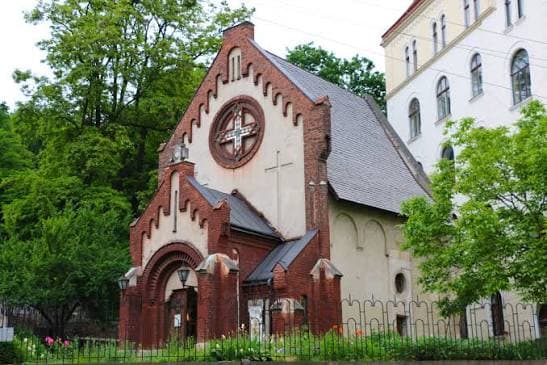
Today, June 23rd, on the feast of the Nativity of John the Baptist we recall the history of one of Lviv's oldest churches, named in his honor. It is located at 1 Uzhorodska Street.
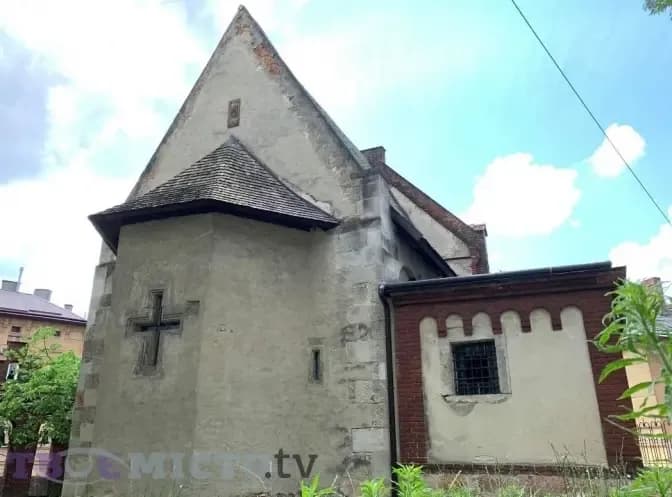
Throughout its existence, the church building has undergone many reconstructions and alterations, as a result of which it is almost unrecognizable from its original form. Currently, it houses the Museum of Ancient Lviv Artifacts of the Borys Voznytsky Lviv National Art Gallery.
How old is the church
There is a dispute among Lviv historians regarding the construction date of the church: 1201, 1236, or 1247. The first written mention of it is dated 1371.
As Natalia Klishch, the head of the "Museums-Monuments" sector of the Art Gallery, told "Your City," one of the most popular versions is that the church was built for princess Constance of Hungary – the wife of Prince Lev of Galicia.
Another version is that the church was built in honor of the birth of Danylo of Galicia. In the 1230s, Dominican monks stopped here; in the 1240s-50s, the shrine was given to the devout Catholic Constance, and after her death, it was transferred to the Armenian Uniatics.
As the head noted, throughout its history, the church has transitioned from one denomination to another and, like the mythical phoenix, has been reborn from ashes.
Reconstructions of the church
The church also burned down more than once and stood empty. The biggest fire occurred here in 1799, after which the church was closed for almost 30 years. Afterwards, it was restored, but unsuccessfully. Later, in 1887, the most thorough reconstruction of the church took place, led by the renowned Lviv architect Julian Zachariewicz.
In 1911, a monastery of the Sisters of the Heart of Christ was built behind the church. For some time, divine services were held in the church, and after the war, it housed utility rooms, a wardrobe, and even a morgue, though there is no documentary evidence of this.
In its original form, the church was small – eight by six meters. However, over time, a narthex and sacristy were added, and the vaults were lowered and then raised again.
What was found during excavations
During excavations in 1978, many burials were found under the church floor. According to Natalia Klishch, 38 skeletons were unearthed, including nine children, lying in three different soil layers.
Also, in front of the church entrance, there is an indentation whose dimensions indicate that a sarcophagus burial might have taken place there. According to legend, Princess Constance herself was buried here. But this is just a hypothesis, as documents, if they existed, have either been destroyed or burned.
Quite a few bones were found when the fence near the church was being redone. They were collected and buried behind the church. By the way, on the facade of the church building, there is an image of Constance; her memory is honored here on March 15th, Hungary's Independence Day.
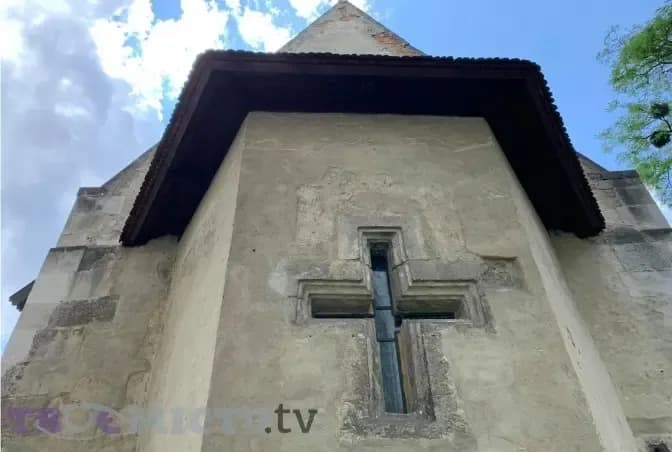
During archaeological research, graffiti was found on the church wall, which may indicate its original appearance – with an apse. It was left there for viewing.
At one time, the church housed the oldest icon – the Lviv Mother of God, which Borys Voznytsky searched for a long time. It is now in the Potocki Palace.
How the church has changed during independent Ukraine
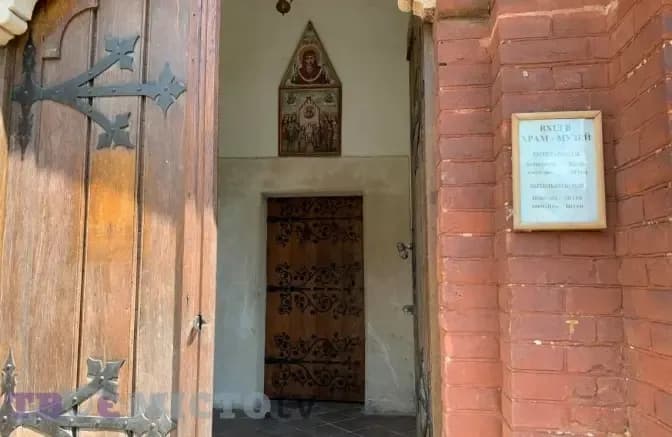
Since the church came under the jurisdiction of the Lviv Art Gallery, new research began to be conducted there. In 1994, a branch was opened here – the Museum of Ancient Lviv Artifacts.
It was not possible to restore the church to its original appearance due to too many reconstructions. However, during restoration, the small stained-glass windows of the church were uncovered. There is also a scaled-down replica of the church in its original form. Who created this model is unknown.
The preserved fragments of paintings date no later than the 16th century. Floral rosettes can be discerned among them.
There are not many icons in the Church of St. John the Baptist: a reproduction of the Mother of God icon, a copy of which can be seen in the Dominican Cathedral, and the original – in the Church of St. Mary, located in Gdańsk (Poland), as well as the famous Częstochowa Mother of God.
At one time, exhibitions of sacred art were held in the temple-museum, which are planned to be resumed, and organ concerts will also be held.
The Church of John the Baptist was consecrated in 2009. Due to coronavirus, it was closed for some time – until July 1, 2021.
The head of the sector also said that the bell tower, which once stood in front of the temple, and is now to the right of the church, was built in 1887 by Yulian Zakharievich. However, in 1939, the bells mysteriously disappeared, and the temple remained "deaf" until 2010.
We talk in more detail about the history of the Church of John the Baptist on Uzhorodska Street in this material.
Full or partial republication of the text without the written consent of the editorial board is prohibited and is considered a copyright infringement.