Astronomical calendar for July: conjunction of planets, meteor shower, and a rare chance to see Venus during the day
01 July 2026, 15:36
01 July 2026, 15:36
In July, interesting astronomical events will be observable in the sky even with the naked eye. For example: the conjunction of Mars with Uranus, Earth passing its aphelion, the start of the Southern Delta-Aquariids meteor shower, and a rare opportunity to see Venus with the naked eye during the day. This was reported by the popular science media outlet "Universe Space Tech".
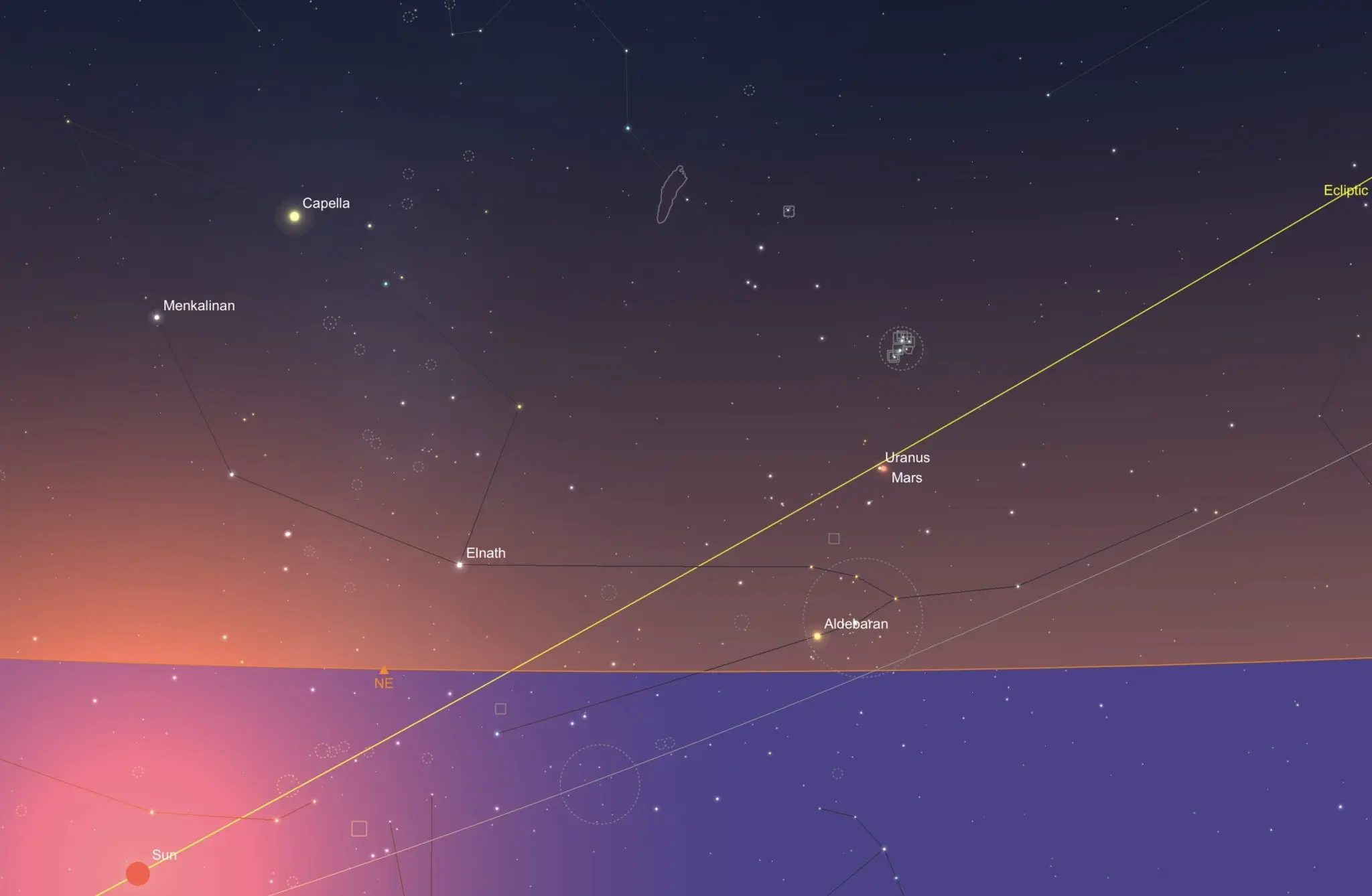
July 4 — conjunction of Mars and Uranus in the morning sky; only 6′ will remain between the planets, which is 5 times less than the diameter of the Moon's disk.
Mars is easy to find even without optical instruments, but to see Uranus, you will need to use a telescope or binoculars. The conjunction will occur on July 4, at 09:10 (06:10 UTC). The best time for observation is just before dawn on the same day. An open eastern horizon is a mandatory condition for success.
July 6 — Earth passes aphelion, the farthest point in its orbit. The planet will be at a distance of 152,087,774 km from the Sun.
Throughout the year, the distance between Earth and the Sun varies due to the planet's elliptical orbit. We reach the greatest distance from the central star at slightly different times each year. For instance, in 2026, this will happen on July 6 around 8 PM (17:00 UTC), when the distance will be 152,087,774 km. We will be closest to the Sun on January 3, 2027 — the distance will shorten to approximately 147,098,291 km.
In a sense, this event can be observed. To do this, you can photograph the Sun on the day of aphelion passage and six months later, on the day of perihelion passage, and compare the angular sizes of the Sun on these two days.
July 8 — just before dawn, the Moon (48%) will be near Saturn. The conjunction will occur on July 7, at 20:31 UTC, when the distance between the bodies will be 5.1°.
July 11 — conjunction of the Moon (16%) with Mars in the pre-dawn sky. Keep in mind that the bodies will be quite low above the eastern horizon.
July 12 — start of the Southern Delta-Aquariids meteor shower.
This shower is the most powerful meteor shower of July and is very broad, active from July 12 to August 23, reaching its peak on July 31 when its ZHR will approach 25. However, it's important to consider that the shower's radiant does not rise high in our latitudes, which significantly reduces the number of meteors. Furthermore, this year the shower's peak coincides with a nearly full Moon, and this last circumstance will reduce the number of meteors to 1-2 per hour even in a rural sky.
July 14 — new moon, exact time 12:43 Kyiv time (09:43 UTC).
For a few nights before and after the new moon phase, the sky remains free from excess light pollution. This period is the best for observing faint deep-sky objects: nebulae, star clusters, and galaxies. However, the trick will only work under dark, rural skies.
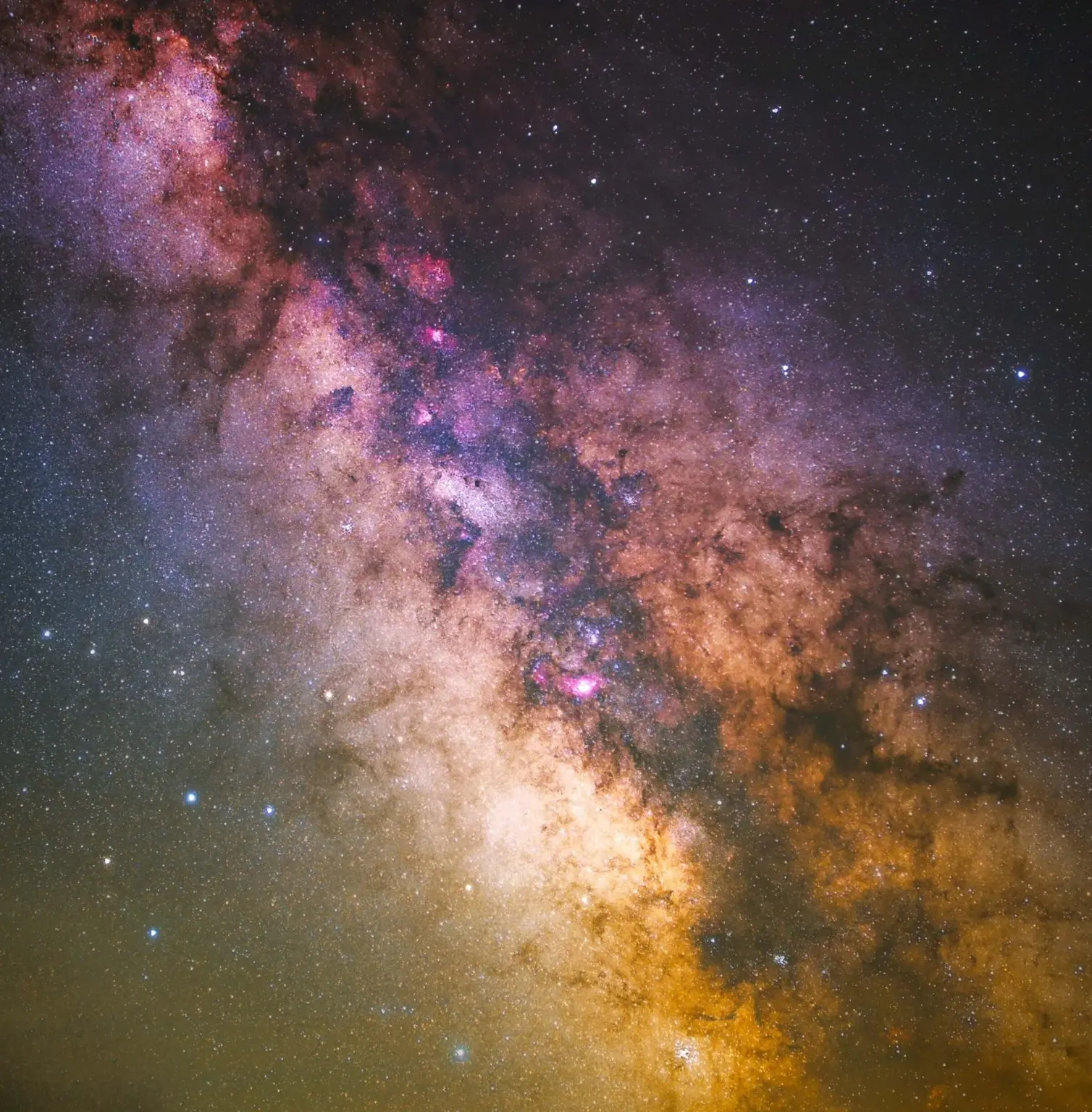
This month, it's worth paying attention to objects in the Milky Way. If you are a beginner, you can point your telescope or binoculars to almost any spot in the pale milky-white band and slowly move along it. You are highly likely to encounter various clusters.
More experienced observers can organize a "mini-marathon" of various interesting sights in the brightest part of the Milky Way. Hanging above the southern horizon will be, among others, objects like the Eagle Nebula (M16), Lagoon Nebula (M8), Trifid Nebula (M20), Small Sagittarius Cloud (M24), and a host of other star clusters.
July 17 — conjunction of the Moon (14%) with Venus. At 17:47 (14:47 UTC), the bodies will be only 1°47′ apart.
The conjunction of the Moon with Venus on July 17 provides a rare opportunity to try to see the brightest planet in the Solar System with the naked eye during the day. At 17:47, the Moon and Venus will be only 1°47′ apart — approximately three lunar diameters. This time can be considered optimal for exotic daytime observations.
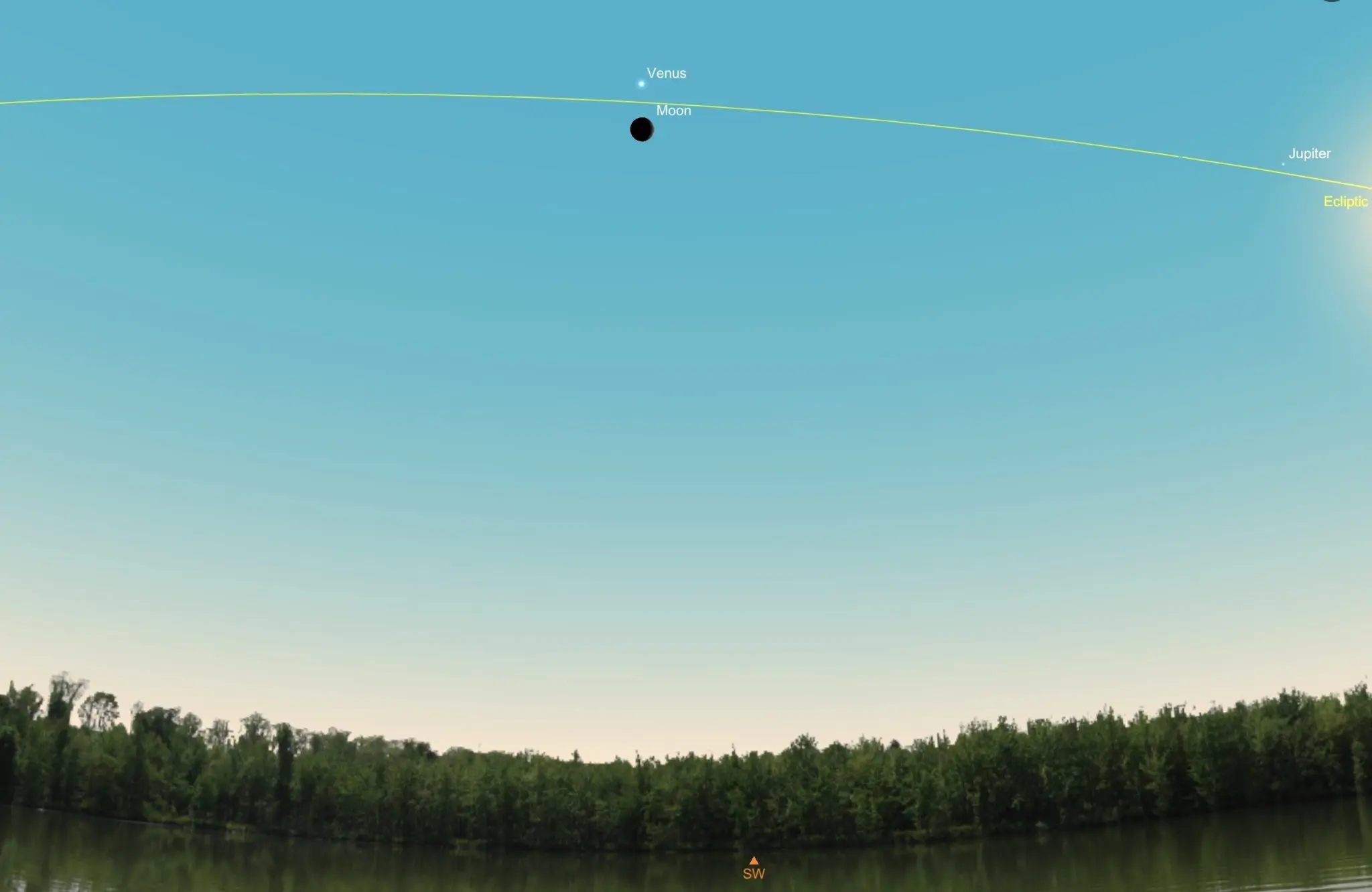
A definite advantage of daytime Venus observations is the absence of excessive brightness, which, in a dark sky, hinders the observation of the planet's phase. Venus's phases change about like the Moon's, depending on the relative positions of the planet, the Sun, and the Earth. Specifically, on July 17, the phase will be 62%.
For successful observations, choose a viewing spot where you are reliably hidden from the bright sunlight by a building or dense tree crowns. You will likely find the 14% phase Moon without difficulty. Venus will be just slightly above the lunar crescent. A perfectly viable alternative would be more traditional evening observations: Venus and the young Moon appear incredibly beautiful in the western sky, even though the distance between them will have slightly increased by then.
July 29 — full moon, exact time 17:36 Kyiv time (14:36 UTC).

Related News