"The height of cynicism": Ukrainian graves hidden under camouflage nets in Poland
13 July 2026, 20:39
13 July 2026, 20:39
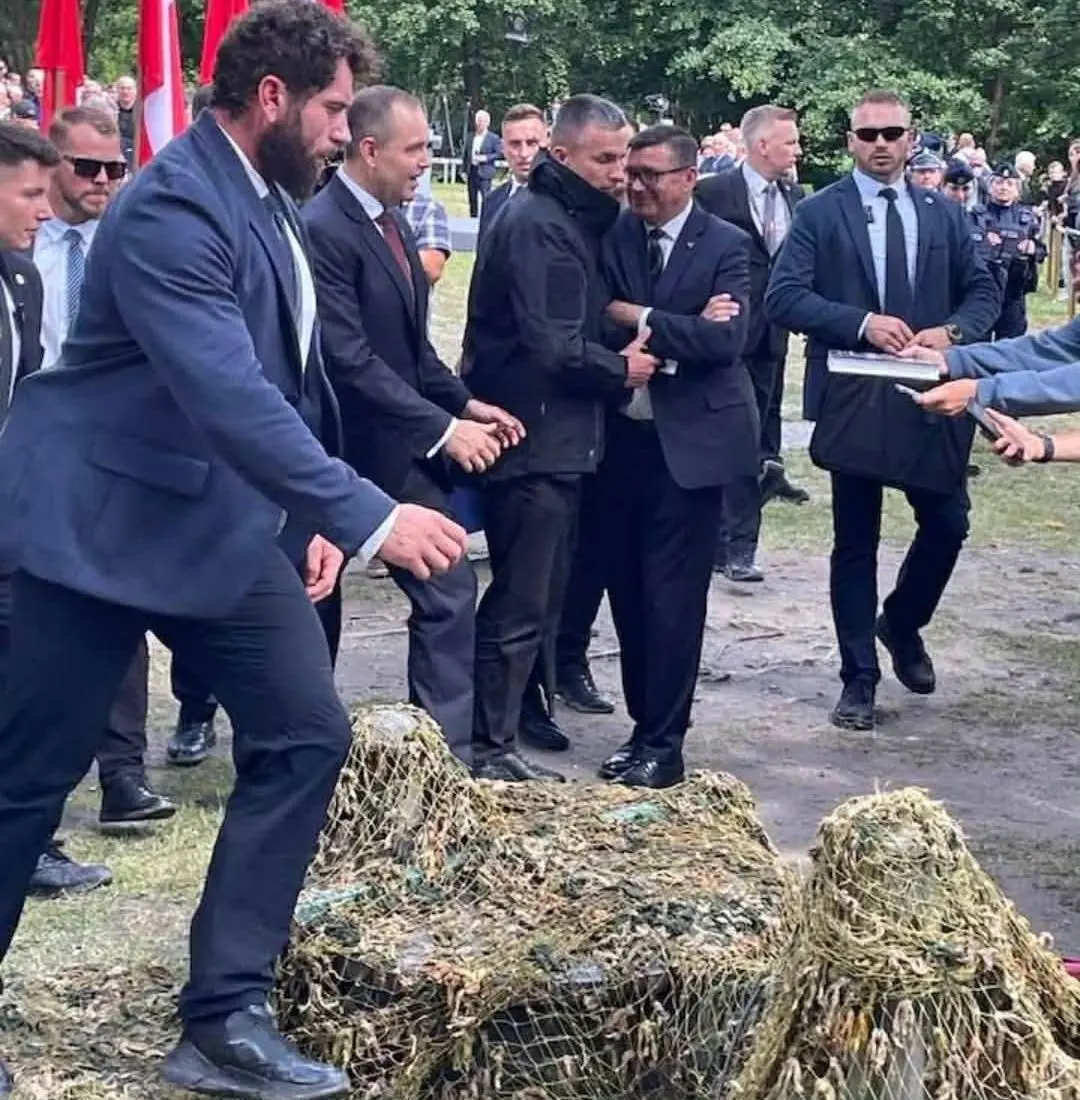
After commemorative events for the anniversary of the Volhynian tragedy with the participation of the country's president, Karol Nawrocki, a scandal erupted. The reason was that during official ceremonies in the village of Radruż, Podkarpackie Voivodeship, part of the Ukrainian burials in the local cemetery were covered with camouflage nets.
As is known, On July 11, Karol Nawrocki arrived in the village of Radruż in Podkarpackie Voivodeship, where he took part in events marking the anniversary of the Volhynian tragedy. The ceremony took place near the 17th-century Greek Catholic Church of St. Paraskeva, located on the grounds of an old Ukrainian cemetery. However, after photos from the event were published, Ukrainian historians drew attention to objects in the background covered with military camouflage nets. It later turned out that the crosses of Ukrainian graves were located beneath them.
Historian and MP Volodymyr Vyatrovych reacted to the situation on his Facebook page:
After this post was published, Polish historian Piotr Żubrowski statedthat restoration work on Ukrainian tombstones has been carried out by the Borderland Museum in Lubaczów since 2016. In Radruż, there are about 500 tombstones, of which 300 have been restored so far, and another 43 will be restored this year.
What Ukrainian researchers say
Although they reported that the restoration work on the older part of the cemetery was not yet completed, a wave of indignation erupted on social media. In particular, representatives of the "Ukraine Incognita" project drew attention to the situation. In a post on their page, the public organization noted that the venue for the event was not chosen by chance.
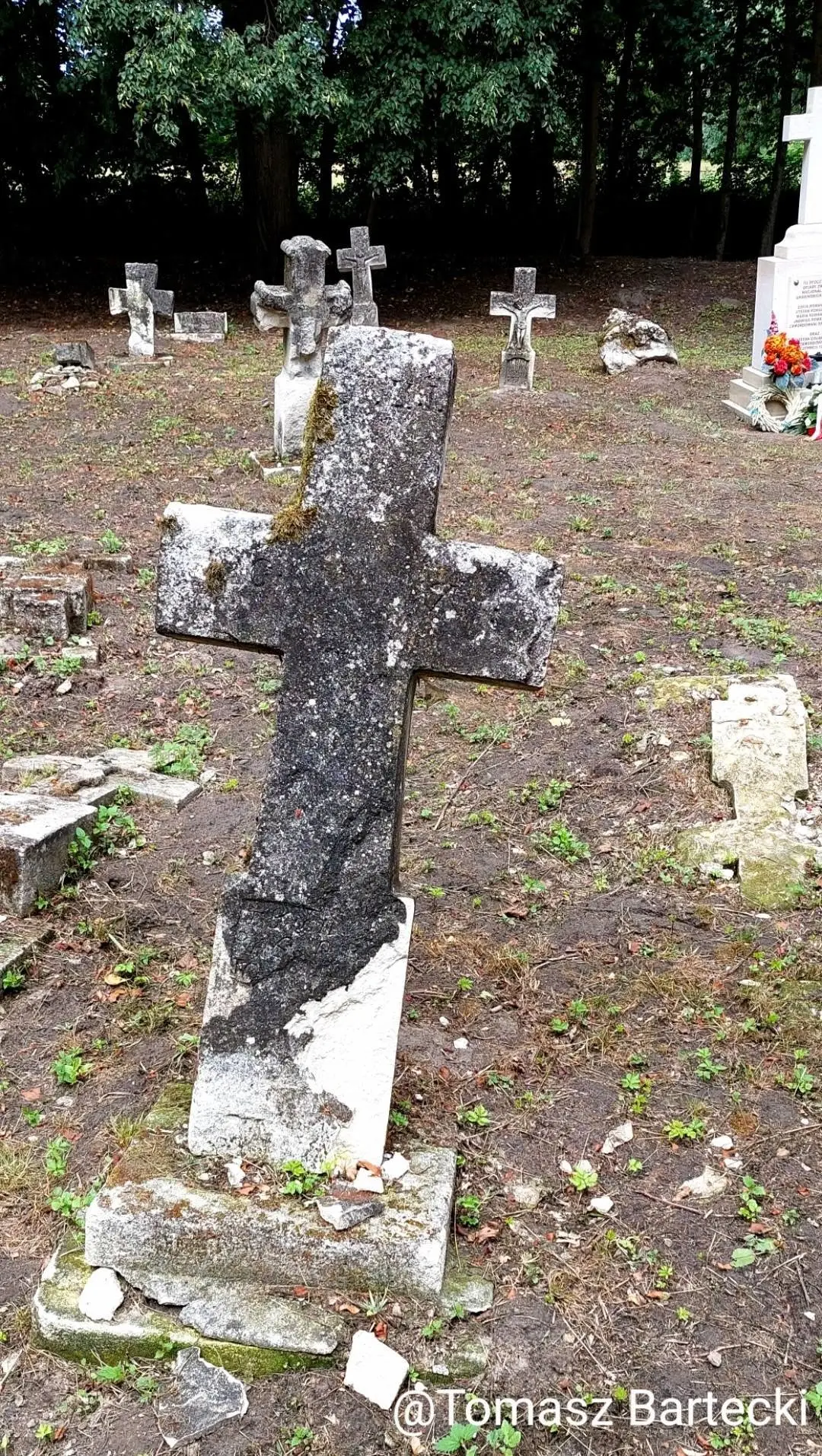
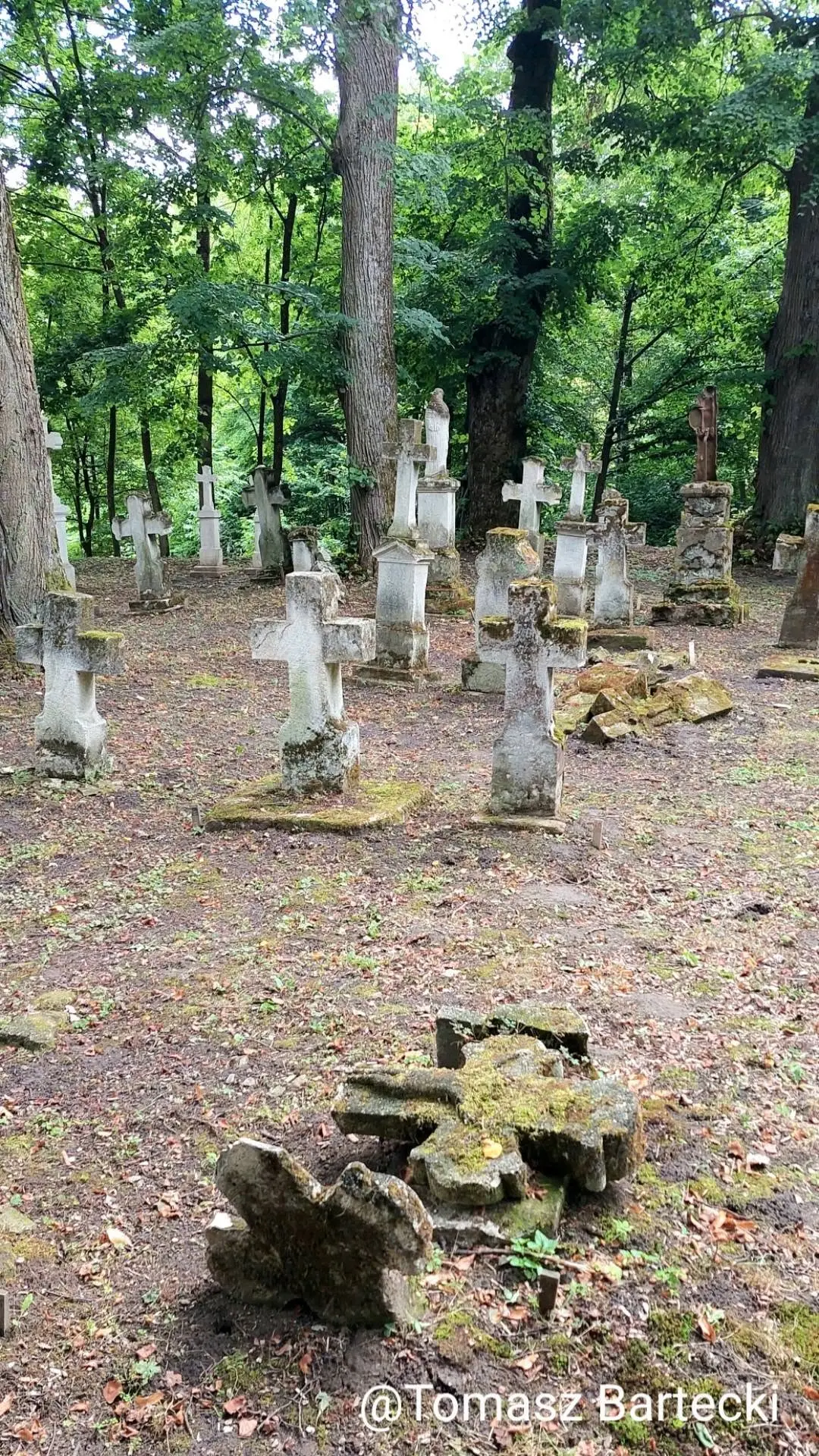
Instead, after the official delegation left, the event venue was visited by Polish researcher Tomasz Bartnecki. Photographs published by him confirmed that crosses and tombstones of the Ukrainian cemetery were indeed located under the camouflage nets.
"The height of cynicism": reaction of the founder of "Ukraine Incognita"
Roman Malenko, the founder of the "Ukraine Incognita" project, expressed his indignation at the situation. In his post on social media, he criticized the holding of commemorative events on the territory of the old Ukrainian cemetery in Radruż and the concealment of part of the burials under camouflage nets. In his opinion, it is particularly controversial that the event took place in a village that was predominantly Ukrainian before World War II, and its indigenous population was later subjected to deportations. Malenko called such actions disrespect for the memory of the Ukrainians who lived in those lands.
Discussion on historical memory
The scandal in Radruż sparked lively discussion not only among historians but also among users. Many commentators drew attention not only to the fact of hiding Ukrainian graves under camouflage nets but also to the broader historical context of Polish-Ukrainian relations.
One of the most widespread was a post by a user on Facebook, who runs a page under the name John Smith. He questioned the very definition of the events in Volhynia as a "tragedy," calling them part of a broader Polish-Ukrainian conflict in the first half of the 20th century. The author also argued that the causes of the ethnic confrontation should be sought in the policy of the Second Polish Republic towards the Ukrainian population and in the social inequality between resettled Polish settlers and local Ukrainians.
Many posts also concerned the post-war deportations of Ukrainians from Lemkivshchyna, Nadsiannia, Kholmshchyna, and Pidliashshia in 1944–1947. The authors emphasized that these events also remain a painful page in history for Ukrainian society, but they are often outside the attention of the Polish historical narrative.
The events of the so-called pacification of 1930, when the Polish authorities carried out punitive operations against the Ukrainian population and public organizations in Galicia, were also mentioned separately in the discussion.
Context
After Karol Nawrocki was elected President of Poland, the issue of historical memory has recently returned to the center of Polish-Ukrainian relations. The theme of the Volhynian tragedy has become one of the key ones in his public speeches. During the ceremony in Radruż, the Polish president criticized supporters of Banderist ideology and those who use its symbolism, calling for a clear condemnation of crimes against the civilian population.
At the same time, calls to talk not only about Volhynia, but also about other pages of shared history are increasingly heard in Ukraine — the policy of Polonization, the pacification of the Ukrainian population, the activities of the Home Army, post-war deportations, and Operation Vistula.
Despite disputes over historical memory, Kyiv and Warsaw have tried to resume dialogue on complex historical issues in recent years. In particular, the parties agreed to conduct search and exhumation work at the burial sites of victims of 20th-century conflicts. However, the incident in Radruzh showed that even symbolic gestures related to memorial sites can quickly turn into a subject of international discussion and exacerbate old historical disputes.
Currently, the Polish side has not released official explanations as to why Ukrainian graves were covered with camouflage nets during the celebrations.
We remind you that at the beginning of July a discussion between Kyiv and Warsaw regarding historical memory intensified after the decision to award one of the units of the Special Operations Forces of the Armed Forces of Ukraine the honorary name "Heroes of UPA". In response, Polish Prime Minister Donald Tusk stated that he expects a "first step" and a "clear signal" from Ukraine to reduce tensions in bilateral relations.
At the same time, Tusk announced that he had received a letter from the third President of Ukraine, Viktor Yushchenko, calling for joint work on understanding difficult pages of history and not allowing the past to define the future of Ukrainian-Polish relations.

Related News