What if trains could be used to travel within Lviv?

10 October, 10:52
10 October, 10:52
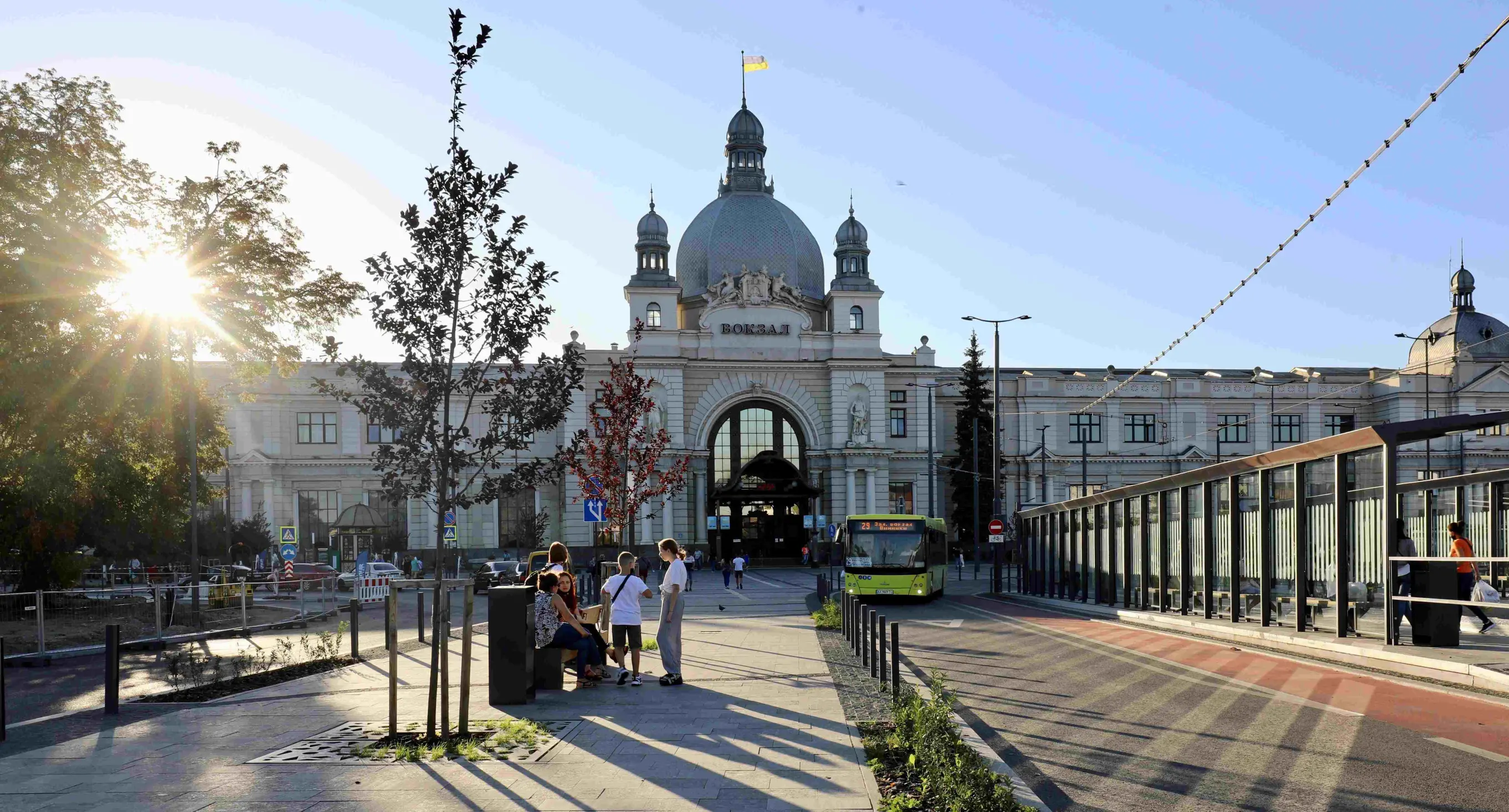
Recently, after a meeting of "Your City" about Lviv as a transport hub, one of the main topics of discussion was the proposal to liquidate the separate Suburban Station. However, I believe it is important now to also discuss something else – how we see the future of the Lviv Main Railway Station and what we propose to do with it.
What is wrong with the station now and how it can be changed
We propose to preserve the historic Dvirets building for a museum, exhibition, or other cultural space. Instead, on the western and eastern sides of the station, two modern, inclusive passenger vestibules with direct access to the high platforms should be built.
The current building has several problems. Its floor is five to six steps higher than the level of the square, so it is difficult to provide fully barrier-free access. The tunnels under the platforms are narrow and low and are not designed for growing passenger traffic. And the design of the platform canopy complicates the installation of escalators and elevators.
Our concept involves upgrading the platforms and access to them, installing escalators and elevators, and also arranging a separate platform for trains on the European 1435 mm gauge.
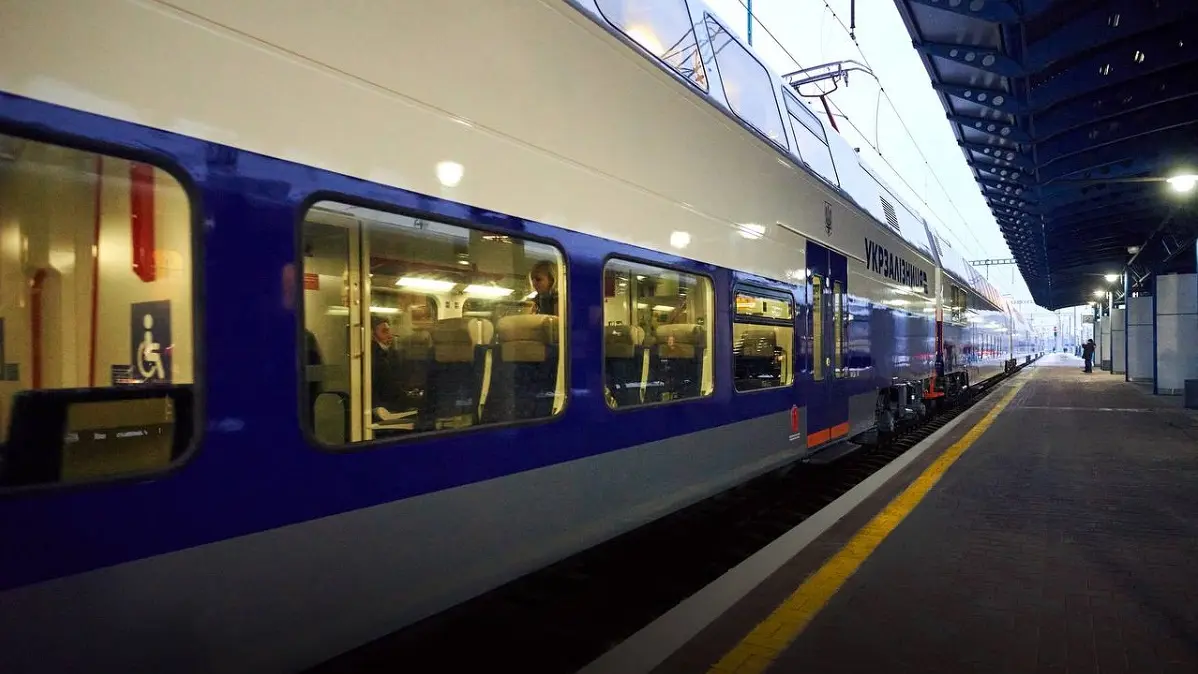
At the same time, it is not only about reconstructing the station. Each of the two vestibules will have its own platform for "Lvivski Lynii" – the city's railway public transport. Trains passing through Lviv will have two urban stops here.
This will make transfers easier for long-distance passengers, and residents of nearby districts will be able to use the railway as regular public transport. The eastern stop will serve the Zaliznychna Street area, and the western stop will serve the Horodotska district, the "Skrynia" shopping center, and future development between Chernivetska and Horodotska streets.
In this concept, the Main Railway Station stops being merely a place you have to make a special trip to in order to board a train. The railway itself becomes part of the city's public transport.
Why the Suburban Station then becomes unnecessary
The "liquidation" of the Suburban Station is not an end in itself, but the result of a transition to a more economically viable model of rail transport.
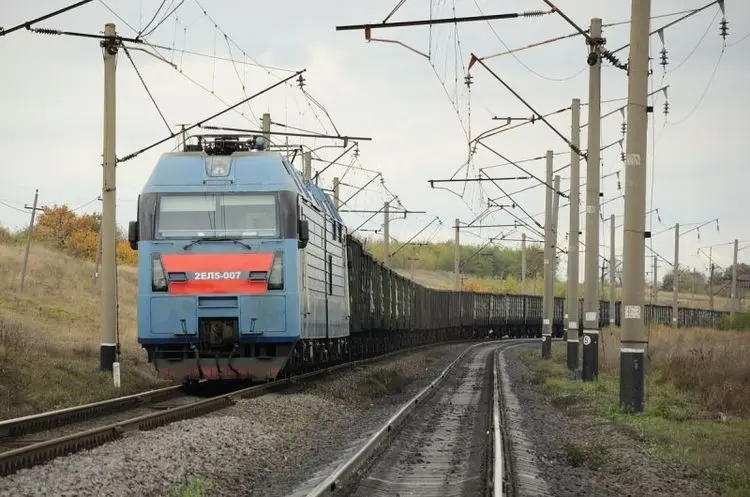
The Lviv railway junction combines non-electrified lines and sections with two power supply systems: 25 kV alternating current and 3 kV direct current. Their junction is located at Lviv station, which complicates through traffic and, under the traditional model, requires a change of locomotive.
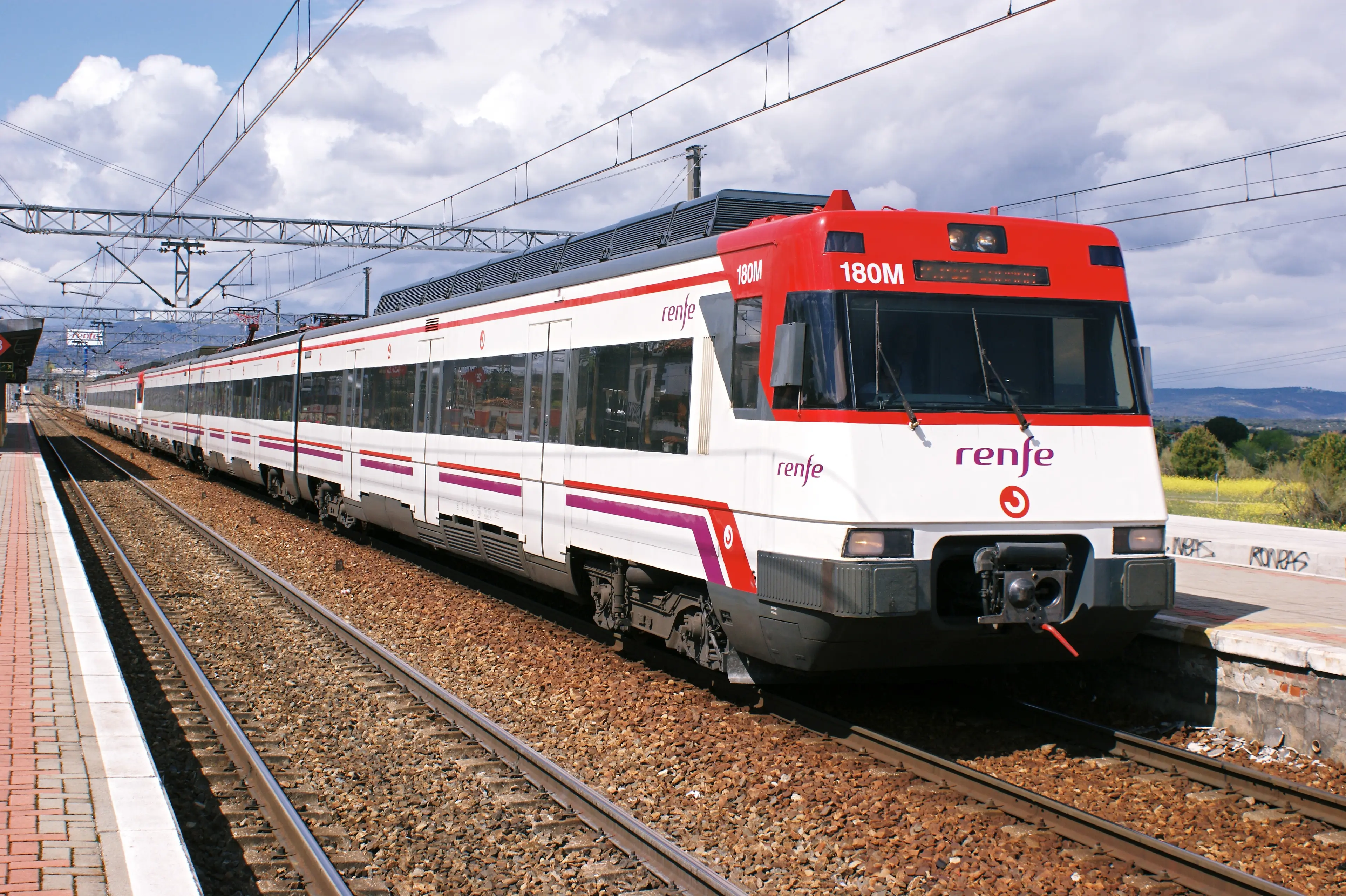
Modern trains can operate with different power supply systems and, if equipped with energy storage devices, can cover certain sections of the route autonomously.
The Suburban Station was originally created for trains serving the western direction, in particular to relieve the Main Railway Station of suburban passenger traffic. However, this decision effectively split the city's transport system.
Passengers who want to transfer from a suburban train to a long-distance train, or vice versa, have to cross the distance between the two stations. An even more important problem is that suburban train routes effectively end in Lviv, instead of continuing through the city and providing convenient connections between its districts.
A passenger arriving from the east cannot continue on the same train to stops west of Lviv station – and vice versa.
Precisely through-running through Lviv makes it possible to use the railway not only to connect the region with the city, but also for fast travel between different districts of Lviv and settlements of the agglomeration.
Moving the junction of power supply systems beyond the central part of the junction and using modern rolling stock make it possible to eliminate the technical reason why routes currently end in Lviv.
In such a model, the dead-end Suburban Station loses its transport function.
That is why we are asking not "What should be done with the Suburban Station?", and "How should railway public transport be organized so that it is convenient for passengers and economically justified for the city, the communities of the region, and the settlements within the service area of the Lviv Railway?"
If through traffic no longer requires a dead-end station, its territory can be used for other needs. For example, the railway technology museum could be expanded. At the same time, given the location of the site, the city may find an even more valuable use for it.
The new function of this territory is to be decided jointly by the Lviv community and the land plot user, JSC "Ukrzaliznytsia".
This is only one fragment of a much larger project
The example with the two railway stations shows why individual decisions should not be considered in isolation from the entire project. To understand their logic, it is necessary to see how they work together.
It is important to note that this is not just about ideas or a preliminary concept. We have been working on a comprehensive transformation of the Lviv transport hub since 2018, which covers six public-private partnership (PPP) projects. They were first submitted for consideration as PPP proposals in 2021. After refinement, on October 22, 2025, the proposals were transferred to the Cabinet of Ministers of Ukraine through the Ministry of Development of Communities and Territories, as well as to the Lviv City Council.
It is envisaged that these proposals will be assessed in parallel with the preparation of a long-term development strategy for the Lviv railway hub. This will make it possible to consider specific solutions in the context of the future of the entire railway system of Lviv.
These are six separate but interrelated PPP projects. Their comprehensive implementation involves:
— distribution of the infrastructure of the Lviv hub by priority of passenger and freight traffic, eliminating bottlenecks and moving the main freight traffic out of the central part of Lviv;
— creation of the "Railway Heart": a new main freight line Krasne—Dublyany, the second stage of the Northern freight bypass, reconstruction of the Klepariv and Lviv marshalling yards, creation of infrastructure for freight trains on 1435 mm gauge tracks and transshipment fronts between 1435 and 1520 mm trains;
— creation of infrastructure for passenger trains on 1435 and 1520 mm gauge and a system with four main passenger terminals: the Lviv International Communications Port at Sknyliv, integrated with the airport, Lviv-Holovnyi, Pidzamche, and Chervona Kalyna;
— development of a network of stopping points for railway public transport and creation of the operator "Lviv Lines";
— creation of an optimal enclave of 1435 mm gauge tracks, which directly integrates the Lviv hub into the European TEN-T network and at the same time ensures the operation of the hub's passenger and freight components;
— creation of a freight air terminal with direct access to the 1435/1520 mm track hub;
— development of low-activity airfields and adjacent territories as components of the "Lviv Aerospace Valley".
All these decisions are parts of a single transport system designed to strengthen the economic and social development of Lviv, the region, and the wider area.
Thanks to its geographical location, Lviv has significant transport potential. Integrating the railway hub into the trans-European TEN-T network can help realize it and strengthen the city's role as a cultural, scientific, industrial, and transport center of the region. Whether Lviv seizes this opportunity depends on how this network develops.
An important question is also funding. Should the city rely permanently on subsidies, or can it create an economically self-sufficient model that generates revenue for the community, strengthens the region's competitiveness, and allows attracting investment on public-private partnership terms?
It is precisely these decisions, their logic, advantages, disadvantages, and possible alternatives that I want to describe in more detail in the upcoming publications. That is why we have prepared for "Your City" a cycle of author's materials in which we will consistently present the entire project for transforming the Lviv transport hub, explain the logic behind individual decisions, and the connections between them. We want not only to explain the proposed changes, but also to open space for professional and public discussion, constructive criticism, and the search for solutions that will make the project better.
By the way, "Your City" held a meeting with experts on what is preventing Lviv from becoming a transport hub. You can read the full conversation here.
The author's column reflects the subjective position of the author. The editorial team of "Your City" does not always share the opinions expressed in the columns, but is ready to provide those who disagree with an opportunity for a reasoned response.
Related News