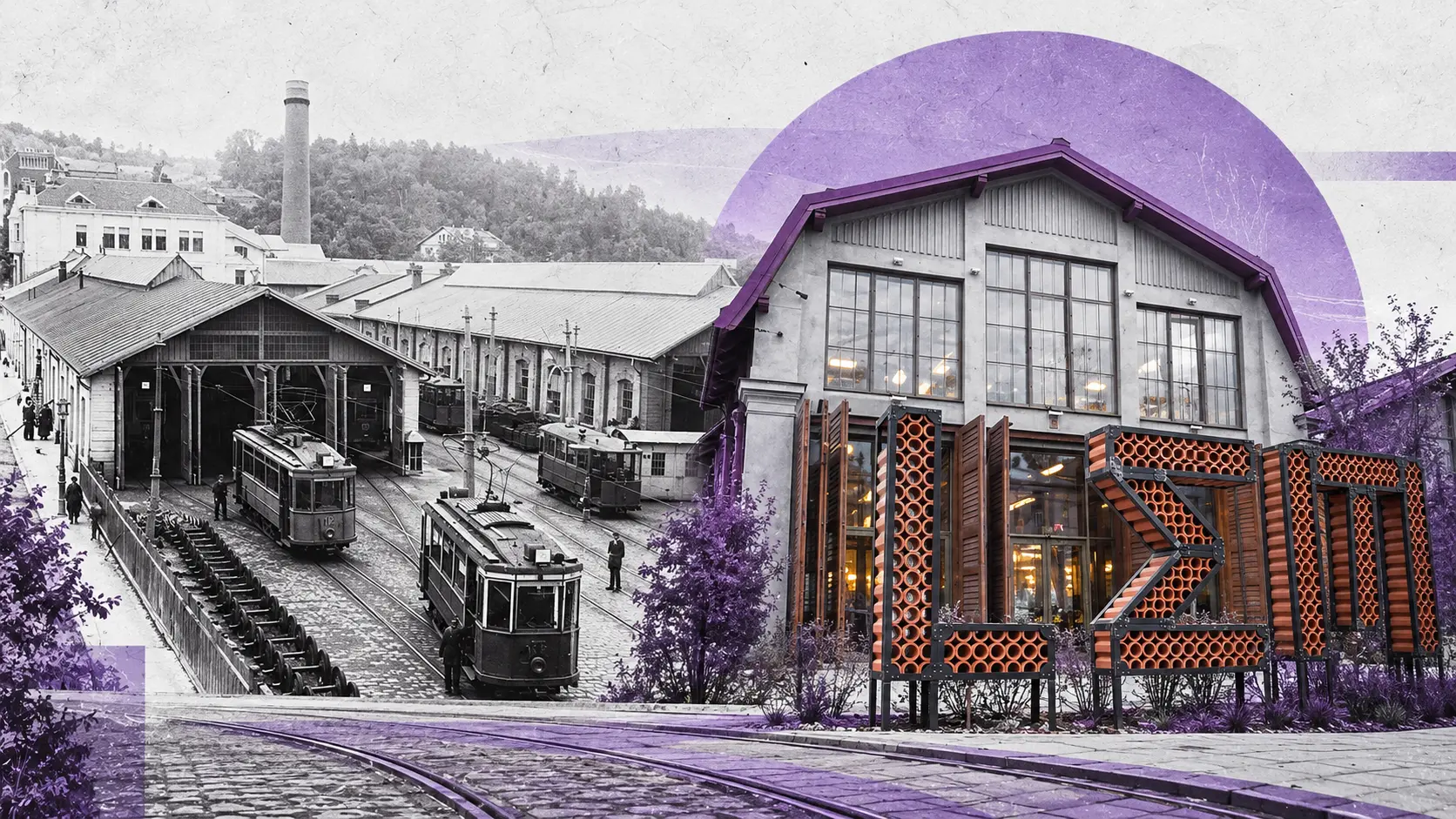
Once, Lviv's trams spent the night here. How the old depot became one of the city's new spaces
13 October, 20:13
13 October, 20:13
Today, LEM Station houses the first and largest Food Market in Lviv, an event hall for 1,000 people, premium 24/7 coworking, and an open public space where jazz concerts and fairs take place.
In the huge hangar of the former tram depot, dozens of restaurants, cafés, and bars have been set up with a shared area for guests. In the neighboring one, large-scale IT conferences, concerts, exhibitions, and festivals are held. And in the historic building of the city's first power station, a modern coworking space has been arranged, with workstations even on the roof, offering a panoramic view of Lviv.
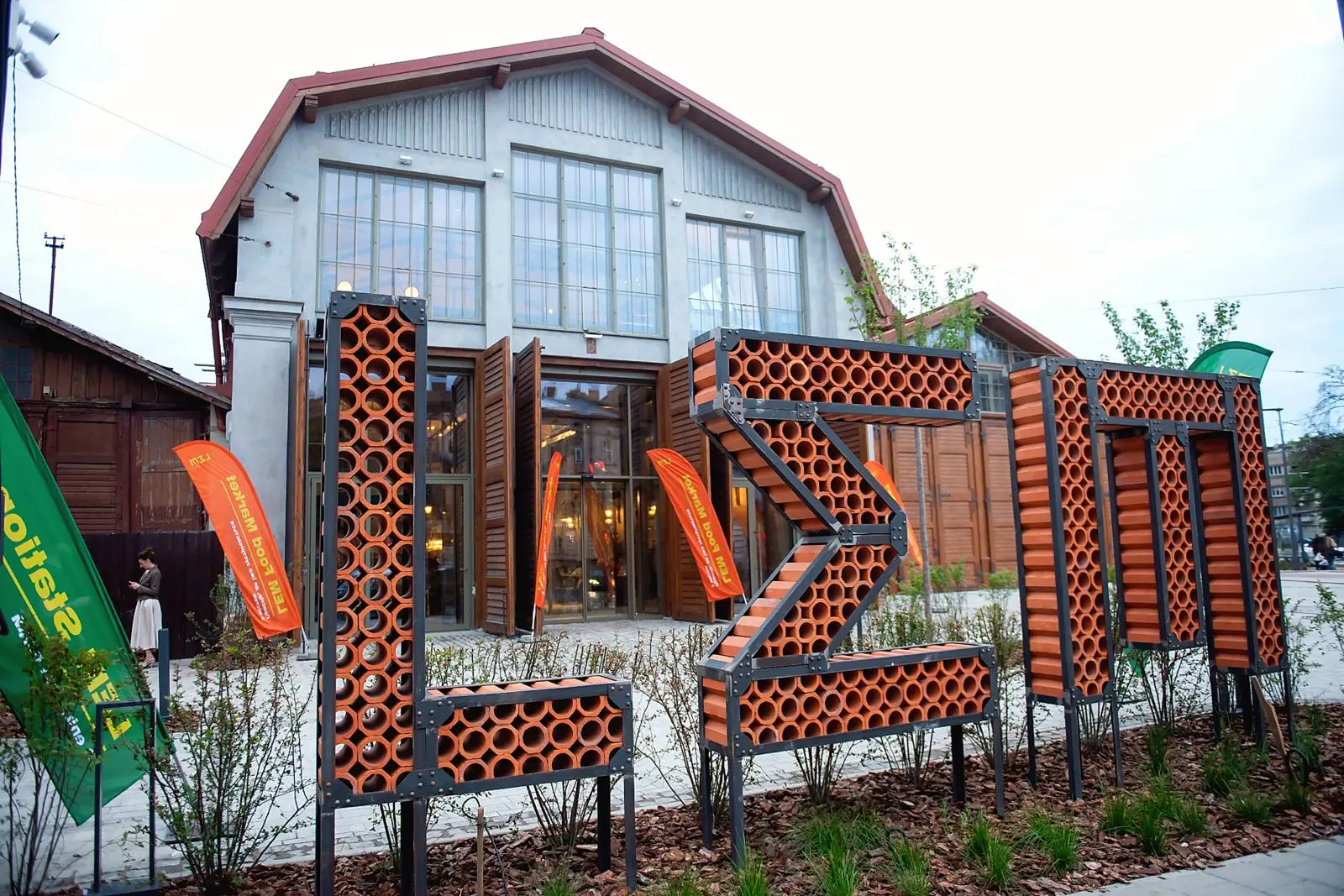
All of this is tied together by the atmosphere of an industrial loft, where modern design harmoniously coexists with authentic architecture.
The large-scale renovation of the historic tram depot at the intersection of Sakharova, Vitovskoho, and Heroiv Maidanu streets lasted almost ten years. Over this time, the neglected complex was transformed into a creative hub that brings together gastronomy, business, art, and urban communities.
How does LEM Station work today, what makes it unique, and what role does it play in the development of modern Lviv?
Industrial vibe and cuisines of the world under one roof
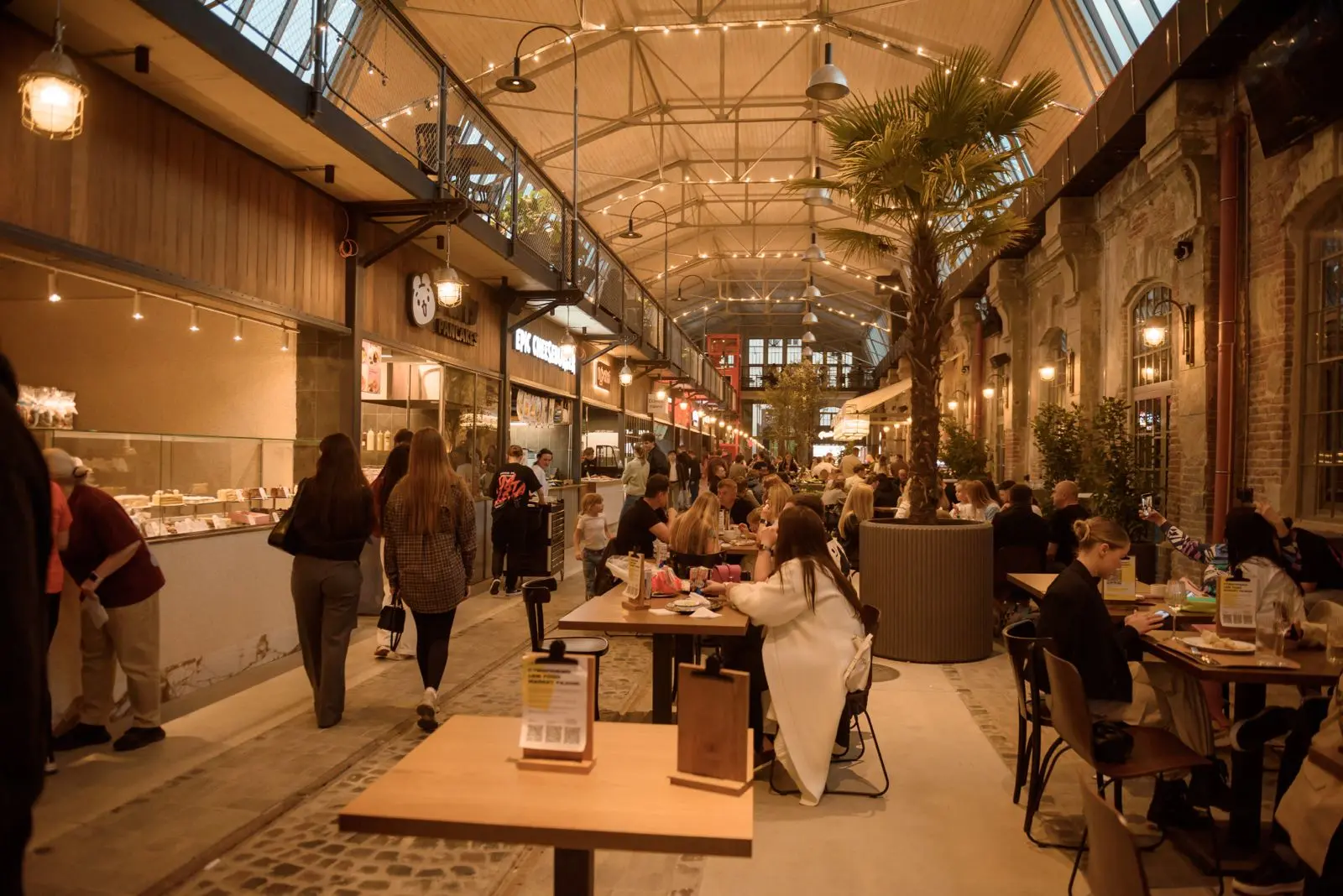
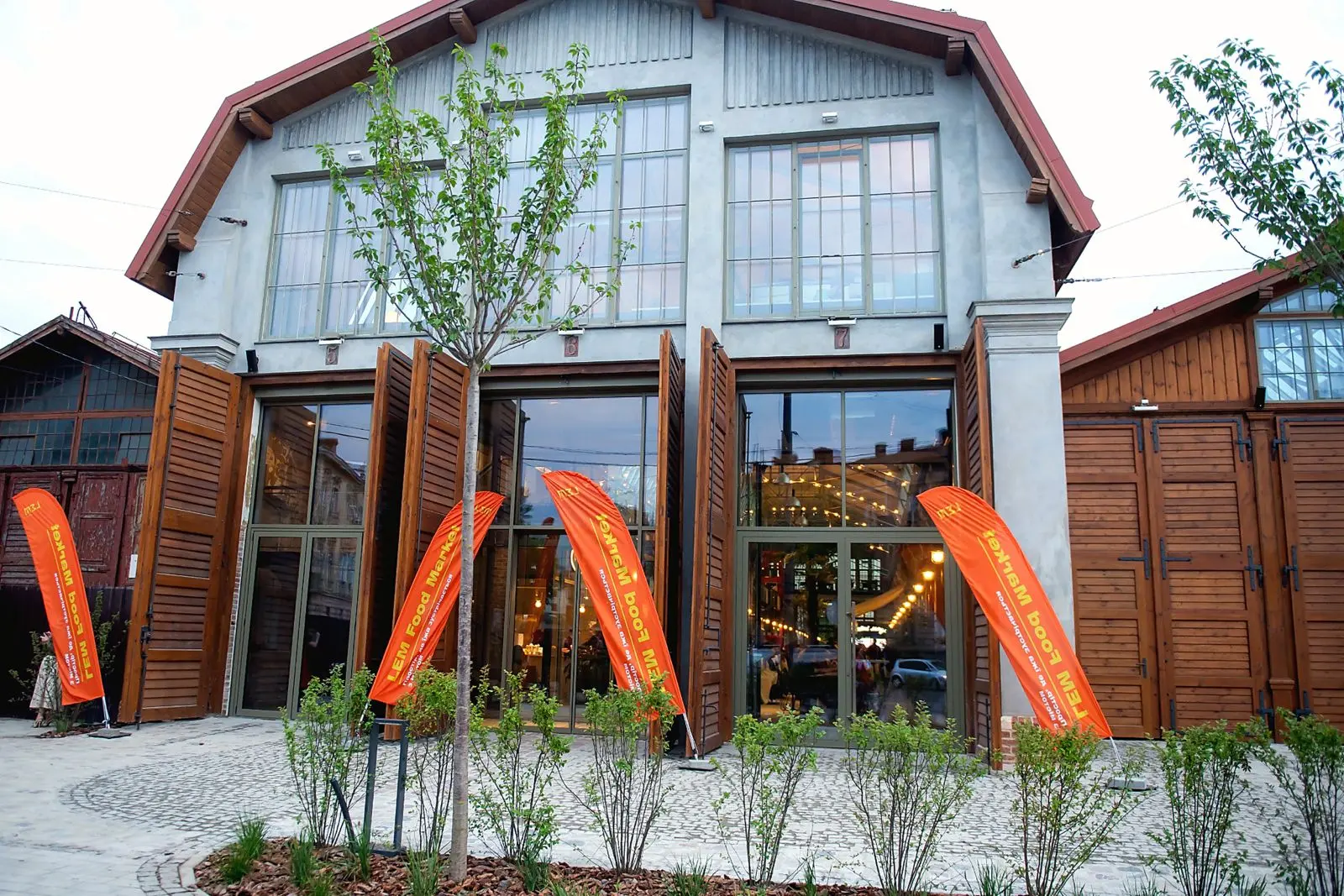
LEM Food Market is the city's first food market, located in the tallest of the depot's hangars. Although it is an enclosed space with walls, doors, and a ceiling, inside it resembles a cozy Lviv street that stretches for several dozen meters. Along it are numerous cafés, restaurants, and a bar. Underfoot is genuine Lviv cobblestone and tram tracks, alongside which stand tables with Viennese chairs. The feeling of street space is further enhanced by daylight streaming through the continuous windows beneath the lofty ceiling. Palm trees grow along the "street," and a "street" piano stands right on the cobblestones, where anyone can play.
This hangar once served as home to Lviv's trams, and now 13 restaurants and cafés are located here.
In November, another gastronomic premiere will take place at LEM Food Market: the seafood restaurant 'MORERYBY' will open.
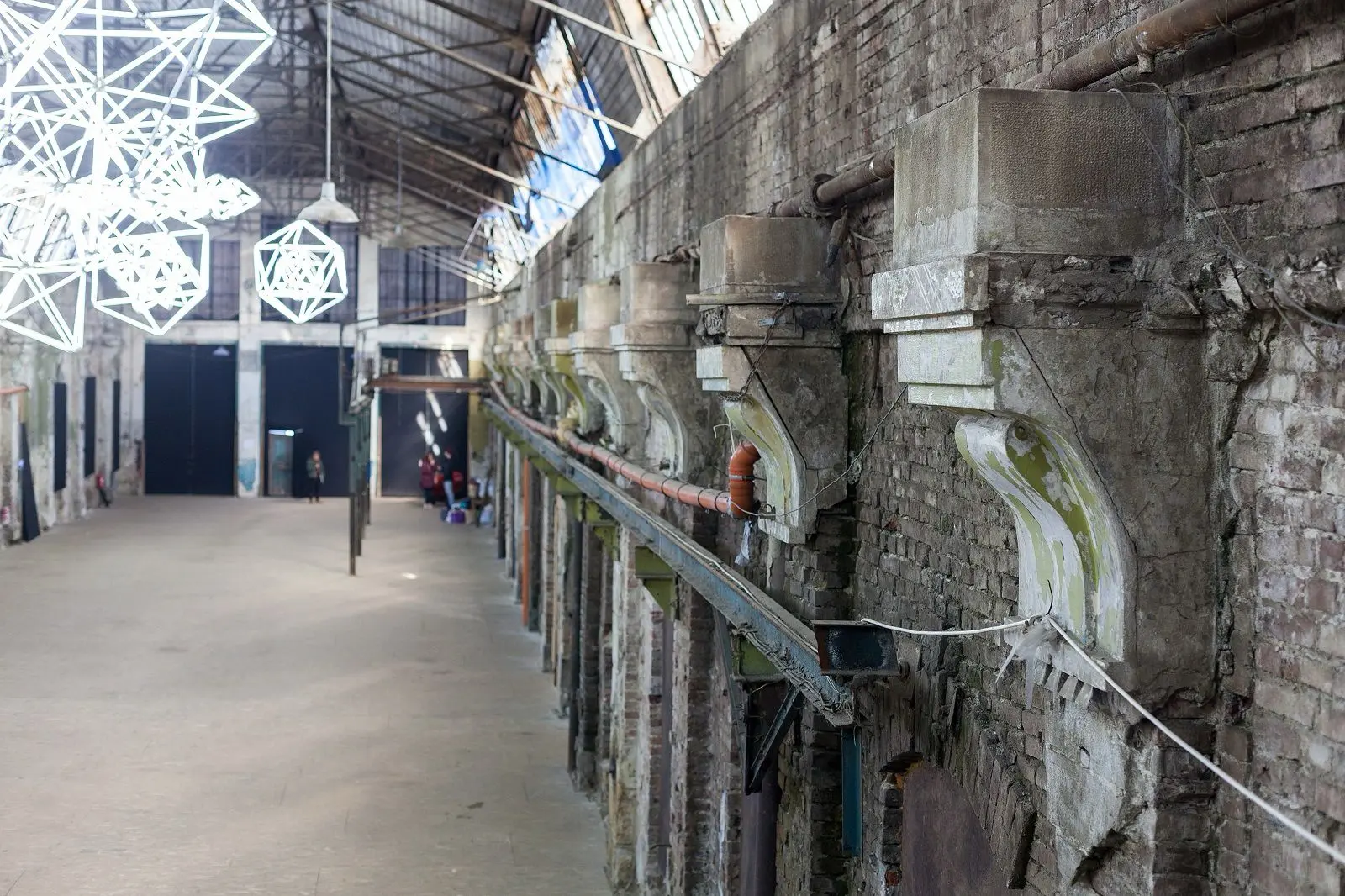
The interior of the Food Market stands out for its distinctive industrial vibe: high loft-style ceilings, exposed brickwork, metal structures, and authentic architecture. Columns and stucco above the windows have been preserved along the hangar walls. At the same time, the industrial authenticity is organically combined with modern design and designer furniture.
LEM Food Market opened in June 2026 and became the largest full-fledged urban food market in Lviv. Before its appearance, the city had restaurant chains, concept pubs, and food courts in shopping and entertainment centers. Instead, LEM Food Market brought together numerous venues with different gastronomic concepts under one roof, creating the city's first large-scale gastronomic hub of this format.
From the 1894 Regional Exhibition to LEM Station
Lviv's first electric tram appeared thanks to the Galician Regional Exhibition of 1894. It was one of the largest events in the history of Galicia during the Austro-Hungarian period, and in significance and scale it was not inferior to the famous World Exhibitions in Paris and Chicago. It was this exhibition that spurred the construction of Lviv's first tram depot.
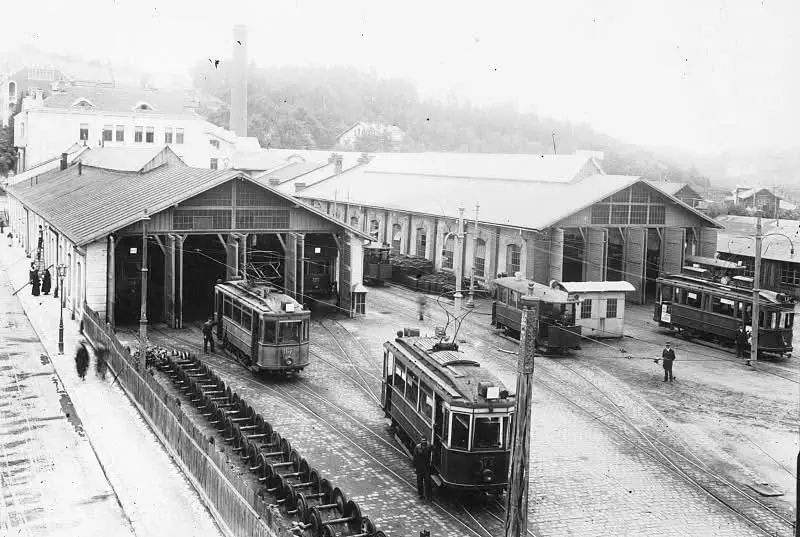
The thing is, the distance from the main railway station, where distinguished guests were to arrive, to Stryiskyi Park, where the exhibition was held, was considerable. In addition, the horse-drawn tram could not handle the steep climbs toward the park, as the horses simply could not withstand such a load.
That is how the idea of launching an electric tram to solve this problem emerged. In late summer of 1893, construction began at the corner of today's Sakharova and Vitovskoho streets on the first electric tram depot. The first hangar was completed in the spring of 1894.
On May 31, 1894, Lviv's electric tram set off on its first regular run. On June 5, the Galician Regional Exhibition opened and continued until October 10. Over 139 days, more than 1.14 million people visited it, although the population of Lviv itself at the time was only about 150 thousand. The majority of exhibition visitors were transported by the electric tram.
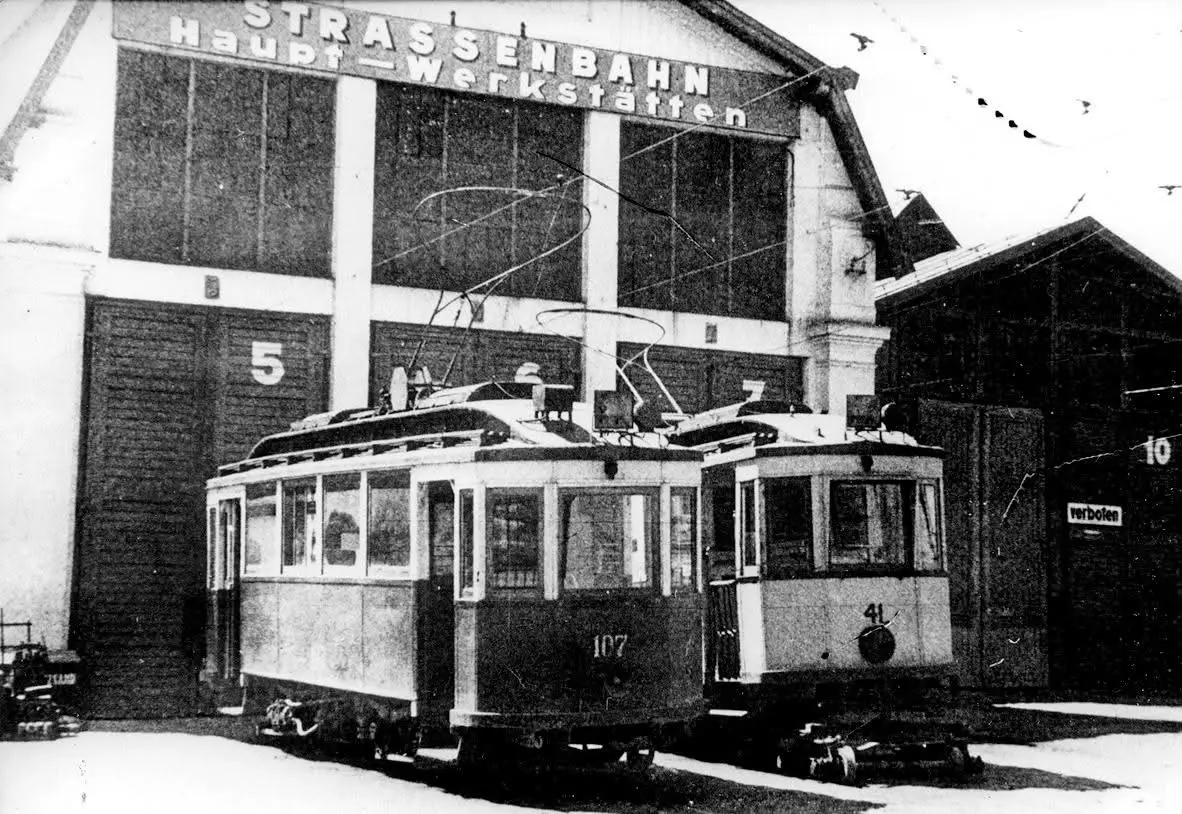
At the time, this was a tremendous technological breakthrough: Lviv launched an electric tram earlier than Kraków and Vienna.
The first power station in Lviv, on the territory of the tram depot, was built by the company Siemens & Halske, which stood at the origins of today's Siemens. The building was erected to a design by the famous Lviv architect Alfred Kamenobrodsky, who designed many industrial structures in the city.
Later, next to the first hangar, along today's Heroiv Maidanu Street, a second one was built, on the side of today's Sakharova Street. This time metal structures were used. And in 1926, Adolf Kamenobrodsky, son of Alfred, set up a third hangar in the middle. More precisely, he effectively covered the street with a roof, joining the two existing hangars and forming a kind of arcade. As a result, the facade walls of the old hangars became the interior walls of the new structure.
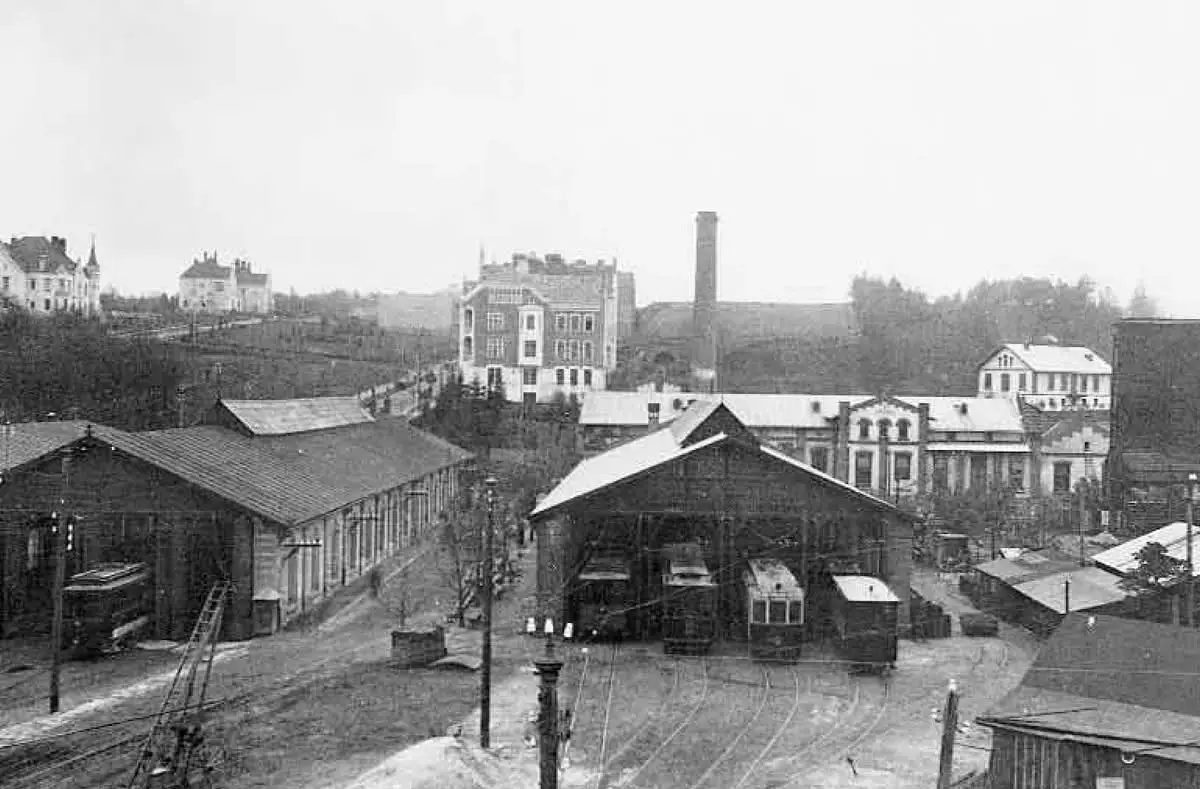
The first hangar was until recently home to 'Retro Garage,' the second now houses Zepo Event Hall, where large-scale conferences, forums, festivals, and concerts are held. And the third, tallest hangar, located between the other two, was fitted out as LEM Food Market.
7 million dollars were invested in the depot's renovation
The transformation of the former tram depot, built at the end of the 19th century, into the LEM Station creative hub lasted almost ten years. In 2017, the Lviv City Council announced an investment competition for the revitalization of the territory, which had been declining for years. The winner was the company LLC 'Lem Steishn.'
Among the company's founders are Taras Kytsmey and Yaroslav Lyubinets, co-founders of one of the largest Ukrainian IT companies, SoftServe. Also among the founders are Dmytro Kosarev, co-founder of the IT company N-iX; Mark Zarkhin, a well-known Lviv restaurateur and co-owner of the Kumpel Group restaurant group; Oleh Matsekh, public figure, entrepreneur, and former director of the municipal enterprise LKP 'Lev'; Taras Dobrianskyi, Lviv entrepreneur and owner of the Leopolis hotel; and Oleh Dryn, representative of the Finnish investment company K.Hartwall.
The tram depot was transferred to LEM Station LLC under a 50-year concession. The company was to transform the abandoned site into an innovative hub, preserve the complex's authentic architecture, and create a socio-cultural space for Lviv residents.
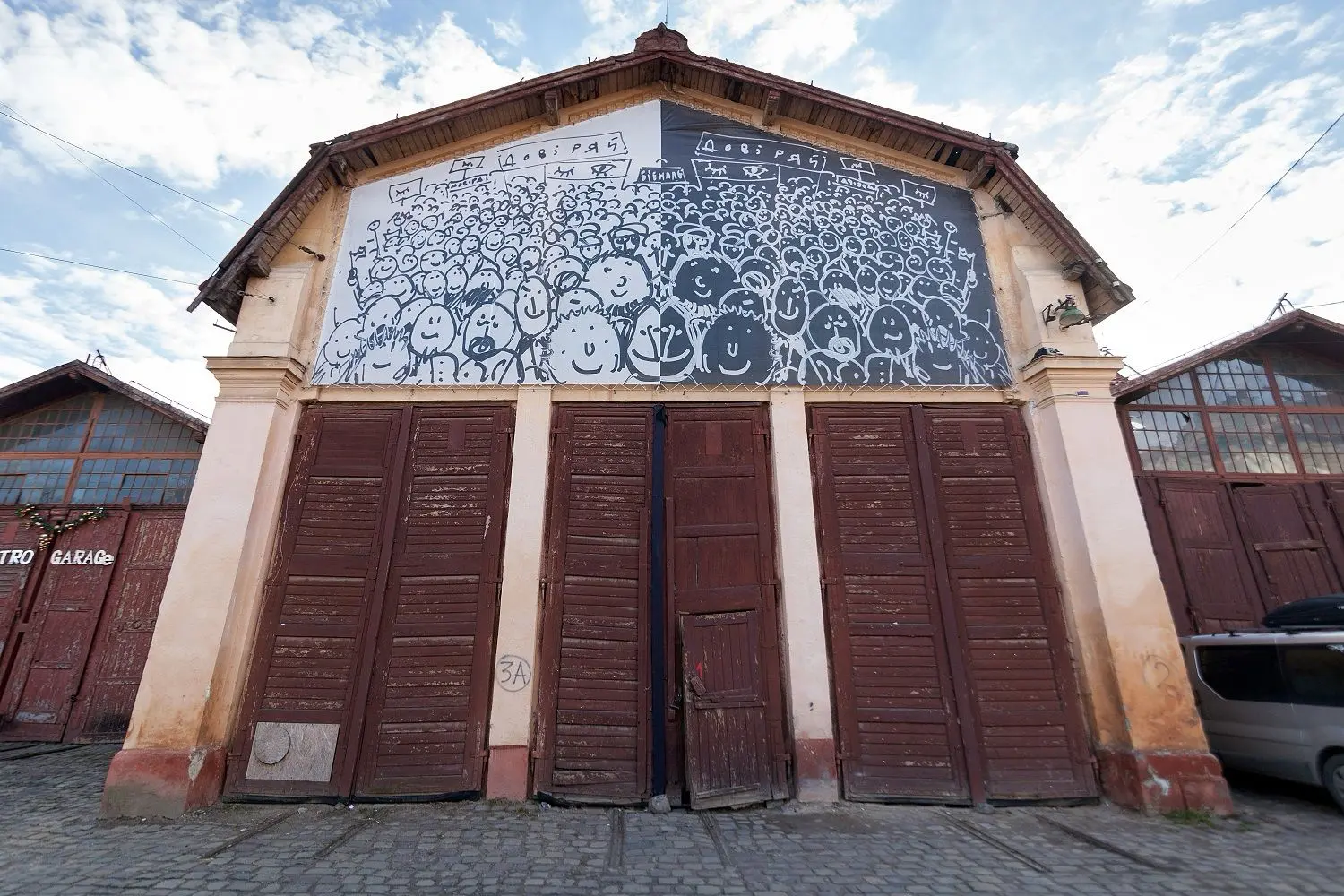
LEM Station was named in honor of Stanisław Lem, a world-renowned science fiction writer, philosopher, and futurologist who was born and grew up in Lviv. His futuristic vision of the world became a symbolic reference point for the concept of the space.
The large-scale revitalization of the old depot effectively began in autumn 2020 with the reconstruction of the three-story power station building, where the coworking space is now located. In parallel, as part of the first phase, the compressor station was being restored, where the "Kompresorna" art hall now operates.
Due to the full-scale Russian invasion in 2022, investors were forced to suspend active construction work for about a year. The restoration was completed in December 2025.
As part of the second stage, the large LEM Depo Event Hall event platform opened in May 2026, and LEM Food Market opened in June. Its opening marked the final stage of launching the full ecosystem of the hub in the historic depot hangar.
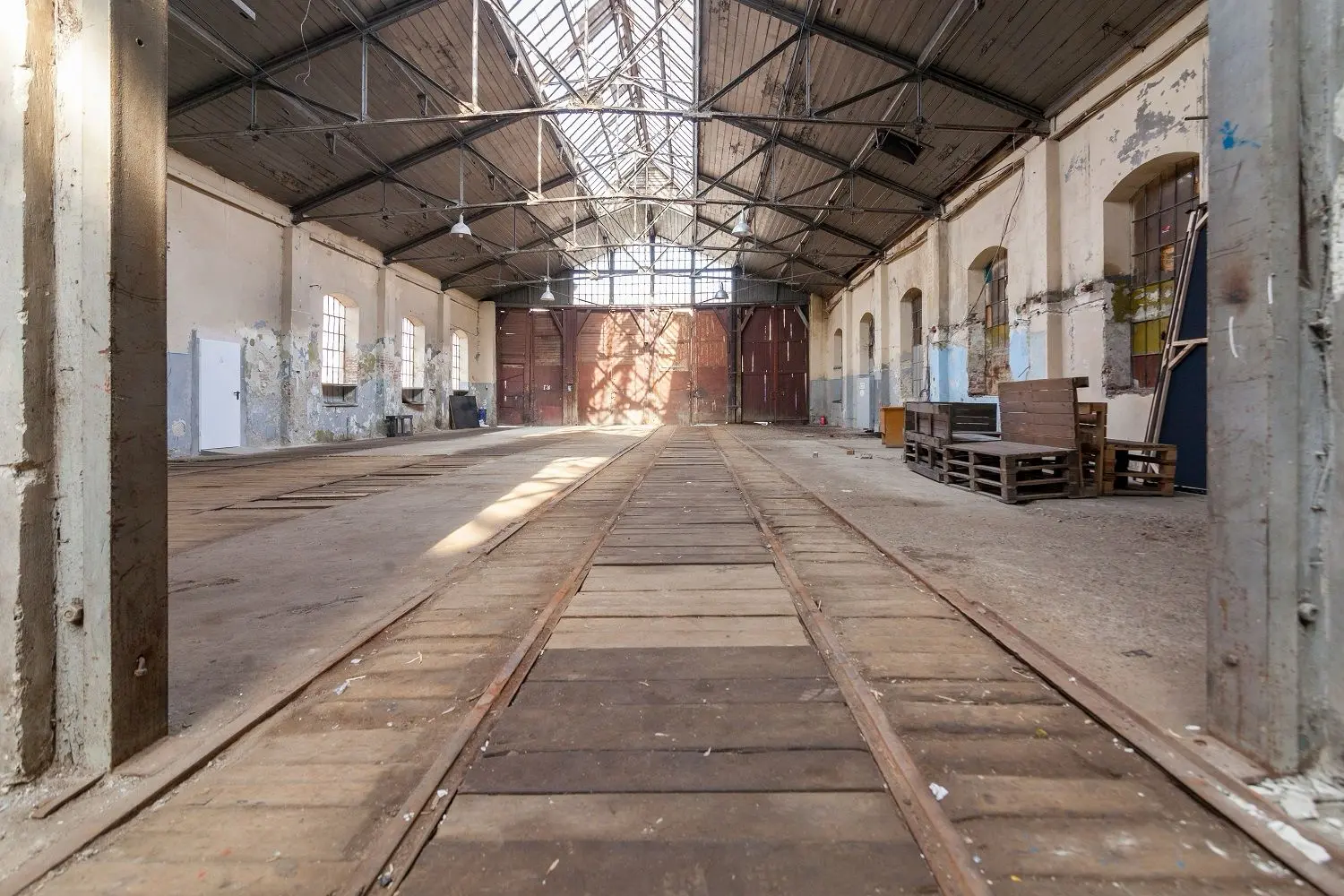
Today, LEM Station brings together 11 venues of various formats. Among them are LEM Food Market, Food Market Lounge for private events, presentations and lectures, a coworking space with offices, LEM Depo Event Hall with a capacity of up to 1,000 people for conferences, forums and concerts, the LEM Pantograph art space, which hosts solo and collection exhibitions of painters, sculptors and photographers, the "Kompresorna" art hall, and a 24-hour parking lot with 100 spaces.
As of 2026, the total investment in restoring the abandoned depot, whose history spans more than 130 years, amounted to 7 million dollars.
Will Lem Square become a "Market Square" for the Frankivskyi district?
Stanisław Lem Square is the official name of the public space at the intersection of Sakharov, Vitovskyi and Copernicus streets, integrated into the territory of the LEM Station creative hub. It appeared on Lviv's map relatively recently: the Lviv City Council adopted the decision to name the previously unnamed plot on the territory of the former depot in August 2022. The square was officially opened on July 3, 2026.
It covers 2,000 square meters. During the renovation of the territory, it was turned into an open public space without fences, with the old fence around the depot dismantled. Now it can be freely accessed from different sides, and the space is used for festivals, fairs and open-air concerts.
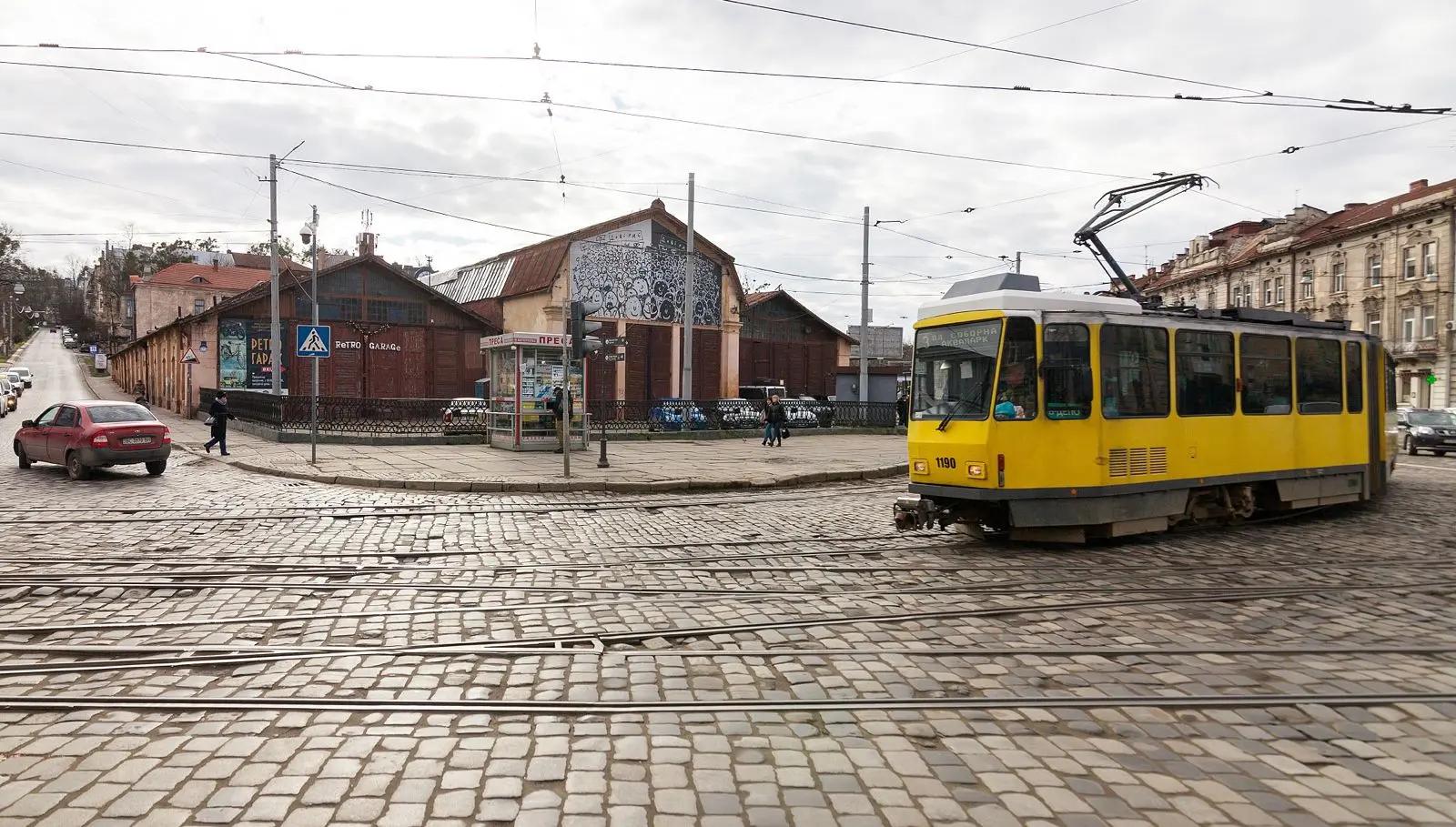
Trams still run onto Lem Square during forums and conferences.
The LEM Station space was also designed according to the principles of inclusivity: there are no thresholds, and elevators and ramps are provided for people with limited mobility.
Will Lem Square become the "Market Square" of the Frankivskyi district?
Coworking on the Roof
For many years, the departmental polyclinic for employees of "Lvivelektrotrans" operated in the historic building of the first municipal power station. After the tram depot closed and fell into disrepair, the premises lost their purpose but later received a new life.
After revitalization, the 1894 building was transformed into the premium LEM Station coworking space. It features 140 workstations, relaxation zones and meeting rooms named after works by Stanisław Lem: Solaris, Cyberiad and Eden. The ground floor houses the Cheese Bakery confectionery and several shops, while the roof has workspaces with panoramic views of Lviv.
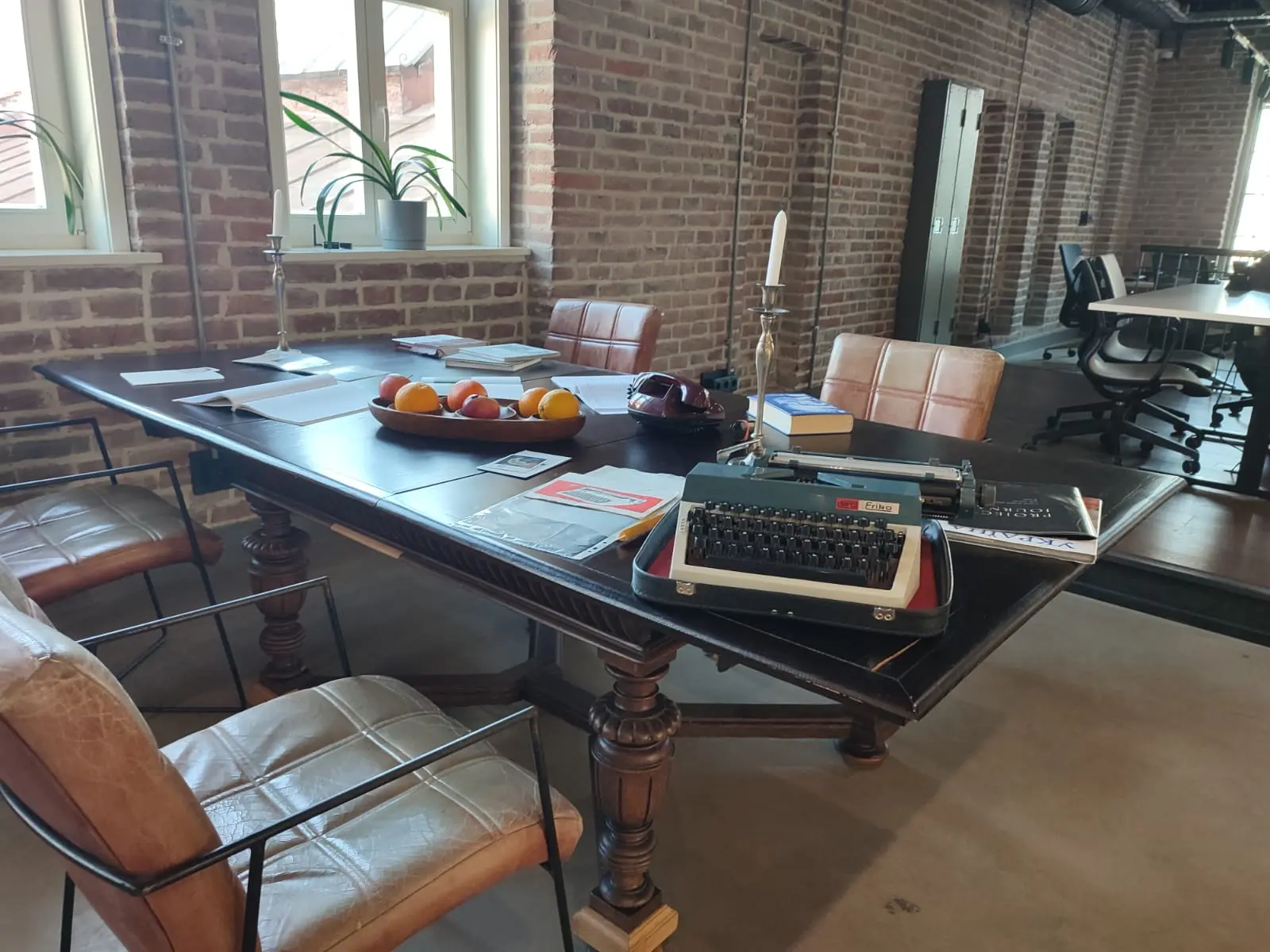
During the restoration of the building, the authentic brick walls, ceilings, structures and antique wooden staircase were preserved. The industrial atmosphere is complemented by lamps collected from various corners of Ukraine.
The coworking space operates around the clock and has become a workspace for startup founders, designers and programmers. The mansard with a glass skylight, a large amount of greenery and natural light particularly stands out.
Antique Cabinets, Tram Sleepers and a Mysterious Piano
During the restoration of the former depot, many authentic details were successfully preserved.
On the wall, we also preserved wooden tram sleepers, which remind us of how rails were once laid. Later, the wooden sleepers were replaced with reinforced concrete ones, and today sleeperless technologies are also used, where rails are mounted into a continuous concrete slab.
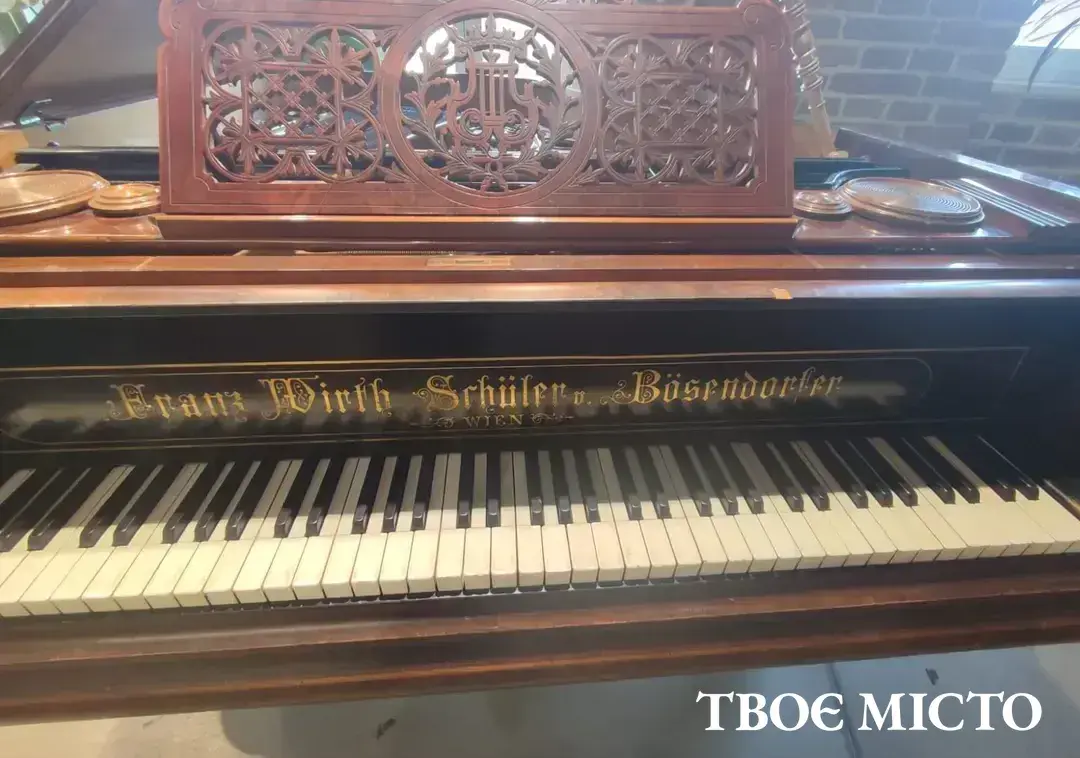
One of the most interesting finds is an antique piano with a wooden music desk decorated with openwork carving.

The lid of the piano bears the inscription "Franz Wirth Schüler v. Bösendorfer". It indicates the instrument's origin: it was made by the Viennese factory Franz Wirth, which operated from 1879 to 1929. Its instruments were renowned for their quality and soft Viennese sound.
The reference to Bösendorfer is also not accidental. Franz Wirth was a student of Ludwig Bösendorfer, the founder of the eponymous Viennese piano factory, which still produces prestigious grand pianos. Wirth was permitted to note on his instruments that he had studied with Bösendorfer, confirming his connection to the latter's piano school.
Could Apple and Microsoft offices appear at LEM Station?
At the early stage of developing the LEM Station concept, various uses of the space were considered – from laboratories and scientific hubs to offices of global technology companies, including Apple and Microsoft. Ultimately, the project focused on supporting local business.
According to Olena, demand for office space remains significant, including due to companies relocating from Kyiv amid Russian attacks. She does not rule out that in the future such corporations as Apple or Microsoft may also join the space.
The idea of creating separate scientific hubs was also abandoned. Instead, LEM Station has become a platform where local startups can test their ideas, while the LEM Depo Event Hall hosts large-scale technology events and international business forums.
The distinctive feature of LEM Station is that Lviv entrepreneurs directed multimillion-dollar investments not into building yet another shopping center or residential quarter, but into restoring a neglected monument of industrial architecture.
The former tram depot has been transformed into a space that combines coworking, art venues, event halls and a food market. This has made it possible not only to preserve historical heritage, but also to create a new hub for the development of business, culture and public life in Lviv.
Full or partial republication of this text without the written consent of the editorial office is prohibited and considered a violation of copyright.

Related News