You have been working at "Okhmatdyt" for over 20 years and know this system well from the inside. What does being appointed CEO mean to you after a period of acting in the role?
This is probably, above all, about greater confidence and the ability to plan for the longer term and implement the tasks that were set before. Because, as you understand, when you are acting, this story can end at any moment, and you don't build far-reaching plans—or you do build them, but always with an internal caveat that it might end tomorrow. Today, I am appointed until the end of martial law, and there is a certain internal contradiction here: on the one hand, it is a responsibility and an opportunity to work systematically, and on the other, an absolutely sincere desire for martial law to end as soon as possible. And, frankly, regardless of any ambitions, I would choose a situation where I am appointed based on the results of an open competition after the war, rather than working in conditions where war is raging outside the window.
Has the hospital's development strategy changed after your official appointment? And what key tasks do you set for yourself for the near future, specifically for 2026?
First of all, it's worth saying that before this, I had no ambition to become the CEO of this hospital, at least in the near future, when I worked as a head of a department. At that time, my main task was to restore the department. But at a certain point, during quite difficult events both in the hospital itself and in society, the staff chose me as the leader.
The key task then was the restoration of the hospital after the terrorist attack on July 8, 2024. As a result of the strike, several buildings were destroyed and damaged: essentially, five suffered serious damage. Our priority was not only physical restoration but also preserving the human resources potential and the continuity of the hospital's operations.
In parallel, we took the path of creating a new economic model. In accordance with the demands of the time and changes in legislation, we were forced to transform from a state institution into a state non-profit enterprise. This significantly changed the status of the hospital, and we went through this process in quite short terms, which is atypical for Ukraine. Internally, we also built a new financial management model, making it as transparent as possible: today it is clearly visible what funds are coming into the hospital, how they are used, and how consumables and medications are distributed. This also shaped a new quality of interaction with benefactors.
I emphasize this because this very model is the foundation for further development. Now, given that we are the first multi-profile children's hospital in the country, we are trying to adapt to the new conditions of medical reform. We are analyzing our own weak points, seeing the cost structure, and we will build on this in further changes—both structural and strategic.
It is important to understand that I don't quite support the idea of breaking the hospital down into separate autonomous units, because our strength lies precisely in our integrity. This is a large mechanism in which many directions interact, and it is this synergy that makes us effective. We have powerful expertise in various fields and that is why we can take on the most complex cases. "Okhmatdyt" has always been a place of last hope for patients, and we want to preserve this role.
At the same time, we will develop key medical directions: neurosurgery, maxillofacial surgery, we will continue the expansion of the endocenter, and we also plan to create a center for robotic surgery and deepen the work with rare diseases.
By the way, we have already created a new client service unit. For a state institution, this is a difficult direction due to resource constraints, but thanks to benefactors, we are gradually improving comfort and safety for patients. Also updated the call center, making it more modern, and in general, we are trying to be more open and more sensitive to patient inquiries.
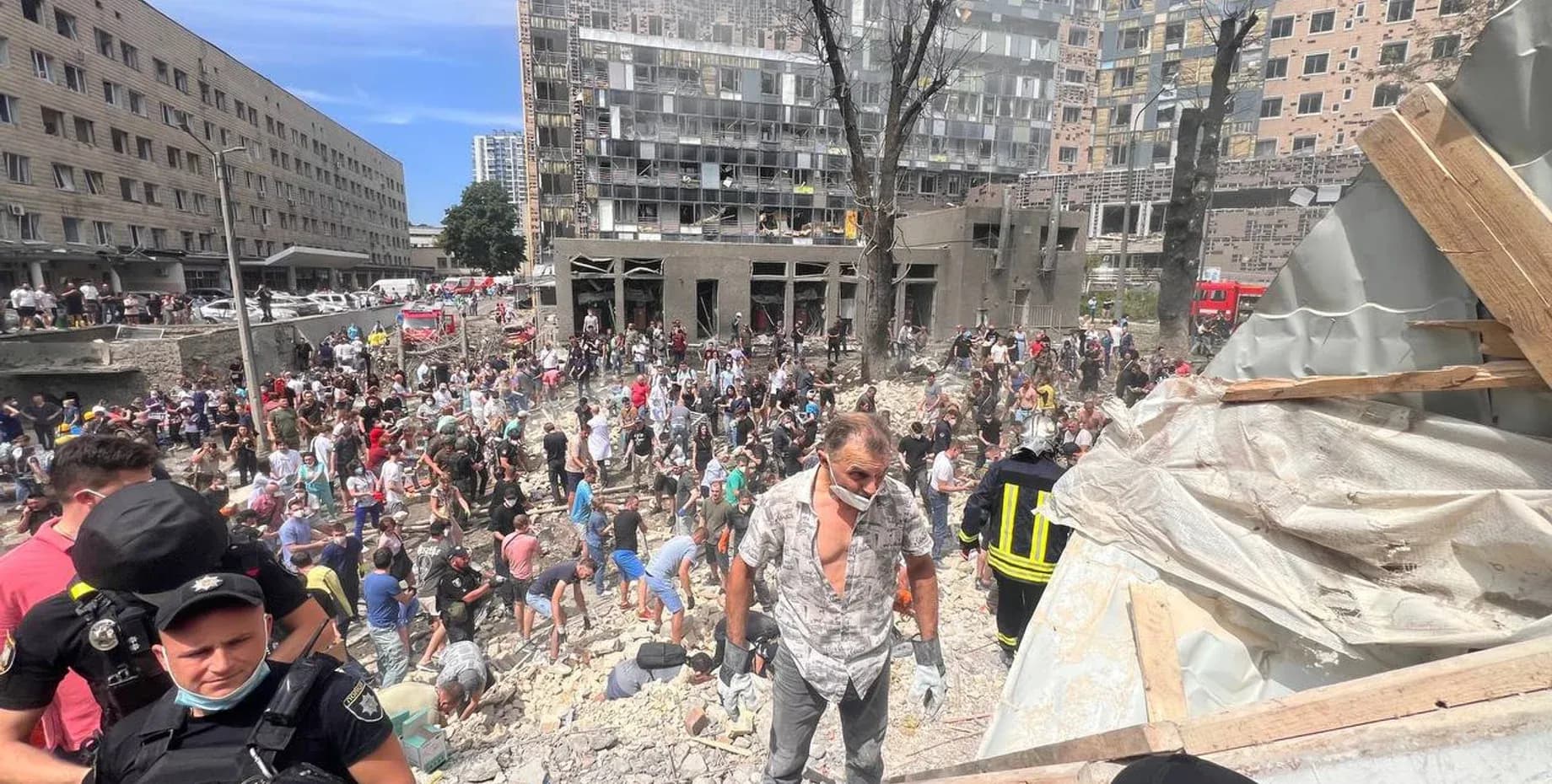
I would like to focus specifically on the restoration of the hospital after the missile strike. At what stage is this process today, and what infrastructure projects are planned for the near future?
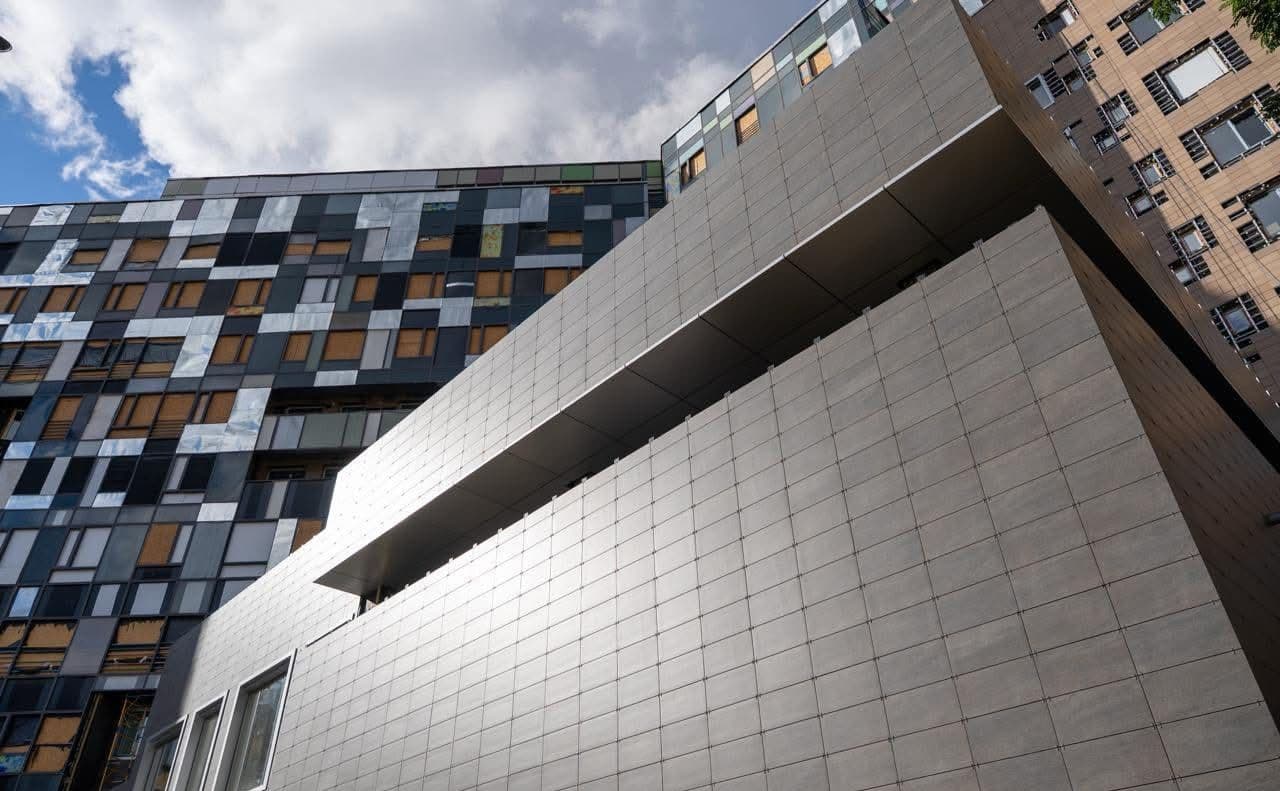
Speaking about the building we are in now—this is the main new treatment and diagnostic building—the facade installation has already been fully completed, and internal work is now essentially in the final stage. Why this process didn't happen faster: the building itself is extremely complex, it was realized according to an experimental project, and in many rooms, the facade simultaneously serves as the exterior wall. Accordingly, we couldn't start full-scale internal work without completing the external work.
This renovation, as far as I know, should have already been completed.
There is a certain delay because we planned to complete these works by March 31. But these are objective reasons: the war, power outages, difficult logistics, and weather conditions. For example, at temperatures below five degrees, facade installation is simply impossible due to technological requirements. I am not a builder, so I won't dive into details, but this also significantly affected the deadlines.
We work daily with contractors and organizations that supervise the construction, and we see that the process is going according to plan. I don't want to name specific dates—construction always has its risks—but I expect that in the near future we will be able to report to the public on the completion of these works.
How about the six-story building that suffered critical damage?
That is the old surgical building, the so-called "white six-story" building; it suffered critical damage during the missile attack. It is a building from the 60s that does not meet modern building standards, and its restoration in its original form is economically impractical: the costs will be very high, and the functionality will be significantly lower than that of a modern project.
That is why, with the support of the World Bank, a feasibility study for a new surgical building has already been developed, and we have submitted documents to obtain permits to start preparatory work. We are very grateful to international partners for their support and expect that this building will be constructed with their funding. It will be integrated with the current treatment and diagnostic building, and as a result, we will have a single medical complex where the maximum amount of aid will be concentrated and where units from old, scattered buildings can be moved.
Regarding historical buildings: for example, building No. 3, where the toxicology center used to operate and where I myself was the head for 14 years—for me, this is a particularly important place. We have carried out its conservation to preserve the building, and a technical inspection is currently underway. The next stage is the development of restoration documentation. In the long term, we plan to create a modern training center for doctors, interns, and students there.
Similarly, another historical building— building No. 9 on Chornovola Street—is also undergoing inspection, and restoration documentation will be developed for it. We plan to adapt it to modern requirements, including inclusivity, and it will house the administration building.
The hospital is 132 years old, and this heritage is a memory of those specialists who created its name.
(After the missile strike, the reconstruction of the hospital was accompanied by a public scandal. Funds for restoration began to be collected immediately — through UNITED24 and Monobank, 100 million UAH were collected in less than three hours. Another 100 million UAH were allocated by the government from the reserve fund, and an additional 300 million were also announced. At the same time, the "Okhmatdyt — Healthy Childhood" charitable foundation held a private competition for repairs, explaining this by the need to speed up the process. The winner was the company "Bud-Technology" with a proposal of over 300 million UAH, although some other participants offered significantly lower amounts. This sparked criticism and suspicions regarding a possible overpricing of the work. Subsequently, the Ministry of Health announced a new tender through Prozorro. In 2025, a contract was signed with another company — "Riola-Module LTD," and the cost of the work was reduced to approximately 293 million UAH, which is more than 70 million less than expected.)
"Okhmatdyt" is primarily about children and their families. What support do they receive today during treatment? Are there social programs for patients and their families at the hospital?
We have a very powerful center for medical and psychological assistance. Psychologists are working, there are educators, and we also have partners — in particular, the "Superheroes School," which allows children to continue their studies during long stays in the hospital.
Psychological support is extremely important, especially for children who have experienced severe trauma, illness, or the consequences of combat operations. We work with such patients constantly. There are also rehabilitation programs abroad — for example, in Latvia, where both children and sometimes our employees, who have also experienced difficult circumstances, go. There they undergo a two-week rehabilitation.
And, frankly speaking, sometimes even just the opportunity to be in an environment without air raid alerts and blackouts is already a form of rehabilitation to some extent. But for children, very good conditions and a rich program have been created there, and they return to treatment in a much better state.
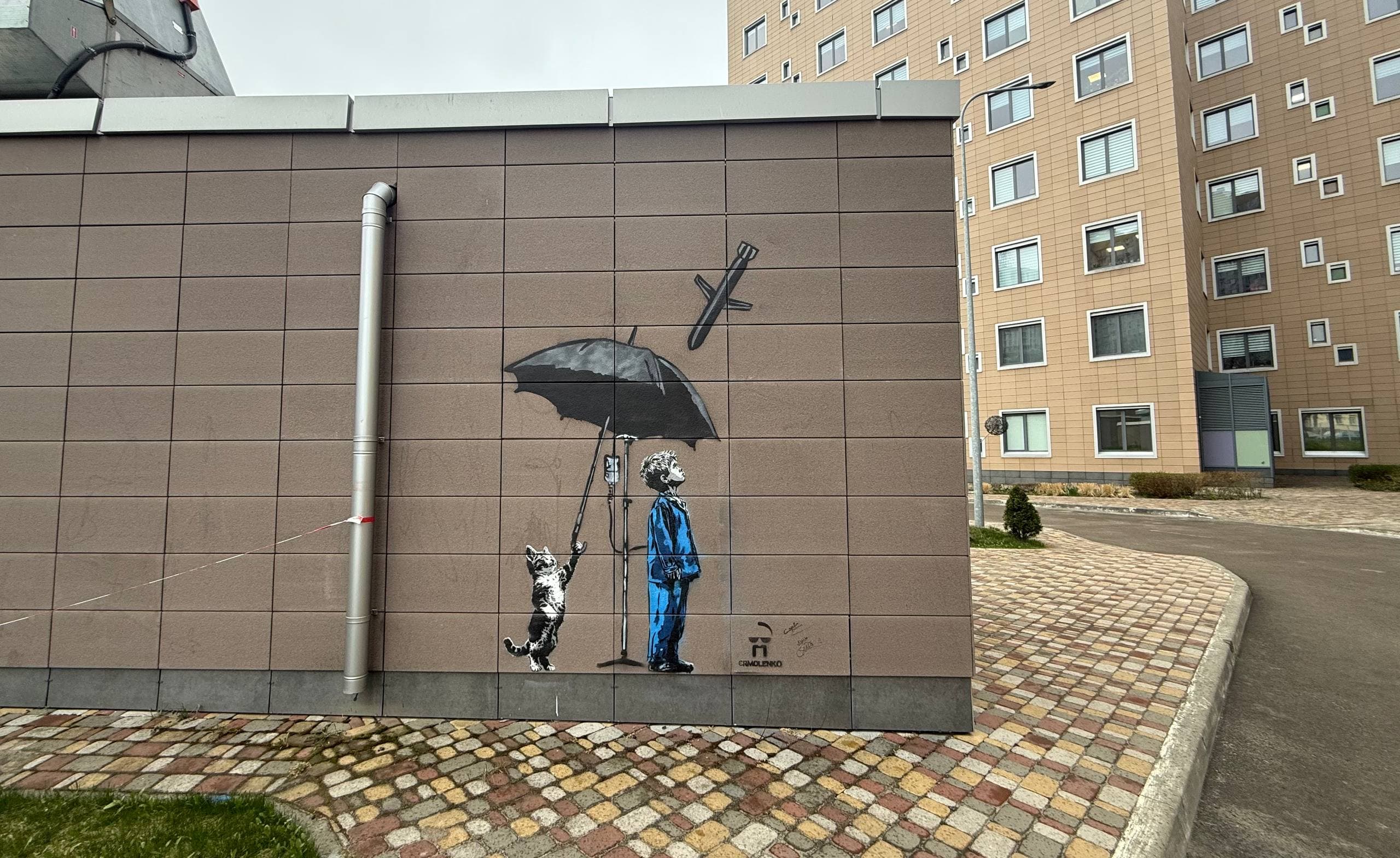
We also collaborate with a large number of partners — there are really many of them, and I wouldn't want to miss anyone. Recreational zones have been created in the hospital where children can go outside, be in nature, and participate in various activities — from planting plants to creative classes.
There are sports events that we hold together with the "Dynamo" society, and theaters visit us with performances. We try to move away from the feeling that a hospital is exclusively about pain. Because even if treatment is objectively associated with painful procedures, a child should have the opportunity to be distracted and get other emotions.
Since the start of the full-scale war, the healthcare system has been operating under significant pressure. How does "Okhmatdyt" feel this? Has the patient structure changed, and does the hospital have enough specialists and resources?
One of the biggest problems is the shortage of nurses. This is a global crisis, and Ukraine is no exception. But in our conditions, it is felt particularly acutely: constant stress, intensive work with patients, rapid burnout.
In my opinion, this work is also insufficiently financially compensated. And although we try to support our nurses as much as possible, we see a certain outflow of personnel, particularly to the private sector.
Regarding patients, certain changes were noticeable as far back as 2014, but after 2022, they became significantly more palpable. People started coming less often with "simple" cases; instead, we receive many patients from de-occupied or front-line territories — often with neglected chronic diseases and complications that previously could only be seen in textbooks.
In addition, we have gained colossal experience in treating combat trauma in children. These are extremely complex cases: polytraumas, damage to multiple organs, amputations. Such patients require long-term treatment and rehabilitation — sometimes more than a year. This fundamentally changes the load on both doctors and the psychological service. We are also actively developing the rehabilitation direction because the need for it has significantly increased.
At the same time, we see a decrease in the birth rate. And this will have a long-term impact on the entire healthcare system.
If we talk about the development of medicine as a whole, which areas require the most attention today?
It is difficult to highlight one thing here because medicine is a complex. But there are directions that are especially relevant now. For example, burn trauma — we are already creating a burn unit because the number of such cases is growing due to fires, shelling, and the use of alternative heating systems.
Rehabilitation — both physical and psychological — also needs immense development. The issue of mental health is becoming increasingly important. We have already strengthened this direction, involved strong psychiatry specialists, and believe that such help should be available within regular hospitals, rather than in isolation.
A separate big challenge is the future adaptation of military personnel after returning from the front. This applies to both psychological help and socialization. And we need to prepare for this now.
"Okhmatdyt" is a national children's hospital, but at the same time, it plays an important role for Kyiv as well. Is the support from the state and the city sufficient for the hospital?
Actually, the question is quite complex. If we talk about the state, we really feel strong support. What you see now — the process of hospital restoration, the implementation of infrastructure projects — all of this happens not without the involvement of the Ministry of Health, the government, and the state leadership as a whole. There is an understanding of the importance of this hospital, and there is an interest in having it function and develop.
As for interaction with the city, there are certain issues that have not yet been fully resolved. In particular, this concerns patient routes. For example, in many areas where we have strong expertise, the ambulance does not always take patients to "Okhmatdyt" because of those routes that were defined at the city level. And this issue is now being worked out at the level of the Ministry of Health together with the city medical service.
When people talk about the hospital's role for Kyiv, it seems to me that it is important for the city itself to provide an answer. Because, on the one hand, we are a national institution, but on the other, we have always been part of Kyiv's medical system. In different years, up to 60% of our patients were Kyiv residents.
If we recall 2022, even residents of neighboring buildings came here to sleep in the shelters because they considered this place one of the safest in the capital.
Now we mostly accept the most complex cases — polytrauma, complex eye injuries, those areas where historically there was no such expertise in Kyiv. But, frankly speaking, it seems to me that all of us — both the state and the city — should think more about the interests of children than about any political expediency.
You have many years of experience as a doctor and now head one of the country's key medical institutions. Is the hospital ready for any critical situations?
If previously we, as doctors, primarily thought about the quality of treatment, clinical protocols, and results, now another basic question has been added: how the hospital will operate in conditions where there may be no electricity, water, or heating.
That is, the safety of patients and staff has become just as much of a priority as the treatment itself. And these are not theoretical things — this is the reality we live with every day.
As an anesthesiologist and intensive care physician, I understand well that any doctor can have complications. And the question is not how to avoid them completely — that's impossible — but how ready you are for them and how quickly you react when they occur.
Now this principle is being transferred to the level of hospital management. We think ahead: what will happen if a critical situation occurs, how we will act, what reserves we have.
For example, we are planning to create additional sources of water supply — wells, installing solar panels, looking for cogeneration units, and working on alternative heating sources. And we plan to implement these solutions this year.
That is, the main focus is the prevention of possible crisis situations and readiness for them. Because, as experience shows, planning in wartime conditions is very difficult: you can do repairs, upgrade equipment, and in two months all of this can be destroyed.
What personally motivates you to continue working in such conditions?
To be honest, I don't really like high-flown wording. But I once heard a phrase that stuck with me: for some, a high mountain is a challenge, and for others, it is an impassable abyss.
It seems to me that a lot depends on how you perceive difficulties. Because they exist and will continue to exist, but the question is whether you are ready to face them. If we talk about motivation, it's probably love. Both for your work, for the people you work with, and for the country.
I worked as a doctor with love, I was the head of a department with love, and I tried to improve both the work and the atmosphere in the team. And now I try to perform my duties in the same way — with respect for this hospital, for our patients, for the children, and for the employees. And, probably, that's the main thing: if you don't love what you do, you will never do it well. And I believe it is not up to me to evaluate the result of this work.
Full or partial republication of the text without the written consent of the editors is prohibited and considered a copyright infringement.