"1,700 UAH — and it can be demolished?" Why part of Kyiv's monuments are being destroyed, who is responsible, and how to protect them
30 April 2026, 20:30
30 April 2026, 20:30
How does the cultural heritage protection system in Kyiv function today, who is responsible for what, and what are the main challenges?
The cultural heritage protection system in Kyiv is multi-level. There is the Department of Cultural Heritage Protection of the KMDA, as well as the Ministry of Culture of Ukraine. We work at the city level, dealing, in particular, with the preparation of accounting documentation.
Within the structure of the Department, there are two municipal institutions: the Kyiv Scientific and Methodological Center and the Center for Conservation of Archaeological Monuments. They are subordinate to the Department, and the Department itself is the manager of budget funds for these organizations.
It is the Kyiv Scientific and Methodological Center that produces the accounting documentation. The procedure for granting monument status looks like this: first, a discovery card is prepared (it can be prepared by virtually anyone if a person believes that a certain object has historical or cultural value). Then this card is submitted to the Department. The Department checks whether the object is in the lists or registers (if it has preliminary signs of value, the Department tasks the subordinate institution — the Kyiv Scientific and Methodological Center or the author of the card — to prepare full accounting documentation).
After that, the documentation, in accordance with the Ministry of Culture's procedure, is submitted for consideration by the Department's advisory council on cultural heritage protection issues. The council can approve it, return it for revision, or reject it if it believes the object does not meet the criteria.
If approved, the Department issues an order to include the object in the List of newly discovered ones. From that moment, the object acquires protected status and falls under the legislation. Next, a package of documents is prepared and transferred to the Ministry of Culture. The Ministry itself enters the object into the State Register of Immovable Monuments of Ukraine, and then it acquires the status of a monument of local or national significance.
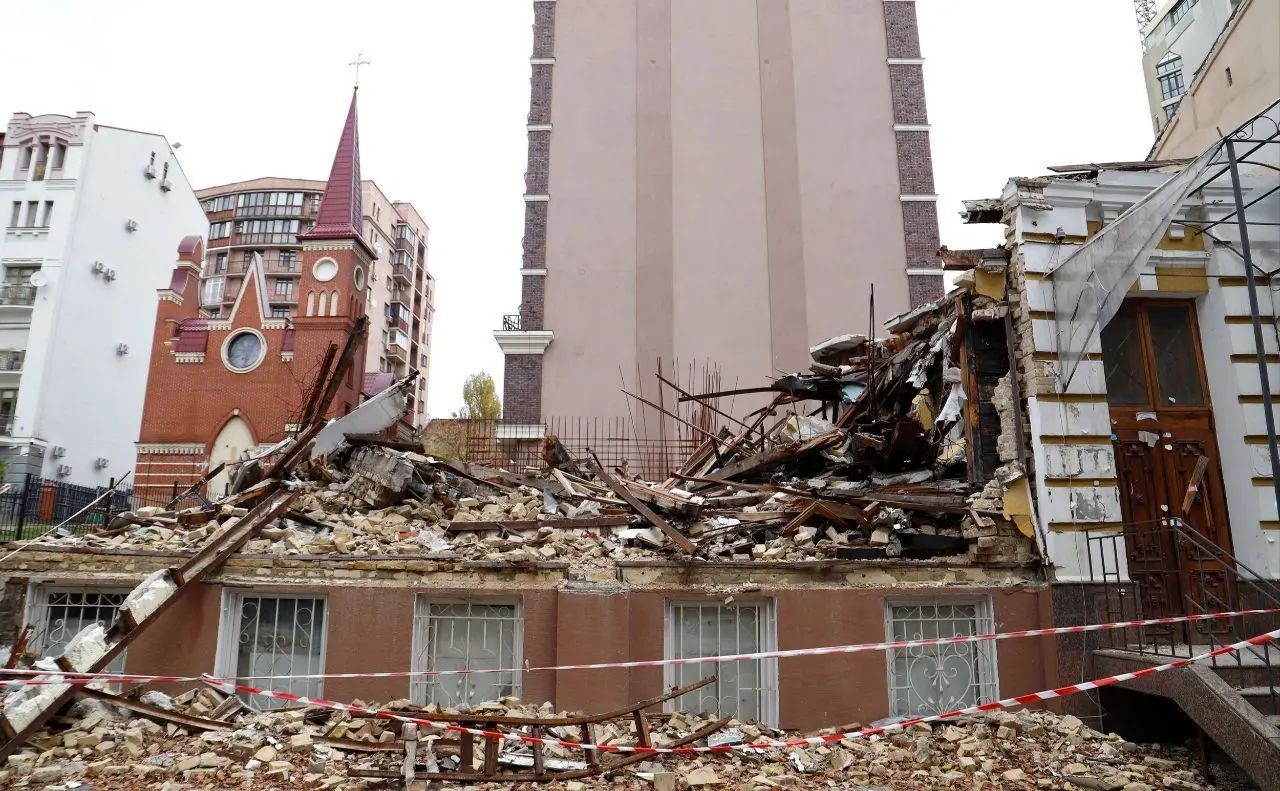
In addition to accounting, we deal with monitoring and inspection. In case of damage to cultural heritage objects as a result of Russian aggression (missile strikes, drones, fragments), our inspectors go to the site, record the damage, and keep records of such cases.
We also monitor how owners and balance holders maintain the monuments. In case of violations, we apply sanctions: first a prescription, then an act, and then financial sanctions in the form of a resolution.
What tools of influence does your Department have in cases of violations, and how effective are they in practice?
This is a very painful issue. The current fines are extremely low: for individuals — 1,700 hryvnias, for legal entities — from 17,000 to 170,000 hryvnias.
Obviously, these amounts are incomparable with the potential profits of developers. If an owner wants to destroy an object and build a high-rise in its place, the fine is not a deterrent for them.
Do you have real leverage besides prescriptions, which are often ignored? A 1,700-hryvnia fine – it is like a "ticket for demolition"…
Since the moment of my appointment, we, together with the KMDA and people's deputies, have worked on amendments to the Law of Ukraine "On the Protection of Cultural Heritage." We are talking about a significant increase in fines to a level of at least 1.7–3 million hryvnias.
Comparing with European countries, fines for violations in the field of heritage protection there amount to thousands of euros. And in Ukraine, there should also be adequate responsibility.
The second important aspect is criminal liability for the destruction of cultural heritage objects. This is fundamental, especially in conditions of war, when we are already losing many monuments.
As of today, 146 cultural heritage objects have been damaged in Kyiv. Among them are the Kyiv TV Tower, the Khanenko Museum, the National Philharmonic of Ukraine, the National Academy of Sciences of Ukraine, the "Ukraine" Palace, Saint Sophia Cathedral, the "Motherland" monument, and others.
Another problem is situations where the owner deliberately leads the object to ruin: does not maintain it, does not restore it, does not fulfill the terms of the protection agreement. In such cases, in my opinion, the city should have the right to return such objects to municipal ownership.
Increasing fines, introducing criminal liability, and the possibility of seizing neglected objects would significantly strengthen the protection of cultural heritage.
A corresponding draft law has already been worked on together with people's deputies. It has passed the committees, but has not yet been adopted.
And if guests or Kyiv residents have seen a violation regarding an architectural monument or historical building, where should they turn first? We sometimes hear that while someone is trying to reach the Department, the excavator is already finishing its work.
First of all, one can contact the Department of Cultural Heritage Protection. This can be done in writing — through an appeal to the office or by phone.
The Department has monitoring and inspection departments. After receiving an appeal, they react promptly: go to the site, record the violation, and draw up a visual inspection report.
If it is established that the owner is violating the law (for example, carrying out unauthorized construction or dismantling), they receive a prescription to stop construction and provide scientific and project documentation.
Any works on cultural heritage sites may be conducted only on the basis of such documentation. If it is missing, the works are illegal.
After receiving an order, the owner must submit scientific-project documentation, which is reviewed, in particular, by the Advisory Council, which must approve or reject the scientific-project documentation. In case of compliance with the requirements, the Department provides approval. Next, the owner applies for a permit to perform the work and only after that can carry out restoration in a legal manner.
But you are not the only ones controlling the city. Who else has the right to stop machinery if it involves a violation of the improvement of the area around a landmark?
One can also contact the Department of Territorial Control of the City of Kyiv.
This body reacts to violations in the sphere of city improvement, in particular during construction or work performance. Inspectors go to the site, can issue an order, and it is this Department that issues a city improvement violation card.
This applies not only to buildings but also, for example, to the placement of temporary structures, outdoor seating for establishments, etc. In these matters, the Department of Territorial Control has the relevant powers.
Has a strategy for preserving the cultural heritage of Kyiv already been developed? Doesn't it seem to you that during the war, cultural heritage is funded on a residual basis? Where to look for money when the budget is empty?
In Kyiv, there are many objects in need of restoration, both in municipal and in state and private ownership.
In the conditions of war, the issue of financing is extremely difficult. The priority, of course, remains supporting the Armed Forces of Ukraine and restoring housing for victims. At the same time, cultural heritage also cannot be funded on a residual basis.
One of the main directions is attracting extra-budgetary funds, in particular international aid and patronage. We cooperate with international organizations such as UNESCO, World Heritage Watch, and Europa Nostra, as well as with various foundations and grant programs.
There are positive examples of such cooperation. In particular, the restoration of individual objects is funded with the support of international partners. For example, one of the buildings of the "Okhmatdyt" hospital was funded thanks to the participation of international institutions.
The development of patronage is also important. In my previous activities, I worked with philanthropists who funded restoration works: the restoration of the territory at 2 Volodymyrska St., the restoration of the Church of the Savior at Berestovo.
Another important direction is cooperation with the public sector. Many active initiatives operate in Kyiv, such as "Ukraine Incognita", "Real Kyiv", "Brave to Rebuild". They help both in restoring objects and in promptly responding to violations.
For example, after the damage to the House of Writers, activists joined the restoration work. Also, during a cleanup at Poshtova Square, volunteers helped remove a lot of garbage.
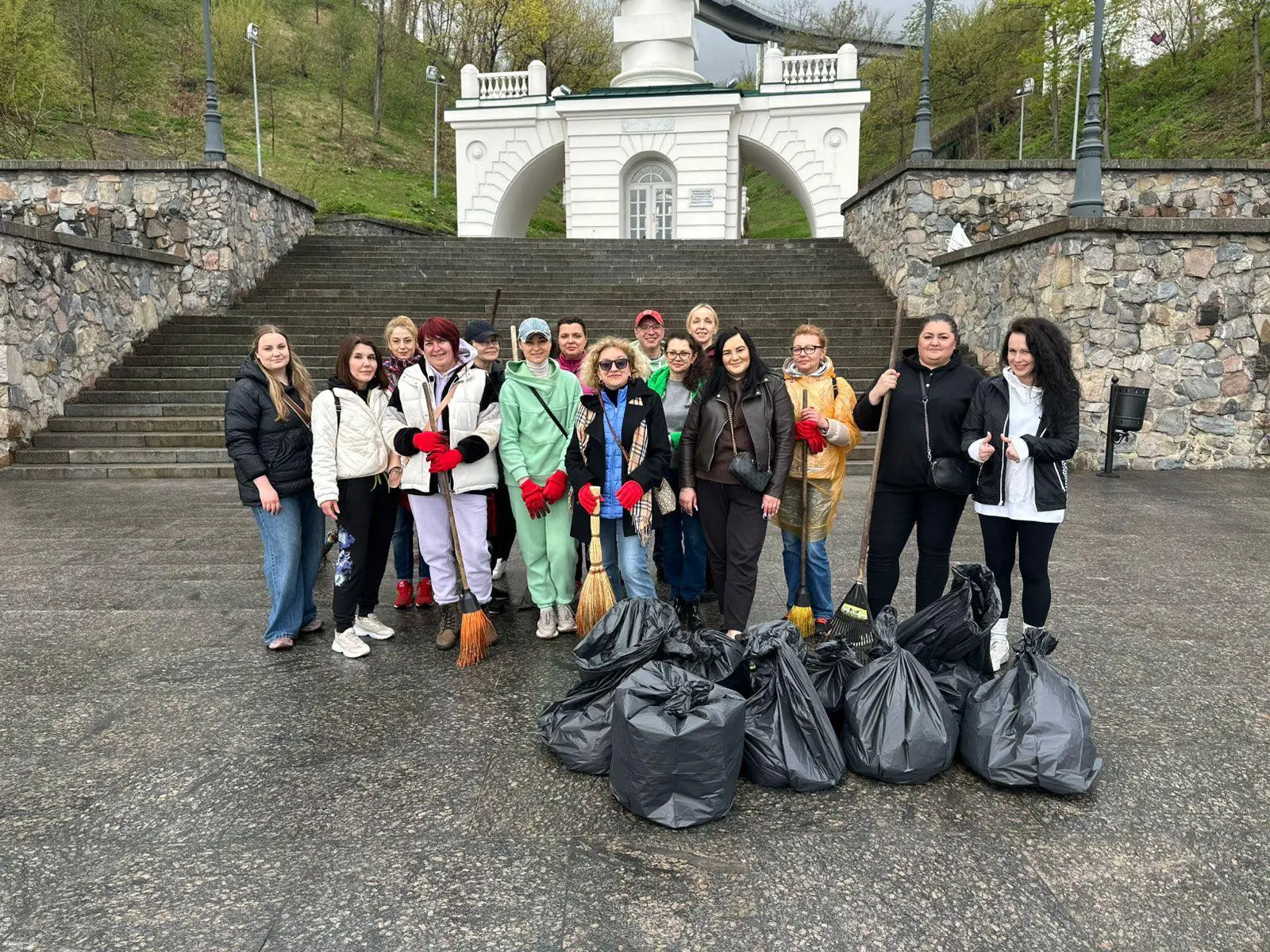
Overall, an effective model for preserving cultural heritage is possible only under the condition of cooperation between the state, the city, and civil society. Such synergy allows for results to be achieved even in difficult conditions.
Are there systemic problems in legislation that complicate the protection of cultural heritage? Sometimes we wait for years for court decisions regarding the return of landmarks that are beginning to crumble. Is it realistic to introduce the European experience of "fast" seizure from unscrupulous owners in Ukraine?
Yes, such problems exist. Above all, insufficient responsibility of object owners. Currently, the legislation does not provide for an effective mechanism for seizing objects from unscrupulous owners who do not fulfill their obligations. At the same time, such cases do occur in practice.
As an example, the return to municipal ownership of the Tereshchenko estate at 34 Taras Shevchenko Boulevard. This process lasted almost 10 years and took place through the courts. Earlier, in 2025, the building was returned, and in 2026, the wing located nearby was returned.
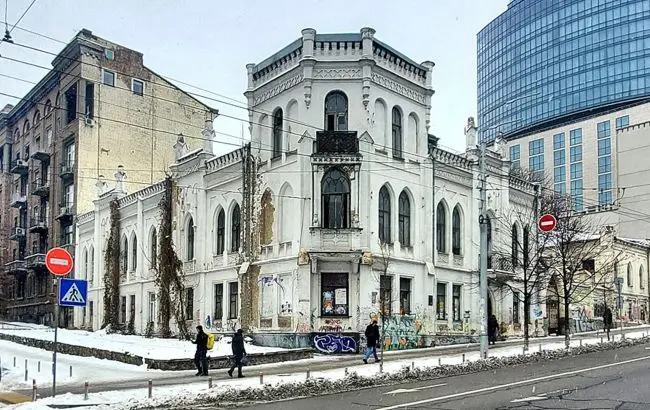
This example shows that even with legal mechanisms in place, the process is too long. That is why it is necessary to legally regulate the possibility of returning objects to the community's ownership in case of their neglect.
Another important direction is the implementation of models that successfully work in European cities. For example, in Vilnius, there is a practice of transferring neglected buildings into long-term lease through open competitions for 15-20-30 years.
Thanks to this model, the building remains in the community's ownership, but the tenant undertakes to carry out restoration at their own expense within clearly defined deadlines. After that, they can use the property in accordance with the terms of the contract.
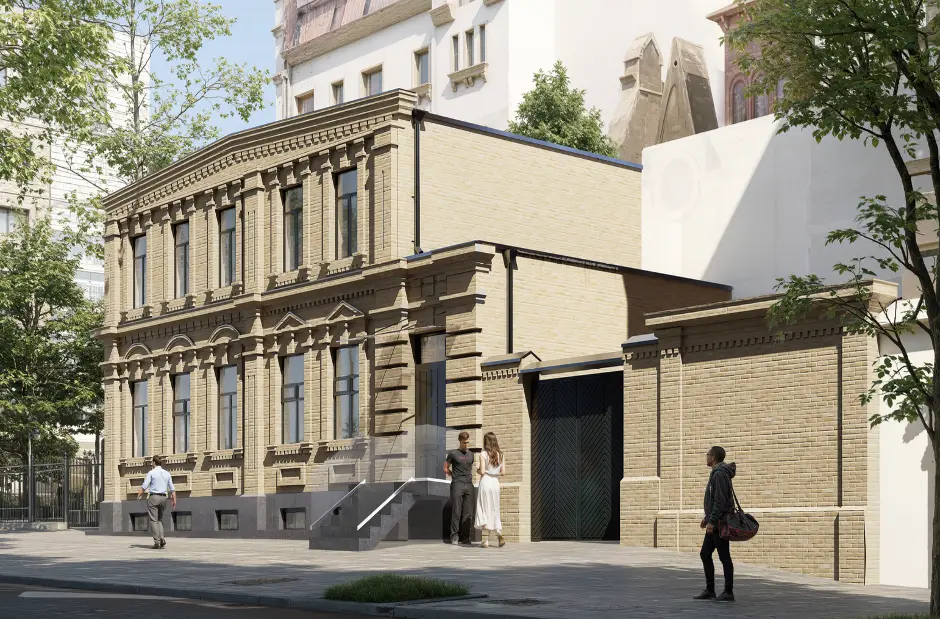
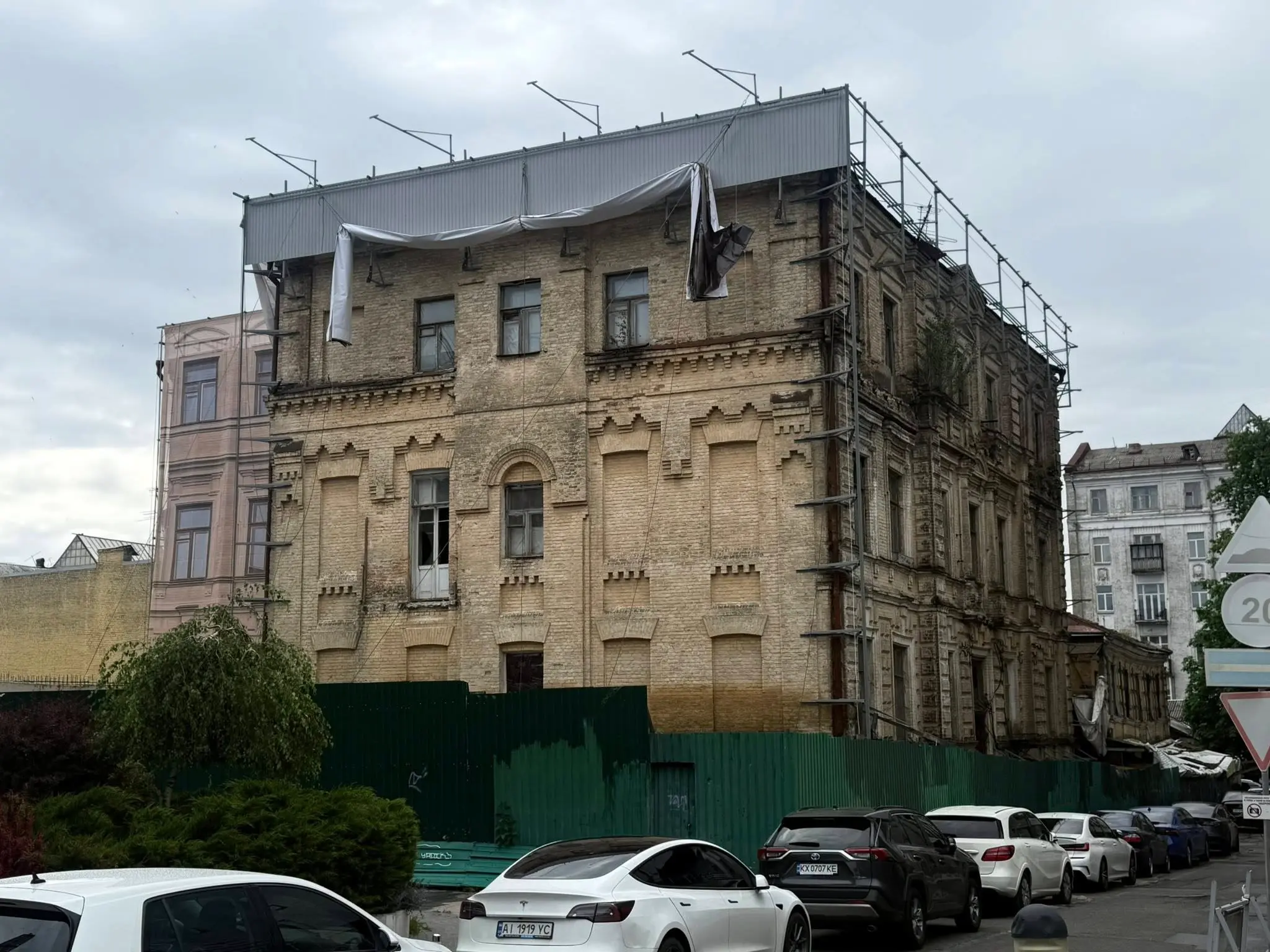
I want to dwell separately on the example of the former "Pid lypoyu" cafe, because it is very illustrative. This property was on the balance sheet of the Kyiv Scientific and Methodological Center. The previous tenant essentially abandoned it. Rent was not paid, an arrears of about 800 thousand hryvnias accumulated, and only about 150 thousand could be recovered through the courts.
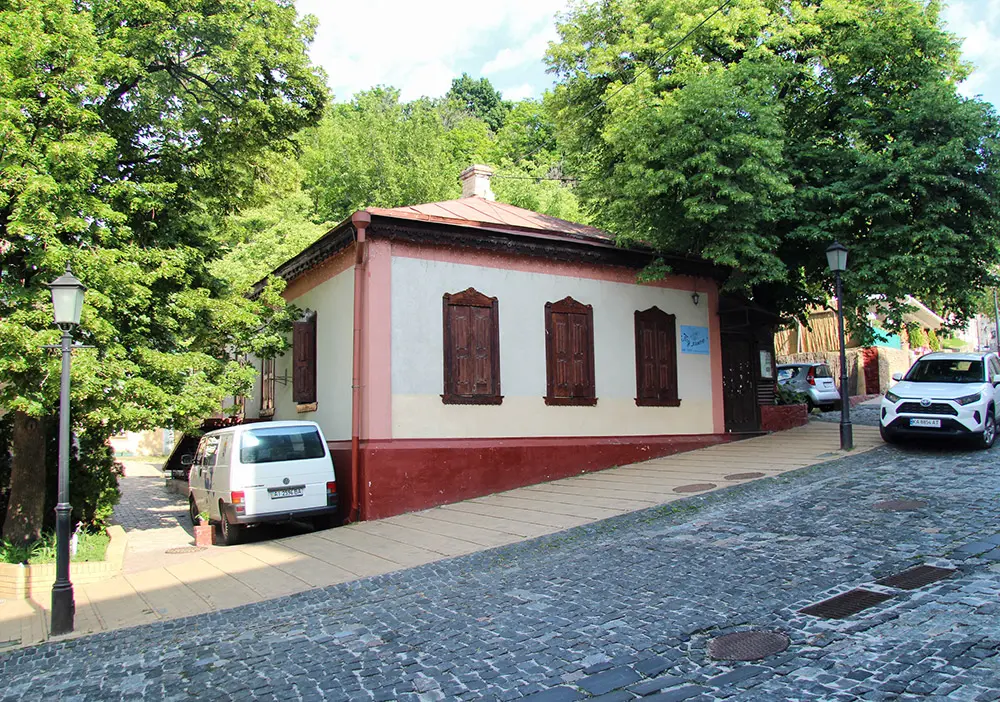
After the building was left in a dilapidated state by the former tenant, a decision was made to lease the property through the Prozorro system; a winner was determined, and a lease agreement for 15 years was concluded. The new tenant began the process in accordance with legal requirements: conducted the necessary research and prepared scientific and project documentation.
Read also: The oldest estate on Andriivskyi Descent is planned to be radically rebuilt — activist
I want to emphasize that before any restoration, research is mandatory – they study the condition of the foundation, walls, and floors, and perform technical and chemical-technological inspections. This is a standard procedure, without which it is impossible to develop a high-quality project.
The project was submitted to the advisory council. Initially, it was returned for revision due to comments. After the revision, the documentation was reviewed again and approved. Accordingly, the Department provided approval and a permit to carry out the work.
But at that moment, information about the alleged destruction of the monument began to spread in the public space – particularly on social media. Based on these signals, the prosecutor's office seized the property. And today we have a situation where there is an investor, there is an approved project, there are all the permits, but the work is blocked.
And this is a very telling moment for me. Because we are talking about a model that allows monuments to be preserved with extra-budgetary funds, without a burden on the budget, but it is halted due to the dissemination of false information.
At the same time, there are other cases, such as the illegal extension on 4 Volodymyrska Street. We appealed to the prosecutor's office at various levels, but no criminal proceedings were opened.
So the question of balance in response arises. Because in one case, where there is an investor and an approved restoration project, the process is stopped, while in the second, where there are obvious violations, there is no reaction. I sincerely regret that such an initiative, which could have become an example for the restoration of many objects in Kyiv, is currently effectively blocked.
The Malynovskyi-Barskyi building in Podil: won't it happen that while experts are processing the documentation, the owner will find a way to "rebuild" the property?
Currently, the Department has already received the registration documentation for this property. Specialists are processing it. According to the procedure of the Ministry of Culture, any registration documentation must be reviewed by the Advisory Council. This is a consultative body under the Department, which includes architects, archaeologists, art historians, designers, and representatives of the public. They work on a voluntary basis.
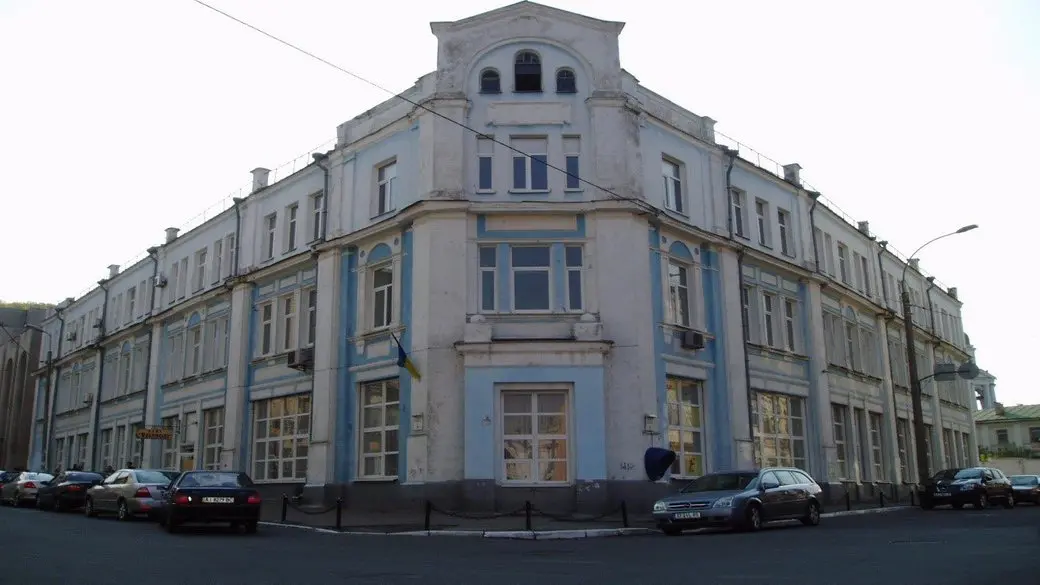
If comments arise during the review, the documentation is returned for revision. If it meets all the criteria, it may be approved. After consideration by the Advisory Council, in case of a positive decision, the property can be included in the List of newly discovered cultural heritage objects. Then it will receive the appropriate protected status.
And what is the status of the Zelenskyi estate now? As is known, after the work, preparations for restoration began.
The situation there was critical. It was practically ruins—dangerous, with large fragments of walls that could collapse at any moment.
Under normal procedures, research is conducted first, but here it was physically impossible. Therefore, we followed the path of emergency stabilization works: separate scientific and design documentation was developed specifically for the conservation and stabilization of the site.
This documentation was approved, a permit was issued, and the work was carried out.
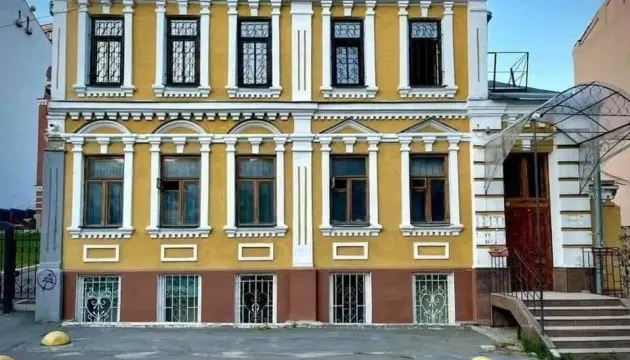
But it is important to understand: before this, the site was under seizure for a year and a half. That means for a year and a half nothing could be done, and the building simply continued to deteriorate. The seizure was lifted relatively recently—about six months ago.
Currently, we are awaiting the submission of a full restoration project. The idea is to restore the building to the form recorded in the registration documentation as a two-story historical site. And here it is important that sometimes in the public sphere, any works are perceived as destruction. But without emergency measures, this building could have simply disappeared.
Recently, information appeared about criminal proceedings regarding the possible destruction of a historical estate in Osokorky. At the same time, the building does not have landmark status. Are there risks that this estate could be destroyed while this formal refusal regarding the lack of landmark status exists?
In this case, the situation began with a public organization, "Spadshchyna Kyiv" (Kyiv Heritage), submitting an identification card to the department, believing that this building could be a cultural heritage site. Our specialists visited the site and recorded that the object has modern structural characteristics, specifically a concrete foundation. Therefore, it currently does not have landmark status.
At the same time, if the organization insists on its position, it has the right to prepare full registration documentation in accordance with legal requirements. The department will consider it in the established manner, including at the advisory council.
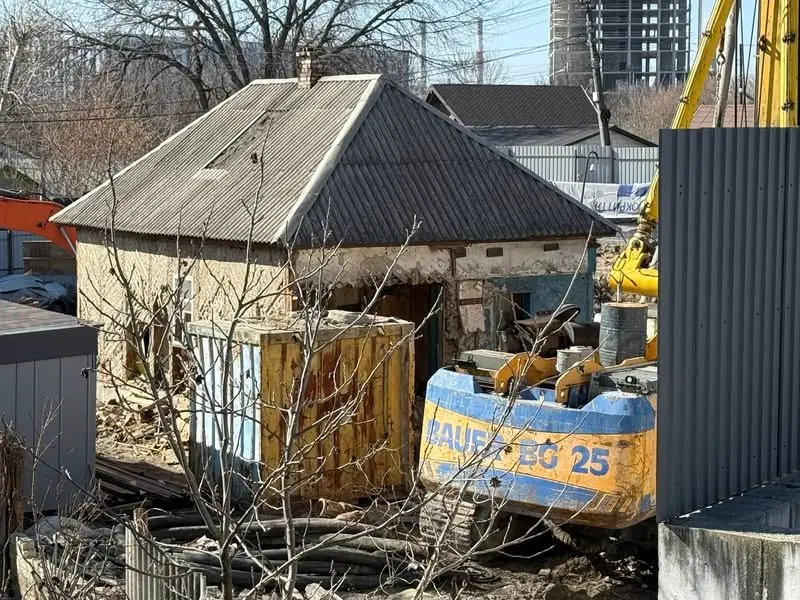
It is worth understanding that there are clear criteria for granting the status of a cultural heritage site. This could be the uniqueness of the architectural design, authorship by a famous architect, historical value, or events associated with the site confirmed by archival sources. If these criteria are proven in the registration documentation, the site can receive the appropriate status. If not, there will be no grounds for it.
And what is the situation with the Gostiny Dvor? Why can't the state or the city restore it while it is crumbling?
Gostiny Dvor is a separate story altogether. In 2012, it was stripped of its landmark status, which effectively paved the way for its redevelopment into a shopping center. At that time, the city literally rose up—activists, students, teachers, the public.
There was the "Gostinna Respublika" (Hospitable Republic) there, where poems were read and lectures were held. It was a living cultural environment. And at the same time, there were conflicts, forceful dispersals, and confrontations.
As a lawyer at that time, I represented interests in courts. We filed lawsuits to cancel the decisions of the Kyiv City Council, the orders of the Kyiv City State Administration, and construction permits.
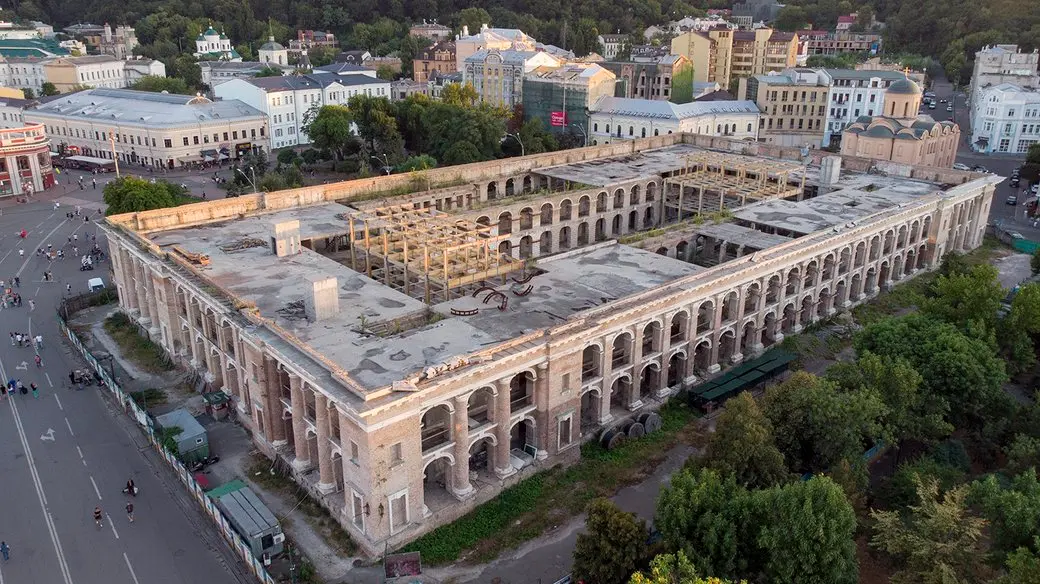
After the Revolution of Dignity, all those decisions of that government were successfully overturned, and the site's landmark status was restored. But then another story began. The Ministry of Culture and Information Policy of Ukraine transferred it to the management of the "Sophia of Kyiv" National Conservation Area. And essentially, since then, it has not received proper funding. Funds were allocated only for security and partially for emergency works, which were never completed. The city has repeatedly asked for the site to be transferred to municipal ownership. The Kyiv City Council twice passed resolutions to accept the Gostiny Dvor into municipal ownership. But this has not happened.
Read also: Kyiv seeks to acquire Gostiny Dvor and Sikorsky's House as city property
And now we have a situation where the people who fought for it write: "Why did we do this? So that it stands and crumbles now?". Meanwhile, Kyiv is ready to take the site and restore it. There is an understanding of what needs to be done; there is a readiness to invest funds. But as long as it is in state ownership, we cannot do this. And the landmark is deteriorating. It is now only a matter of time.
The museum on Poshtova Square has been practically under threat of destruction for several years—without conservation, with flooding and officially recorded risks of structural failure. At the same time, the surface building of the post station remained neglected for a long time. Why has this situation still not been resolved, and what real steps are the city and the state taking now to preserve these sites?
It is important to distinguish between two sites here.
The above-ground building of the post station is a communal property of the city of Kyiv and is on the balance sheet of the Kyiv Scientific and Methodological Center. After an inventory, it was revealed that the building is in a neglected state, and part of the premises had been essentially occupied by unauthorized persons without permission.
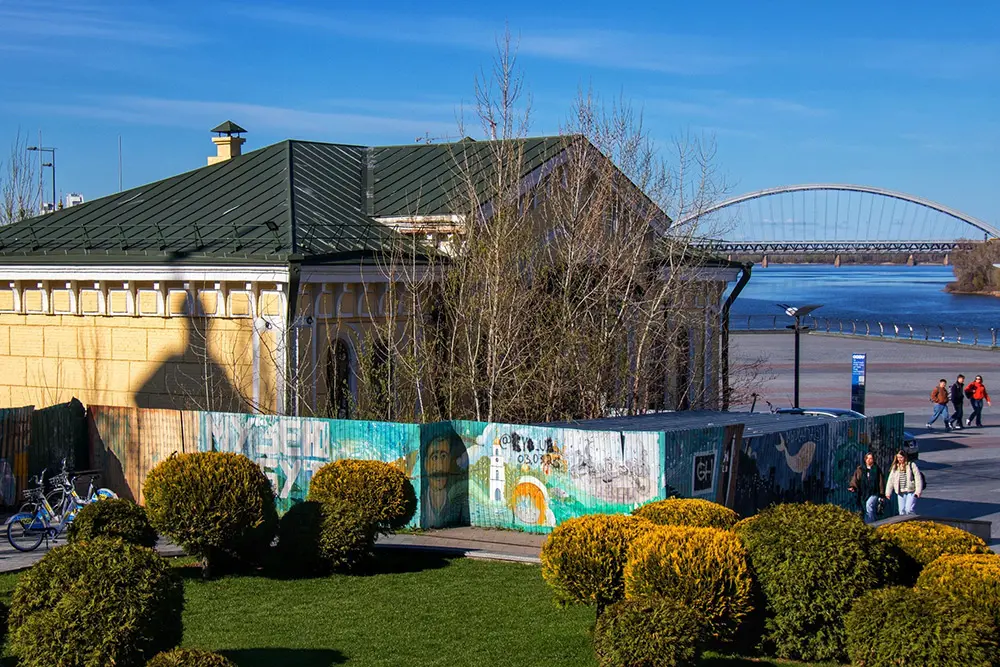
The Department demanded the premises be vacated. This took some time, but finally, the situation was settled.
As for the underground part, it is an archaeological site of national significance. All such objects are state property and fall under the responsibility of the Ministry of Culture. To resolve the situation, a working group was created with the participation of representatives from the ministry, the KMDA, archaeologists, scientists, and other specialists.
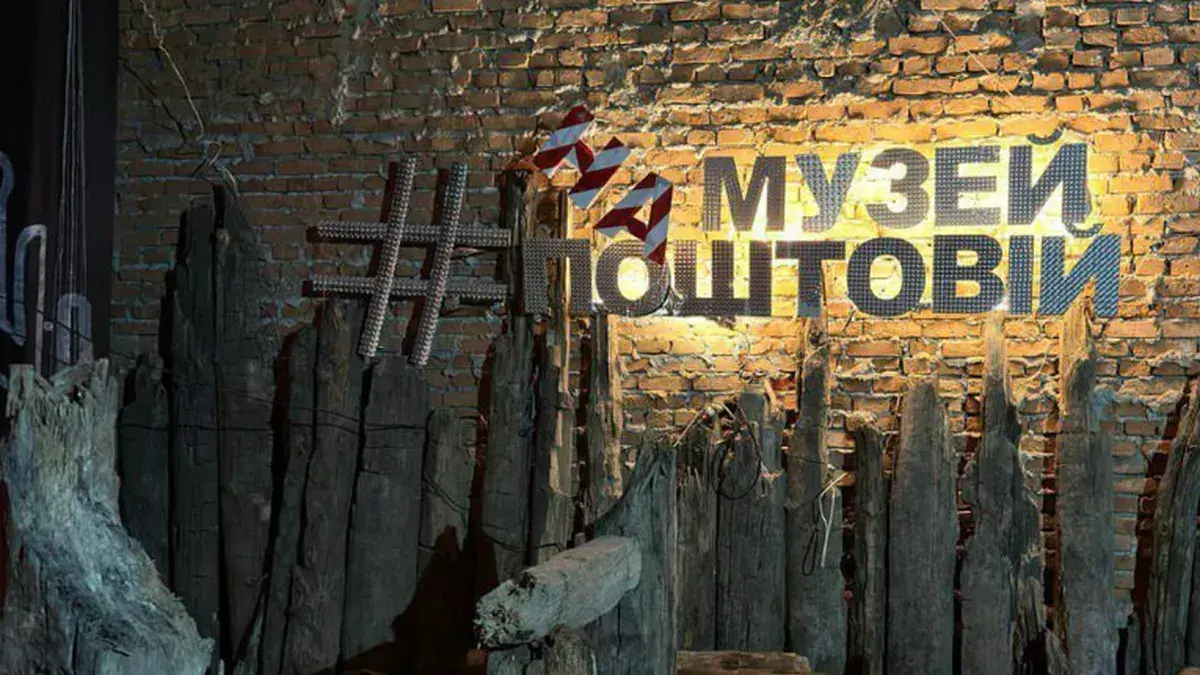
One of the possible options being discussed is the creation of a branch of one of the state museums based on this monument. This would allow for funding for the maintenance and development of the site.
Regarding the post station itself, the city is planning its restoration. For this, it is necessary to develop scientific and design documentation. This is a complex and long process that can take up to a year.
In the future, there are plans to create a postal history museum and a public space there.
What changes are critically necessary today to stop the loss of Kyiv's historical environment, as we are losing monuments right now? What legislative or managerial change is needed today so that tomorrow historical Kyiv does not turn, hypothetically, into glass high-rises?
– I will say something, perhaps, not entirely standard. It all starts with the fact that we have to tell children who we are. Not at university, but in kindergarten, in school. To explain what Saint Sophia Cathedral is, who Anna Yaroslavna was, that our history is not what they tried to impose on us during Soviet times.
Because today Russia and, in particular, Vladimir Putin are waging war not only for territories. They are fighting for our identity, for our history. They appropriate it, distort it, and try to erase it.
We must talk about the fact that when "they were still living in the marshes," we already had stone temples – the Church of the Tithes, Church of the Saviour at Berestove, Saint Sophia Cathedral. This needs to be conveyed constantly, through education, books, films, and urban space.
And then, when this child grows up and becomes a developer or an official, they simply won't have the heart to destroy a historical building, even if it is profitable.
It is equally important to change the perception of success. So that parents can say to their children not "I built 20 floors," but "I restored a monument."
There are examples of patrons who invest their own funds in the restoration of objects. And this should become the norm; it should be prestigious. If the state, the city, and the community work together, then there is a result, but if they work separately, then we lose.
Full or partial republication of the text without the written consent of the editorial office is prohibited and considered a copyright infringement.

Related News