"The right to a view" for everyone, regardless of the apartment's cost
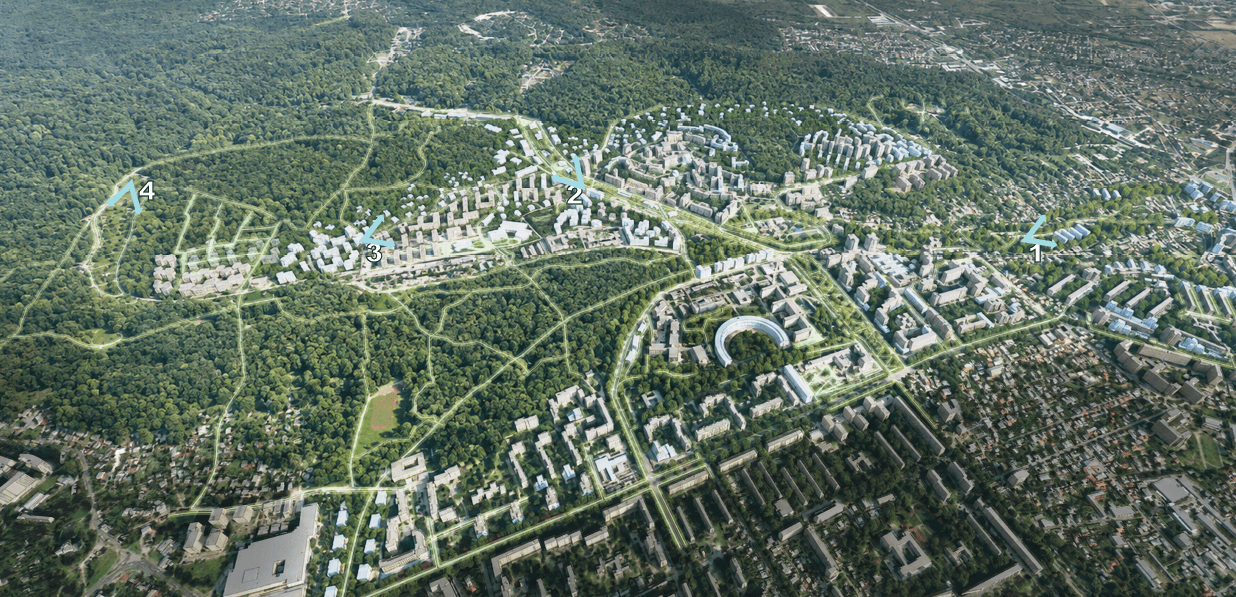
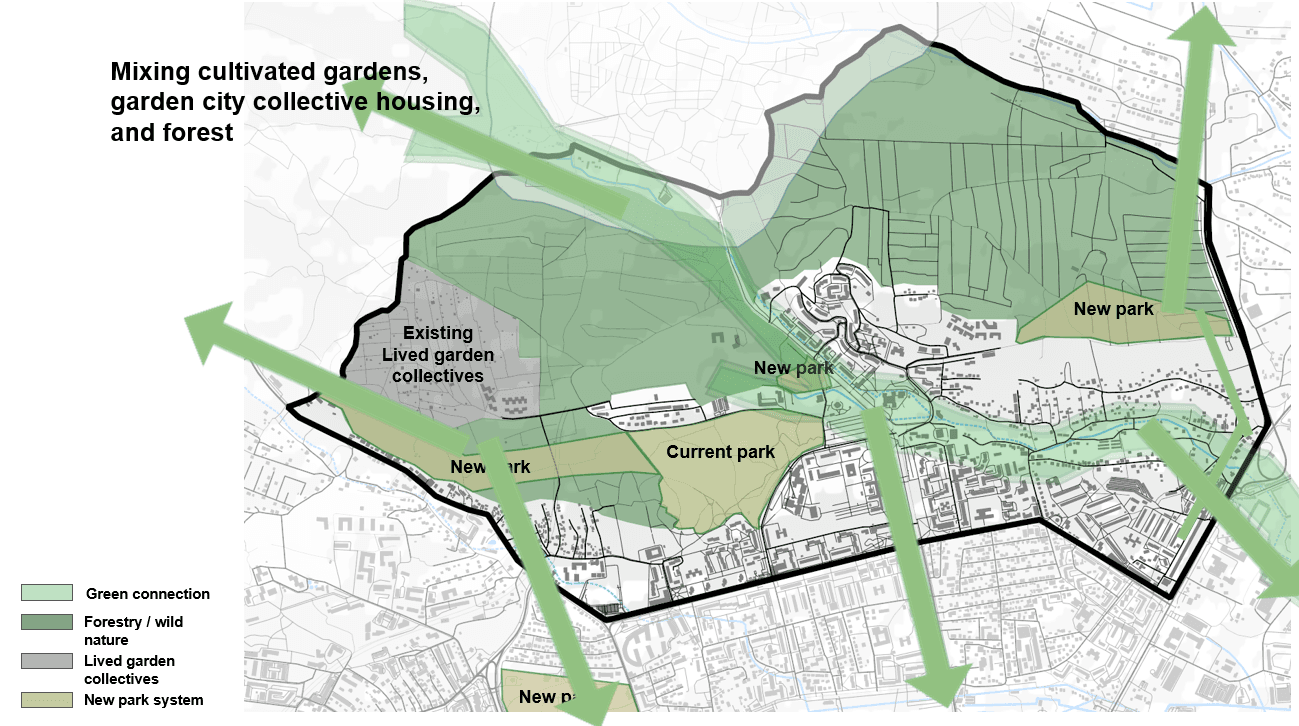
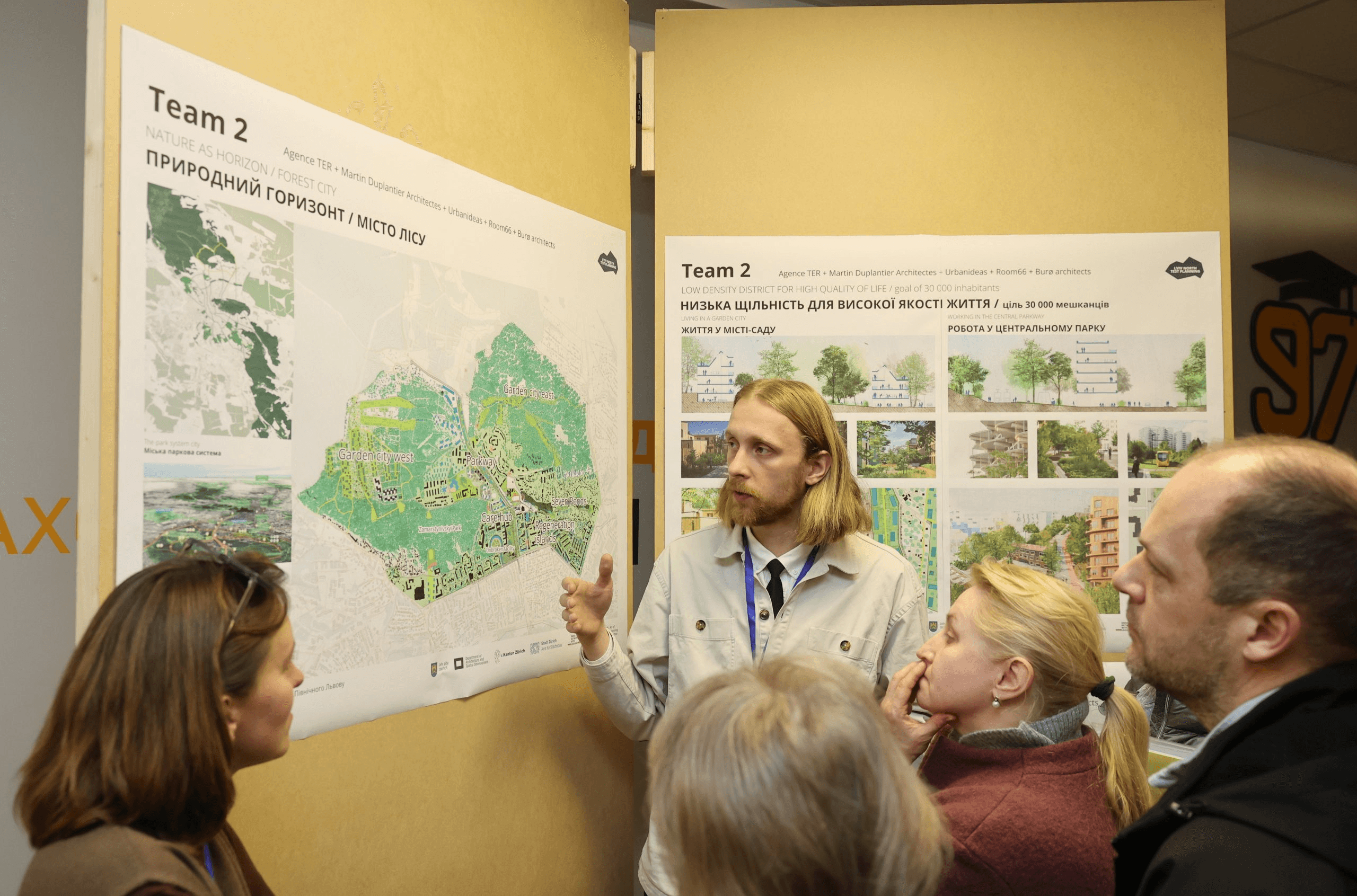
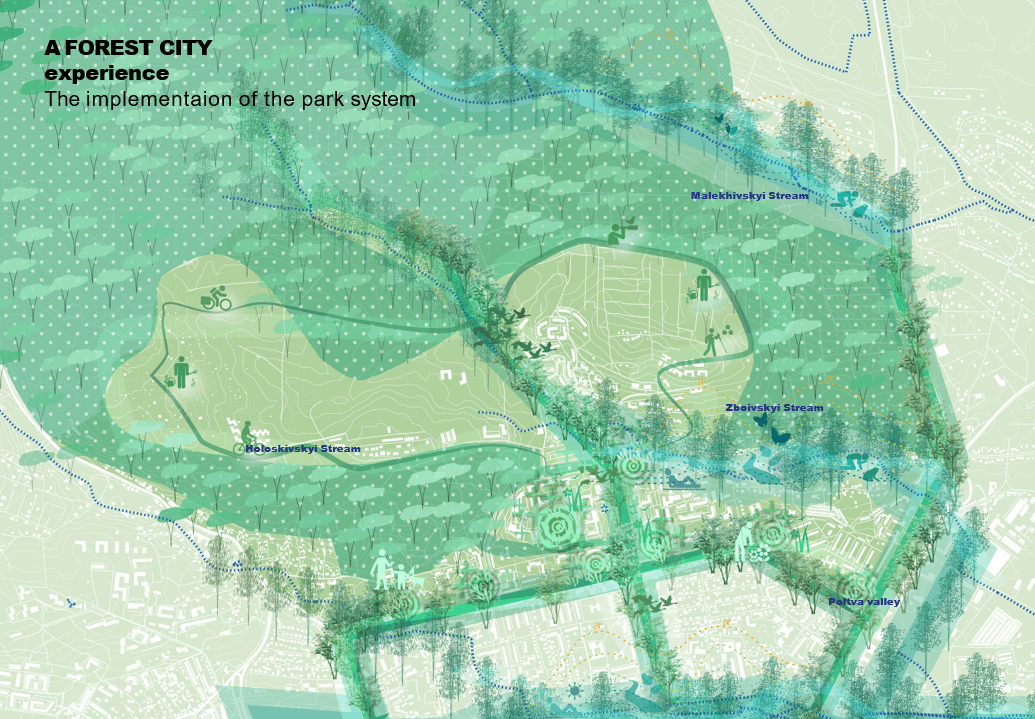
The concept of the French team Agence TER & Martin Duplantier (France) in partnership with the Lviv bureaus Urbaideas and Room⁶⁶ and the Kyiv bureau Burø is based on the idea of a park-district: nature should not be "islands" amidst concrete but should permeate the entire district – with an emphasis on the Poltva River, ecology, and recreation.
Their presentation was one of the most emotional, as the architects emphasized the "right to a view" for every resident – regardless of the apartment's cost. At the same time, they talked about how to make the "invisible" nature of Lviv visible and how to turn neglected territories into blooming park spaces.
According to him, "English density" in development is a concept of a compact city associated with the British approach to urban planning. It involves creating compact, multifunctional districts with a high concentration of housing, jobs, and services, united by pedestrian accessibility and public transport. This approach is the opposite of suburban sprawl and allows for more efficient use of space and infrastructure.
Agence TER (France) – a world leader in the field of landscape urbanism. Henri Bava is a world-renowned French landscape architect and urban planner, one of the founders of the influential international bureau Agence TER. He is famous for his innovative approach to urban space, where the landscape is viewed not as a decoration but as the basis of the urban structure.
Landscape urbanism is a modern theory of urban planning that considers not buildings as the main element of organizing the urban environment, but the landscape – that is, nature, ecology, and open spaces.
One of Henri's most famous projects is Aqua Magica Park in Germany, where he transformed the geological features of the area and mineral springs into an interactive landscape with an 18-meter water crater. He is also known for the large-scale renovation project of Plaça de les Glòries Catalanes in Barcelona, which turned a former road junction into a large city park.
They want to create the "green spine" of the district
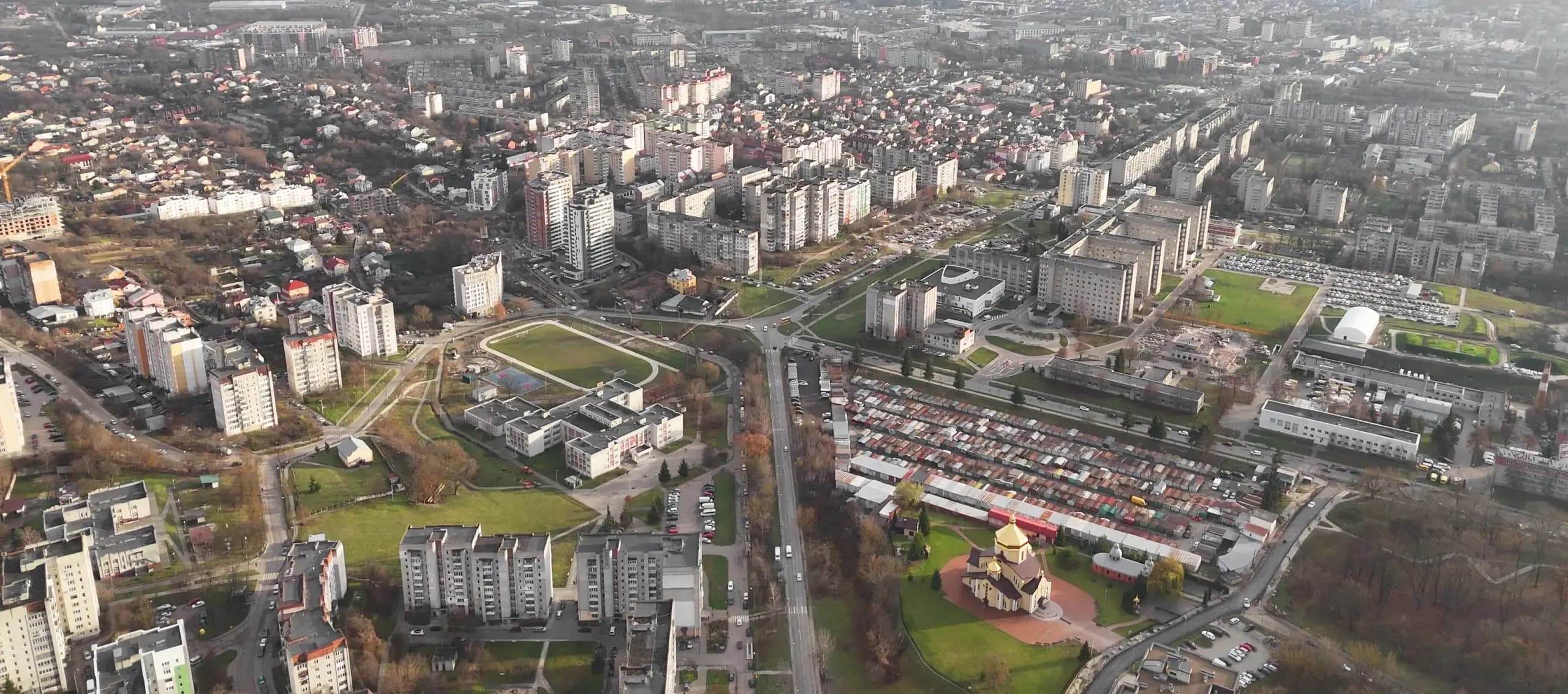
This is exactly what the residents of Zboishcha dreamed of when they complained about the lack of not just parks – even squares or landscaped courtyards within the development. This was previously reported by Tvoe Misto. How will the neighborhoods already built in the 70s and 80s with chaotic Soviet development change? What transformation is envisioned for them in the "Northern Lviv" project? Will it affect Hrinchenka and Khmelnytskoho streets, which are densely built up and lack spaces for parks?
Since the Hrinchenka district is low-lying, the architects propose a system of open drainage channels and "rain gardens."
"During heavy rains, they retain water, preventing the flooding of entrances, and in dry weather, they serve as decorative elements," – the architect explains.
Martin Duplantier – one of the world's leading urban planners, an urbanist, head of the French bureau Martin Duplantier Architectes, and president of the French architectural association AMO. He gained world recognition thanks to ecological projects and creative urban solutions.
In particular, in the unique Zhangjiajie National Forest Park in Hunan Province, China, he created mirrored pedestrian bridges and pavilions in a complex landscape. He also participated in the development of the Olympic Village for the 2024 Summer Olympics in Paris.
After the full-scale invasion of Ukraine, Martin Duplantier gathered a team of like-minded people to work together on the reconstruction of Ukrainian cities. To this end, he founded the "D Architecture Ukraine" association. Before the major war, he had successful commercial projects all over the world. He works on projects in Europe, Asia, and Africa.
According to Martin, their project proposes to "revive" the blind walls of buildings along Hrinchenka Street by adding lightweight glass extensions for small businesses – workshops, cafes, children's clubs. Thanks to this, the street should become more active, safer, and more interesting for walks.
Part of the private estates can become a public garden
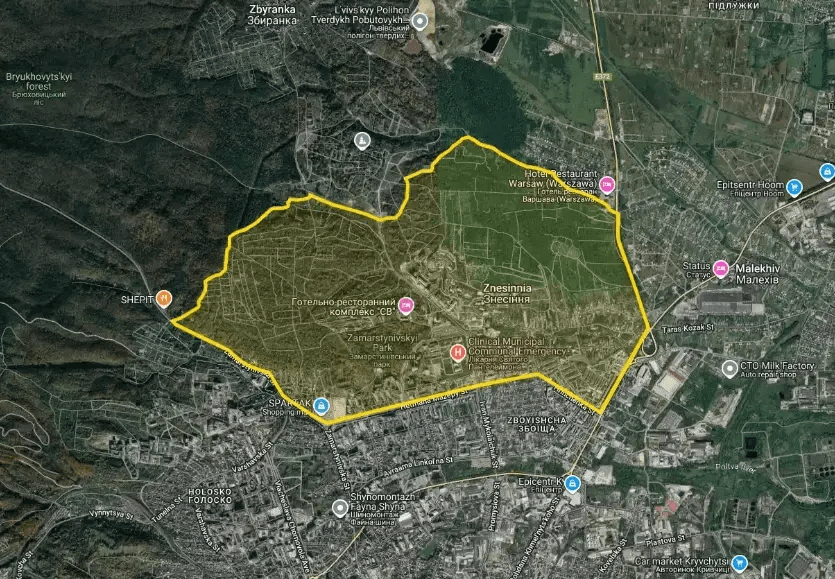
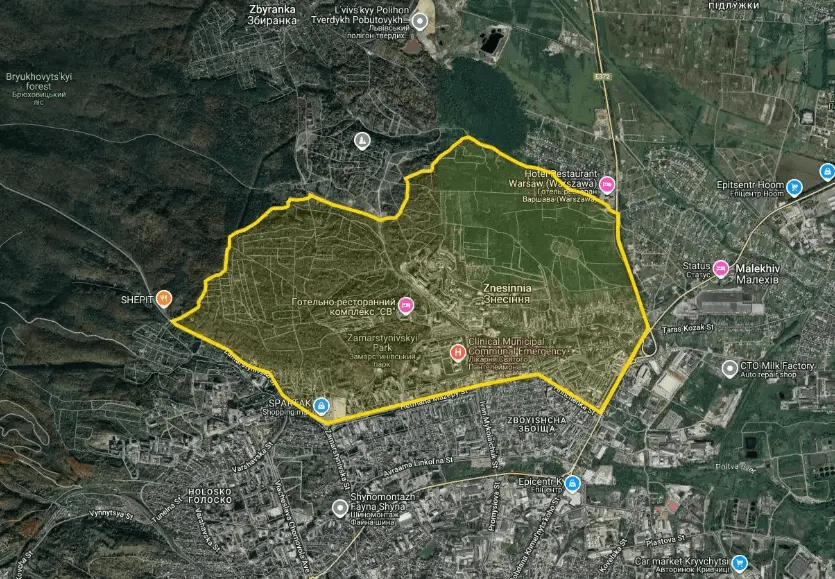
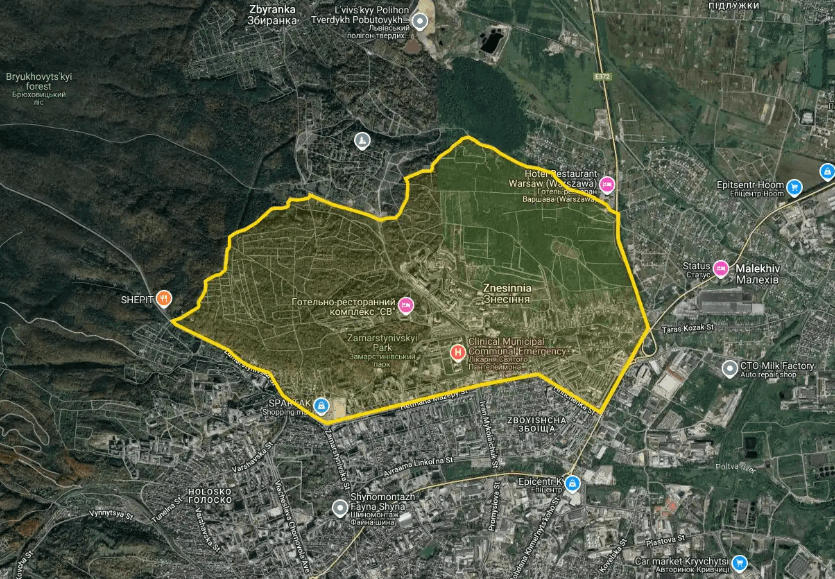
In the territory of Zboishcha and Zamastyniv, there are many private garden plots and dacha areas used by cooperatives. It is difficult to determine their exact total area, as the territory is actively changing its status from "garden" to "residential" for development.
To the question from Tvoe Mistoabout what will happen to the private garden plots, Martin Duplantier replied that the task of architects is to help the city council transform these territories.
“Currently, we have designed a system of parks that is adjacent to the garden plots,” — he clarifies. — “Some transformations are possible. We can turn part of the gardens into public ones, but not all. In this context, we are working on a system that will allow private gardens to be made public or shared for several houses – accessible to a certain group of residents.”
Lviv architects claim that Northern Lviv is a unique area that cannot be understood from a drone or on a map. We asked Martin and Henri whether they managed to feel this locality to organically combine its advantages and uniqueness in the project.
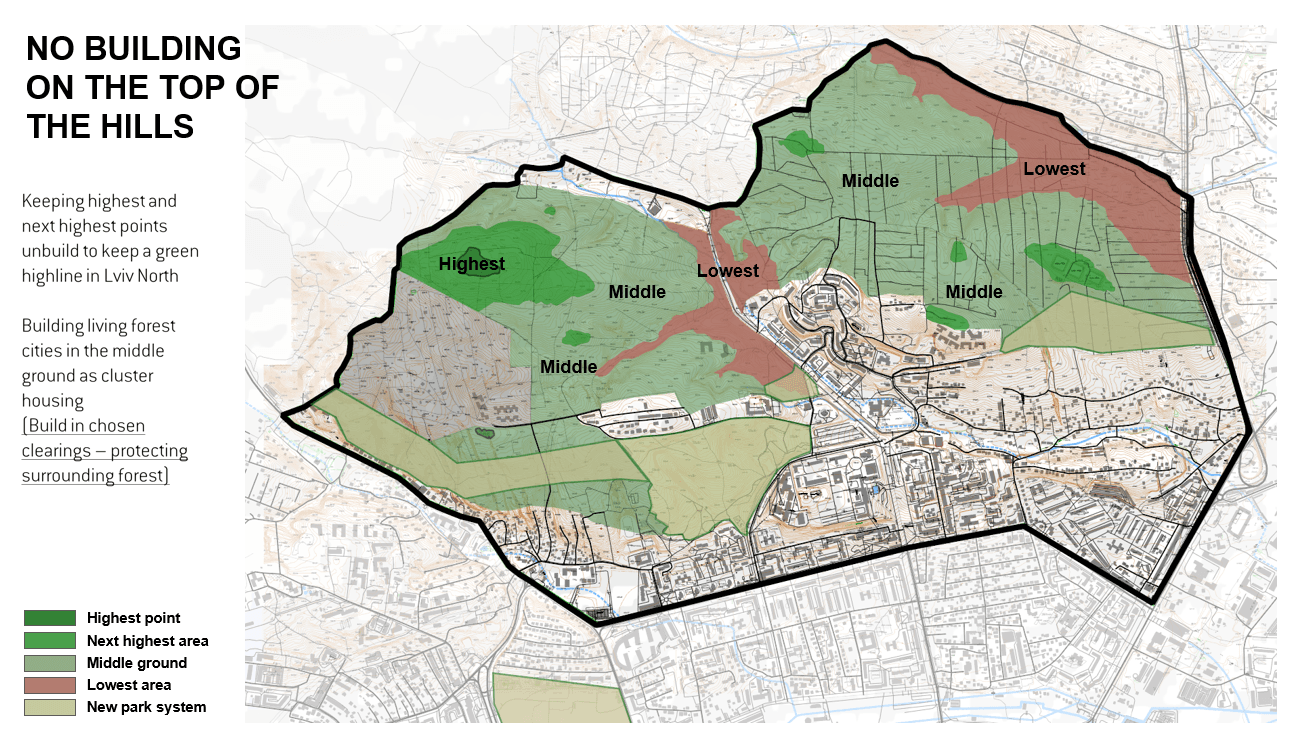
Building heights below the treetops
During the presentation of master plans within the "Northern Lviv" project, different teams showed different potential for development of the territory. The amount of new housing and residents depends on the chosen strategy – landscape or urban.
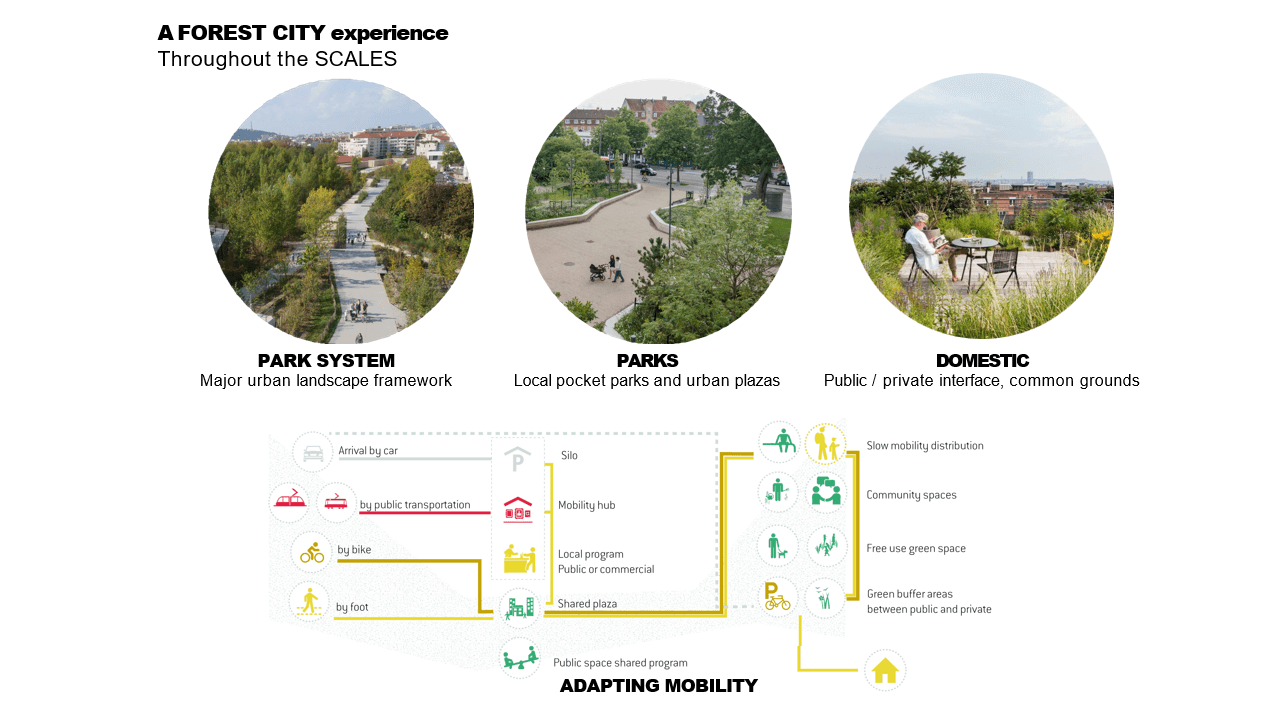
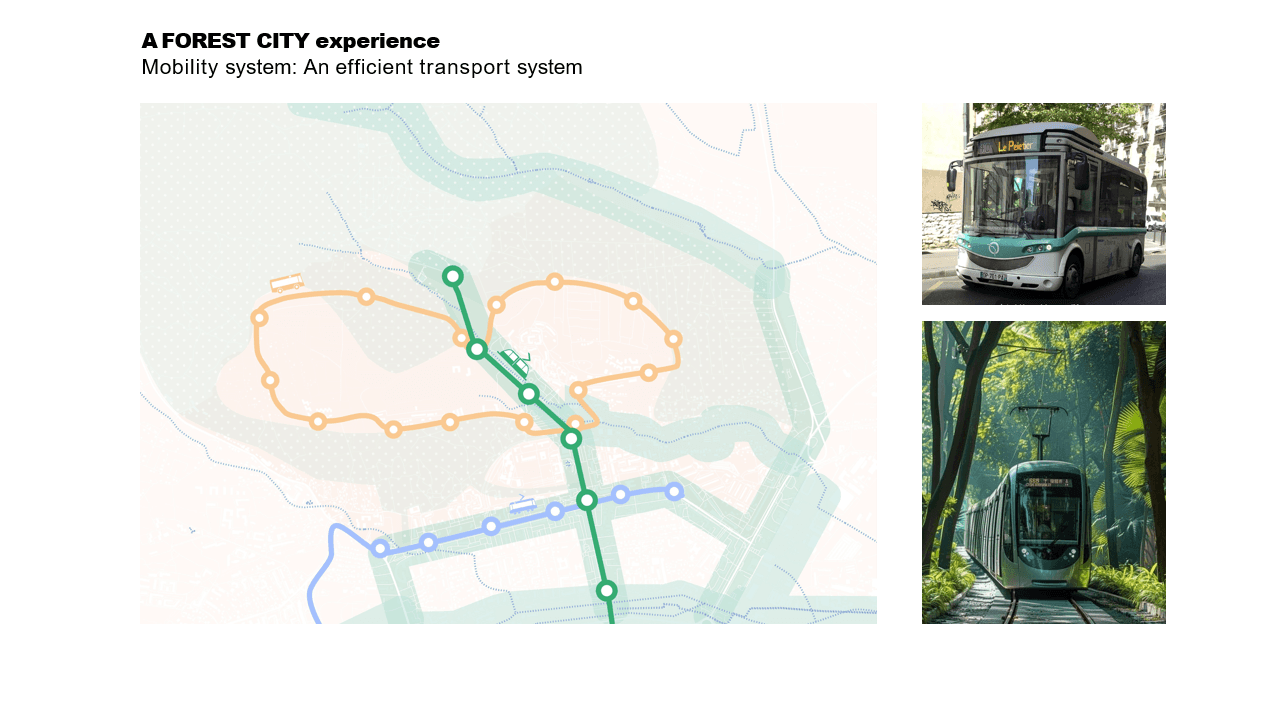
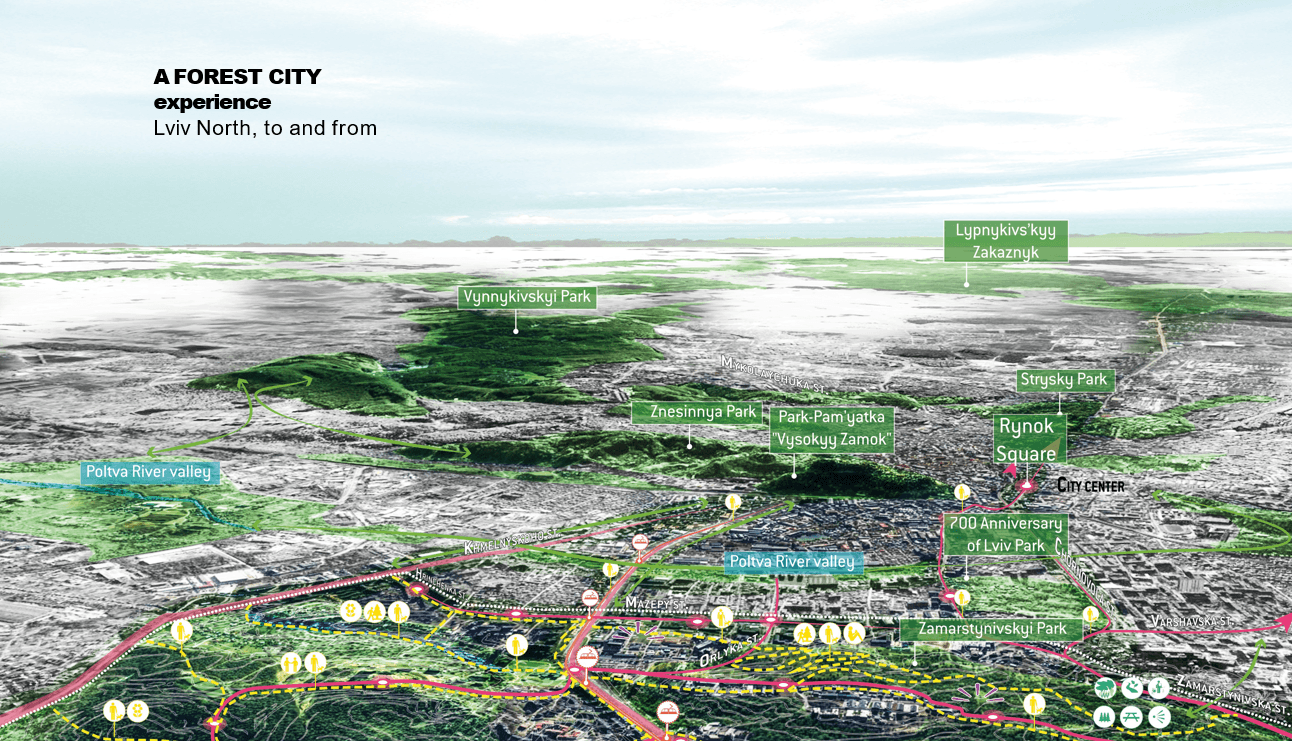
Agence TER & Martin Duplantier has the lowest indicator among all teams – about 10,000 new residents. This is explained by the fact that a significant part of the territory in their master plan is allocated for open parks, water bodies, wide "green corridors," and restoration of the natural landscape.
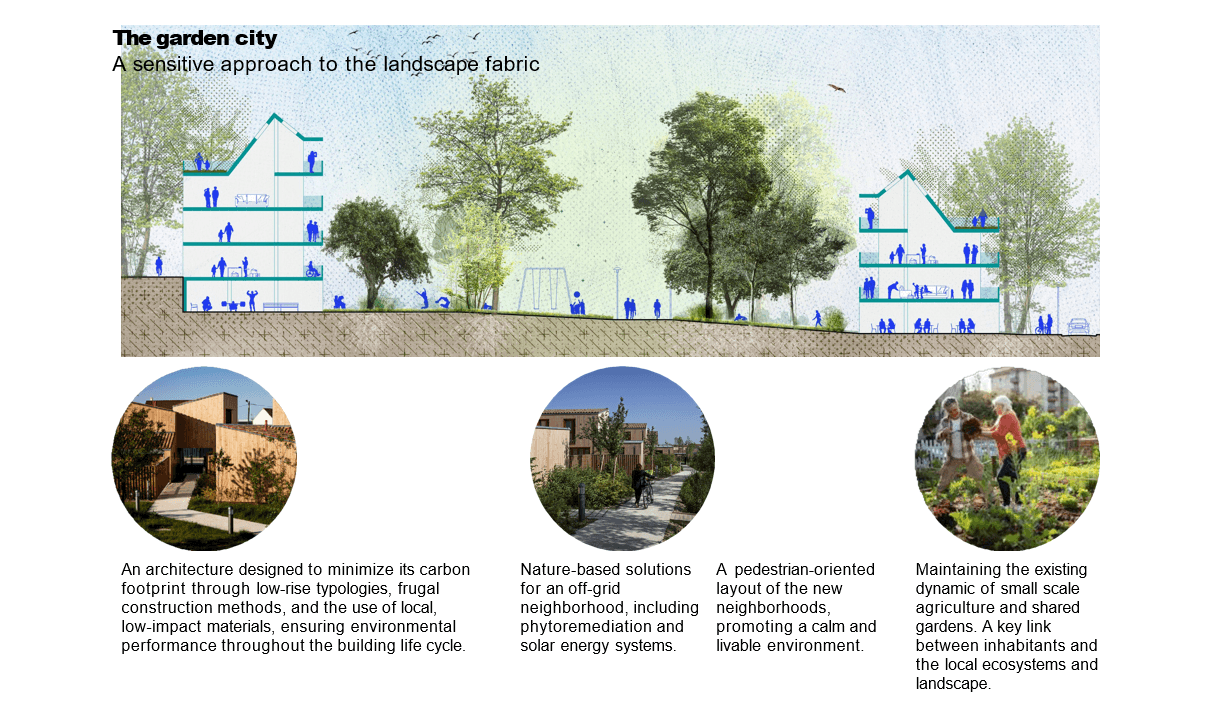
Instead of monotonous high-rises, the team of French architects proposes development of variable heights.
“This allows sunlight to enter every courtyard,” — Martin Duplantier emphasizes. — “Low-rise construction should not exceed the tops of the trees on the hill. Buildings – up to four floors maximum. This way we preserve the view of the green hills while creating a comfortable environment for residents.”
According to him, the main innovation the team is working on is not to invite more developers and build dense residential complexes, but to preserve the unique character of this site.
“We see an opportunity to emphasize the local identity,” — Martin Duplantier emphasizes. — “And not turn the north of Lviv into another cookie-cutter suburb. We want to maintain the connection with nature and the forest, while creating conditions for new residents.”
Henri Bava adds that in the era of climate change, it is extremely important to adapt cities to new environmental challenges.
“And the main tool that allows us to realize this is the opening up of the soil,” — he emphasizes. — “Moisture passes through the soil, but when we cover it with asphalt or concrete, the water remains on the surface. In our project, there is a lot of open land that we strive to preserve. This is the first step for adapting this site to climate change and for the proper management of biodiversity.”
The territory of the northern part of the city today is one of the largest in Lviv with vacant plots without development.
As a reminder, residents of Zboishcha admit that in the summer they like to go to Franko Park or walk along Chuprynka or Konovalets streets, admiring the ancient architecture and taking photos against its backdrop. People told Tvoe Misto that they want their district to become much more comfortable as well. We have already explored what the situation is like there today and what changes the residents themselves expect. More details can be read here.
Full or partial republication of the text without the written consent of the editorial board is prohibited and considered a copyright infringement.